Artwork
Saint Augustine in His Cell
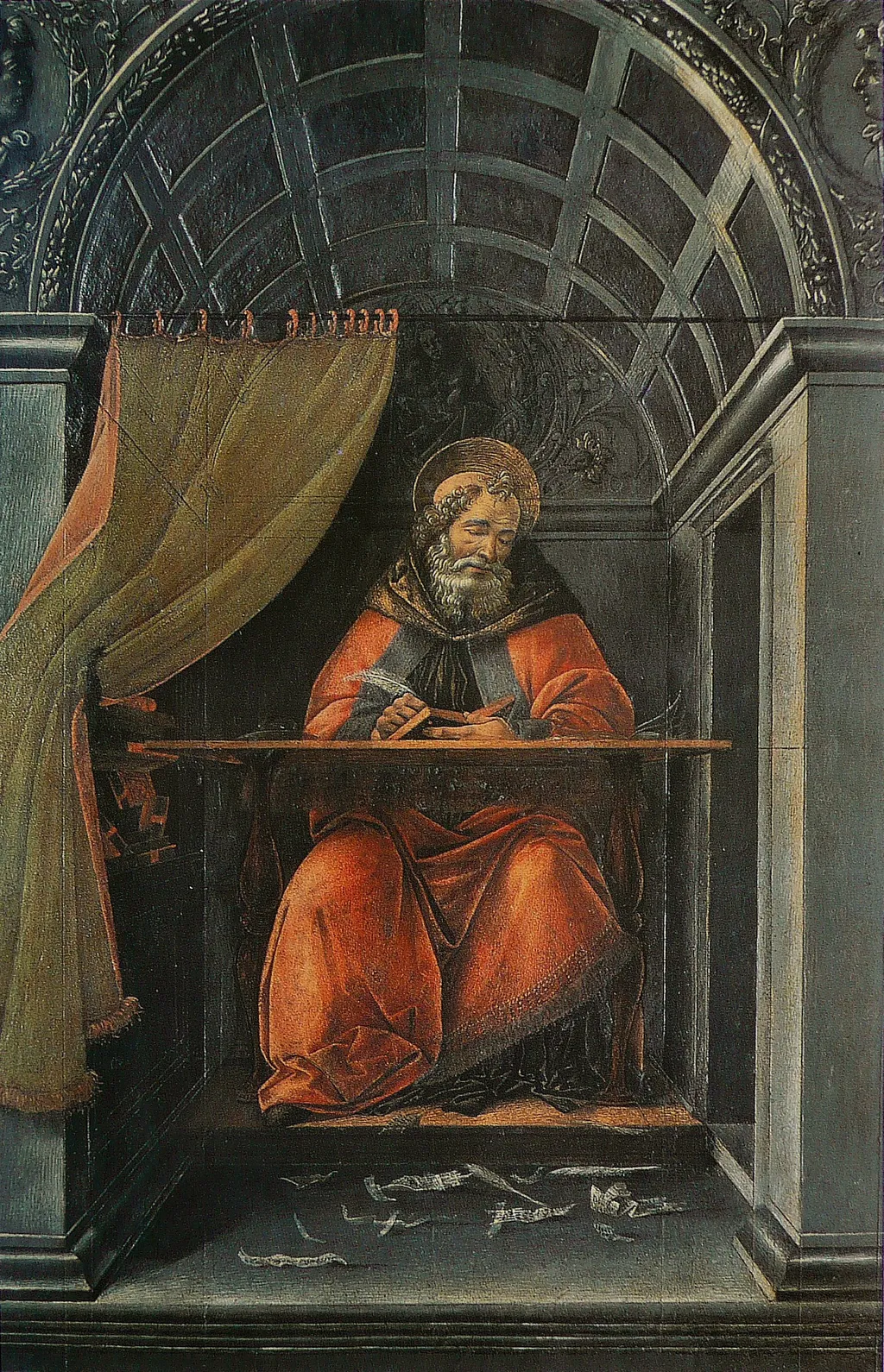
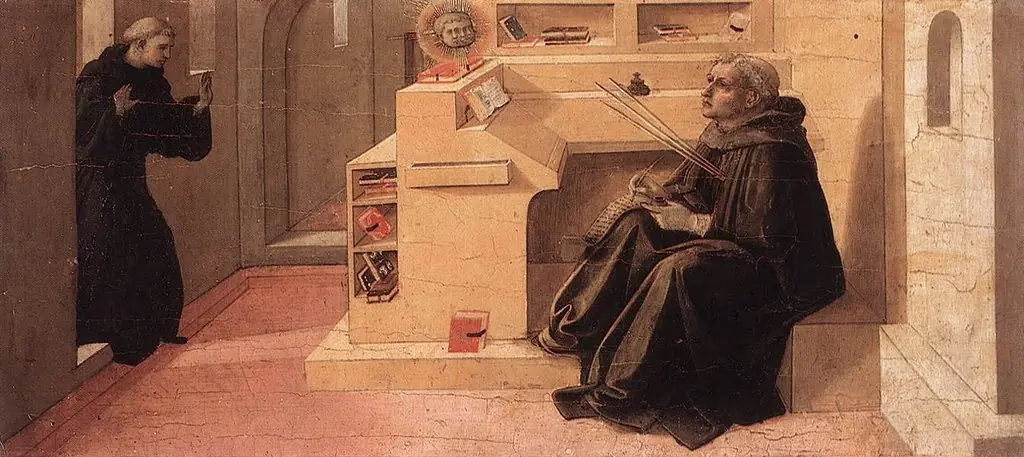
Saint Augustine in His Cell is a tempera painting by the Early Renaissance artist Sandro Botticelli. It dates from 1496 and is held in the collection of the Uffizi Gallery.
About this work
Overview
Saint Augustine in His Cell is a tempera on panel painting created by Sandro Botticelli circa 1490–1494. It is currently housed at the Uffizi in Florence.
Subject & Meaning
The painting depicts Saint Augustine in a state of focused writing, clad in a combination of episcopal and hermit attire, indicating a blend of religious authority and asceticism. This duality suggests the work may have been commissioned by an Augustinian hermit, possibly reflecting the saint's balance between spiritual leadership and personal devotion.
Technique & Style
Characterized by a predominantly dimly lit interior, the painting features a simple, unadorned space with the saint as the central figure. The use of tempera on panel, typical of Botticelli's practice, contributes to the work's restrained yet expressive quality.
History & Provenance
likely commissioned for an Augustinian hermit of Santo Spirito, the painting's creation was influenced by the preachings of Savonarola, a common theme in Botticelli's later works. It is now part of the Uffizi Gallery's collection in Florence.
Context
Emerging during the Italian Renaissance, this work reflects the period's emphasis on religious introspection, influenced by the fervor of Savonarola's teachings which stressed personal piety and simplicity.
Legacy
While specific lasting impacts of 'Saint Augustine in His Cell' are not broadly highlighted in available information, it remains a notable example of Botticelli's later, more contemplative works, offering insight into the artistic and religious climate of late 15th-century Florence.
Artist & collection

Artist
Sandro Botticelli was a Florentine painter who loved the drama of stories—myths, saints, and ancient tales.