Artwork
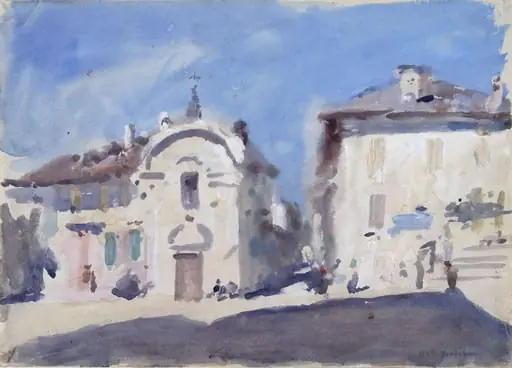
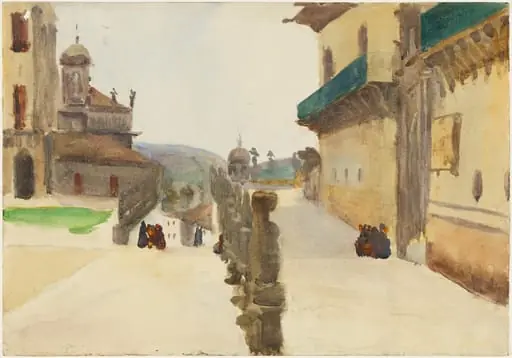
Church and Street, Camprodon
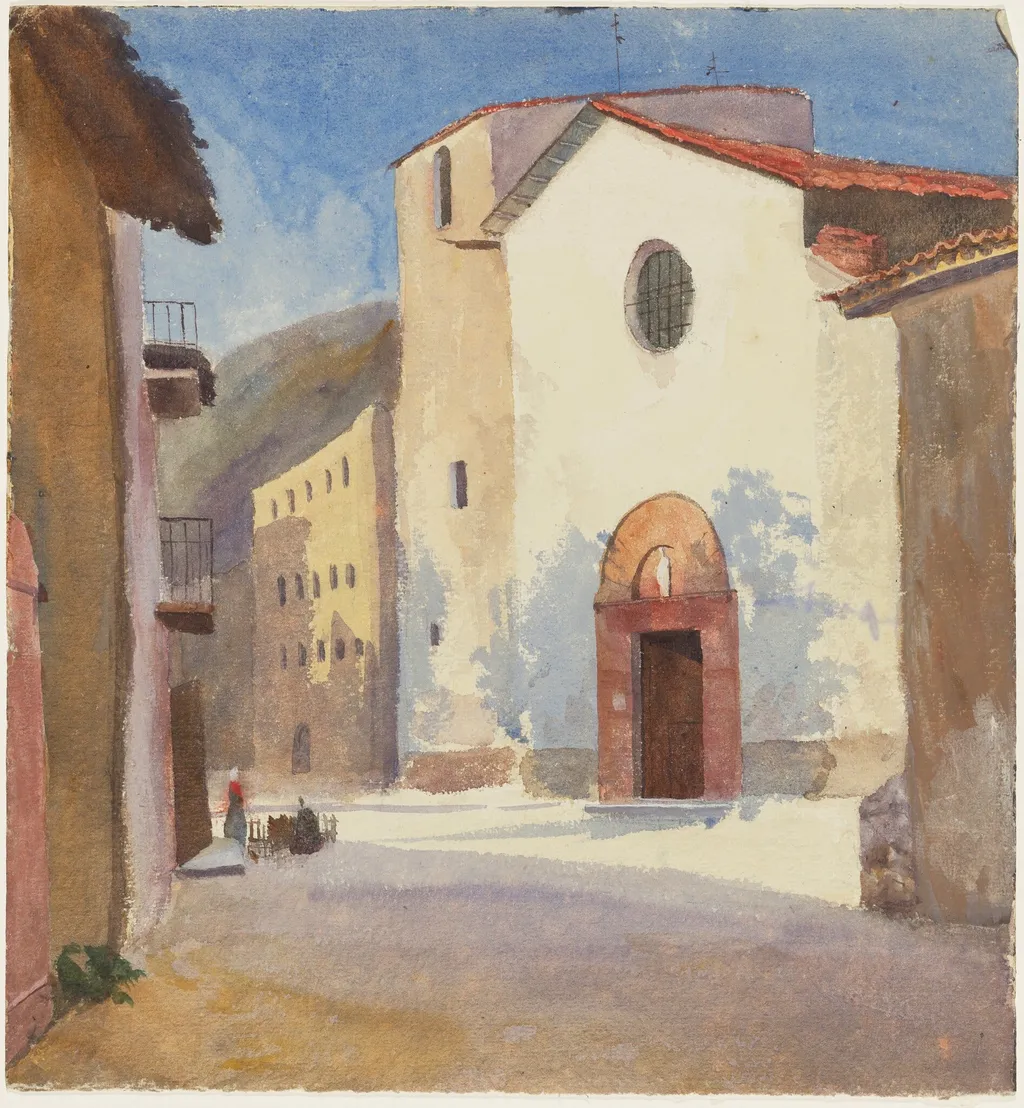
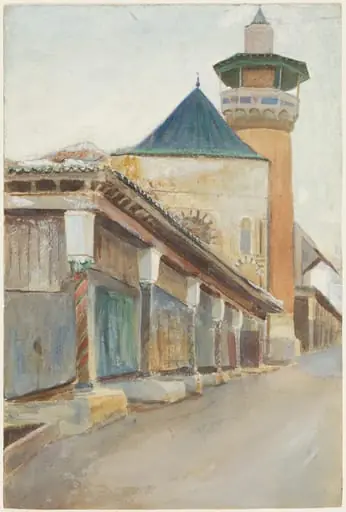
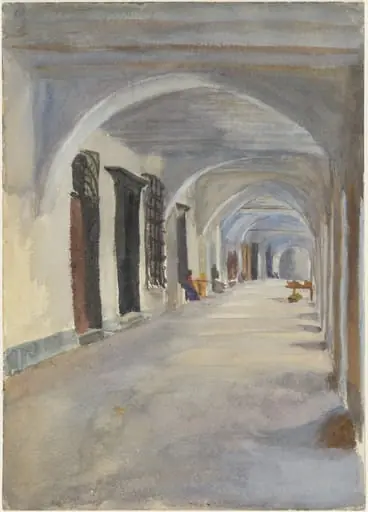
Church and Street, Camprodon is a watercolor drawing by Emily Sargent. It dates from 1902 and is held in the collection of the National Gallery of Art.
About this work
Overview
Created in 1902, Church and Street, Camprodon is a watercolor drawing by Emily Sargent that captures a quiet Catalan village scene.
Created in 1902, Church and Street, Camprodon is a watercolor drawing by Emily Sargent that captures a quiet Catalan village scene. The work is part of the National Gallery of Art’s collection in Washington, D.C. Rendered with delicate washes, it presents an unassuming street leading to a modest church, emphasizing atmosphere over detail. Sargent’s choice of medium lends the composition a transient, luminous quality, characteristic of her travel sketches.
Subject & Meaning
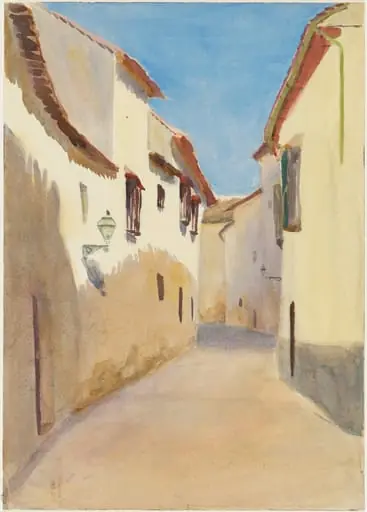
The painting centers on a small, whitewashed church with a rounded window and red arched entrance, flanked by low, earth-toned buildings. A narrow alley to the left holds a few indistinct figures, suggesting daily life without narrative focus. The scene conveys stillness and solitude, reflecting Sargent’s interest in ordinary moments rather than grand landmarks. The absence of dramatic action invites quiet contemplation of place and light.
Technique & Style
Sargent employed watercolor with loose, fluid brushwork and layered glazes to achieve a soft, diffused effect. Colors blend seamlessly on the paper, allowing underlying tones to show through and enhance depth. The technique avoids sharp outlines, instead relying on subtle gradations to suggest form and shadow. This approach gives the scene an ethereal, almost impressionistic quality, emphasizing atmosphere over architectural precision.
History & Provenance
Painted during Sargent’s travels in Catalonia, the work was likely made as a personal record of her observations. It entered the National Gallery of Art’s collection through the bequest of her brother, John Singer Sargent, who collected her drawings after her death. The piece remained largely unseen in private hands until its public acquisition, reflecting its status as a quiet companion to her more famous works.
Context
Emily Sargent traveled extensively in southern Europe during the early 20th century, often sketching rural architecture and daily life. Her watercolors from this period reflect a growing interest among artists in capturing vernacular scenes with sensitivity rather than idealization. Church and Street, Camprodon aligns with broader trends in travel art that valued authenticity and light over romanticized grandeur.
Legacy
Though less known than her brother’s portraits, Emily Sargent’s watercolors contribute to an understated tradition of female artists documenting everyday landscapes. Her work in Camprodon exemplifies a restrained, observational approach that influenced later generations of watercolorists focused on place and mood. The painting endures as a quiet testament to her skill in translating transient light into enduring form.
Own this work as a print
Artist & collection