Artwork
Tangier
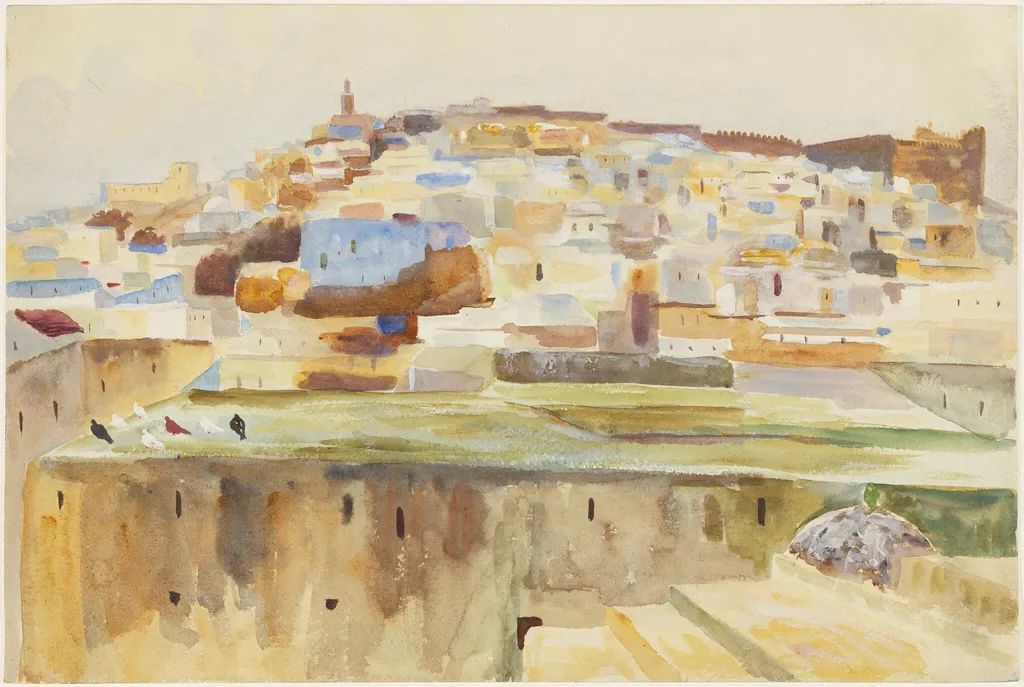
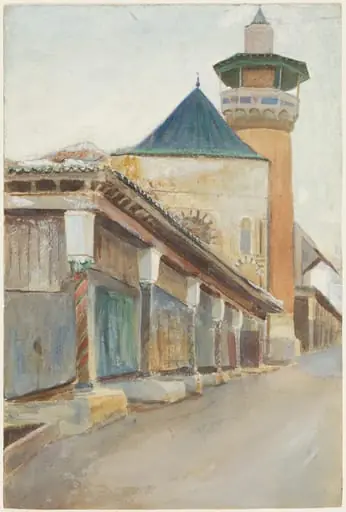
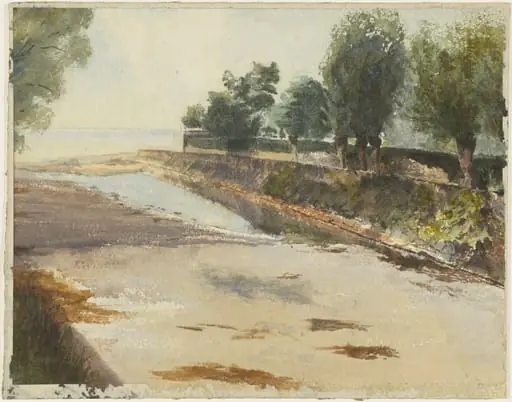
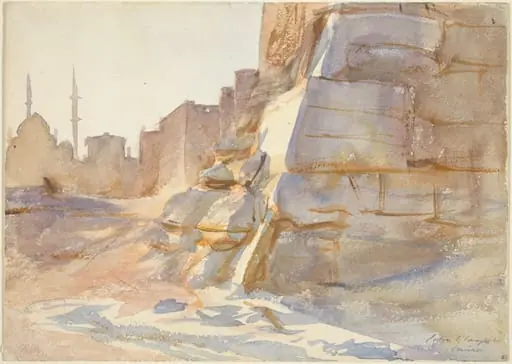
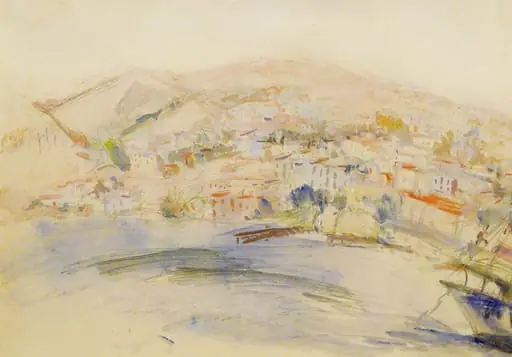
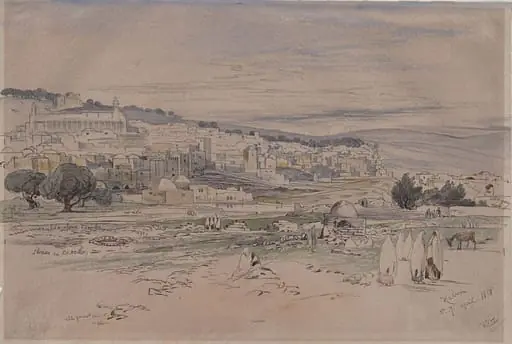
Tangier is a watercolor drawing by Emily Sargent. It dates from 1900 and is held in the collection of the National Gallery of Art.
About this work
Overview
Created in 1900, Tangier is a watercolor drawing by Emily Sargent that captures the Moroccan coastal town with a sense of immediacy.
Created in 1900, Tangier is a watercolor drawing by Emily Sargent that captures the Moroccan coastal town with a sense of immediacy. Executed in translucent pigments, the work belongs to the collection of the National Gallery of Art in Washington, D.C. Its delicate handling and spontaneous brushwork reflect the artist’s interest in capturing fleeting atmospheric effects rather than detailed architectural precision.
Subject & Meaning
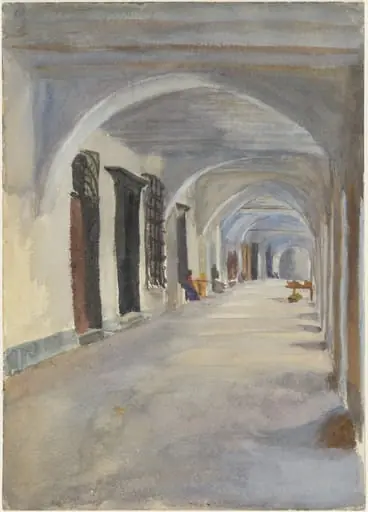
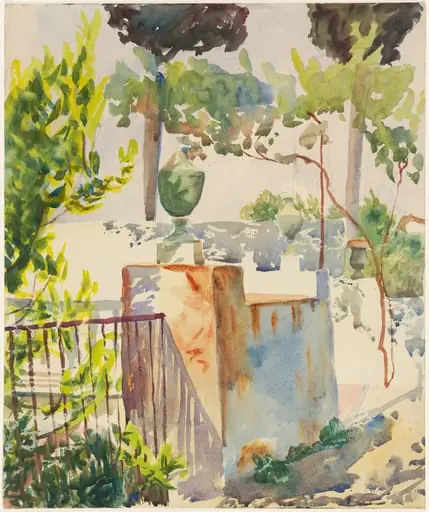
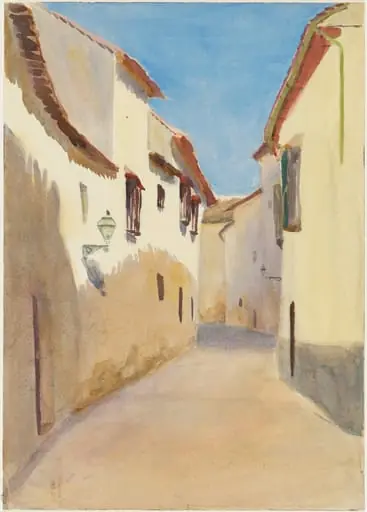
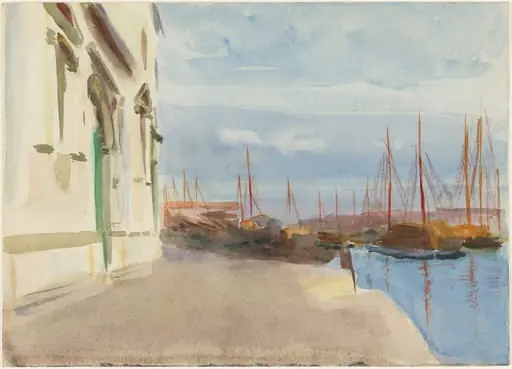
The scene depicts a densely clustered hillside settlement with flat-roofed structures, suggesting the compact urban fabric of Tangier. A narrow river winds through the foreground, mirroring the buildings and dotted with small human figures. The composition conveys a quiet, everyday rhythm of life, emphasizing the relationship between architecture, landscape, and human presence without overt narrative or symbolism.
Technique & Style
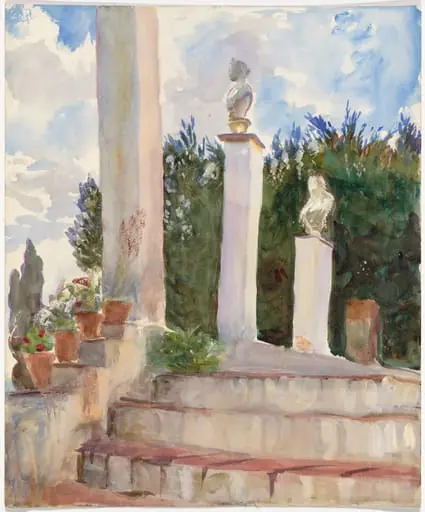
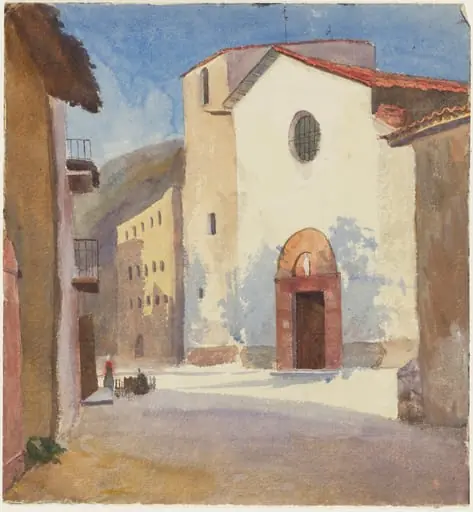
Sargent employed watercolor with loose, fluid brushstrokes, allowing colors to bleed and blend naturally on the paper. She avoided sharp outlines, instead building form through subtle gradations of yellow, brown, blue, and muted green. The transparency of the medium enhanced the play of light, creating soft shadows and reflections that mimic the hazy quality of Mediterranean daylight.
History & Provenance
The work was completed during Sargent’s travels in North Africa and entered the National Gallery of Art’s collection through the A.W. Mellon Educational and Charitable Trust. Its preservation in a major American institution reflects early 20th-century interest in European and American artists’ responses to non-Western landscapes, though it was not widely exhibited during her lifetime.
Context
In the early 1900s, Western artists increasingly traveled to North Africa, drawn by its light, architecture, and cultural difference. Sargent’s watercolor aligns with this trend, yet avoids exoticism. Her approach is observational rather than romanticized, situating Tangier within a broader tradition of plein-air watercolor practice common among artists of her generation seeking spontaneity over studio polish.
Legacy
Tangier remains a quiet example of Sargent’s skill in watercolor, illustrating her ability to convey place with restraint and sensitivity. While not central to her public reputation, the work contributes to understanding the breadth of her output beyond portraiture. It continues to be studied for its technical economy and its understated depiction of a foreign landscape through a personal, intimate lens.
Own this work as a print
Artist & collection