Artwork
A Loggia
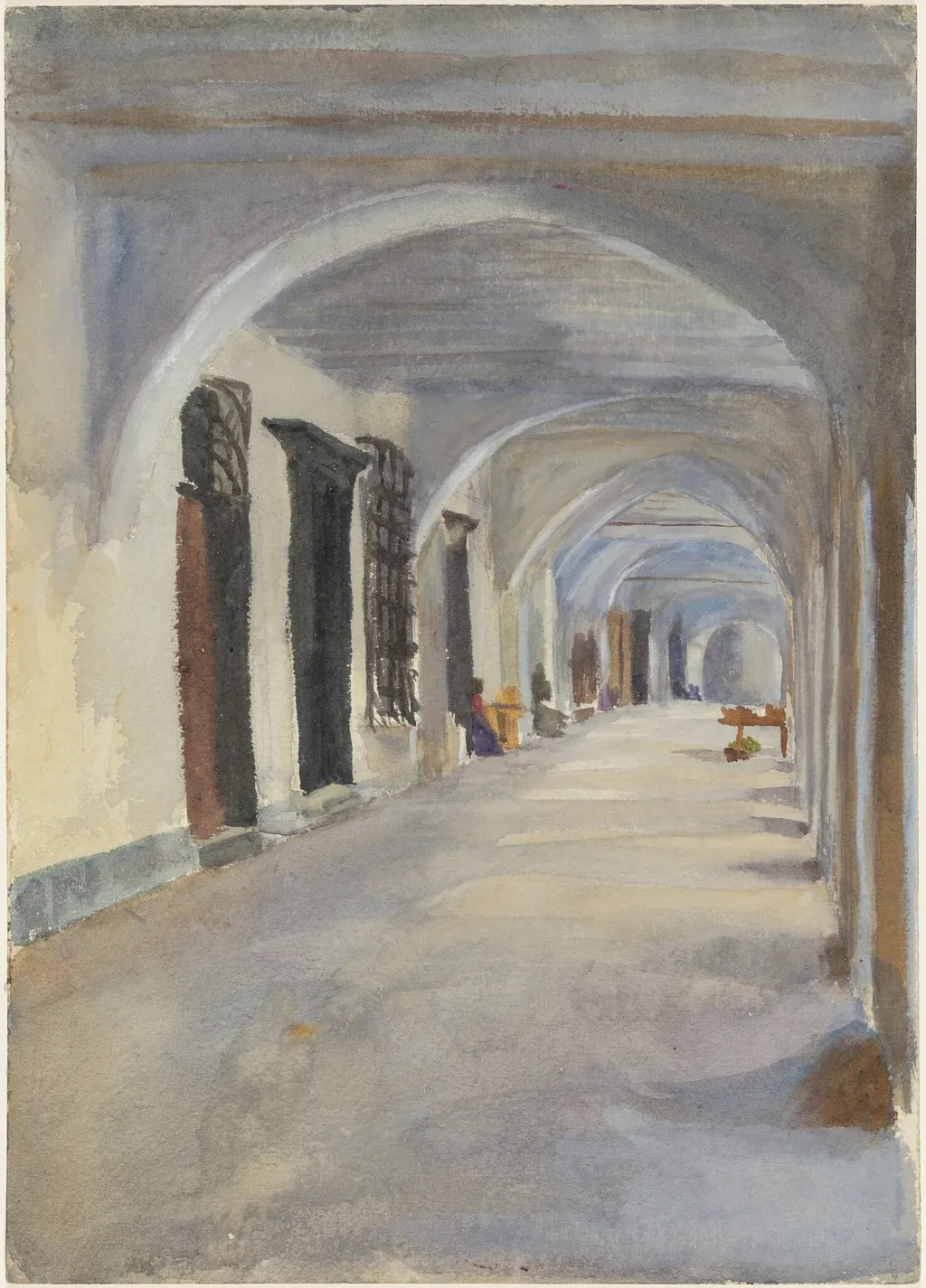
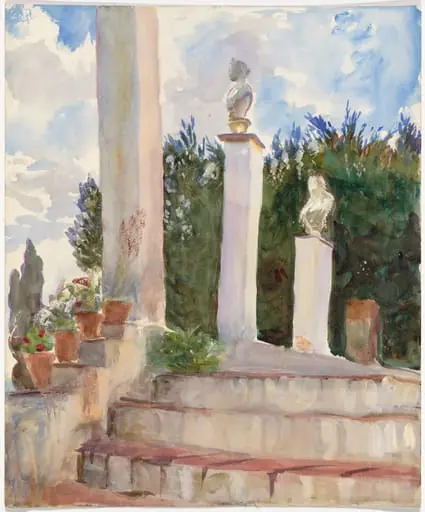
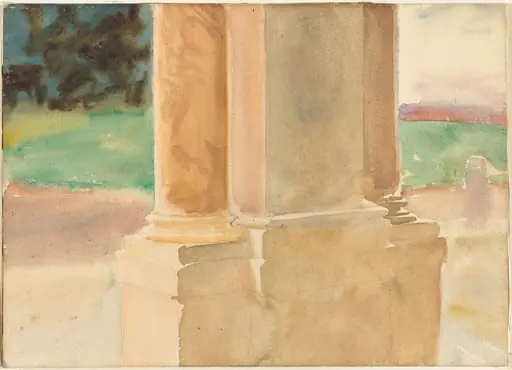
A Loggia is a watercolor drawing by Emily Sargent. It dates from 1901 and is held in the collection of the National Gallery of Art.
About this work
Overview
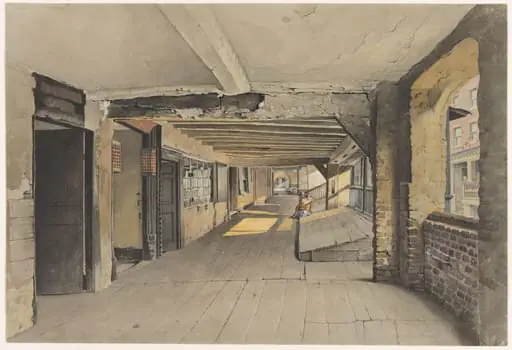
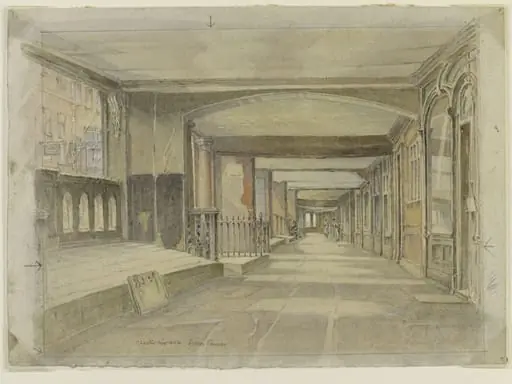
Emily Sargent’s 1901 watercolor entitled *A Loggia* depicts an elongated, arched passageway rendered in a restrained palette. The composition is anchored by stark white walls and a muted gray floor, punctuated by a series of windows and doors that admit diffused light. Sparse furnishings appear intermittently, contributing to an overall sense of quiet interior space.
Subject & Meaning
The work presents a domestic architectural element—a loggia or covered gallery—inviting contemplation of the interplay between interior and exterior realms. By emphasizing the emptiness of the corridor and the subtle illumination, the painting evokes a tranquil atmosphere, suggesting a pause in daily life where light and space become the primary focus.
Technique & Style
Executed in watercolor, Sargent employs loose, impressionistic brushwork that softens edges and blends tones. Muted hues of gray, white, and faint earth tones convey atmospheric depth, while delicate washes capture the shifting patterns of light and shadow across the floor and walls. The handling of pigment creates a sense of spatial recession without relying on precise detail.
History & Provenance
Created in the early twentieth century, *A Loggia* entered the collection of the National Gallery of Art in Washington, D.C., where it remains on view. The acquisition reflects the museum’s interest in American watercolor practice of the period, and the piece stands as a representative example of Sargent’s oeuvre during her mature phase.
Own this work as a print
Artist & collection