Artwork
A Bridge and Campanile, Venice
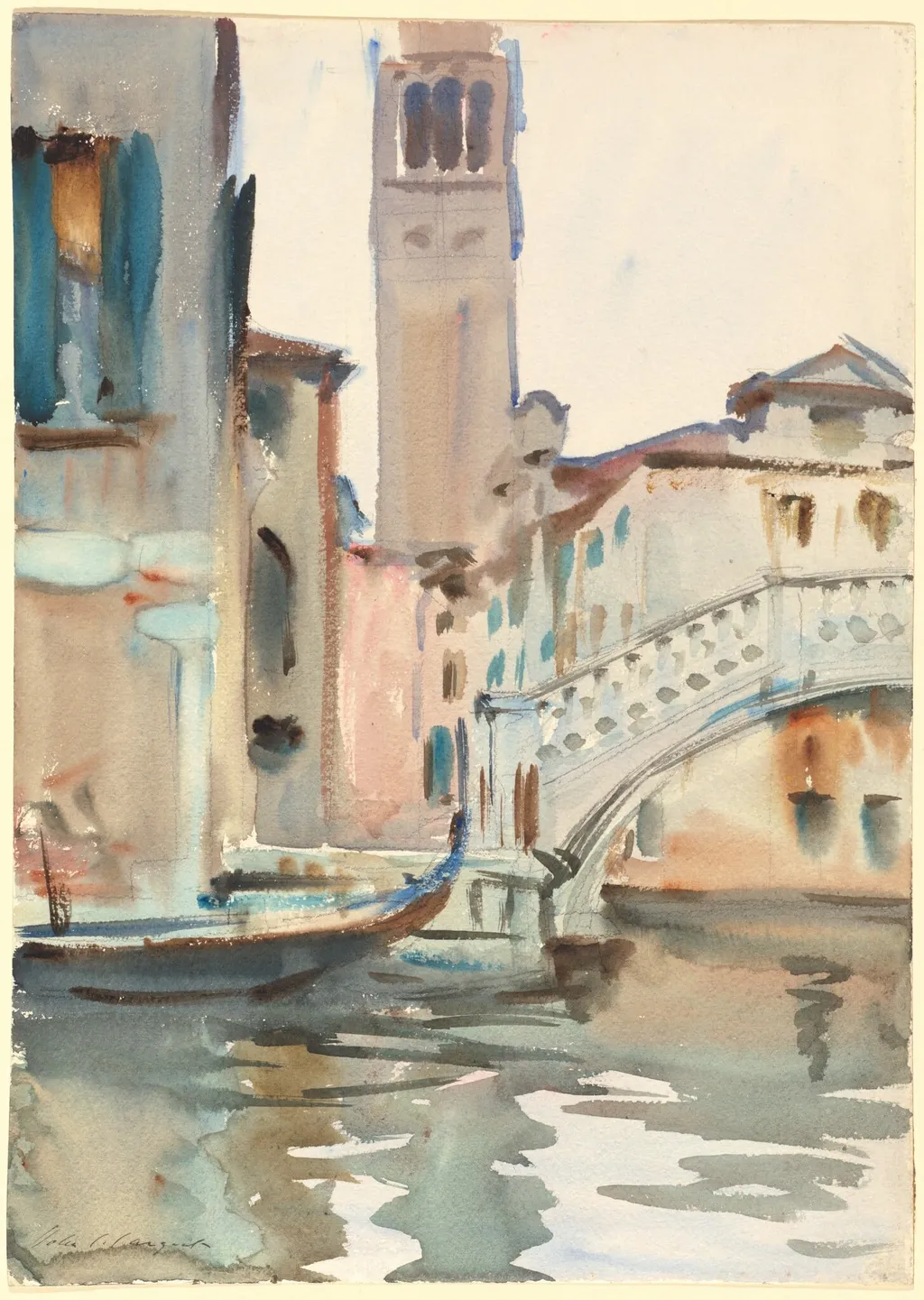
A Bridge and Campanile, Venice is a chalk drawing by John Singer Sargent. It dates from 1903 and is held in the collection of the National Gallery of Art.
About this work
Overview
It belongs to a large corpus of watercolors he produced outside his formal portraiture, capturing transient effects of light and atmosphere in urban landscapes.
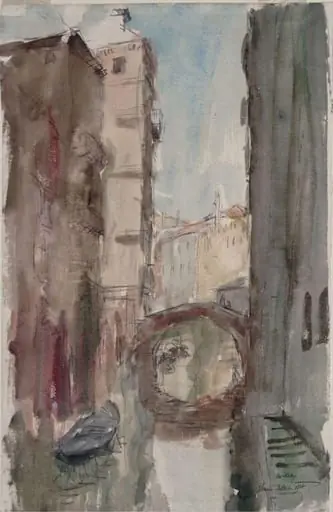
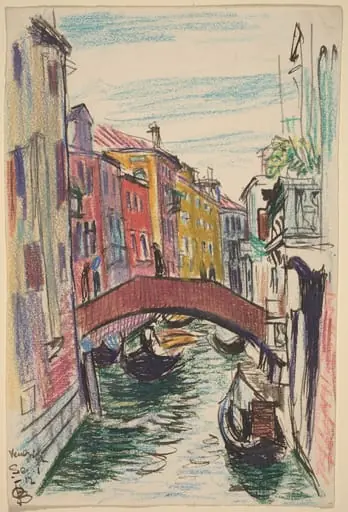
Created in 1903, this watercolor drawing by John Singer Sargent depicts a Venetian bridge and its accompanying bell tower. Executed on thick wove paper with black chalk underdrawing and layered watercolor, the work exemplifies Sargent’s mastery of the medium during his frequent travels across Europe. It belongs to a large corpus of watercolors he produced outside his formal portraiture, capturing transient effects of light and atmosphere in urban landscapes.
Subject & Meaning
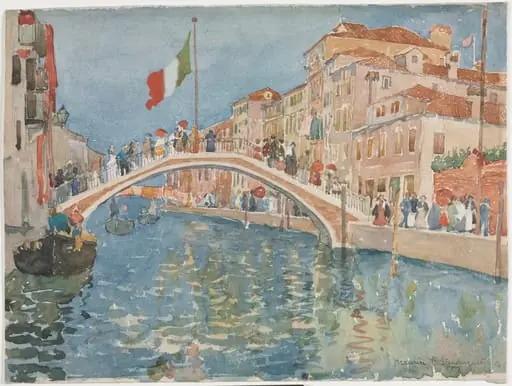
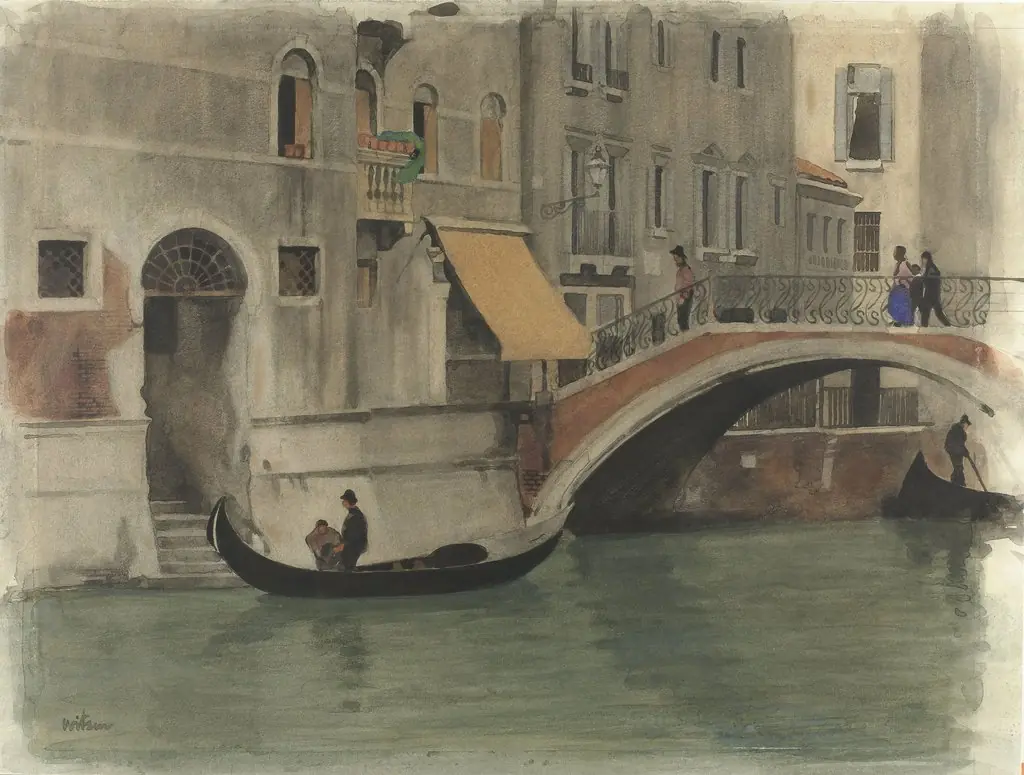
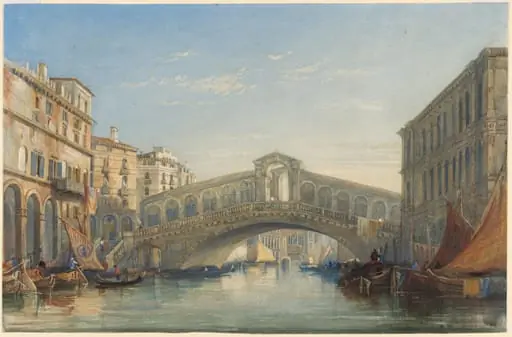
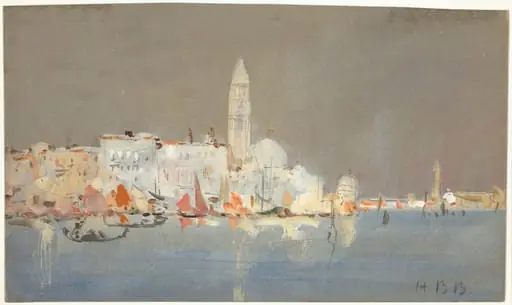
The scene portrays a quiet moment in Venice: a stone bridge arches over a canal, with the campanile rising behind it. A gondola glides beneath, its dark form contrasting with the pale, reflective water. The composition emphasizes spatial depth and the interplay of architecture and water, suggesting the rhythm of daily life in the city. There is no narrative focus—instead, the work invites contemplation of place and light.
Technique & Style
Sargent employed black chalk to define structural elements, then applied watercolor in thin, translucent washes to suggest color and luminosity. He left areas of the paper bare to capture highlights on water and stone, using wet-on-wet techniques to blur edges and mimic atmospheric haze. The brushwork is swift yet deliberate, conveying movement in the water and the softness of weathered masonry without overworking the surface.
History & Provenance
Painted during one of Sargent’s many visits to Venice, the work was likely made on-site as part of his routine sketching practice. It remained in his personal collection until his death in 1925, after which it entered a private collection. Its current location reflects its status as a documented part of his watercolor oeuvre, though it has not been widely exhibited compared to his portraits.
Context
In the early 20th century, Sargent turned increasingly to watercolor as a means of personal expression, away from the demands of portrait commissions. Venice, with its light-dappled canals and crumbling architecture, offered ideal subjects for his explorations of transparency and reflection. His watercolors from this period align with broader European trends favoring immediacy and sensory observation over academic precision.
Legacy
This drawing contributes to Sargent’s reputation as one of the most accomplished watercolorists of his time. His ability to convey atmosphere with minimal strokes influenced later generations of American landscape painters. Though less celebrated than his oils, his Venetian watercolors remain vital for their technical innovation and quiet sensitivity to place.
Own this work as a print
Artist & collection

Artist
John Singer Sargent (; January 12, 1856 – April 15, 1925) was an American expatriate artist, considered the "leading portrait painter of his generation" for his evocations of Belle Époque and Edwardian-era luxury.