Artwork
The Rialto Bridge, Venice
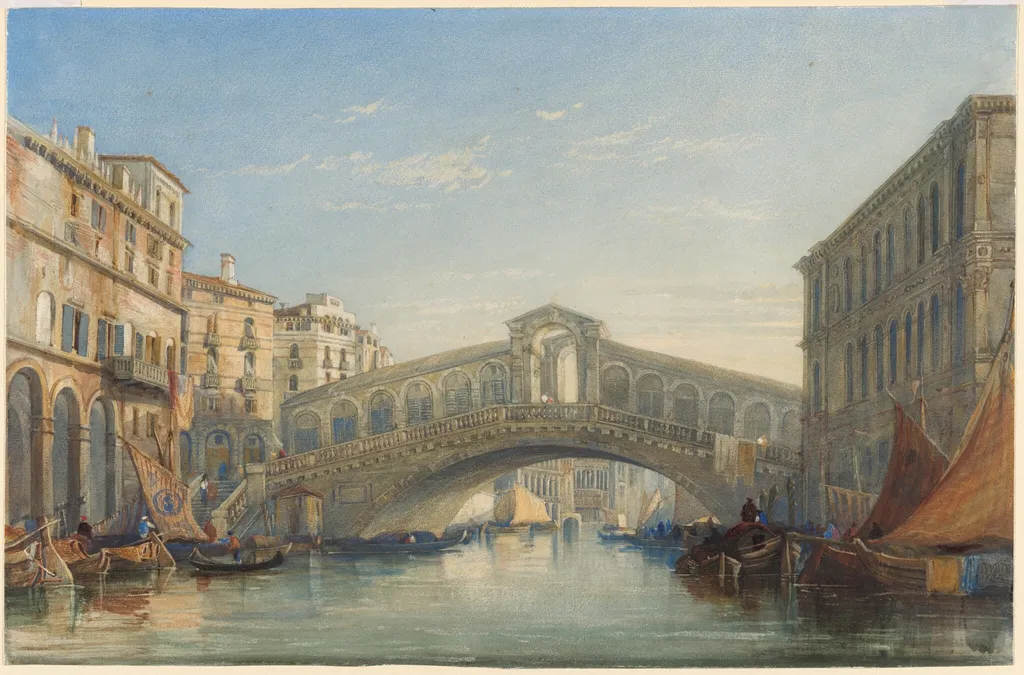
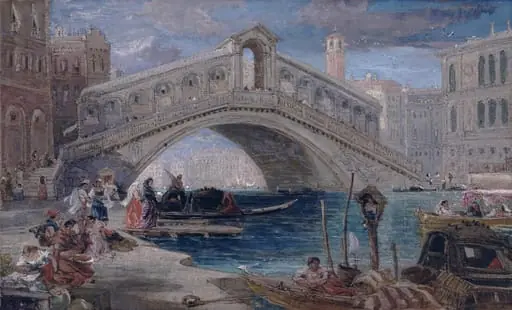
The Rialto Bridge, Venice is a watercolor drawing by the Romanticist artist William James Müller. It dates from 1835 and is held in the collection of the National Gallery of Art.
About this work
Overview
Executed on wove paper, the work belongs to the National Gallery of Art in Washington, D.
Created in 1835, this drawing by William James Müller depicts the Rialto Bridge in Venice using watercolor and gouache over graphite, with selective scratching to refine details. Executed on wove paper, the work belongs to the National Gallery of Art in Washington, D.C. It reflects Müller’s interest in Italian urban landscapes during his travels in the 1830s, capturing the bridge not as a grand monument but as a lived-in architectural element within its environment.
Subject & Meaning
The Rialto Bridge is portrayed with attention to its structural complexity and the activity along its edges—figures, boats, and surrounding buildings suggest daily commerce and movement. Rather than idealizing the scene, Müller emphasizes its functional character, conveying Venice as a working city. The composition avoids romanticized grandeur, instead offering a quiet, observational record of a key urban crossing in the early 19th century.
Technique & Style
Müller layered watercolor with opaque gouache to build texture and contrast, using graphite underdrawing for precision. Scratching into the paper revealed lighter tones, enhancing highlights on stone and water. This method allowed for both atmospheric washes and sharp, defined edges, characteristic of topographical drawings of the period. His approach balances spontaneity with control, reflecting a practice rooted in direct observation rather than studio reconstruction.
History & Provenance
The drawing was produced during Müller’s travels in Italy between 1834 and 1836, a period when British artists increasingly sought subjects in Venice for their light and architectural variety. It entered the National Gallery of Art’s collection through the A.W. Mellon Bequest in 1937. Its preservation in good condition offers insight into the working methods of 19th-century British watercolorists who documented European cities with both scientific and aesthetic intent.
Context
In the 1830s, watercolor drawing was a respected medium for topographical and travel records, especially among British artists. Müller’s work aligns with a broader trend of documenting Venice’s urban fabric as it transitioned from a historic republic to a modern city. Unlike contemporaries who emphasized romantic decay, Müller focused on the bridge’s active role in civic life, reflecting a shift toward realism in travel art of the period.
Legacy
Though not widely exhibited, Müller’s Rialto Bridge drawing remains a representative example of mid-19th-century British topographical watercolor. It contributes to the understanding of how artists engaged with Italian cities not as picturesque ruins but as evolving environments. The work’s technical clarity and restrained palette continue to inform studies of travel drawing as a form of visual documentation during the early Victorian era.
Artist & collection


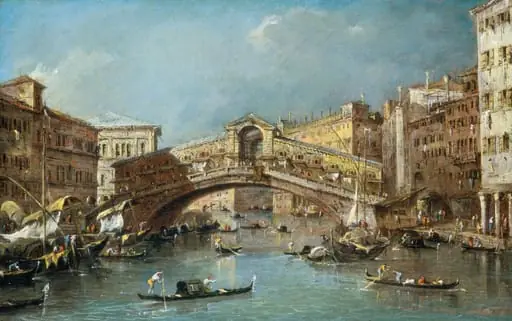 Rialto Bridge, Venice
 The Rialto, Venice
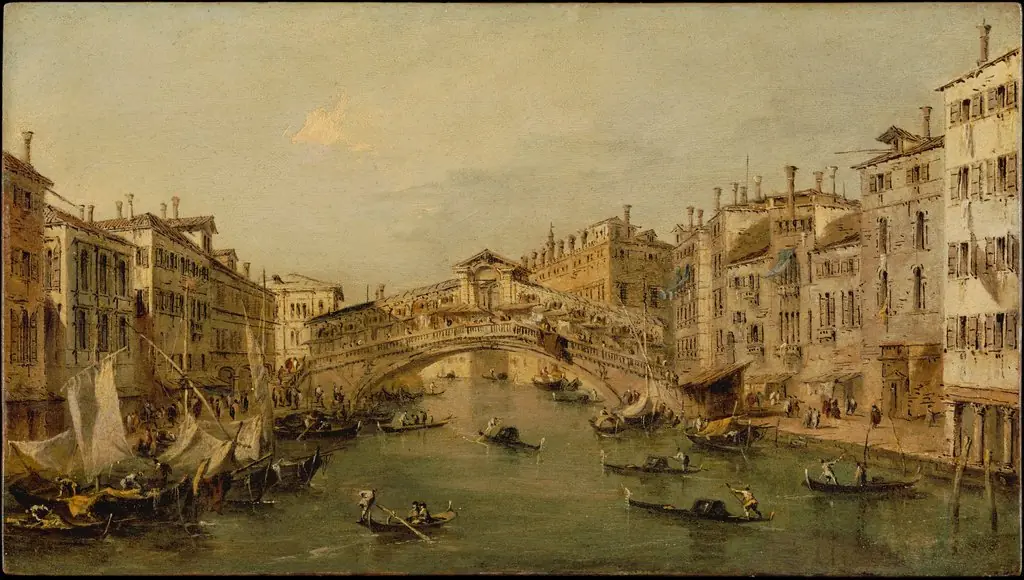 Venice: The Rialto
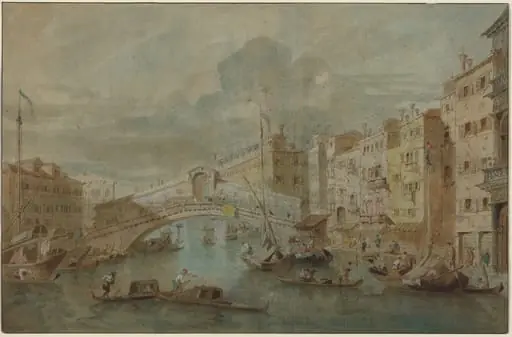 View of the Rialto Bridge, Venice
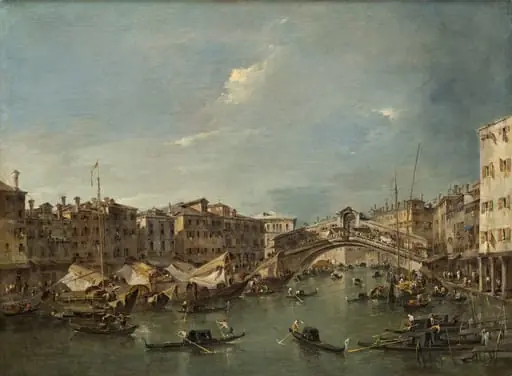 Grand Canal with the Rialto Bridge, Venice
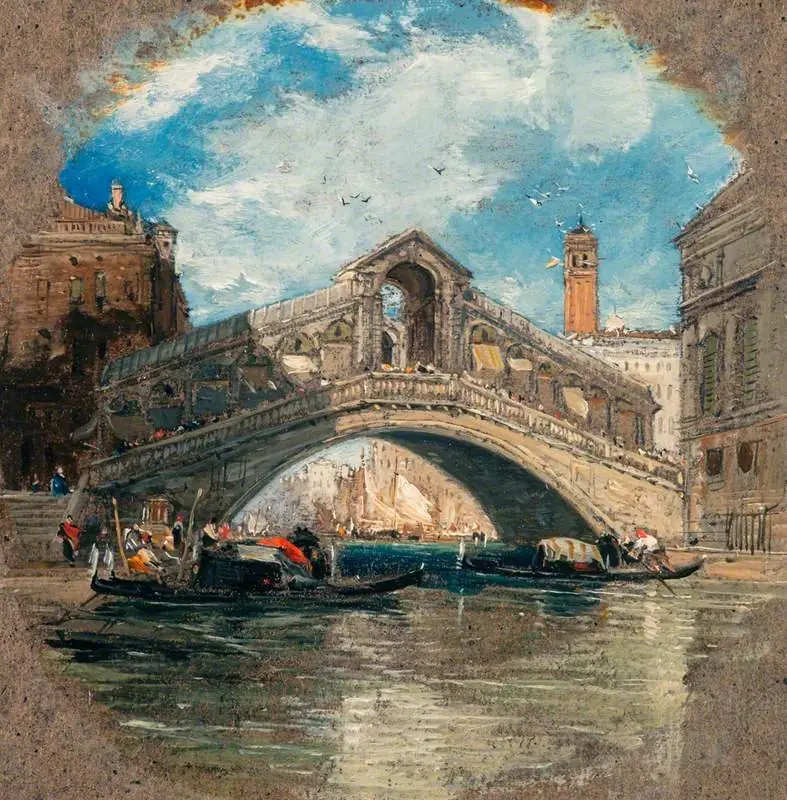 The Rialto, Venice
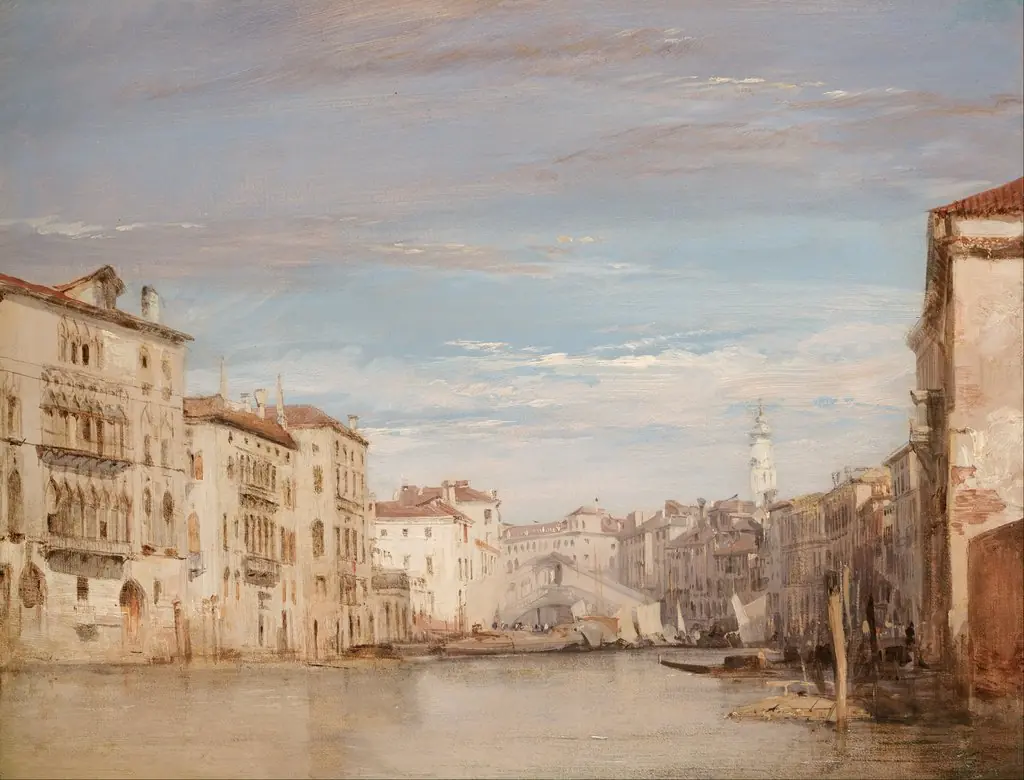 The Grand Canal, Venice, Looking Toward the Rialto
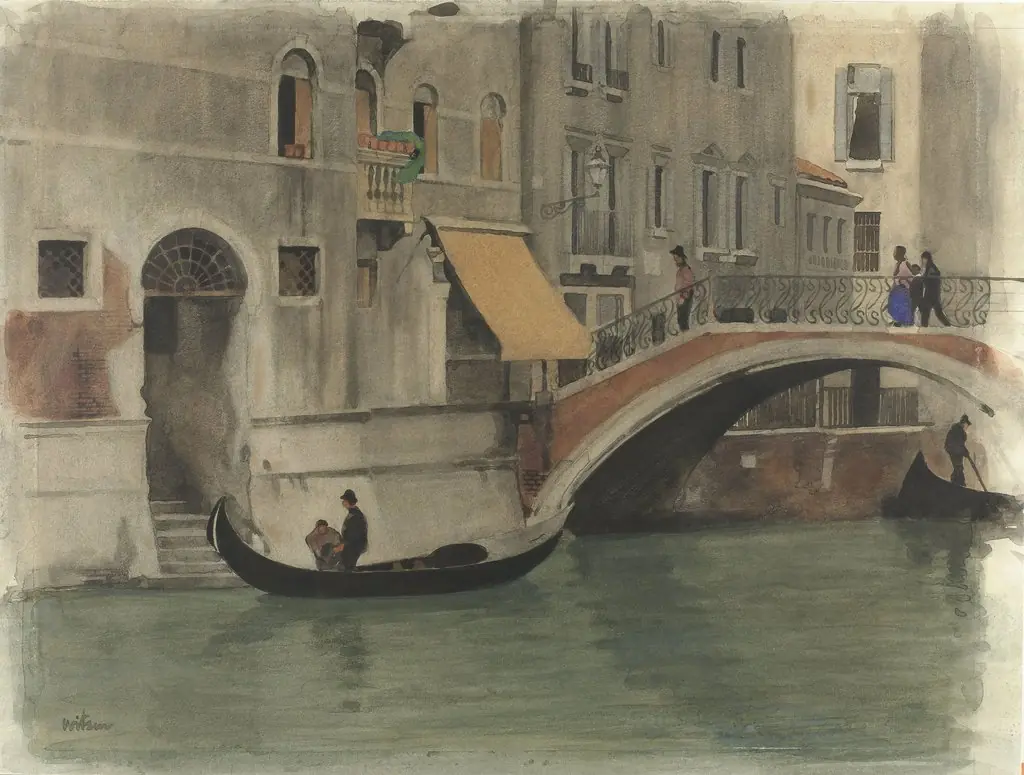 Bridge over a canal in Venice
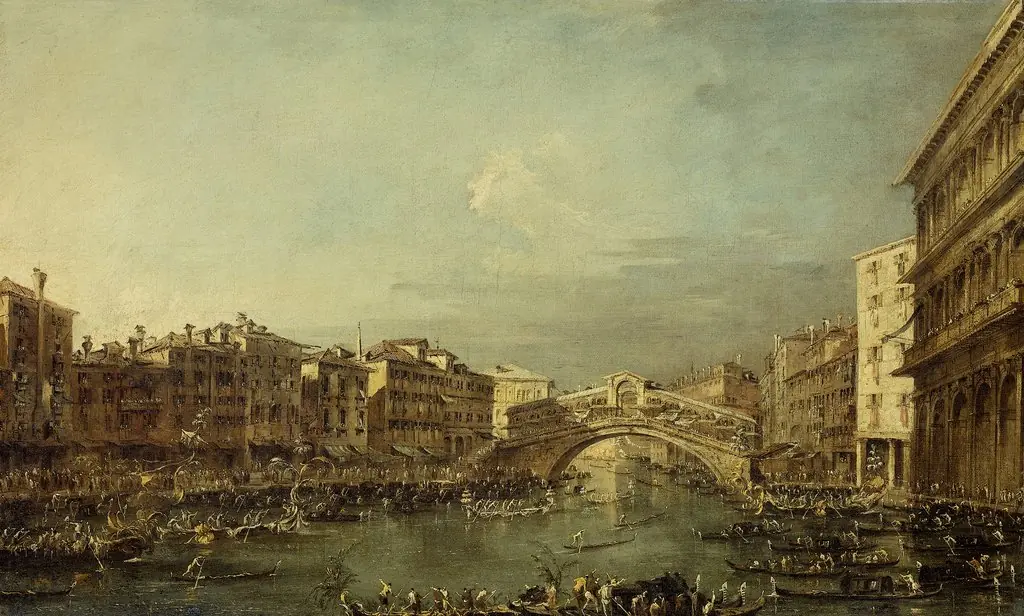 A Regatta on the Grand Canal with the Rialto Bridge in Venice
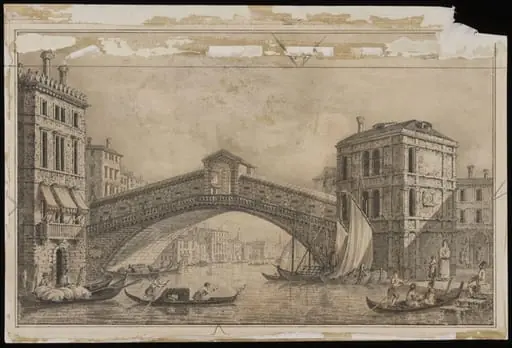 Ponte di Rialto, Venice
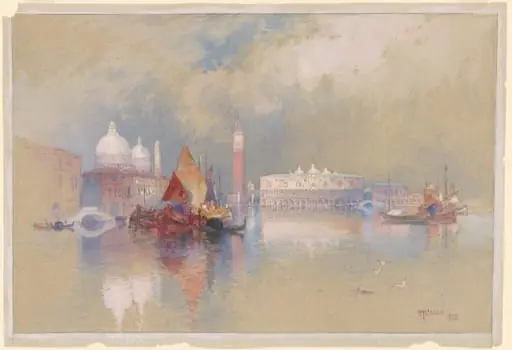 View of Venice