Artwork
Bedouin Women
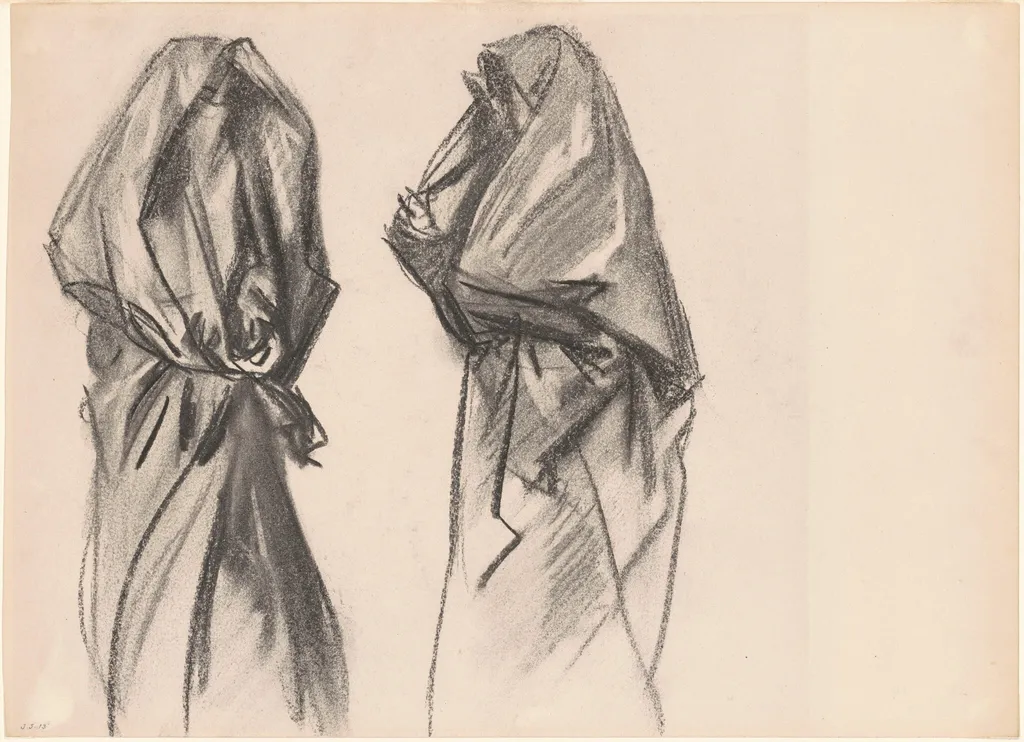
Bedouin Women is a charcoal drawing by the Impressionist artist John Singer Sargent. It dates from 1890 and is held in the collection of the National Gallery of Art.
About this work
Overview
Created in 1890, this charcoal drawing by John Singer Sargent captures two Bedouin women during one of his travels in the Middle East.
Created in 1890, this charcoal drawing by John Singer Sargent captures two Bedouin women during one of his travels in the Middle East. Executed on wove paper, it belongs to a large body of sketches made outside his formal portrait commissions. Sargent, an American raised in Europe, used drawing as a means to record fleeting moments observed in diverse cultural settings, often prioritizing observation over narrative.
Subject & Meaning
The figures are anonymous, their identities obscured by veils and shadow, emphasizing their roles as members of a nomadic community rather than individual portraits. The focus on posture and drapery suggests an interest in cultural presence rather than personal expression. The women’s stillness amid flowing garments conveys a quiet dignity, rooted in daily life rather than staged performance.
Technique & Style
Sargent employed charcoal with controlled urgency, using sharp, deliberate strokes to define the complex folds of fabric while leaving facial features softly blurred. The contrast between crisp textile textures and indistinct features directs attention to the interplay of light and material. His handling suggests rapid observation, yet each mark is intentional, revealing a mastery of tonal gradation and spatial suggestion.
History & Provenance
The drawing emerged from Sargent’s extensive sketching trips through the Levant and North Africa in the late 19th century, undertaken between major portrait commissions. It remained in his personal collection until his death in 1925, after which it entered institutional holdings as part of a broader bequest of his graphic works, preserving its status as a private study rather than a public commission.
Context
During this period, European artists increasingly turned to the Middle East as a site of ethnographic curiosity and aesthetic inspiration. Sargent’s approach avoided exoticism, favoring direct observation over romanticized tropes. His drawings from this region reflect a broader shift in artistic practice: documentation grounded in firsthand experience, not studio reconstruction or colonial fantasy.
Legacy
This work exemplifies Sargent’s commitment to drawing as a vital, independent discipline—not merely preparatory but a complete expression of perception. It influenced later generations of artists who valued immediacy and tonal precision in sketching. As part of his extensive graphic oeuvre, it remains a quiet testament to his ability to capture presence through minimal means.
Artist & collection
Artist
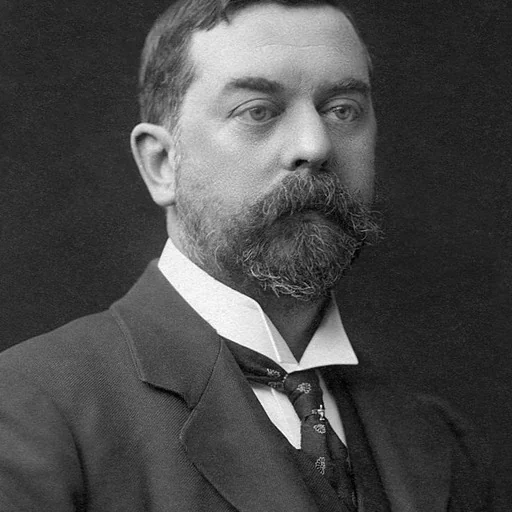
John Singer Sargent (; January 12, 1856 – April 15, 1925) was an American expatriate artist, considered the "leading portrait painter of his generation" for his evocations of Belle Époque and Edwardian-era luxury.

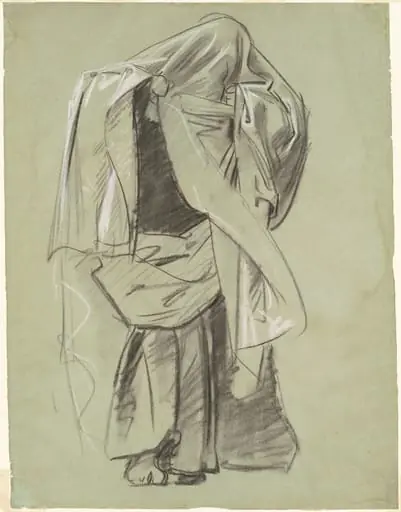 Study for "Frieze of Prophets"
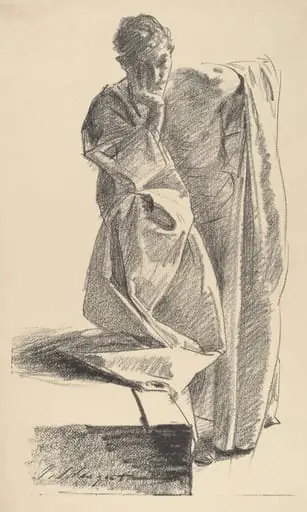 Study of a Young Man in a Robe, Standing
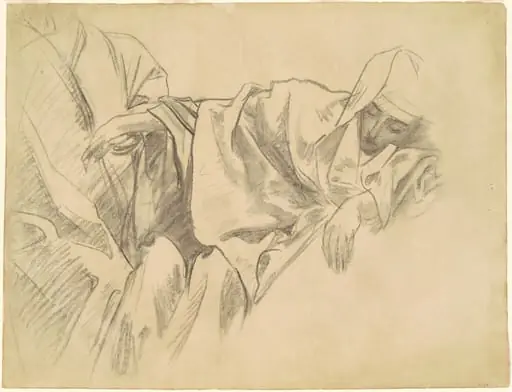 Study of the Crucifixion for "Fifteen Mysteries of the Rosary"
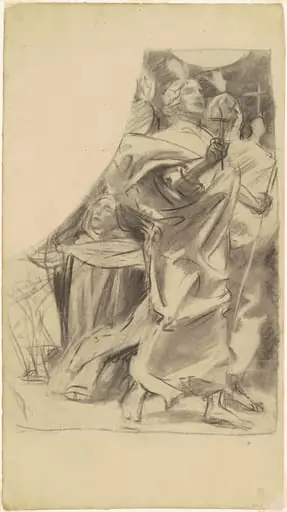 Study for "Triumph of Religion"
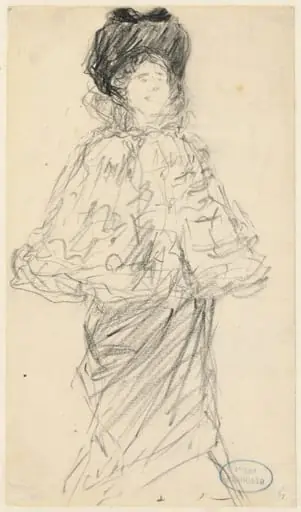 Standing Woman
![Man Wearing a Cloak [recto], by Edouard Manet](https://artifactworldgallery.com/img/edouard-manet--man-wearing-a-cloak-recto--6f165c0376318d82-w320.webp) Man Wearing a Cloak [recto]
Man Wearing a Cloak [recto]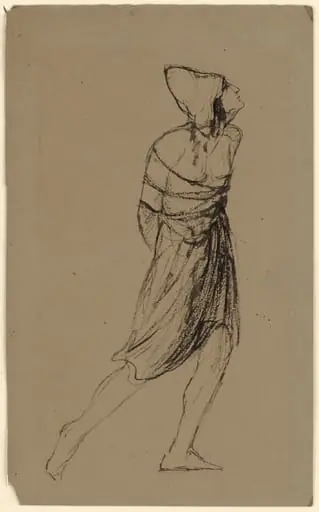 Untitled
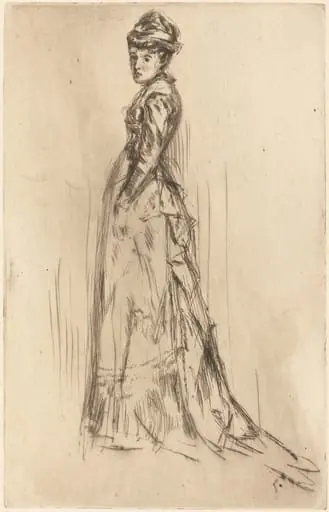 The Silk Dress
![Man Wearing a Cloak [verso], by Edouard Manet](https://artifactworldgallery.com/img/edouard-manet--man-wearing-a-cloak-verso--0bd057994533d120-w320.webp) Man Wearing a Cloak [verso]
Man Wearing a Cloak [verso]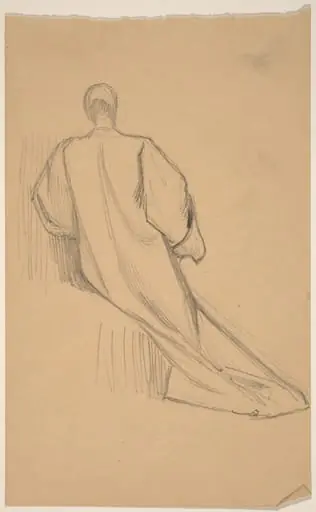 Study of a Figure from Behind
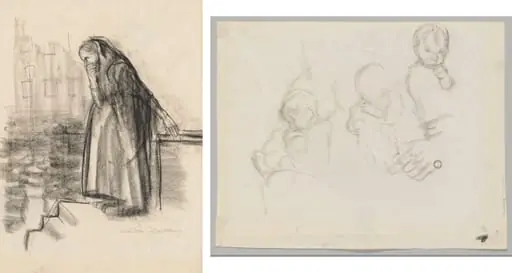 Pregnant Woman Contemplating Suicide (recto) Three Studies of a Child (verso)
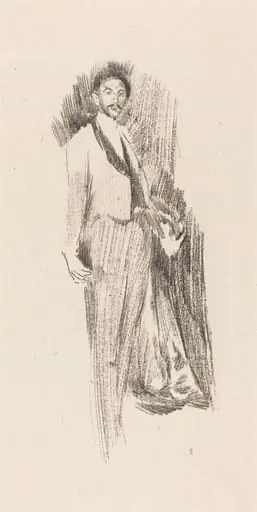 Count Robert de Montesquiou