Artwork
Pregnant Woman Contemplating Suicide (recto) Three Studies of a Child (verso)
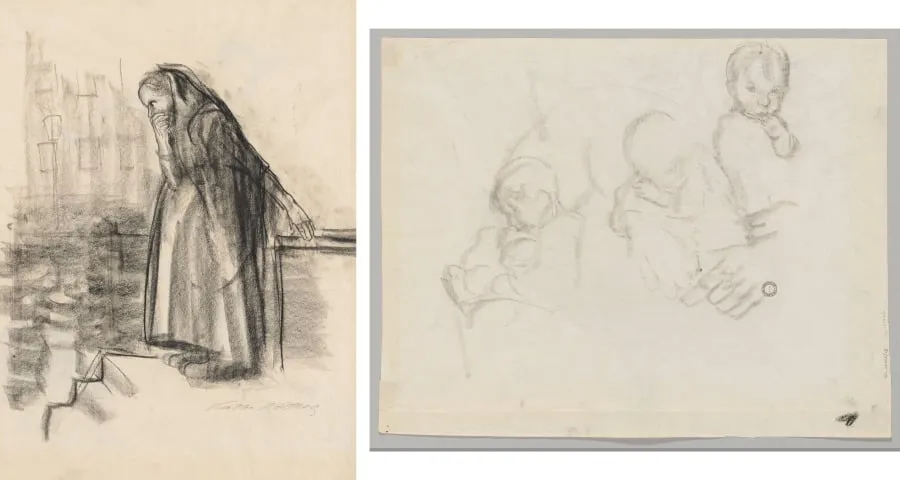
Pregnant Woman Contemplating Suicide (recto) Three Studies of a Child (verso) is a drawing by Käthe Kollwitz. It dates from 1926 and is held in the collection of the Cleveland Museum of Art.
About this work
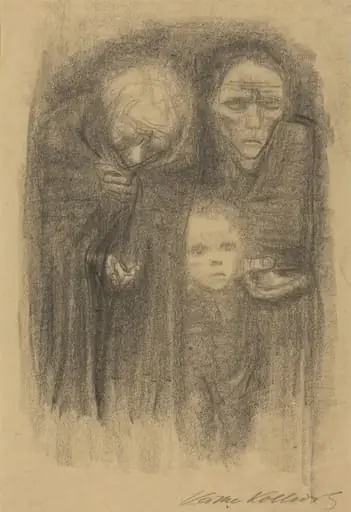
Instead, she showed the quiet suffering of those left behind—mothers, widows, children.
A woman stands alone, her hands pressed to her face, her body heavy with grief. She’s pregnant, her belly round under a simple dress. The lines are rough, almost urgent—just enough to show her pain.
Käthe Kollwitz drew this after World War I, when Germany was broken. She didn’t paint heroes or battles. Instead, she showed the quiet suffering of those left behind—mothers, widows, children. This sketch was private, never meant for display. It feels raw because it was.
To see more of her work, look up Käthe Kollwitz (German, 1867–1945).
Overview
Pregnant Woman Contemplating Suicide (recto) and Three Studies of a Child (verso) is a dual drawing by Käthe Kollwitz, characterized by a frank, emotional naturalism. The recto depicts a pregnant woman overwhelmed by grief, conveyed through sparse, bold crayon strokes.
Subject & Meaning
The pregnant woman on the recto serves as a universal emblem of human sorrow, reflecting the artist's focus on the plight of those affected by loss and hardship, particularly after World War I. This theme was deeply personal, following the death of Kollwitz's son Peter in the war.
Technique & Style
Kollwitz employed a minimalist approach with rough, urgent crayon lines to express the woman's despair, prioritizing emotional intensity over detail. This stark style contrasts with the contemporaneous artistic trends.
History & Provenance
Created post-World War I, this private sketch was not intended for public display, contributing to its raw, intimate quality. It reflects Kollwitz's post-war thematic shift towards depicting the silent suffering of civilians, especially mothers and widows.
Context
Against the backdrop of a devastated post-war Germany, Kollwitz's work diverged from typical war art by highlighting the unspoken struggles of the home front rather than heroic or military themes.
Artist & collection
Artist
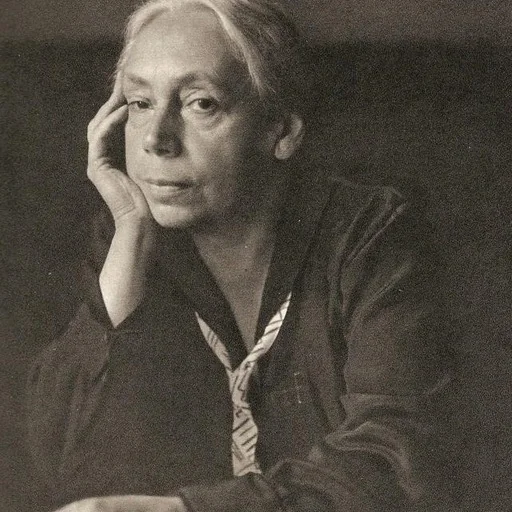
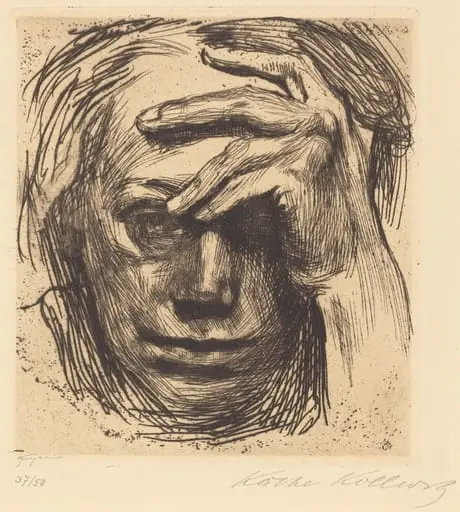
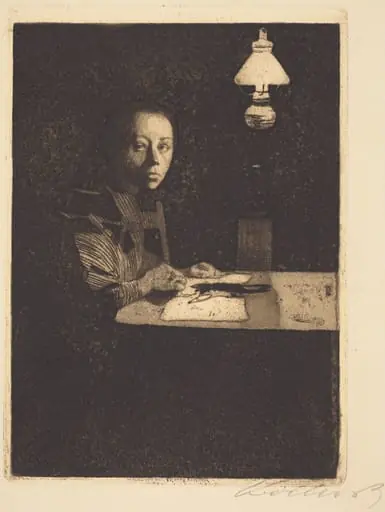
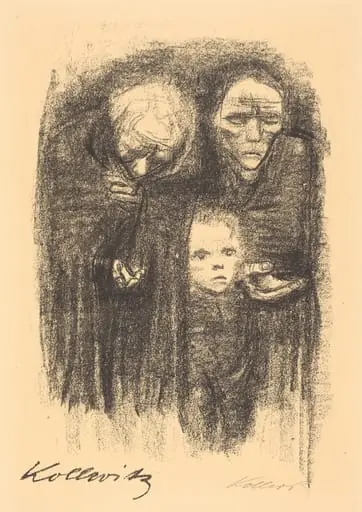
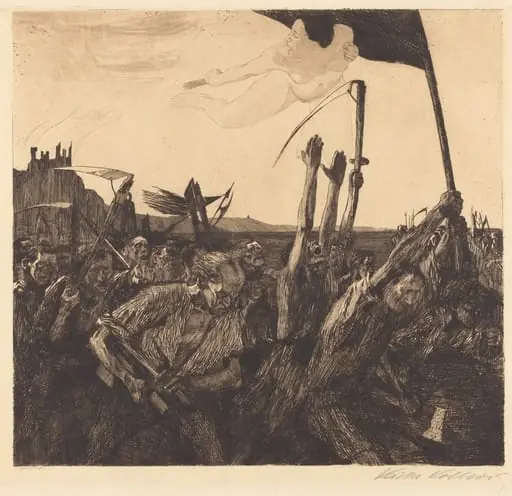
Käthe Kollwitz (German pronunciation: born Schmidt; 8 July 1867 – 22 April 1945) was a German artist who worked with painting, printmaking (including etching, lithography and woodcuts) and sculpture.

 Soldier in a Trench (recto) Reclining Woman (verso)
 Study of a Female Nude (possibly for an unrealized allegorical painting) (recto); Studies of Drapery and Study of a Landscape (verso)
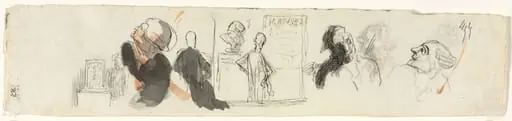 Sketches of Various Figures (verso)
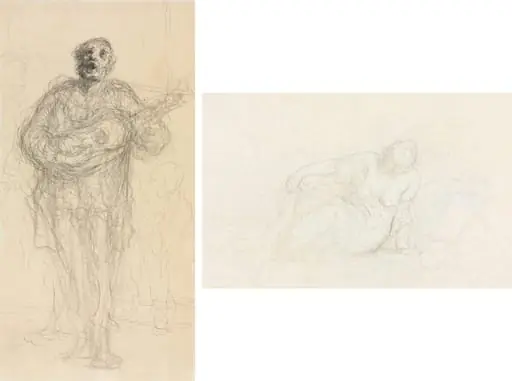 Singing Guitarist (recto); Reclining Woman Leaning on Her Arm (verso)
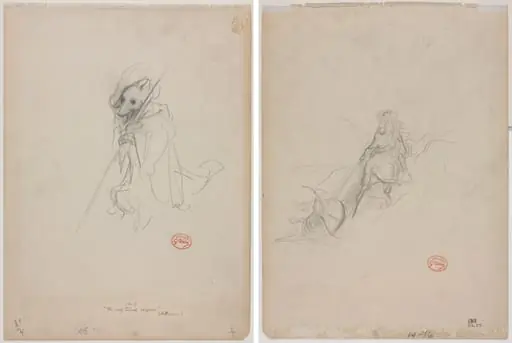 Sketch for "The Wolf Turned Shepherd" (recto) Sketch of Hunting Scene (verso)
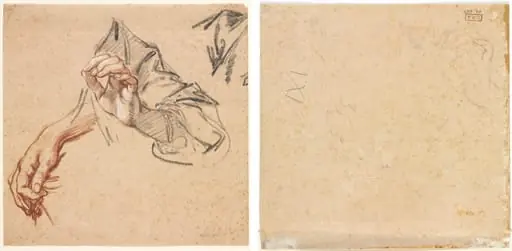 Study of Hands (recto); Sketch of a Hand (verso)
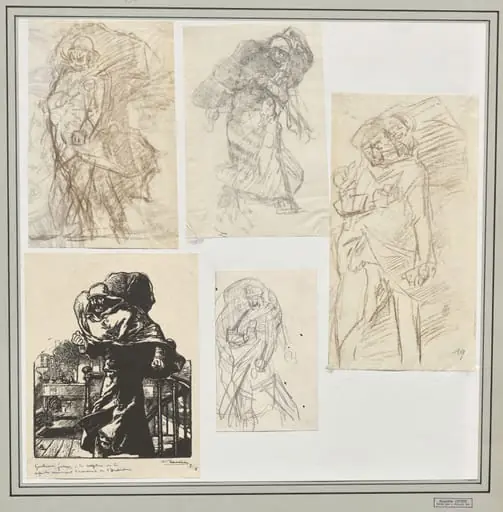 L'Empereur Guillaume, furierx...
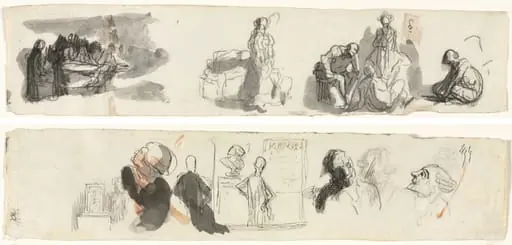 Sheet of Studies with a Group of Four Figures to the Right (recto) Sketches of Various Figures (verso)
![A Breton Woman and a Standing Man; Head and Hand of a Monkey [recto], by Paul Gauguin](https://artifactworldgallery.com/img/paul-gauguin--a-breton-woman-and-a-standing-man-head-and-hand-of-a-monkey--e35c46eb8cb6c297-w320.webp) A Breton Woman and a Standing Man; Head and Hand of a Monkey [recto]
A Breton Woman and a Standing Man; Head and Hand of a Monkey [recto]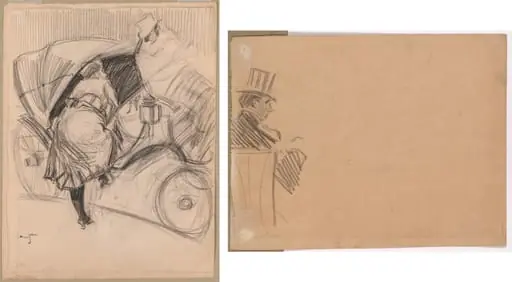 Woman Entering a Fiacre (recto); Right Profile of Man Wearing Tall Hat (verso)
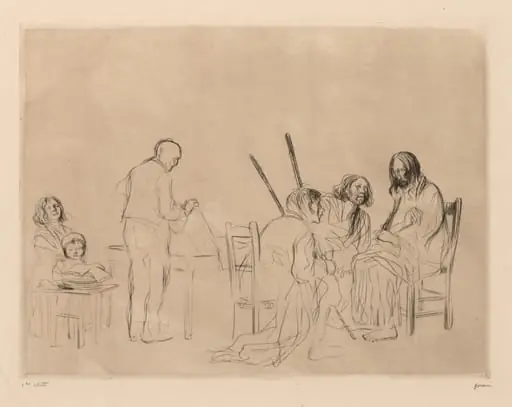 Before the Supper at Emmaus
 Bedouin Women