Artwork
Studies for "Triumph of Religion"
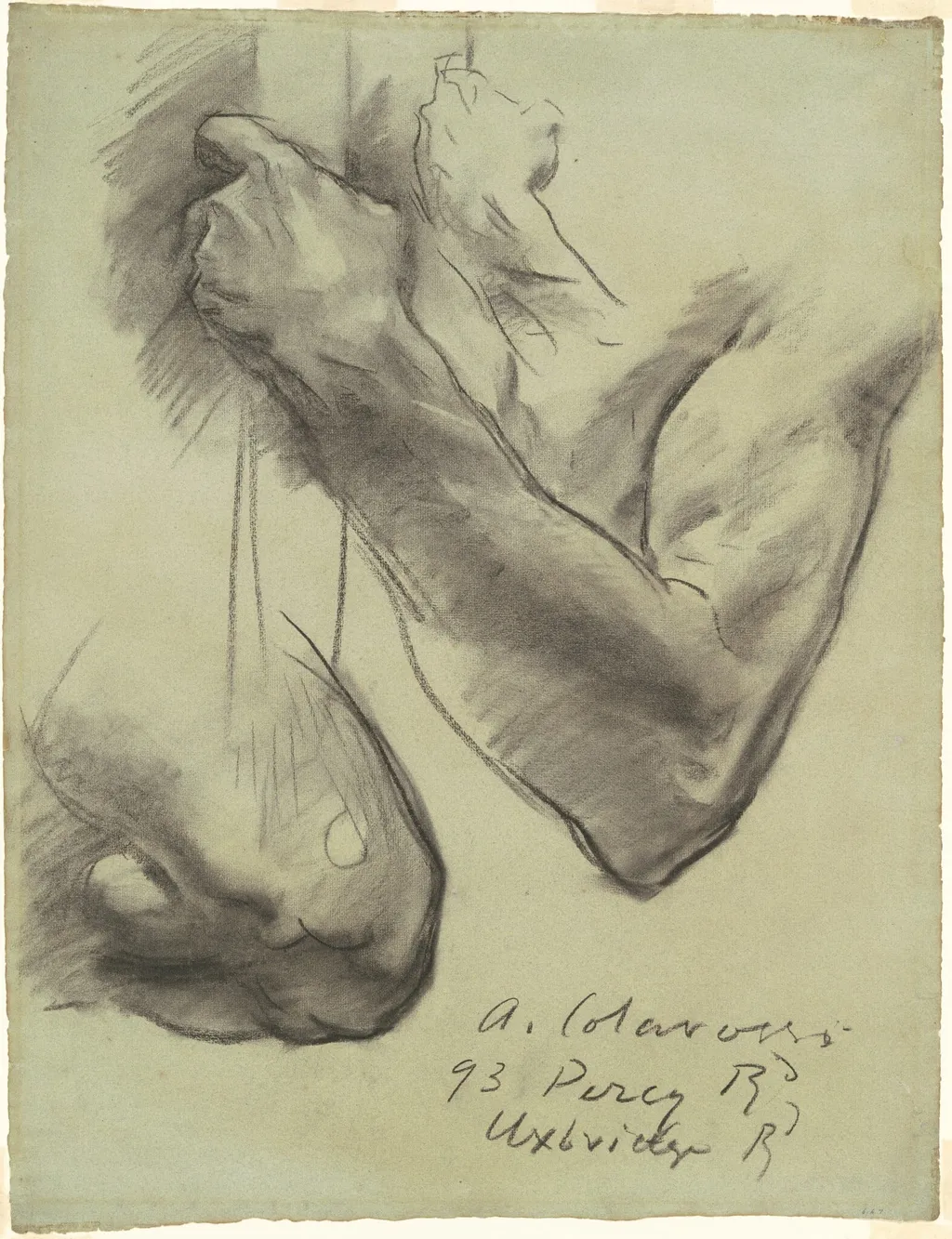
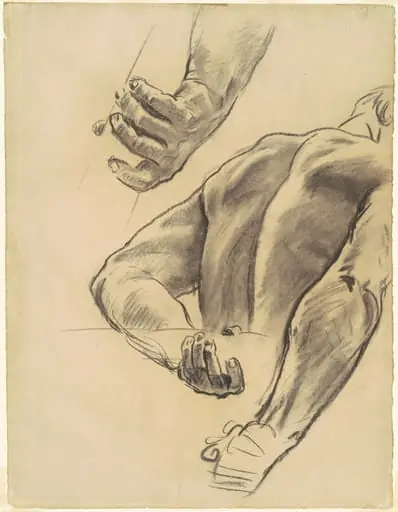
Studies for "Triumph of Religion" is a charcoal drawing by the Impressionist artist John Singer Sargent. It dates from 1904 and is held in the collection of the National Gallery of Art.
About this work
Overview
The work reflects Sargent’s disciplined approach to anatomy, prioritizing structural accuracy over narrative context.
Created between 1891 and 1916, this charcoal drawing is part of John Singer Sargent’s preparatory studies for the larger mural cycle 'Triumph of Religion' at the Boston Public Library. It focuses narrowly on two forearms and hands, isolated from their full figures to examine form and gesture. The work reflects Sargent’s disciplined approach to anatomy, prioritizing structural accuracy over narrative context.
Subject & Meaning
The subject is the human hand and forearm, rendered with intense focus on musculature and bone structure. These limbs, though detached from a body, suggest labor, prayer, or divine action—elements central to the religious theme of the eventual mural. Their weight and tension imply movement and purpose, serving as symbolic vessels of spiritual effort rather than mere anatomical exercises.
Technique & Style
Sargent employed charcoal with precision, using layered hatching and cross-hatching to model volume and texture. The gray paper provided a mid-tone base, allowing him to build shadows and highlights with controlled strokes. His technique avoids smudging, preserving crisp edges that define tendons and muscle groups, revealing a methodical, almost scientific observation of the body.
History & Provenance
This drawing was produced during Sargent’s extended engagement with the Boston Public Library commission, a project that occupied him for over two decades. It remained in his studio until his death, later entering institutional collections as part of a broader archive of preparatory works. Its survival offers rare insight into his process for large-scale religious imagery.
Context
Sargent’s anatomical studies were shaped by his training in Paris and his admiration for Renaissance draftsmanship. While known for portraiture, his work on religious murals demanded a return to classical ideals of the human form. These studies reflect a broader 19th-century revival of academic drawing as a foundation for monumental art, even as modernism began to challenge its dominance.
Legacy
The drawing stands as a testament to Sargent’s commitment to foundational skills, even as his public reputation centered on oil portraits. It continues to be studied for its disciplined rendering of anatomy and its role in the evolution of American mural painting. Though overshadowed by his finished murals, such studies reveal the quiet rigor behind his most ambitious projects.
Artist & collection
Artist
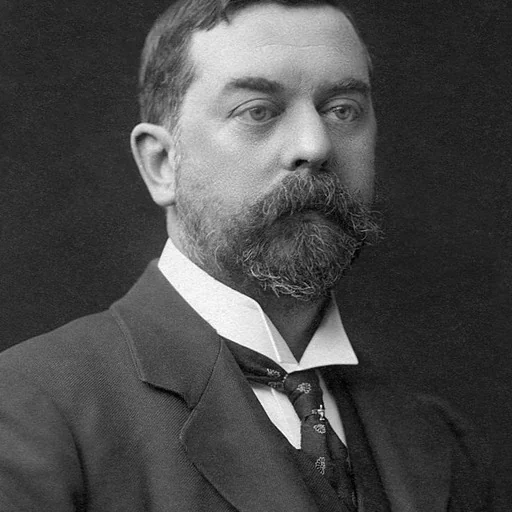
John Singer Sargent (; January 12, 1856 – April 15, 1925) was an American expatriate artist, considered the "leading portrait painter of his generation" for his evocations of Belle Époque and Edwardian-era luxury.


 Studies for "Judgment"
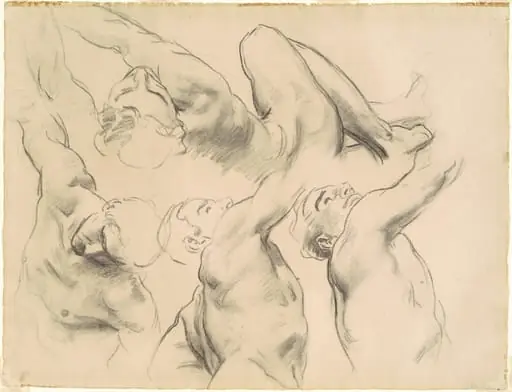 Studies for "Heaven" and "Hell"
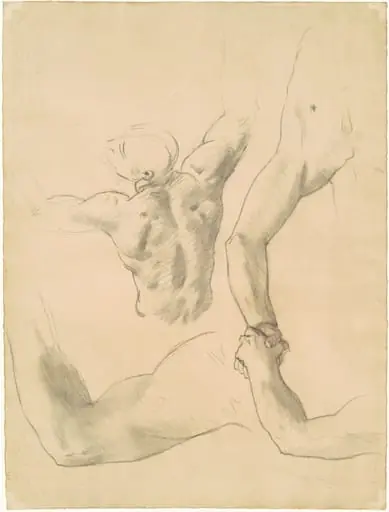 Studies for "Two Classical Male Figures Wrestling"
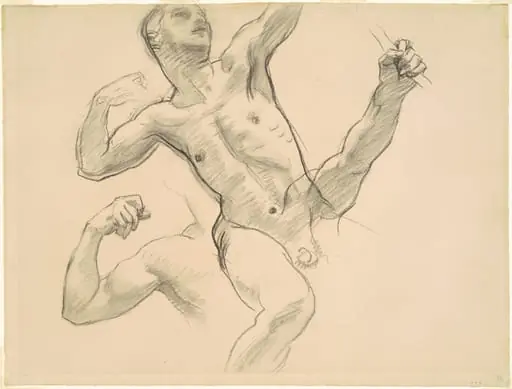 Studies of Achilles for "Chiron and Achilles"
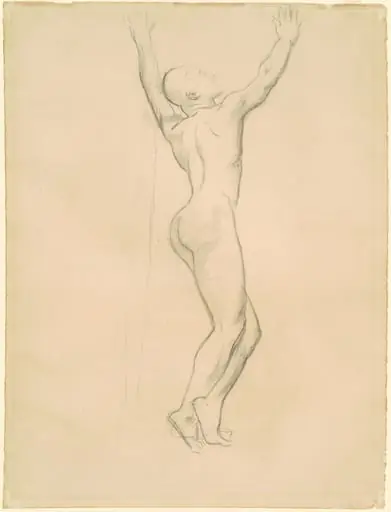 Study for "Apollo and Daphne"
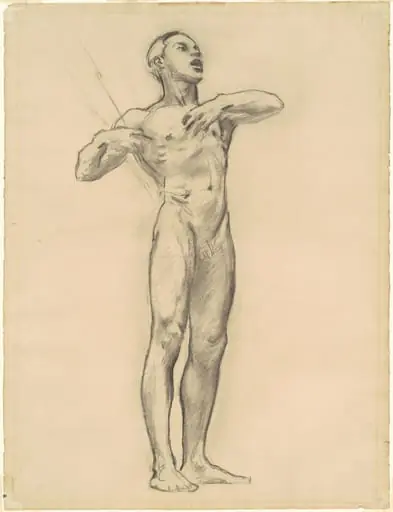 Study of Orpheus for "Classic and Romantic Art"
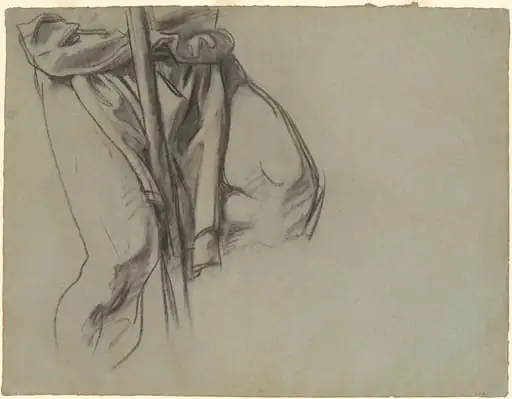 Study of Adam for the "Fifteen Mysteries of the Rosary"
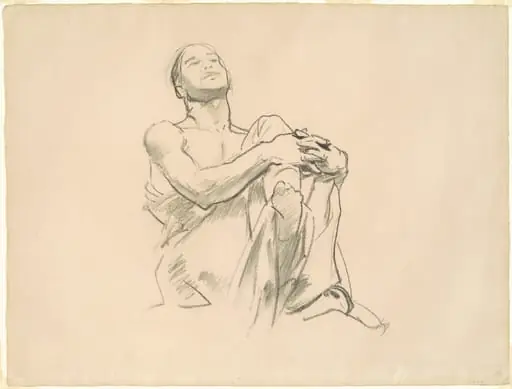 Study for "Astronomy"
![Studies of Male Nudes [verso], by John Singer Sargent](https://artifactworldgallery.com/img/john-singer-sargent--studies-of-male-nudes-verso--6a06b2ac3ad0c09a-w320.webp) Studies of Male Nudes [verso]
Studies of Male Nudes [verso]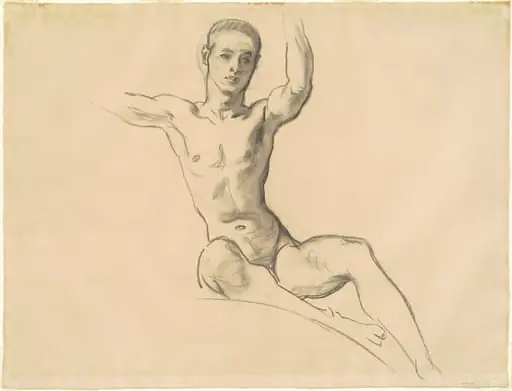 Study for Figure above "Music"
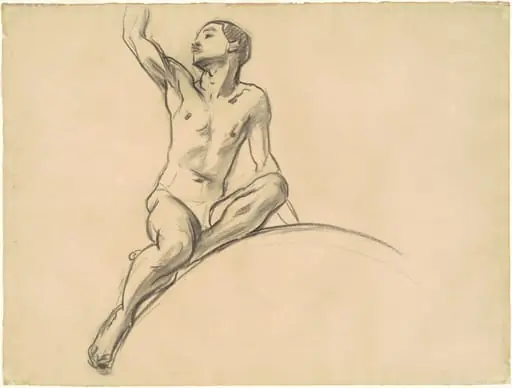 Study for Figure above "Music"