Artwork
Study of a Young Man, Seated
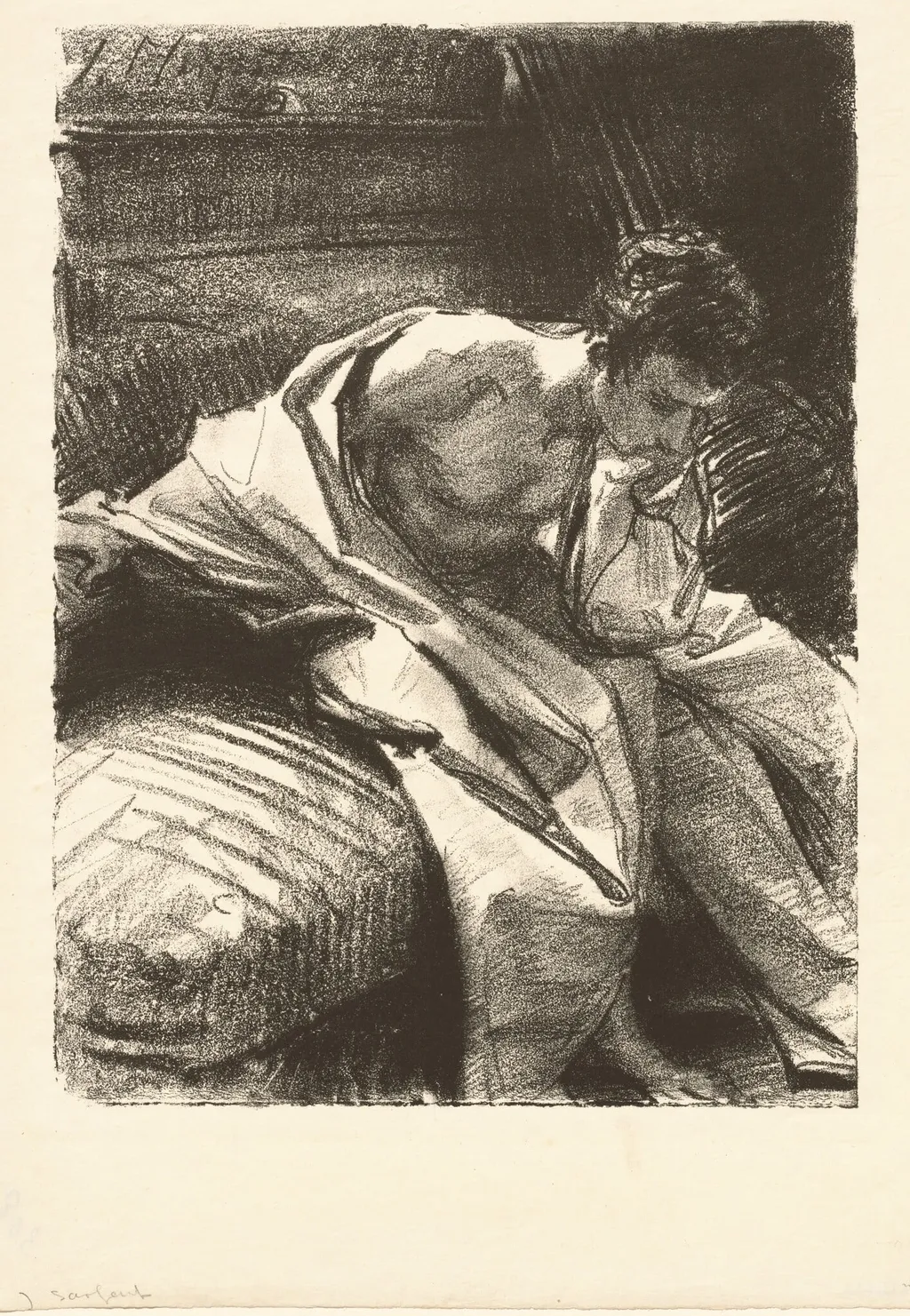
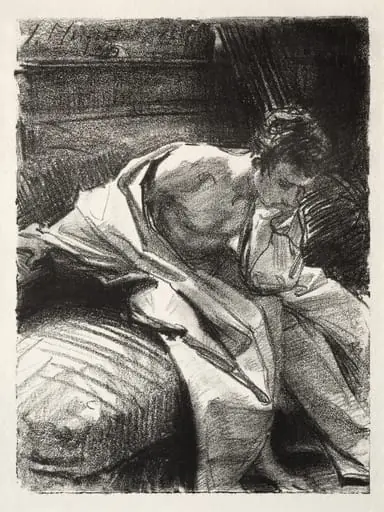
Study of a Young Man, Seated is an ink print by the Impressionist artist John Singer Sargent. It dates from 1895 and is held in the collection of the National Gallery of Art.
About this work
Overview
Executed in black ink on laid paper, it belongs to a large body of graphic works produced alongside his more celebrated portraits.
Created in 1895, this transfer lithograph by John Singer Sargent captures a seated young man viewed from behind. Executed in black ink on laid paper, it belongs to a large body of graphic works produced alongside his more celebrated portraits. Unlike finished paintings, this piece functions as a preparatory study, emphasizing form and light over detail. Sargent’s use of lithography allowed him to explore tonal subtleties with a spontaneity suited to his observational approach.
Subject & Meaning
The figure is anonymous, rendered without identifying features or context, suggesting the study was made for formal exploration rather than portraiture. The pose—slightly turned, shoulders relaxed—conveys quiet stillness. Sargent’s focus on the back and arms reflects his interest in the human form as a vehicle for light and volume. The absence of facial expression invites attention to posture and gesture, aligning with his broader practice of studying the body in natural, unposed states.
Technique & Style
Sargent employed transfer lithography, a method that transfers drawn images from paper to a stone surface for printing. The resulting lines are fluid and loosely controlled, mimicking the immediacy of pencil sketches. Soft, graded shading gives the skin a matte, tactile quality, while the textured paper enhances the sense of spontaneity. The absence of hard outlines and the muted tonal range reflect his preference for atmospheric suggestion over precise definition.
History & Provenance
This work is one of hundreds of graphic studies Sargent produced during his career, many of which were retained in his personal collection. While not exhibited publicly during his lifetime, such studies later became important for understanding his creative process. The piece entered institutional holdings after his death, preserved as part of a broader archive of his drawings and prints, offering insight into his working methods beyond oil and watercolor.
Context
In the 1890s, Sargent was deeply engaged in exploring new mediums, including lithography, as a means to capture fleeting impressions. His travels across Europe provided constant subject matter, and studies like this one were often made en route or in studio settings between major commissions. The informal nature of this work contrasts with the polished society portraits for which he was known, revealing a quieter, more introspective side of his practice.
Legacy
Sargent’s graphic works, including this lithograph, have since been recognized as vital to understanding his artistic development. They demonstrate his commitment to direct observation and his ability to convey volume and presence with minimal means. Today, such studies are valued not as preliminary sketches but as autonomous expressions of his visual language, influencing later generations of draftsmen and printmakers.
Artist & collection
Artist
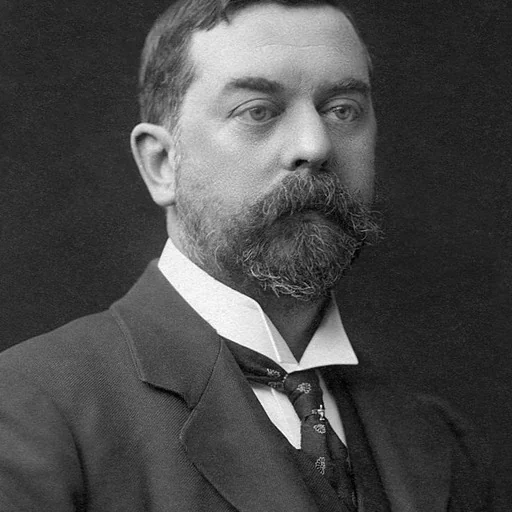
John Singer Sargent (; January 12, 1856 – April 15, 1925) was an American expatriate artist, considered the "leading portrait painter of his generation" for his evocations of Belle Époque and Edwardian-era luxury.

 A Study
 Standing Man in Pensive Pose
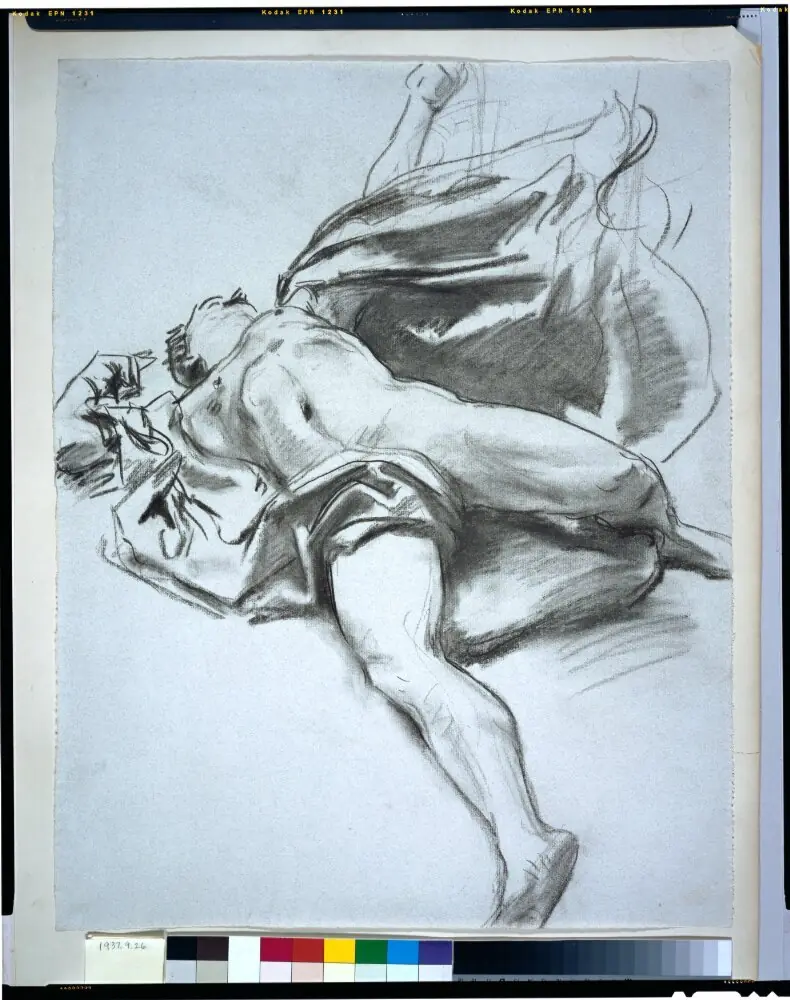 Male Nude Reclining with Drapery
 In "La glu" (Dans "La glu")
 Yvette Guilbert: Dans la glu
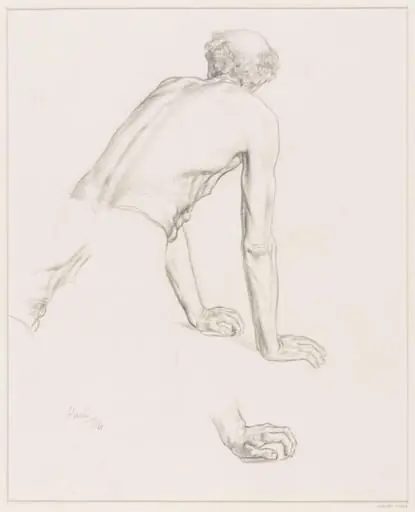 Morning on the Seine
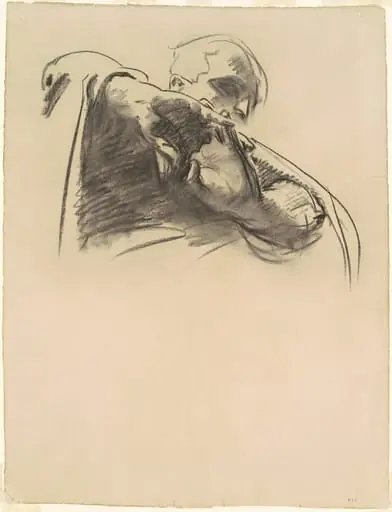 Study for "The Crucifixion and Death of Our Lord"
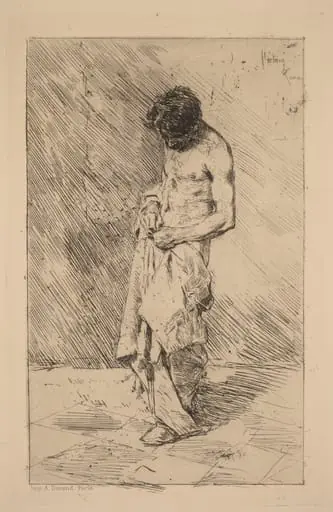 Un Pouilleux (Flea Seeker)
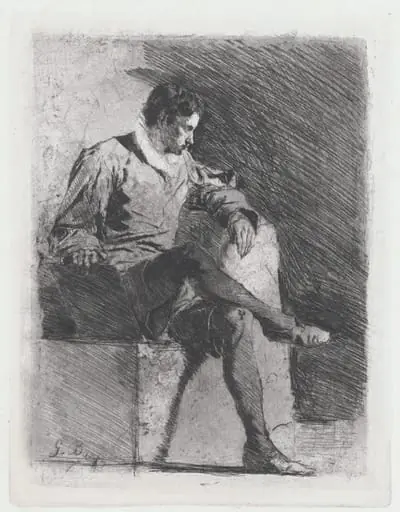 Seated Man in Sixteenth-Century Costume
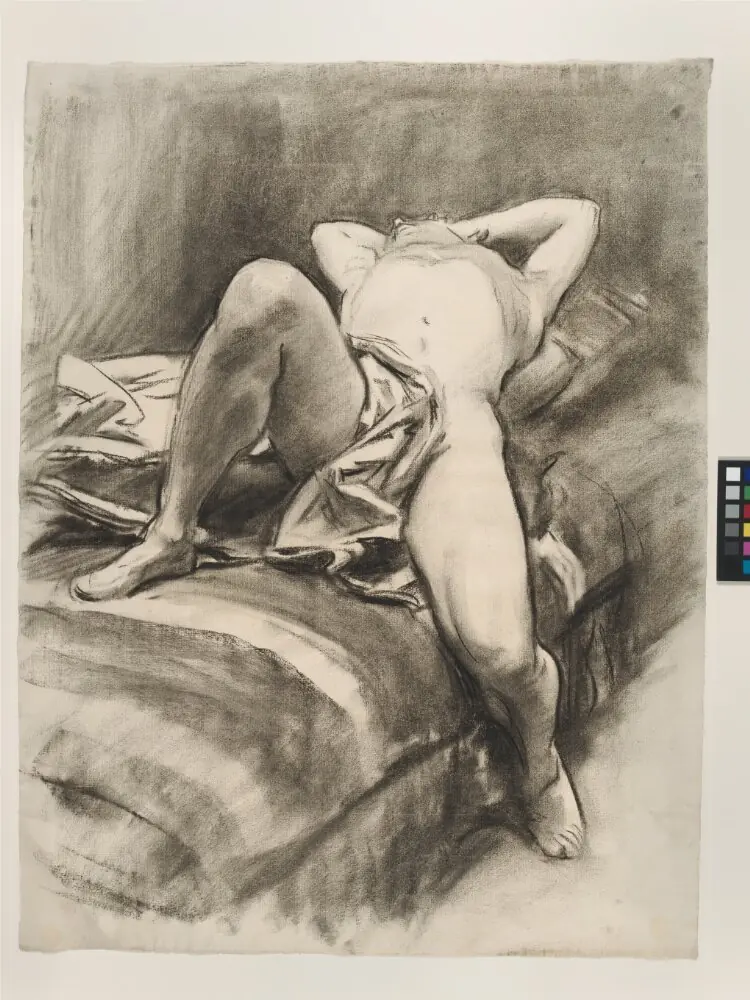 Reclining Male Nude, Draped
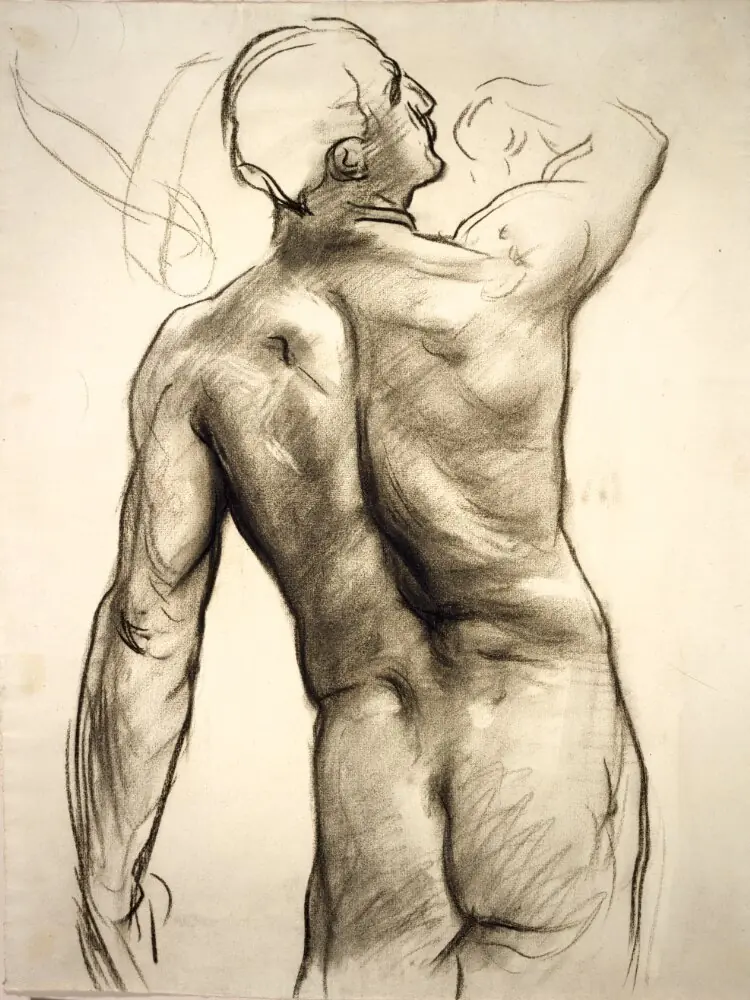 Standing Male Nude with Raised Right Arm Seen from Behind
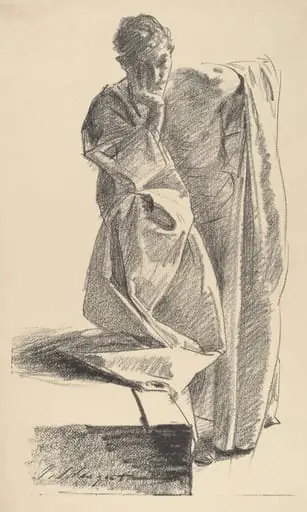 Study of a Young Man in a Robe, Standing