Artwork
Old Mill, near Dolgelly
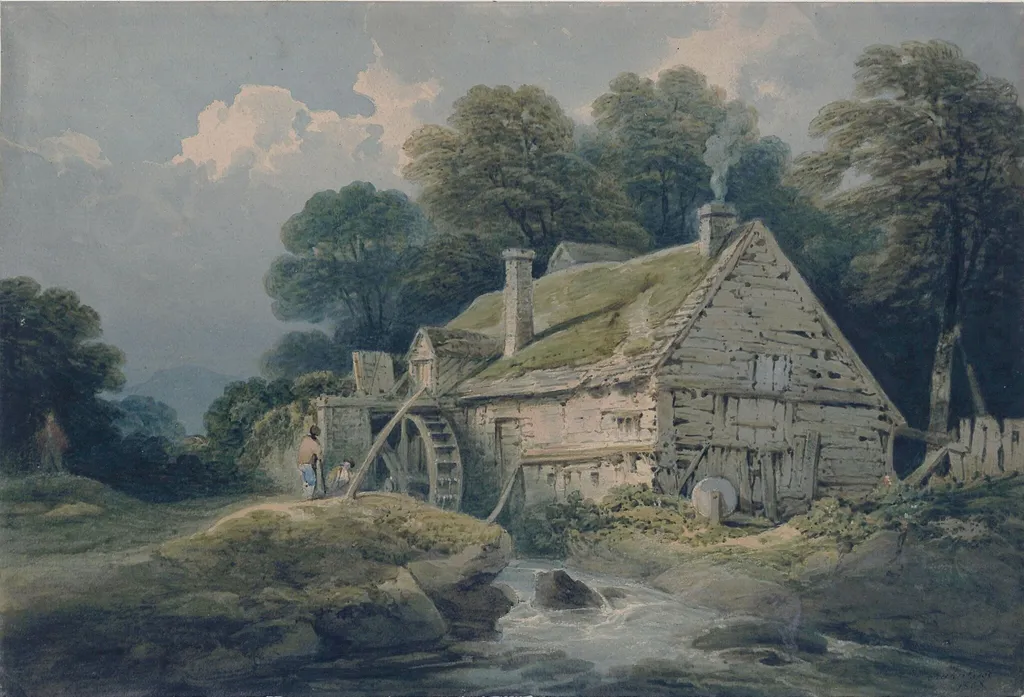
Old Mill, near Dolgelly is a watercolor work on paper by the British Romanticist artist Sasse. It dates from 1808 and is held in the collection of the Victoria and Albert Museum. Painted in 1808, this watercolour captures a quiet rural scene near Dolgelly in Wales.
About this work
Overview
Painted in 1808, this watercolour captures a quiet rural scene near Dolgelly in Wales. The work is signed and dated by the artist, with the title inscribed alongside. Rendered in delicate washes, it presents a modest industrial structure nestled within a natural landscape, reflecting early 19th-century British interest in vernacular architecture and tranquil countryside.
Subject & Meaning
The composition centers on a weathered wooden mill beside a gently flowing stream, its chimney emitting a thin plume of smoke.
The composition centers on a weathered wooden mill beside a gently flowing stream, its chimney emitting a thin plume of smoke. A solitary figure stands on the bank, facing outward, suggesting contemplation rather than labor. The scene avoids drama, instead emphasizing stillness and the quiet integration of human activity within the natural world, aligning with Romantic sensibilities that valued solitude and the dignity of rural life.
Technique & Style
The artist employed transparent watercolour washes to suggest texture and atmosphere—soft gradients define the mill’s timber, while fine brushwork captures the ripple of water and the delicate sway of grass. Light is diffused, creating a muted tonal harmony. No sharp outlines are used; forms emerge through layered tints, reinforcing the painting’s serene, unhurried mood.
History & Provenance
The work was completed during a period when Welsh landscapes were increasingly documented by artists and travelers. Its survival with original signature and inscription indicates careful preservation, likely within private collections. While its immediate provenance after 1808 is undocumented, its survival suggests it was valued as a personal record rather than a commercial piece.
Context
Created during the height of British Romanticism, the painting reflects a broader cultural turn toward rural authenticity and the aesthetic of the everyday. Unlike grand landscapes of mountains or ruins, this scene honors modest, functional architecture—echoing contemporaneous interest in regional identity and the quiet endurance of traditional ways of life in the face of industrial change.
Legacy
Though not widely exhibited or reproduced, the painting contributes to a quieter strand of Romantic art focused on localized, unidealized scenes. It stands as a testament to the artist’s attention to place and detail, offering a modest but enduring record of a Welsh mill at a time when such structures were beginning to vanish from the landscape.
Artist & collection
Artist
British watercolourist Sasse painted quiet landscapes in the early 1800s. Two pieces in the set show his knack for old-world details: in Old Mill, near Dolgelly you can almost hear the river, while Lancaster captures a…

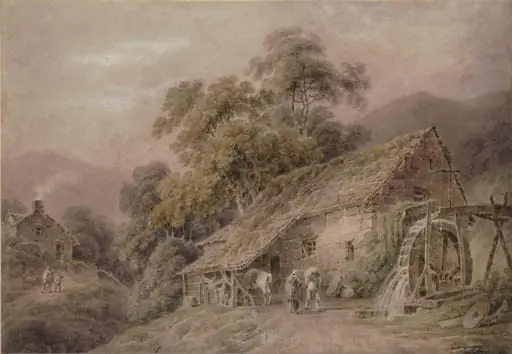 A mill near Dinas Mawddwy
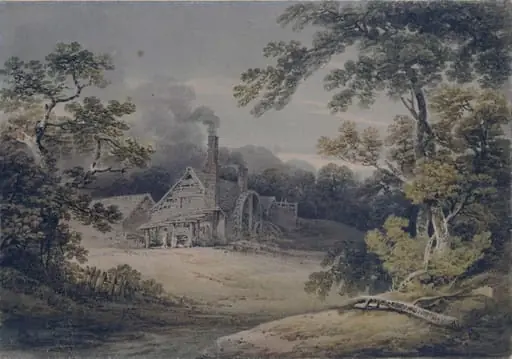 Landscape with cottage and waterwheel
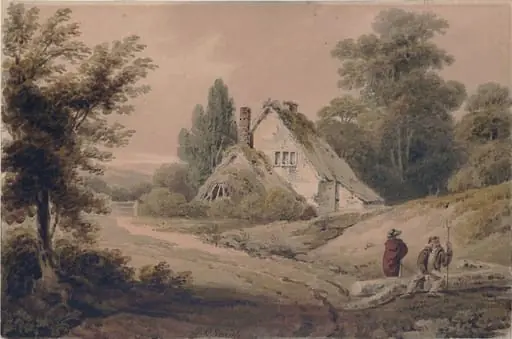 Landscape with cottage and figures
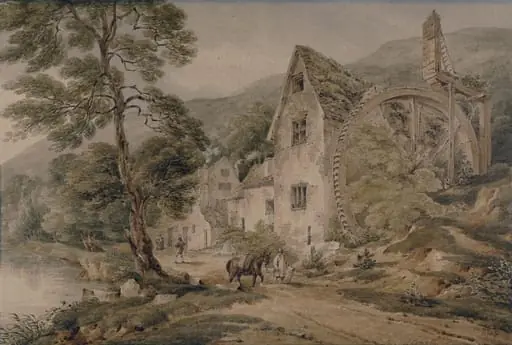 Mill at Tintern, Monmouthshire
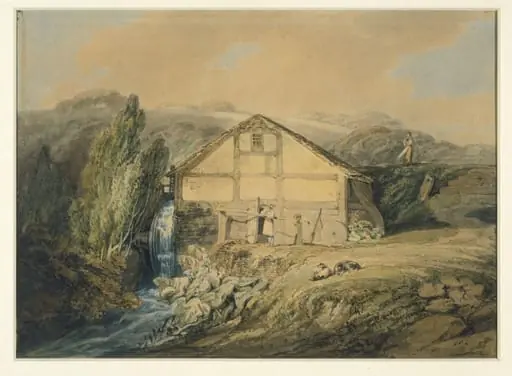 Pembury Mill, near Tunbridge Wells
![Landscape View [?in North Wales], by John Glover](https://artifactworldgallery.com/img/john-glover--landscape-view-in-north-wales--a6780e3d0b73ec67-w320.webp) Landscape View [?in North Wales]
Landscape View [?in North Wales]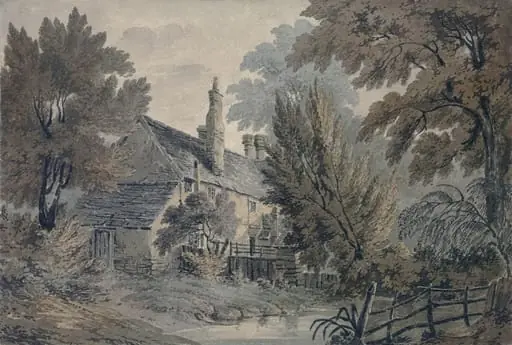 Landscape with House by a Pond
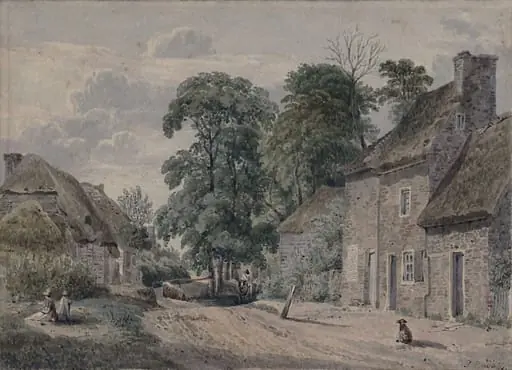 Manstone, near Ramsgate, Kent
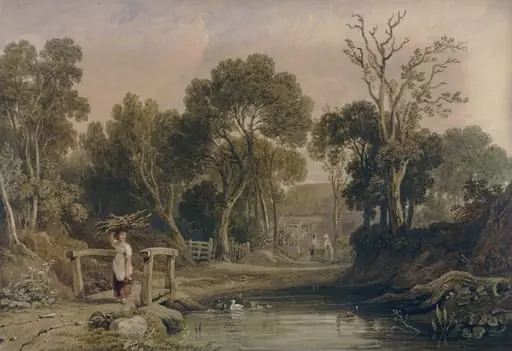 Landscape with a pond and country folk outside a cottage