Artwork
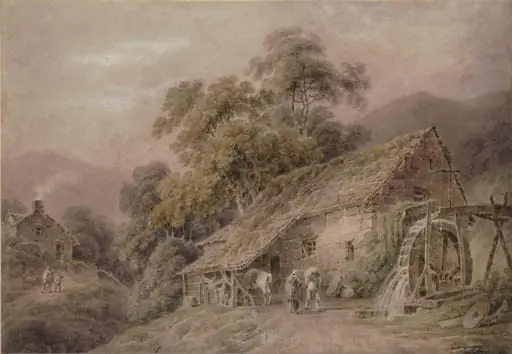
Pembury Mill, near Tunbridge Wells
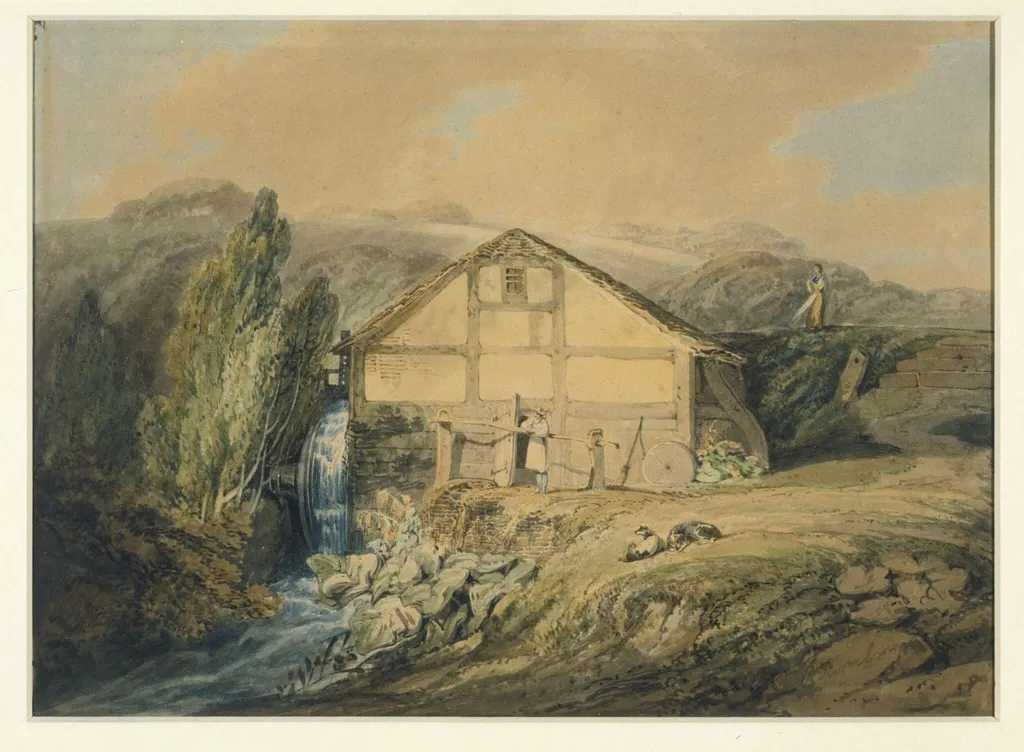
Pembury Mill, near Tunbridge Wells is a watercolor work on paper by the Romanticist artist Joseph Mallord William Turner. It dates from 1800 and is held in the collection of the Victoria and Albert Museum. Painted in 1800, this watercolour by J.
About this work
Overview
Turner captures a rural mill structure near Tunbridge Wells, commonly associated with Pembury Mill though possibly depicting Keyes Mill.
Painted in 1800, this watercolour by J.M.W. Turner captures a rural mill structure near Tunbridge Wells, commonly associated with Pembury Mill though possibly depicting Keyes Mill. Executed in delicate washes, the work reflects Turner’s early engagement with landscape as a subject worthy of quiet contemplation. His signature appears in the lower corner, affirming authorship. The composition balances architectural detail with atmospheric softness, characteristic of his transitional style between topographical precision and emerging Romantic sensibility.
Subject & Meaning
The scene centers on a modest watermill beside a gentle stream, its wheel turning slowly under the weight of flowing water. Two figures—a woman on the roof, another resting against the wall—suggest daily rural life without narrative emphasis. Sheep graze nearby, reinforcing the pastoral tone. The absence of grandeur or drama shifts focus to the quiet rhythm of labor and nature, reflecting a Romantic interest in humble, unidealized environments as vessels of emotional resonance.
Technique & Style
Turner employed loose, fluid brushwork and translucent watercolour washes to dissolve boundaries between land, water, and sky. Muted greens and browns blend softly, creating a hazy, diffused light that envelops the scene. Details like the mill’s timber frame and the figures are rendered with economy, prioritizing mood over precision. The technique evokes a sense of stillness and temporal suspension, as if the landscape breathes in the mist.
History & Provenance
The work dates from Turner’s early career, a period when he was refining his watercolour technique through direct observation of the English countryside. It was likely produced during sketching tours in Kent and Sussex. While its early ownership is undocumented, it entered institutional collections by the late 19th century, where it has remained as part of studies on Turner’s development as a landscape artist.
Context
Created during the height of British Romanticism, the painting aligns with a cultural shift toward valuing nature’s subtlety over classical grandeur. Turner’s focus on modest rural structures and atmospheric effects contrasted with the dramatic sublime favored by contemporaries. This work reflects a growing interest in the everyday landscape, influenced by contemporary topographical surveys and the Romantic ideal of harmony between human habitation and the natural world.
Legacy
Though not among Turner’s most celebrated works, this watercolour exemplifies his evolving approach to light and atmosphere, foreshadowing his later innovations. It contributed to the legitimization of watercolour as a medium for serious artistic expression, influencing subsequent generations of British landscape painters who sought to capture transient natural effects with emotional nuance.
Artist & collection
Artist
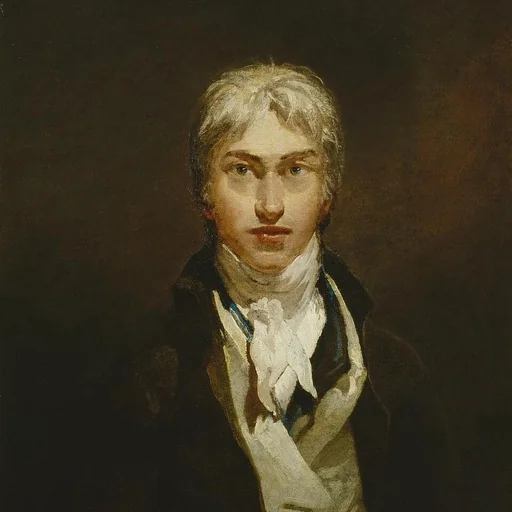
Joseph Mallord William Turner was born in 1775 at Maiden Lane, Covent Garden, where his father kept a barber and wig-making shop.

 A mill near Dinas Mawddwy
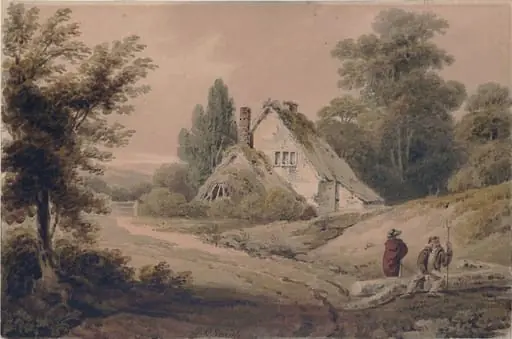 Landscape with cottage and figures
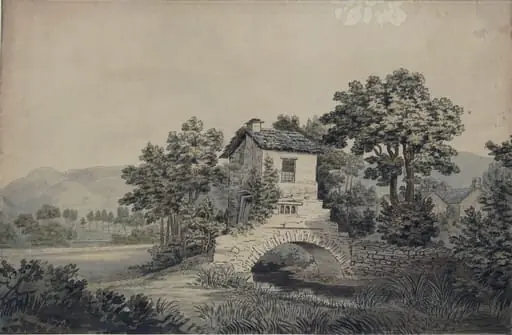 The Hall Summer House at Ambleside
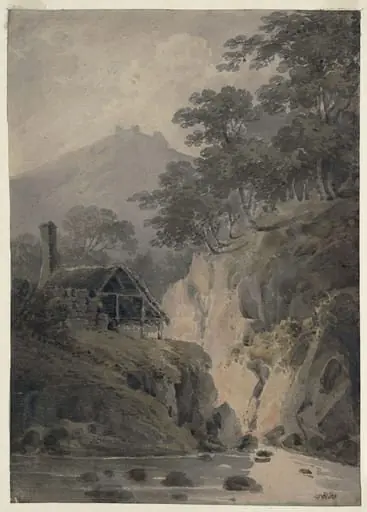 Rocky landscape in Cornwall
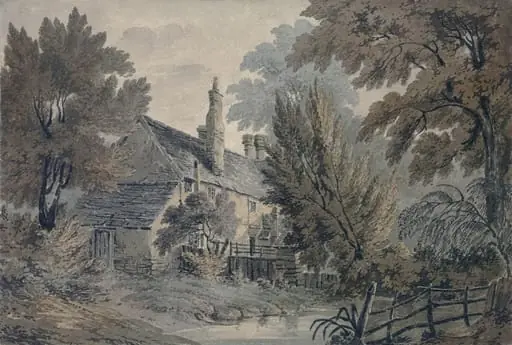 Landscape with House by a Pond
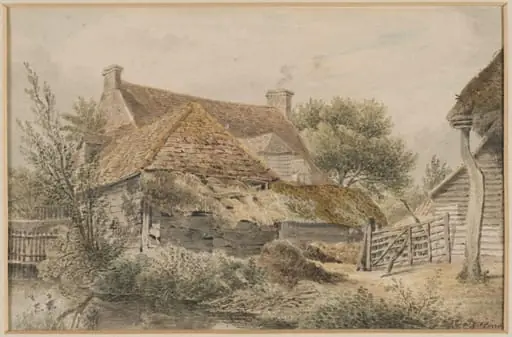 Near Esther, Surrey
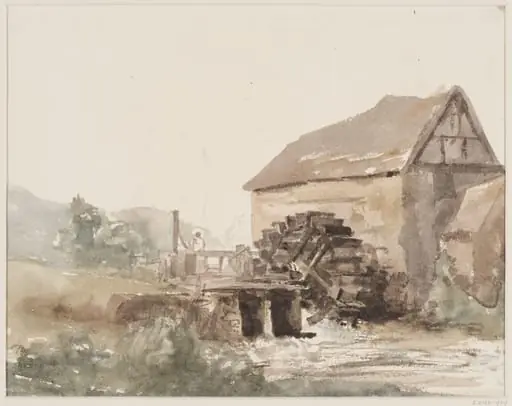 View of a water-mill near Ridware
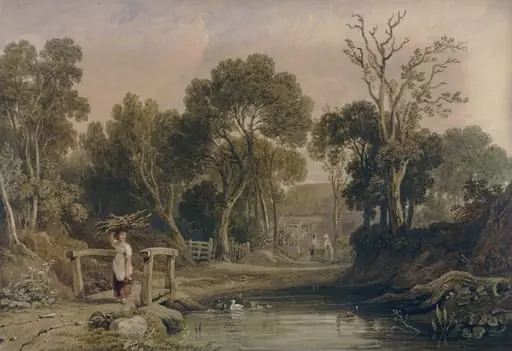 Landscape with a pond and country folk outside a cottage
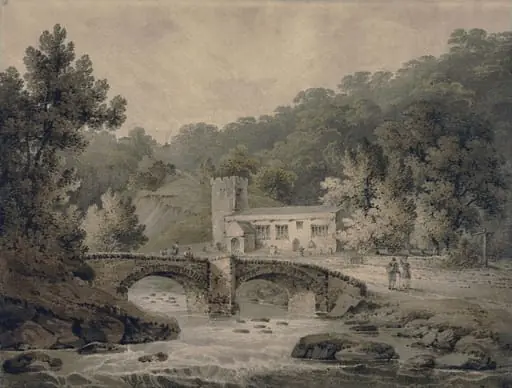 Church and bridge at Hubberholme, Yorkshire
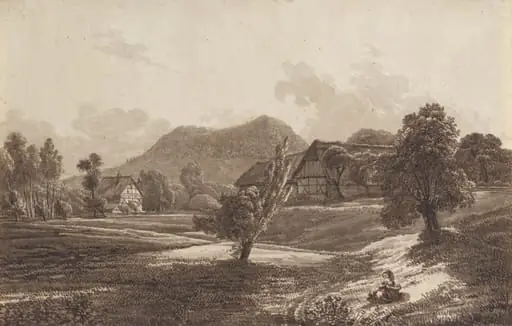 Lusatian Landscape with the Landeskrone Mountain