Artwork
Gaetano Filangieri
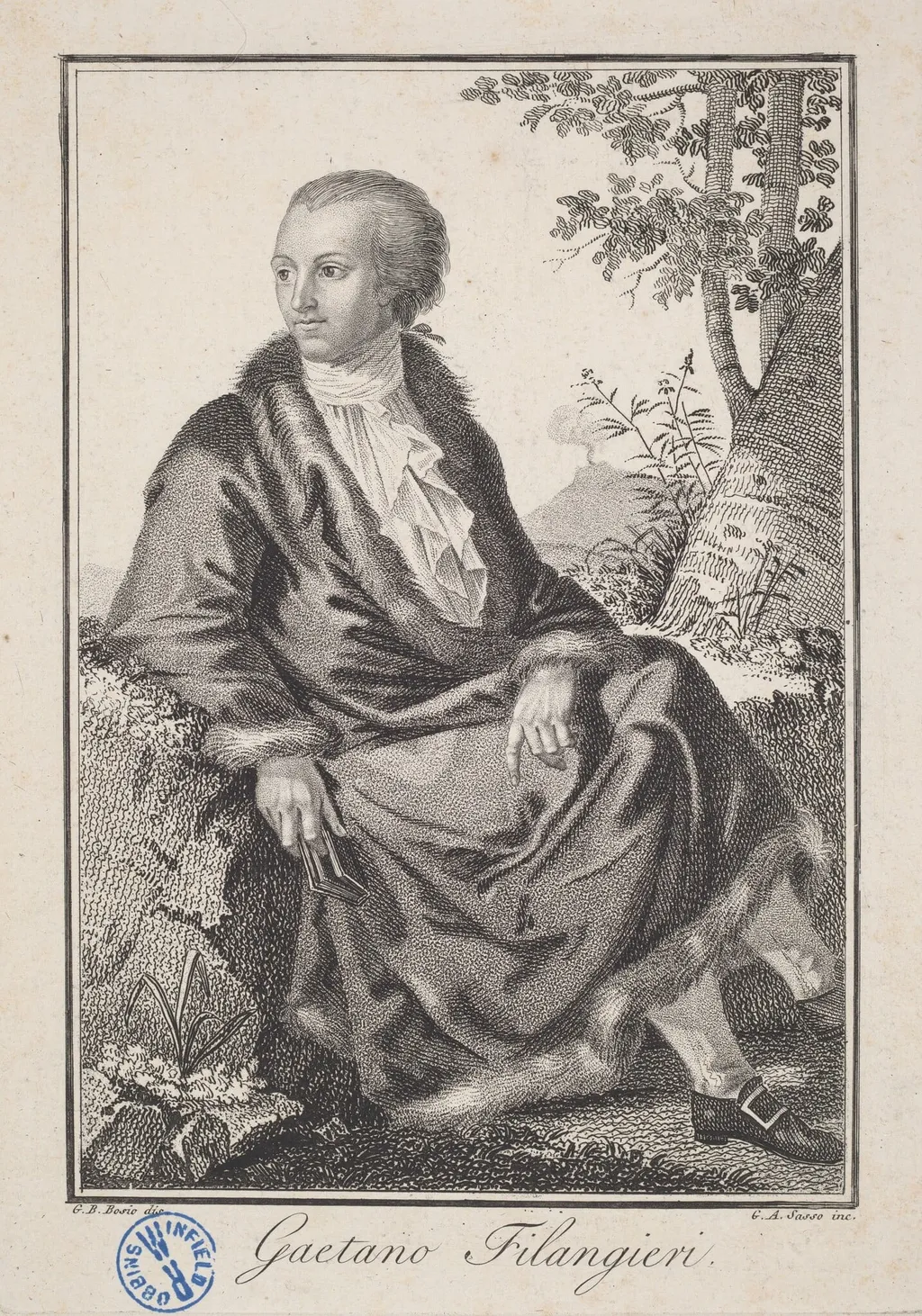
Gaetano Filangieri is an ink print by the Romanticist artist Giovanni Antonio Sasso. It dates from 1816 and is held in the collection of the National Gallery of Art.
About this work
Overview
Giovanni Antonio Sasso’s 1816 print presents a likeness of Gaetano Filangieri. Executed as an etching combined with stipple engraving, the work captures the subject’s visage in a measured, formal composition.
Subject & Meaning
The portrait depicts Filangieri with a composed, serious expression, dressed in the refined attire typical of his social standing. The restrained demeanor suggests a focus on the individual’s intellectual or civic role rather than personal narrative.
Technique & Style
Sasso employed a stipple technique, applying countless minute dots to render tonal gradations. This method softens the surface, allowing subtle modeling of facial features and fabric while maintaining the crispness characteristic of etching lines.
History & Provenance
Created in 1816, the print belongs to the early nineteenth‑century Italian printmaking tradition. It was likely produced for distribution among patrons or institutions interested in Filangieri’s public profile, though specific ownership records are limited.
Context
During the period, stipple engraving was favored for portraiture because it could suggest the delicate shading of painted works. Sasso’s choice aligns with contemporary practices that sought to convey elegance and realism within the constraints of print media.
Artist & collection


 Franz Edmund Weirotter
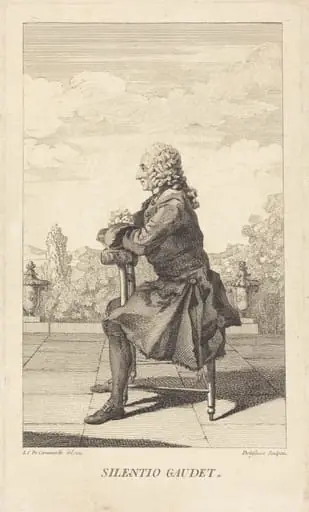 Jean-Baptiste-François Durey de Meinières
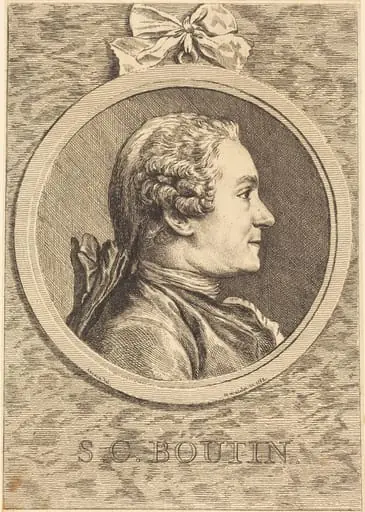 S.C. Boutin
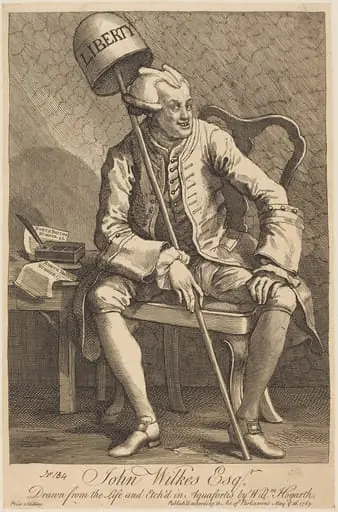 John Wilkes Esq.
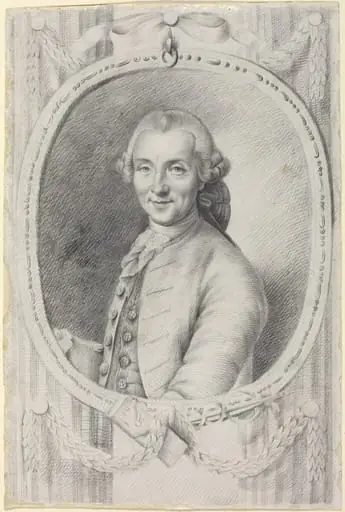 Johann Gottfried von Herder
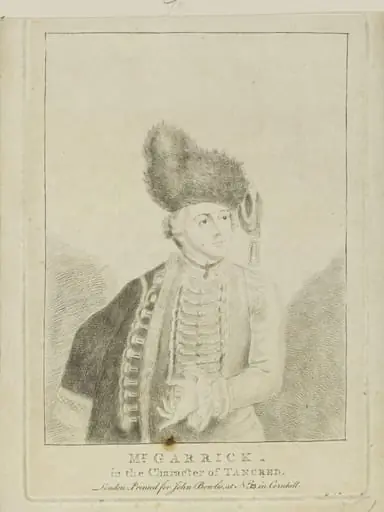 Mr. Garrick in the character of Tancred
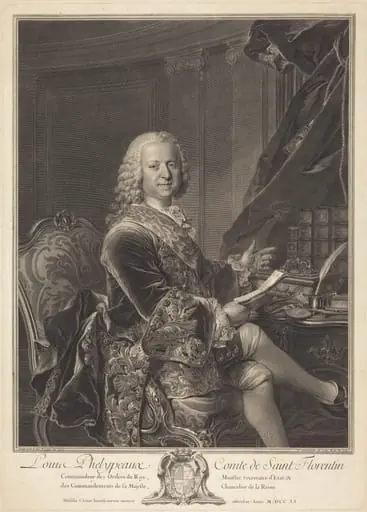 Louis Phelypeaux, comte de Saint Florentin
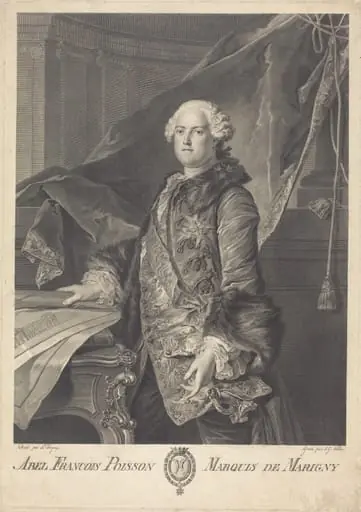 Abel Francois Poisson, Marquis de Marigny
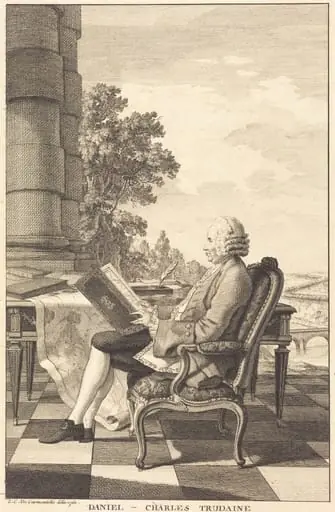 Daniel-Charles Trudaine
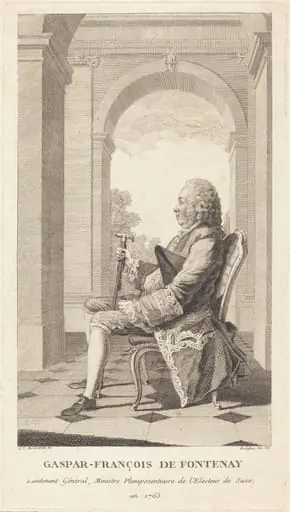 Gaspar-François de Fontenay
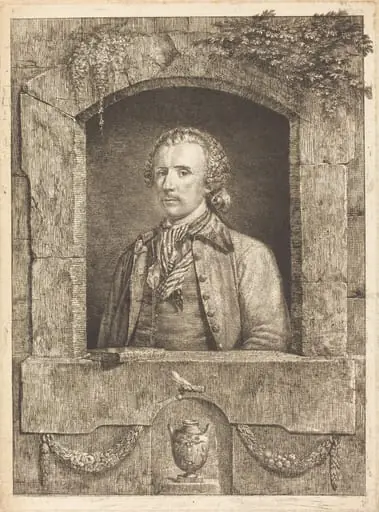 Self-Portrait