Artwork
`Maharraka - Nubia'
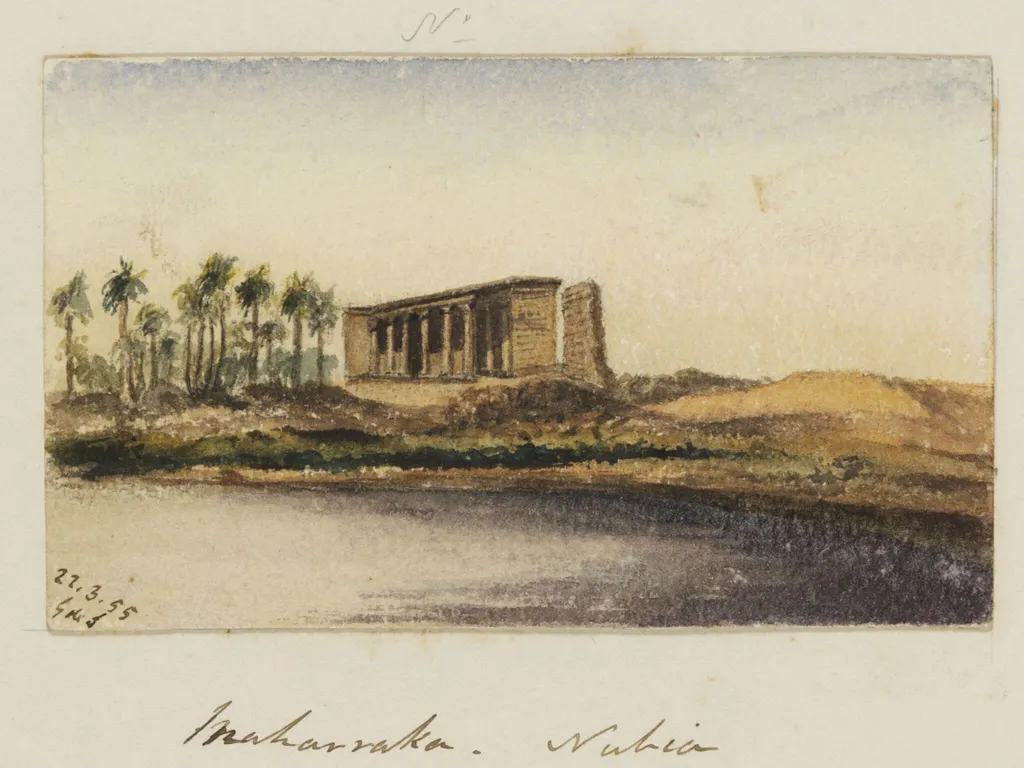
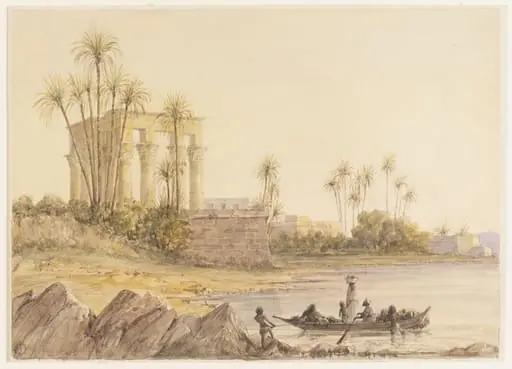
`Maharraka - Nubia' is a watercolor work on paper by the British Romanticist artist George de Sausmarez. It dates from 1855 and is held in the collection of the Victoria and Albert Museum.
About this work
Overview
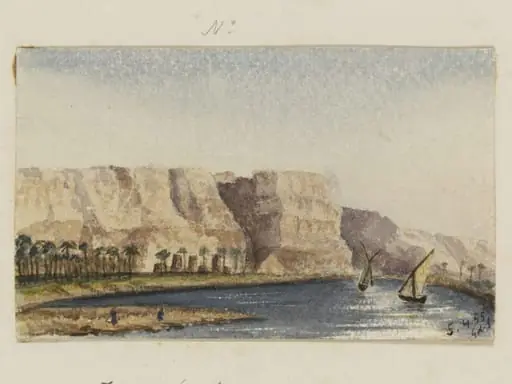
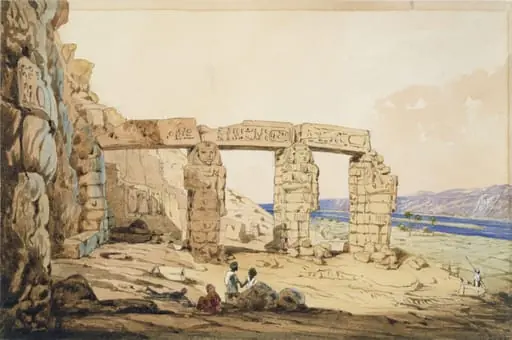
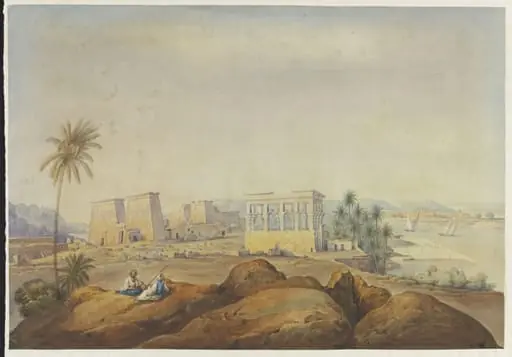
This watercolour, titled “Maharraka – Nubia,” is one of a series of forty‑five sketches produced by George de Sausmarez. The work is mounted on a paper support and forms part of an album that records scenes from Egypt and Nubia, created during or shortly after an 1855 Nile expedition.
Subject & Meaning
The image presents a tranquil desert landscape in Nubia, dominated by a partially buried temple whose ruined columns emerge from the sand. Palm trees frame the left side, while a low stone wall lies before the structure and a dark stretch of water occupies the lower foreground, suggesting a quiet, perhaps seasonal, oasis.
Technique & Style
Executed in watercolour, the sketch employs simple, swift brushstrokes and a restrained palette of muted earth tones. The handling of the medium conveys a sense of immediacy, as if the artist recorded a fleeting impression of the site rather than a detailed study.
History & Provenance
The watercolour is mounted on one of thirty‑five supports within the album, which is bound in half‑bound crimson morocco leather. The cover bears the stamp “EGYPT.” The album remains in the collection of the Victoria and Albert Museum, preserving de Sausmarez’s visual diary of his Nile journey.
Context
During the mid‑nineteenth century, European travelers frequently documented their voyages along the Nile, producing visual records of ancient monuments and contemporary landscapes. De Sausmarez’s sketches reflect this tradition, offering a personal perspective on the archaeological and natural environment of Nubia at that time.
Artist & collection
Artist
George de Sausmarez painted watercolors of Egypt’s Nile in the 1850s, recording river scenes and landmarks with quick, transparent washes.

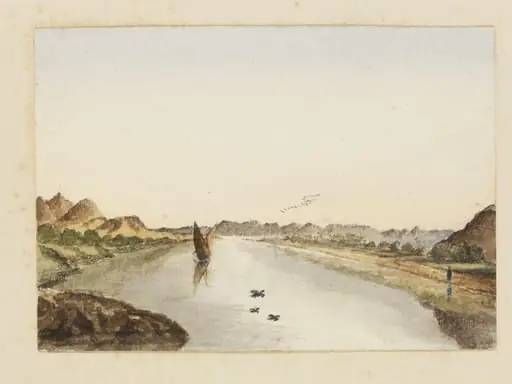 View of the Nile
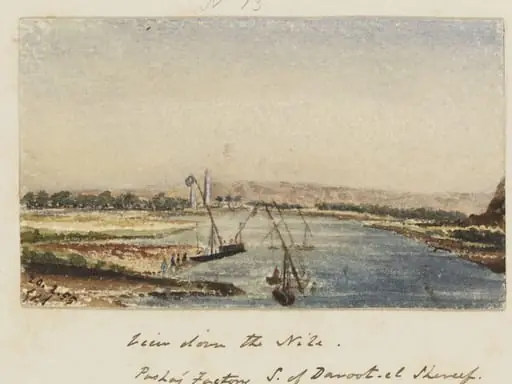 `View down the Nile. Pasha's Factory S.of Daroot-el Shereef. Upper Egypt'
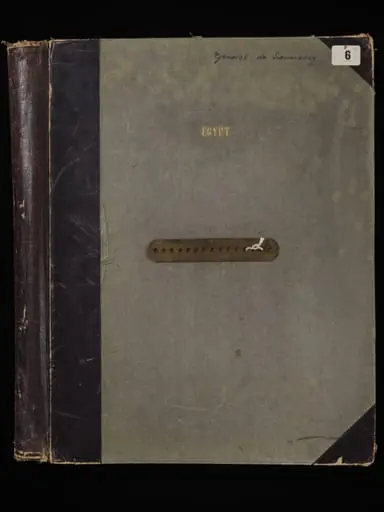 Album
Album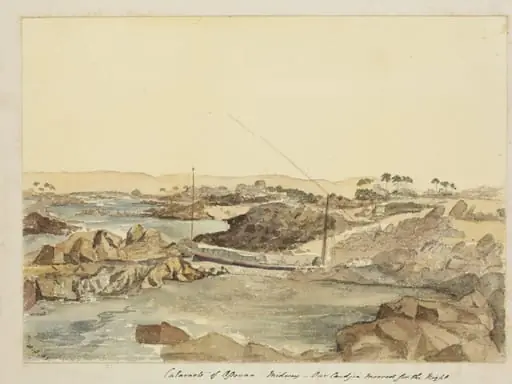 `Cataracts of Assouan. Midway. - Our Candjia Moored for the Night - On the Nile'
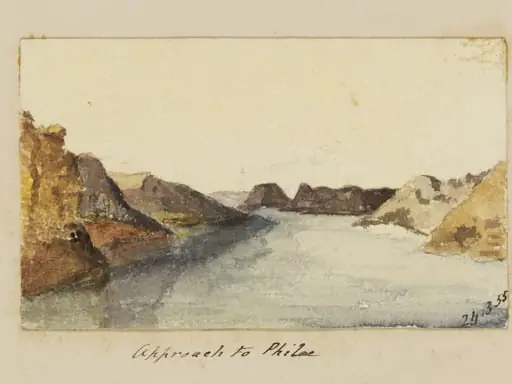 `Approach to Philae'
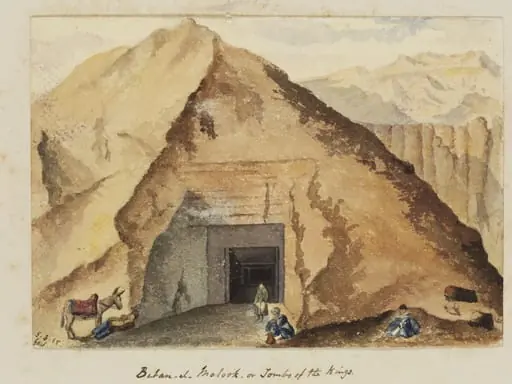 Biban-el-Molook, or Tombs of the Kings. Belzoni's Tomb. Thebes
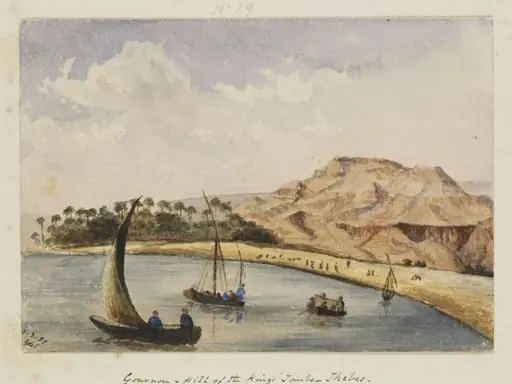 `Gournou & Hill of the Kings' Tombs - Thebes'
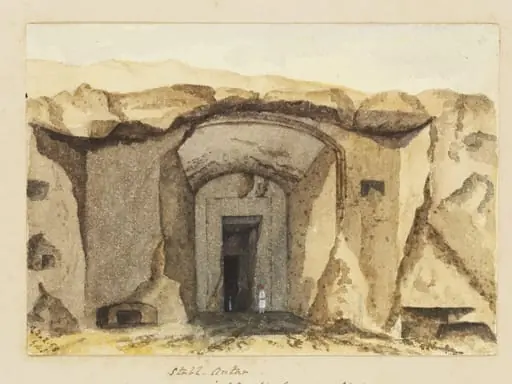 `Stabl-Antar. Ancient Egyptian Cave near Siout. Upper Egypt'