Artwork
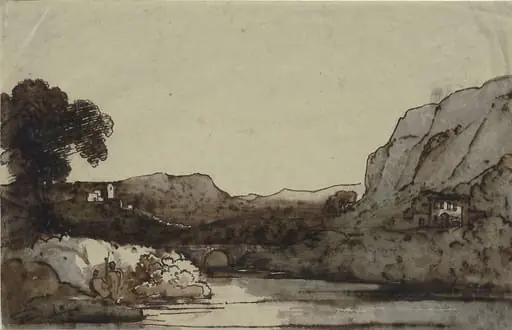
Mountainous Landscape with Castles and Waterfalls
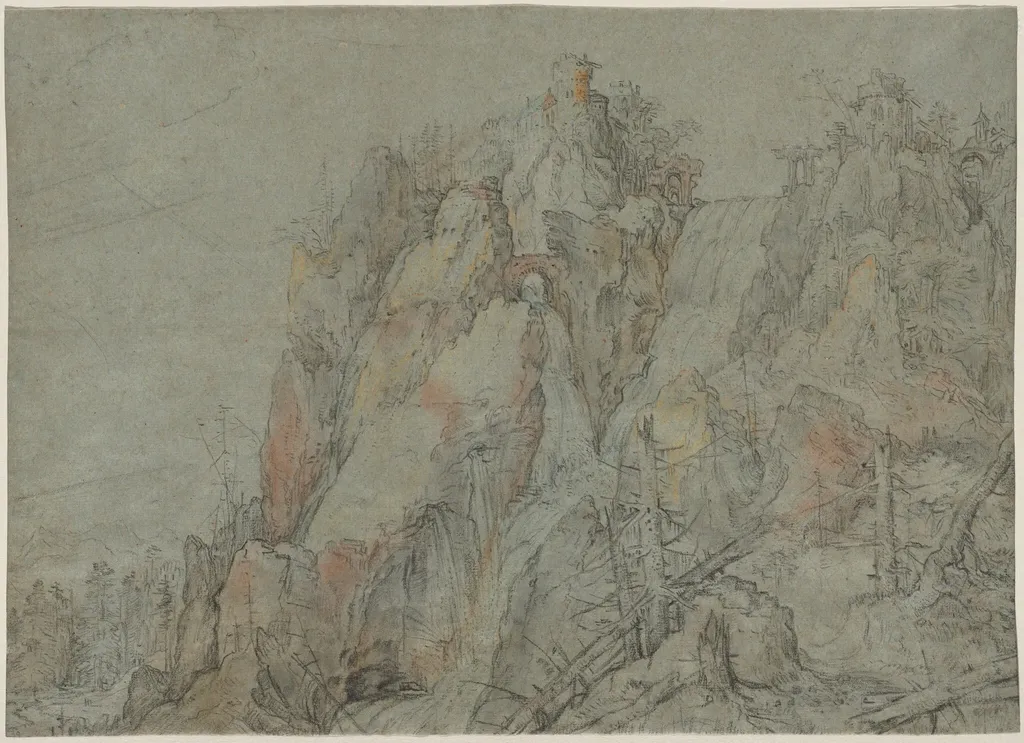
Mountainous Landscape with Castles and Waterfalls is a chalk drawing by the Baroque artist Roelandt Savery. It dates from 1606 and is held in the collection of the National Gallery of Art.
About this work
The painting is called Mountainous Landscape with Castles and Waterfalls.
It was made around 1606, which is interesting because it shows what artists were drawing during that time. The artist used different colors like black, ocher, and blue chalks.
You can find this painting at the National Gallery of Art, Washington, which is also home to works from the movement known as Baroque.
Overview
Created around 1606, this drawing by Roelandt Savery depicts a dramatic alpine scene rendered in colored chalks on gray-green laid paper.
Created around 1606, this drawing by Roelandt Savery depicts a dramatic alpine scene rendered in colored chalks on gray-green laid paper. The composition integrates multiple natural and architectural elements—towering peaks, cascading waterfalls, and fortified castles—within a single, cohesive vista. Its medium, combining black, ocher, red, and blue chalks with subtle white highlights, reflects the precision and tonal sensitivity characteristic of early 17th-century Northern European draftsmanship.
Subject & Meaning
The scene presents an idealized mountainous region populated by distant castles and waterfalls, likely drawn from imagination rather than direct observation. These elements suggest a romanticized vision of wilderness and human habitation coexisting, possibly reflecting contemporary fascination with distant lands and the sublime power of nature. The absence of human figures emphasizes the scale and solitude of the landscape.
Technique & Style
Savery employed a restrained palette of chalks to model form and depth, using ocher and red for earth tones, blue for shadowed recesses, and black for strong contours. White heightening adds luminosity to mist and spray, enhancing atmospheric perspective. The delicate linework and layered hatching demonstrate a mastery of tonal gradation, aligning with the detailed observational tradition of Flemish and Dutch draftsmen of the period.
History & Provenance
The drawing entered the collection of the National Gallery of Art in Washington, D.C., where it remains today. While its early ownership history is not fully documented, its preservation in a major institution underscores its recognition as a significant example of early Baroque landscape drawing. It reflects the growing interest in landscape as an independent subject during the early 1600s.
Context
Created during a period when Northern European artists increasingly turned to landscape as a subject in its own right, this work aligns with trends seen in the works of contemporaries like Jan Brueghel the Elder. Though not tied to a specific location, its fantastical architecture and dramatic topography echo the influence of Alpine travel accounts and the emerging genre of imaginary topography in Northern art.
Legacy
Savery’s drawing exemplifies the transition from symbolic to naturalistic landscape representation in early Baroque art. Its technical refinement and imaginative composition influenced later generations of draftsmen who sought to convey both the grandeur and mystery of the natural world. It remains a key reference for understanding the evolution of landscape drawing in the Low Countries.
Artist & collection


 Mountain Scene with Rocks
 Trees of a Rocky Hillside
 James McCullough's Leadmill
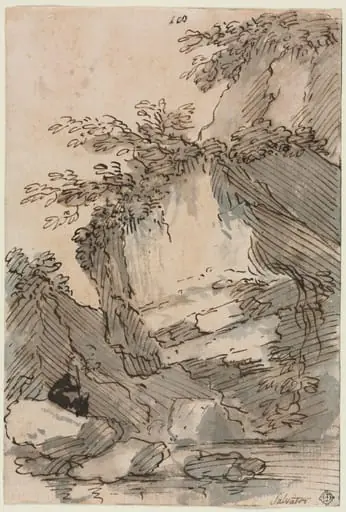 Figures by a Rocky Pool
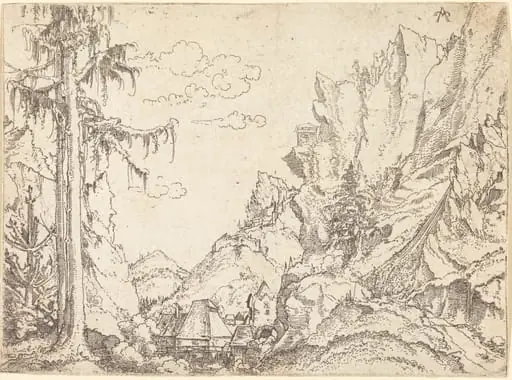 Mountain Landscape
 Autumn Mountains 秋山圖
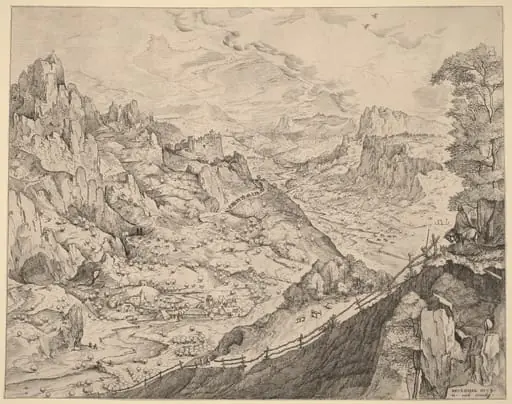 Large Alpine Landscape
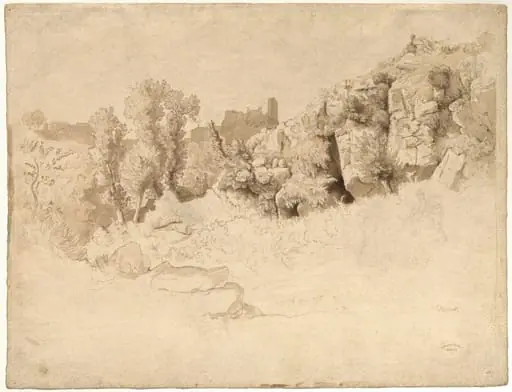 Rock Formations near Olevano
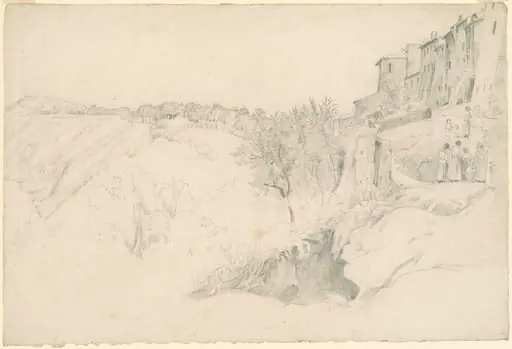 Hillside with Houses and Figures
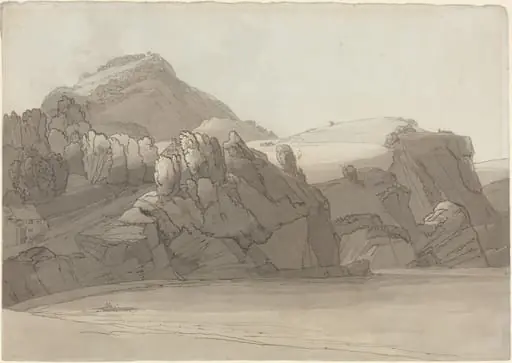 A Rocky Shore at Coombmartin, Devon (Combe Martin Bay)
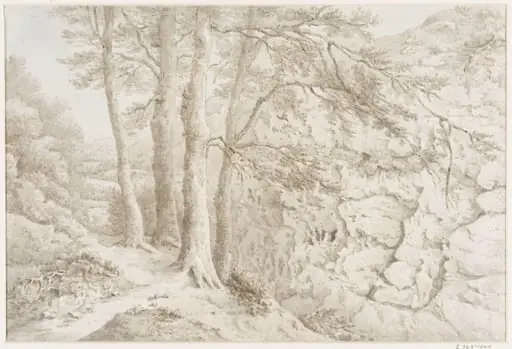 Drawing of a narrow ravine
 Landscape with Bridge and Mountains