Artwork
Harry Beard Print Collection
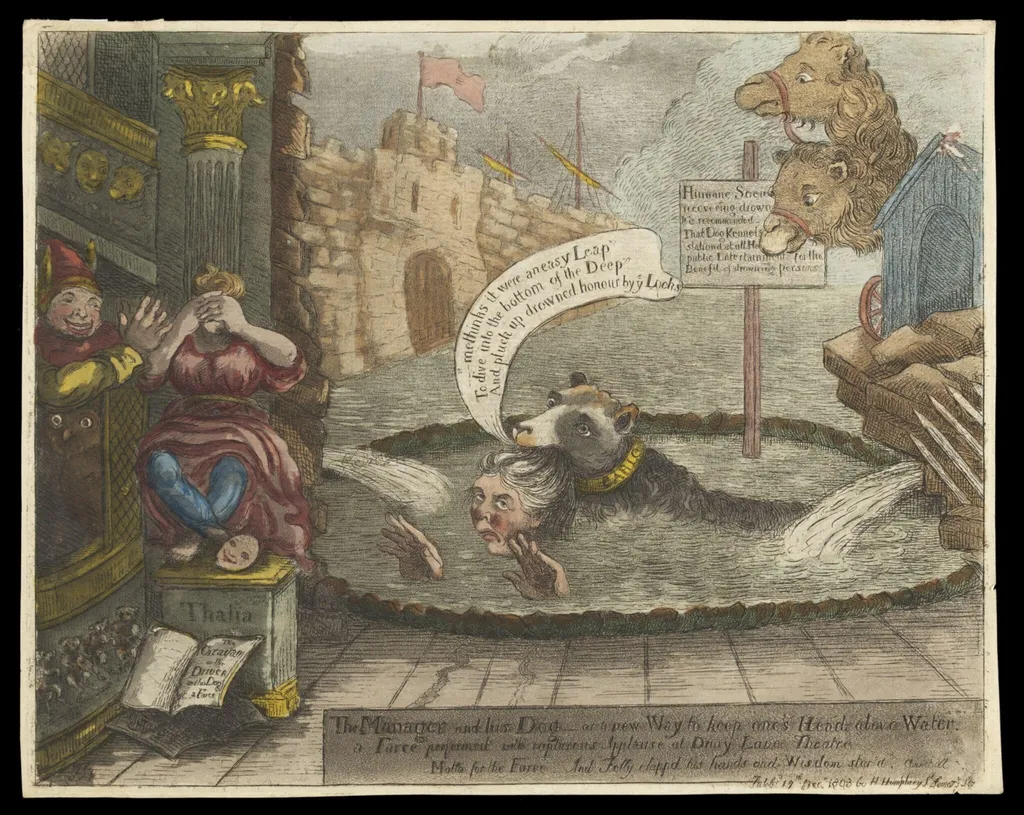
Harry Beard Print Collection is a print by the Romanticist artist James Sayers. It dates from 17 and is held in the collection of the Victoria and Albert Museum.
About this work
Overview
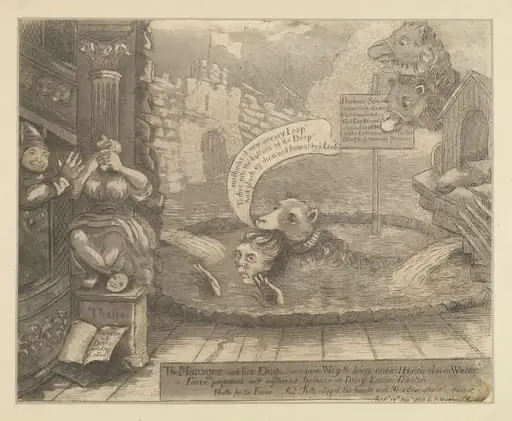
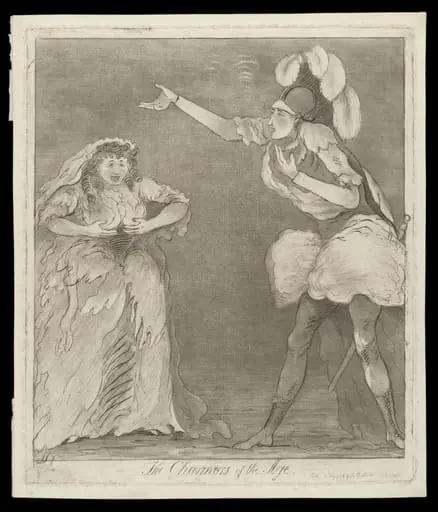
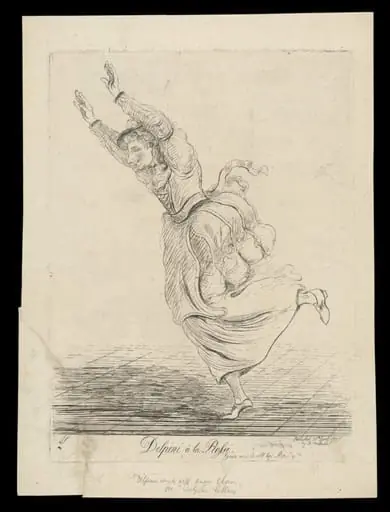
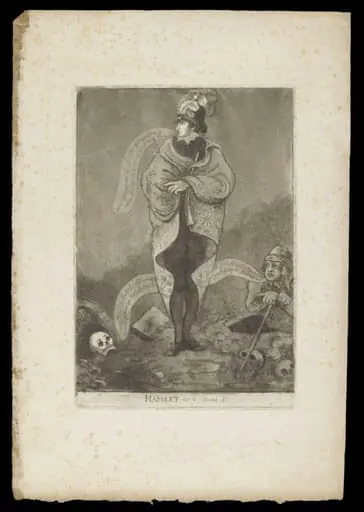
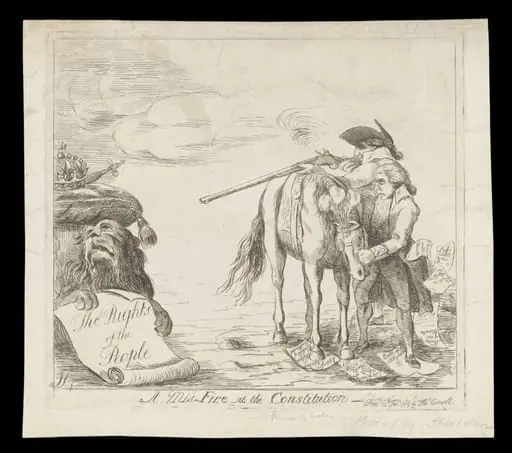
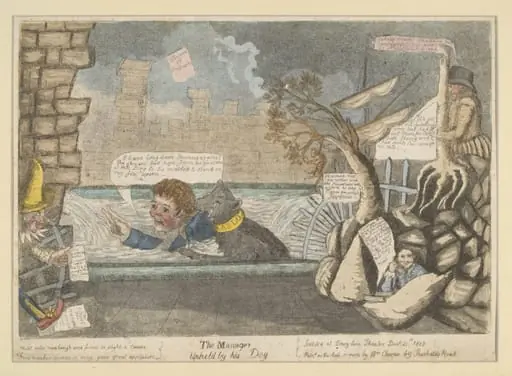
This 1803 colour print is part of the Harry Beard Print Collection, capturing a theatrical satire from London’s Drury Lane Theatre. It illustrates a comedic scene tied to a farce bearing the subtitle 'a new way to keep one's head above water.' The image pairs visual wit with a printed motto, reflecting the era’s fondness for blending stage humor with printed ephemera meant for public consumption.
Subject & Meaning
The imagery mocks his financial struggles and reliance on public favor, with the dog symbolizing loyalty or absurd dependence.
The print portrays Richard Brinsley Sheridan, the theatre’s manager, suspended in water, supported by a dog. The imagery mocks his financial struggles and reliance on public favor, with the dog symbolizing loyalty or absurd dependence. The motto—'And folly clapp'd his hands and wisdom star'd'—suggests a society that applauds nonsense while ignoring reason, turning Sheridan’s predicament into a broader cultural commentary.
Technique & Style
Executed as a hand-coloured print, the work employs bold outlines and flat, vivid hues typical of early 19th-century theatrical caricatures. The composition is deliberately exaggerated, with Sheridan’s precarious position and the dog’s sturdy stance creating visual irony. The style prioritizes immediate recognition and humorous impact over naturalism, aligning with popular print traditions of the time.
History & Provenance
Published by H. Humphrey in 1803, the print emerged during a period of financial instability for Sheridan and the Drury Lane Theatre. It was likely sold as a broadside or souvenir, circulating among theatre-goers and satirical enthusiasts. Its inclusion in the Harry Beard Collection reflects its survival as a cultural artifact documenting the intersection of theatre, politics, and public satire in Regency England.
Context
Sheridan’s tenure as manager of Drury Lane was marked by mounting debts and public scrutiny. This print reflects broader anxieties about artistic patronage and the fragility of cultural institutions. The dog, a common symbol of fidelity, is twisted into a metaphor for desperate reliance—mirroring contemporary debates over whether the arts should be sustained by public whims or institutional stability.
Legacy
The print endures as a record of how theatre figures were visually negotiated in popular media. It exemplifies the role of print culture in shaping public perception of artists and managers, not as heroes but as figures of ridicule and vulnerability. Its preservation in the Beard Collection ensures its place in understanding the visual rhetoric of early 19th-century British satire.
Artist & collection
Artist
James Sayers was a specialist in satirical prints that mocked British politics in the late 1700s and early 1800s.