Artwork
H Beard Print Collection
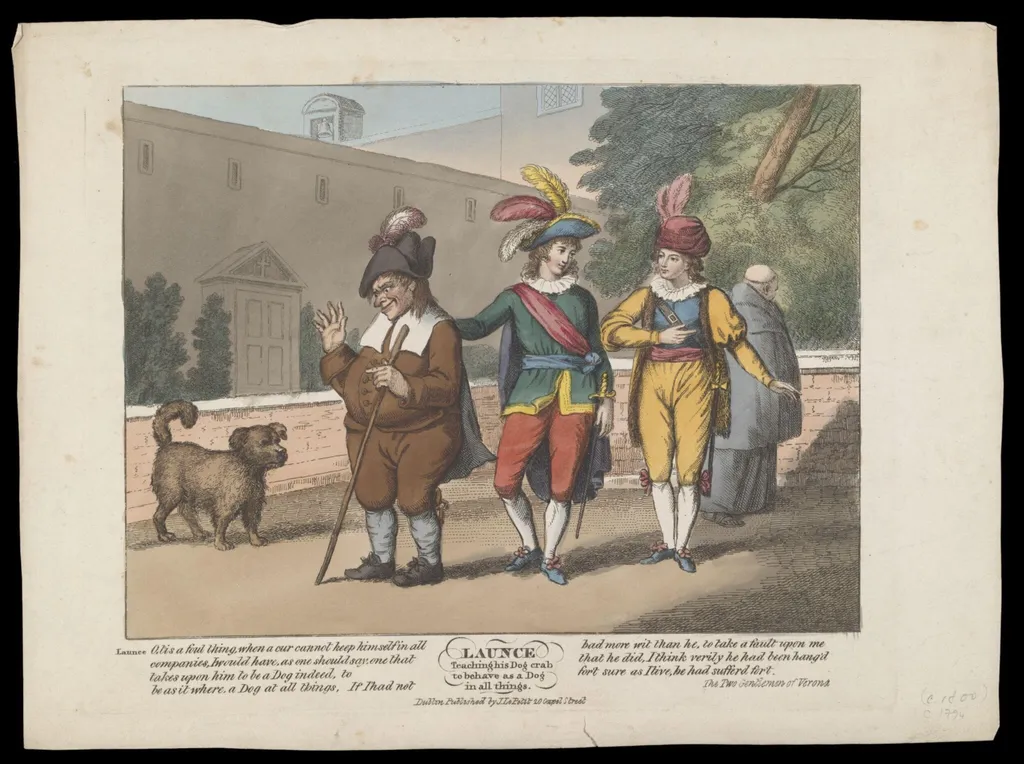
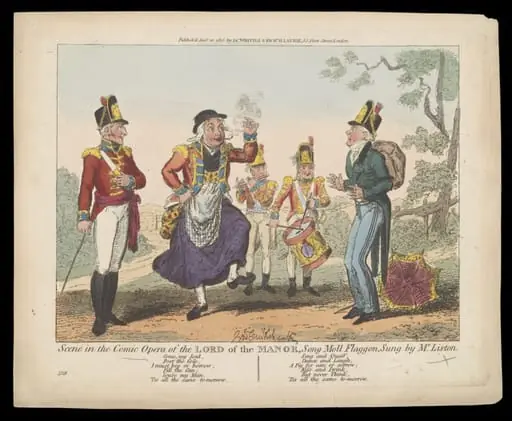
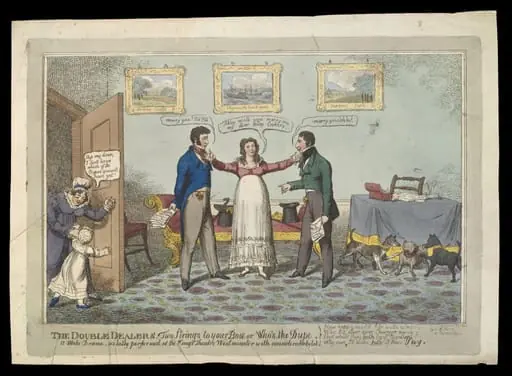
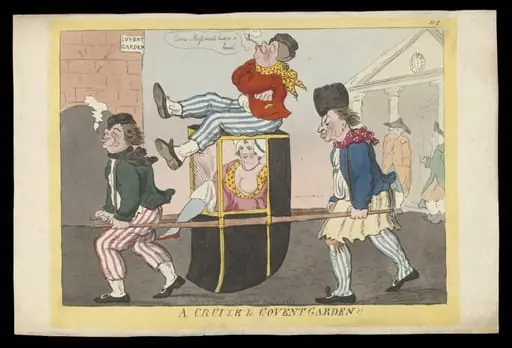
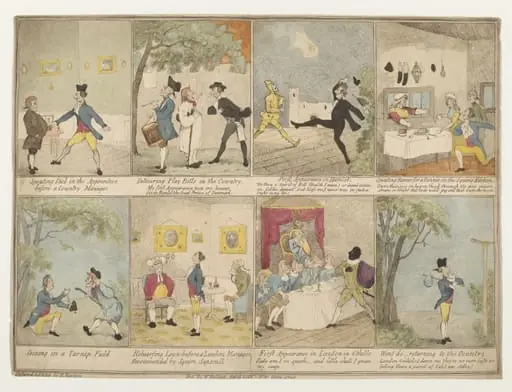
H Beard Print Collection is a print by the Romanticist artist J. Le Petit. It dates from 1794 and is held in the collection of the Victoria and Albert Museum.
About this work
The print is titled H Beard Print Collection, created by J. Le Petit around 1794.
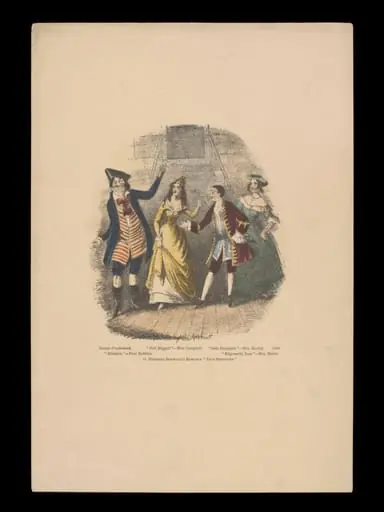
It's interesting because the print depicts a scene from a play, which was not a common theme back then. This scene is from The Two Gentlemen of Verona, showing a character teaching his dog.
You can learn more about this style by looking into the movement: Romanticism.
Overview
The work, catalogued as the H Beard Print Collection, is an 18th‑century print produced by the French publisher J. Le Petit around 1794. It illustrates a moment from Shakespeare’s comedy The Two Gentlemen of Verona, showing the character Launce instructing his dog, Crab, to act like a human canine.
Subject & Meaning
The image captures a humorous domestic scene in which Launce attempts to train his pet to conform to conventional dog behaviour, a motif that reflects the play’s comic exploration of loyalty and social roles. By focusing on a mundane yet playful interaction, the print underscores the theatrical source’s blend of levity and human‑animal relationships.
Technique & Style
Executed as a single‑colour print, the composition relies on line work and shading to convey depth and movement. The clear contours and exaggerated gestures are characteristic of late‑Baroque printmaking, while the emotive subject matter anticipates the Romantic interest in everyday drama and sentiment.
History & Provenance
Printed by J. Le Petit, a noted Parisian publisher of the period, the image was likely distributed as part of a series of theatrical illustrations. Its survival in the H Beard collection suggests it entered a private assemblage of prints, where it has been preserved as a representative example of late‑18th‑century graphic art.
Context
Depicting a scene from a Shakespearean play was relatively uncommon in print media of the 1790s, when classical and mythological subjects predominated. This work therefore offers insight into the growing appetite for literary and theatrical themes among the reading public of the time.
Artist & collection
Artist
This French printmaker had a habit of signing small—so small their initials “J.L.” show up in the corner of crowded scenes like a shy handwave.