Artwork
Hot Spice Ginger Bread Smoking Hot
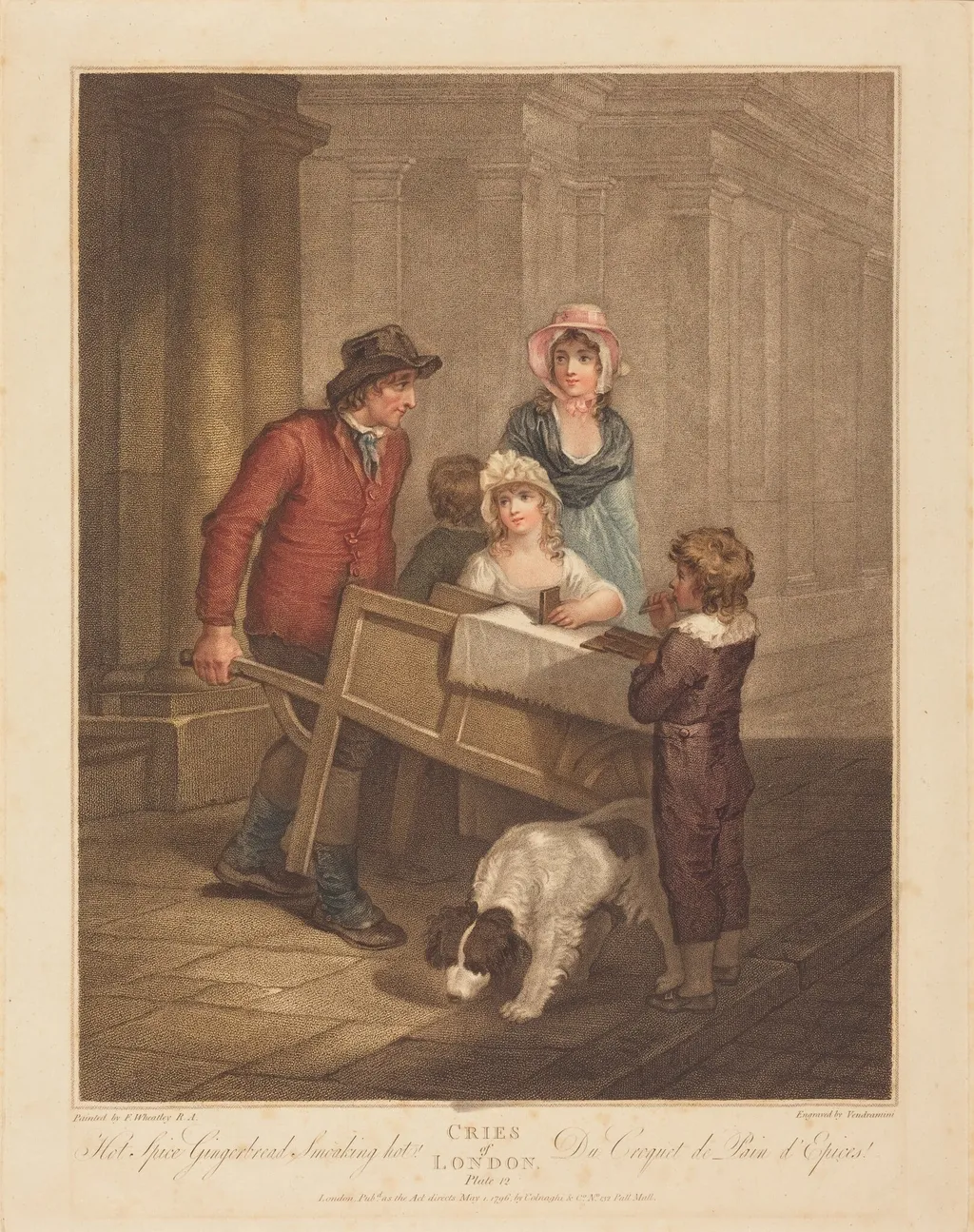
Hot Spice Ginger Bread Smoking Hot is an ink print by the Romanticist artist Giovanni Vendramini. It dates from 1796 and is held in the collection of the National Gallery of Art.
About this work
Overview
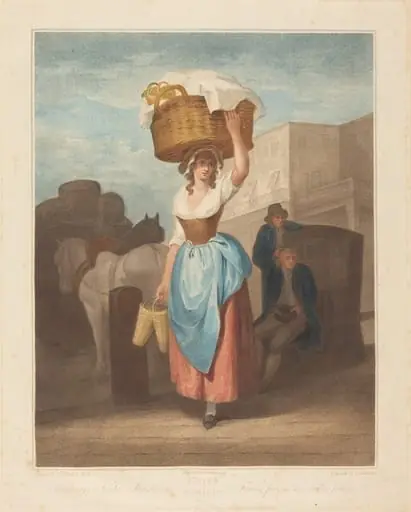
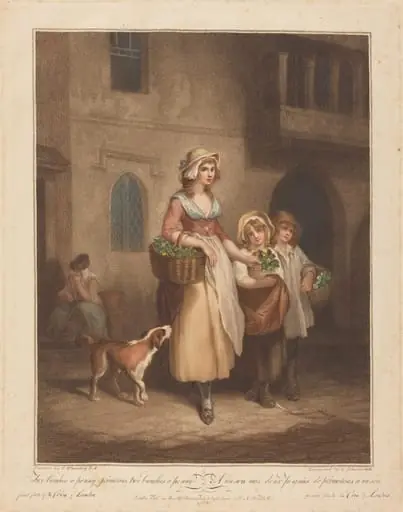
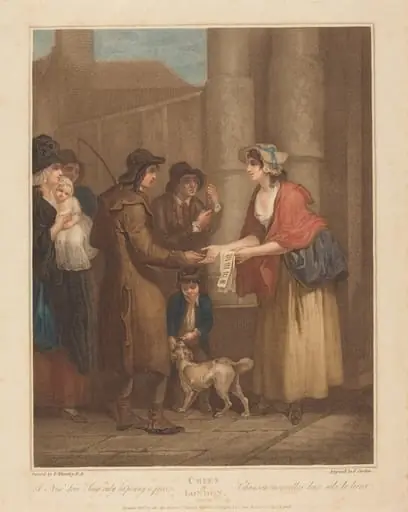
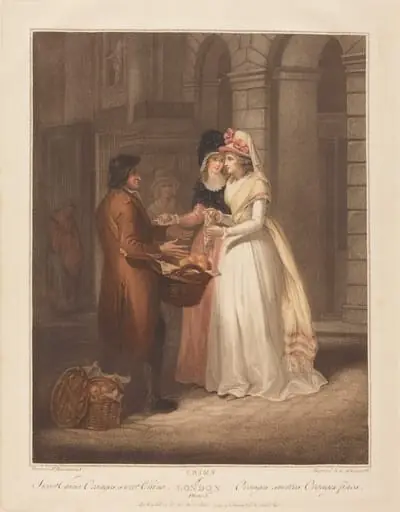
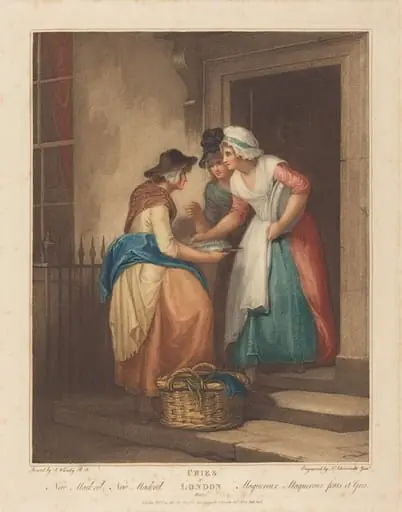
Created in 1796 by Giovanni Vendramini, this color stipple engraving depicts a street scene centered on a vendor’s cart laden with wooden boxes.
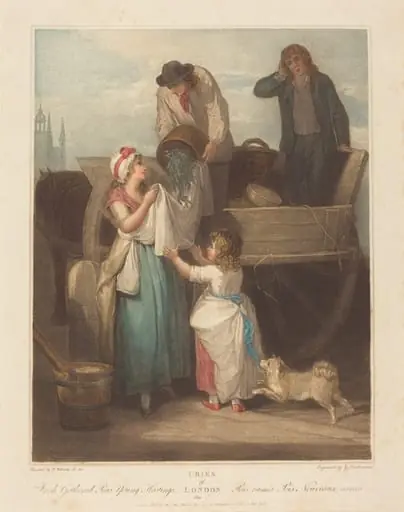
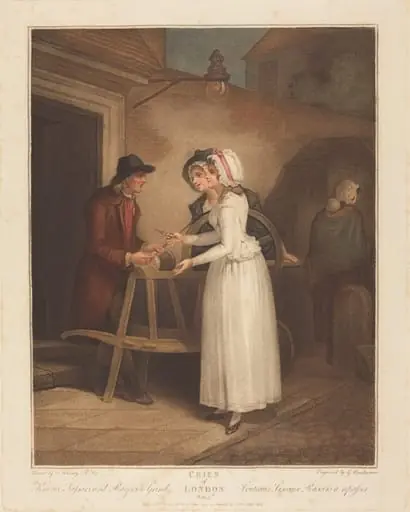
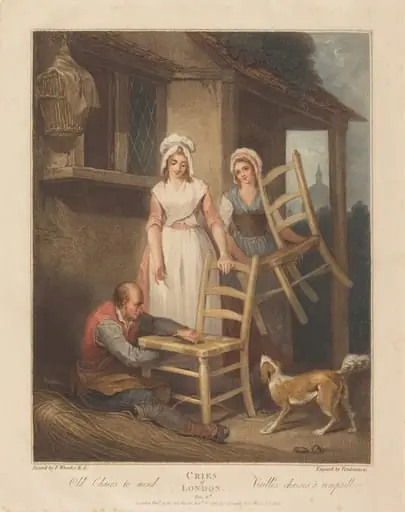
Created in 1796 by Giovanni Vendramini, this color stipple engraving depicts a street scene centered on a vendor’s cart laden with wooden boxes. The composition includes three children observing the scene, a reclining sheep, and a woman leaning against a wall. The title, 'Hot Spice Ginger Bread Smoking Hot,' suggests the sale of spiced baked goods, grounding the image in everyday urban commerce of the late 18th century.
Subject & Meaning
The scene captures a moment of street life, likely in a European city, where a vendor offers gingerbread to passersby. The children’s attentive postures and the woman’s distant gaze imply a quiet, observational rhythm to daily commerce. The sheep, possibly a stray or companion, adds an element of domestic chaos, reinforcing the informal, unidealized nature of the setting.
Technique & Style
Vendramini employed stipple engraving, using fine dots and delicate lines to build tonal gradations and texture. This method, distinct from traditional line engraving, allowed for softer modeling of forms and subtle shifts in light. The color application, though limited, enhances the warmth of the scene, particularly in the red coat and pink hat, without overwhelming the delicate inkwork.
History & Provenance
The print was produced in 1796 during a period when engraved street scenes were popular among middle-class collectors. Vendramini, active in Italy and possibly England, specialized in genre subjects rendered with precision. While specific early ownership records are sparse, the work reflects a broader European interest in documenting ordinary life through reproductive prints.
Context
In the late 18th century, urban markets in cities like London and Venice were vibrant hubs of commerce and social interaction. Prints like this served both as documentation and entertainment, appealing to audiences fascinated by the rhythms of public life. The inclusion of children and animals reflects a growing cultural interest in candid, unposed moments of the lower and middle classes.
Legacy
Vendramini’s work contributes to a tradition of printmaking that elevated everyday scenes into subjects worthy of artistic attention. Though not widely known today, this engraving exemplifies how stipple techniques expanded the expressive range of commercial print culture, influencing later genre artists who sought to capture the texture of urban existence with nuance and restraint.
Artist & collection