Artwork
Christ Descending into the Grave
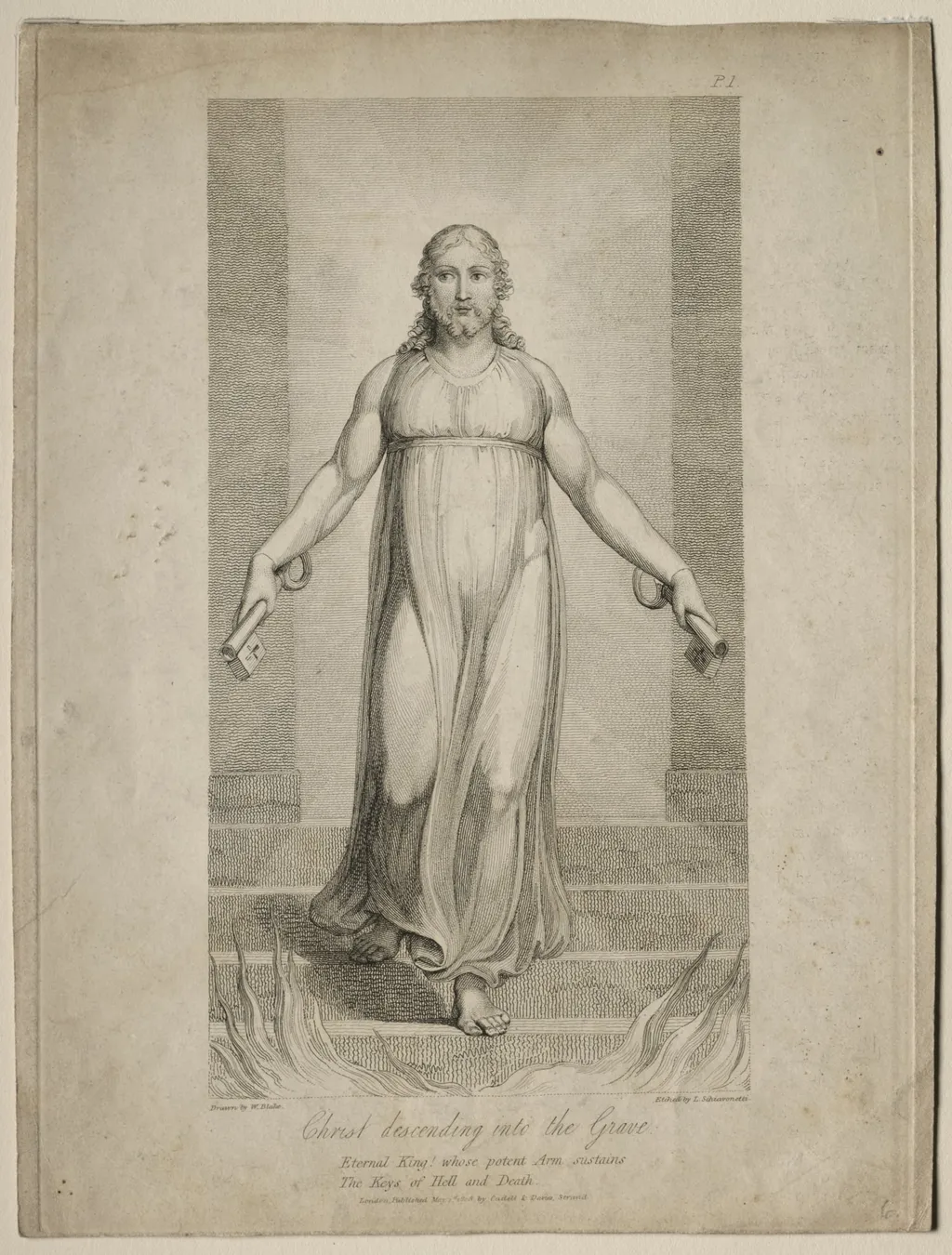
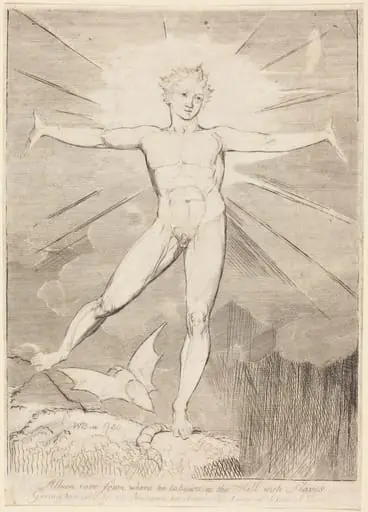
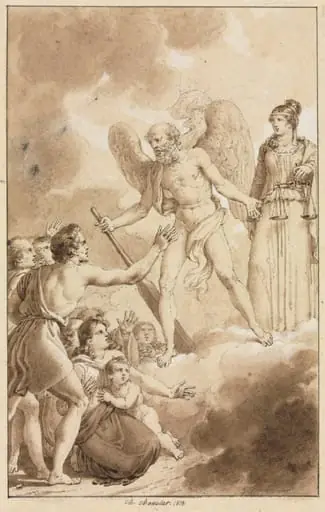
Christ Descending into the Grave is a print by the Romanticist artist Luigi Schiavonetti. It dates from 1808 and is held in the collection of the Cleveland Museum of Art.
About this work
This is a black-and-white print of a robed figure standing with arms outstretched, holding two small objects in each hand.
This is a black-and-white print of a robed figure standing with arms outstretched, holding two small objects in each hand. The figure’s face is calm, with wavy hair and a beard. Flames flicker at their feet, and the background looks like a simple draped cloth.
The title below says *Christ descending into the grave*, and the print was made in London in 1808. The artist used strong lines to show light and shadow, making the figure stand out.
Next, look up chiaroscuro to see how this technique works.
Overview
Created in 1808, this black-and-white print by Luigi Schiavonetti depicts Christ at the moment of descent into the tomb. Executed in London, it is a reproductive engraving based on an earlier painting, not an original composition. The work is held in the collection of The Cleveland Museum of Art and reflects the 19th-century practice of translating religious imagery into accessible graphic form for private devotion and public display.
Subject & Meaning
The figure of Christ, serene and robed, stands with arms outstretched, holding two small objects—likely the instruments of his Passion. Flames at his feet suggest the purifying or transformative nature of death, while the plain draped background isolates him as a solitary, sacred presence. The composition emphasizes stillness and acceptance, aligning with theological interpretations of Christ’s voluntary descent into death as a necessary step toward resurrection.
Technique & Style
Schiavonetti employed fine, incised lines to model form through stark contrasts of light and shadow, a method rooted in chiaroscuro. The absence of color heightens the emotional gravity, focusing attention on the figure’s posture and facial calm. The engraving’s precision and controlled tonal gradations reflect the academic tradition of reproductive printmaking, where technical mastery served to convey spiritual solemnity.
History & Provenance
The print was produced in London in 1808 as part of a broader effort to disseminate religious imagery through engraved reproductions. Schiavonetti, an Italian-born engraver active in England, specialized in translating Old Master compositions into print. Its presence in The Cleveland Museum of Art’s collection indicates its acquisition during the 19th or early 20th century, likely through private donation or institutional purchase focused on religious art.
Context
In early 19th-century Britain, religious prints like this one were widely circulated among middle-class households, serving both devotional and educational purposes. The emphasis on Christ’s calm acceptance of death resonated with contemporary spiritual ideals that valued stoic piety. Schiavonetti’s work fits within a tradition of engravers who adapted Baroque and Renaissance compositions for a Protestant audience seeking accessible sacred imagery.
Legacy
Though not an original painting, the print endures as an example of skilled reproductive engraving and the cultural role of religious imagery in domestic life. It reflects the era’s aesthetic values—clarity, restraint, and emotional gravity—while preserving a visual language of faith that bridged artistic tradition and popular piety. Its preservation in a major museum underscores its historical significance within print culture.
Artist & collection

Artist
Luigi Schiavonetti (1765–1810) was an Italian artist, born in Bassano del Grappa.