Artwork
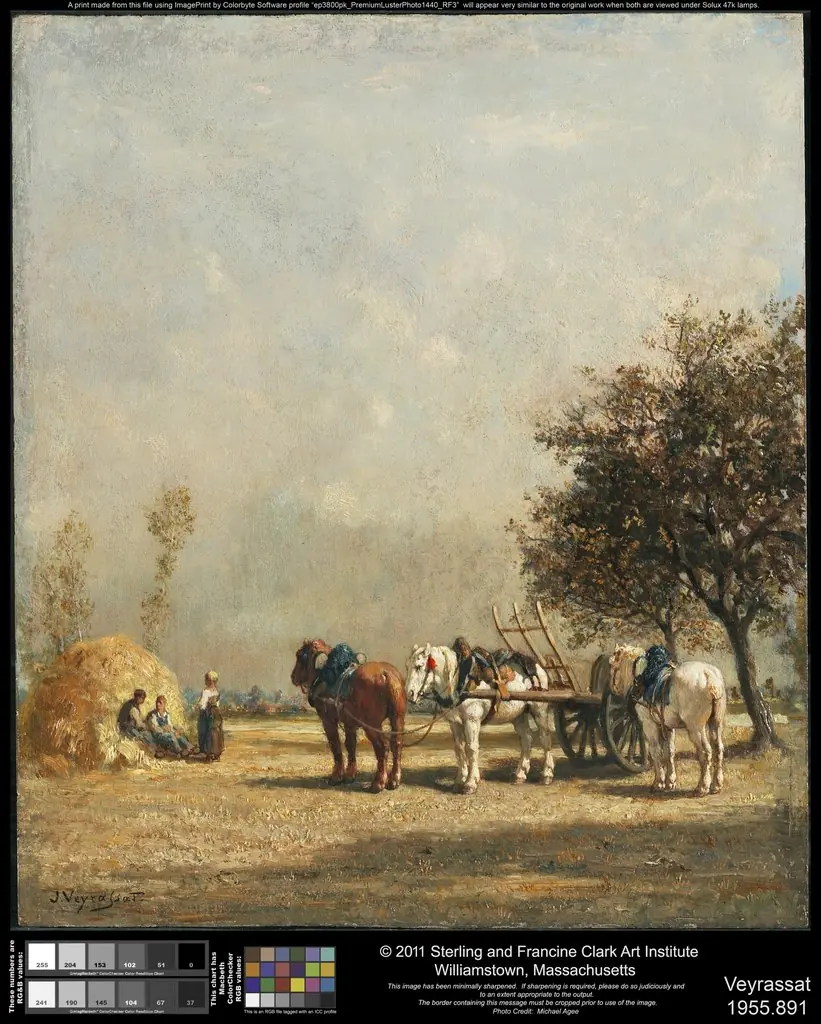
The Hay wagon
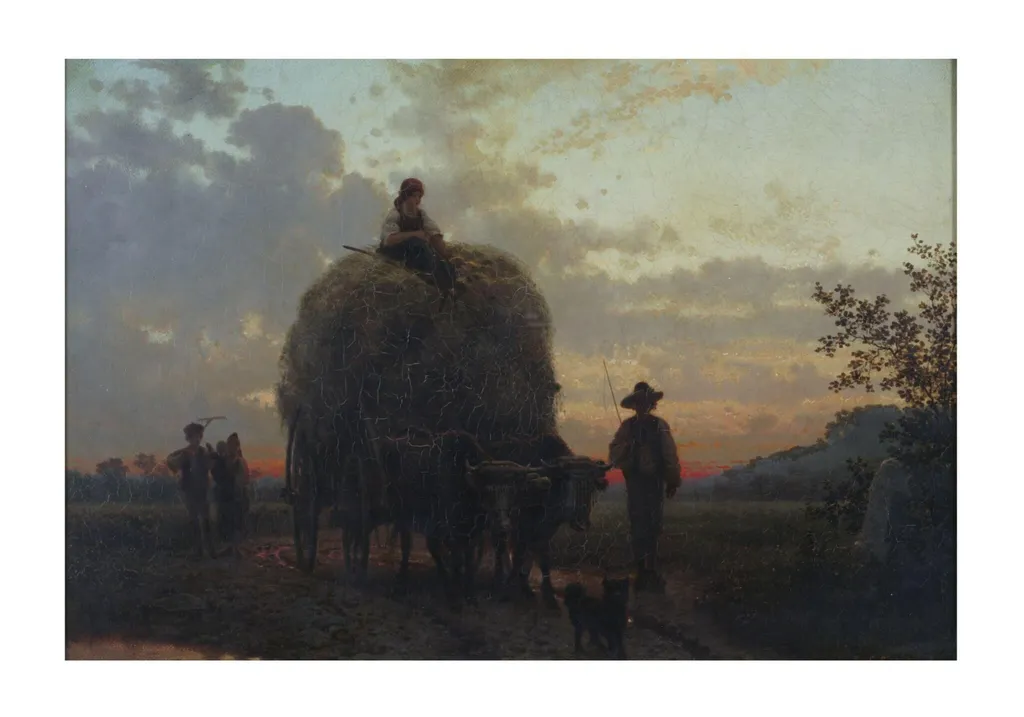
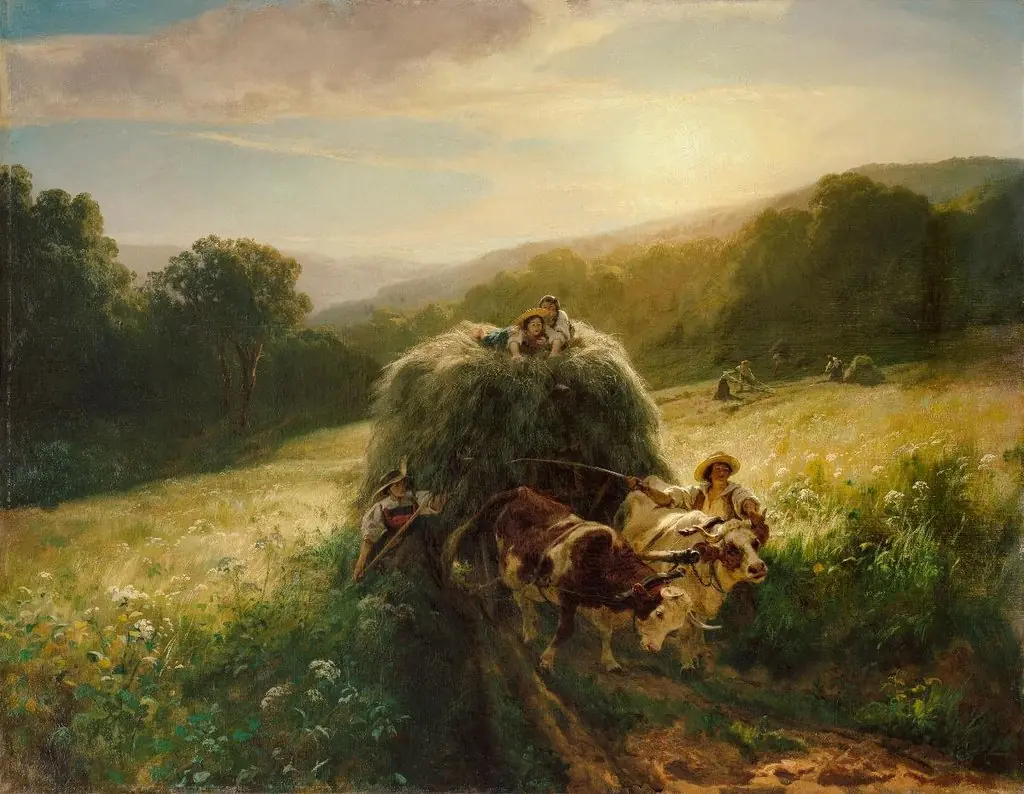
The Hay wagon is an oil painting by the Impressionist artist Karl Schlesinger. It dates from 1864 and is held in the collection of the Victoria and Albert Museum.
About this work
Overview
This oil painting of a hay wagon, created in the 1860s, exemplifies his preference for tranquil, everyday moments rendered with atmospheric precision.
Karl Schlesinger, born in Lausanne in 1825, trained under Dyckmans in Antwerp before settling in Düsseldorf in 1852. He devoted his career to landscape and genre scenes, often capturing rural life with meticulous detail and subtle lighting. This oil painting of a hay wagon, created in the 1860s, exemplifies his preference for tranquil, everyday moments rendered with atmospheric precision. His work aligns with the Düsseldorf school’s emphasis on naturalism and tonal harmony.
Subject & Meaning
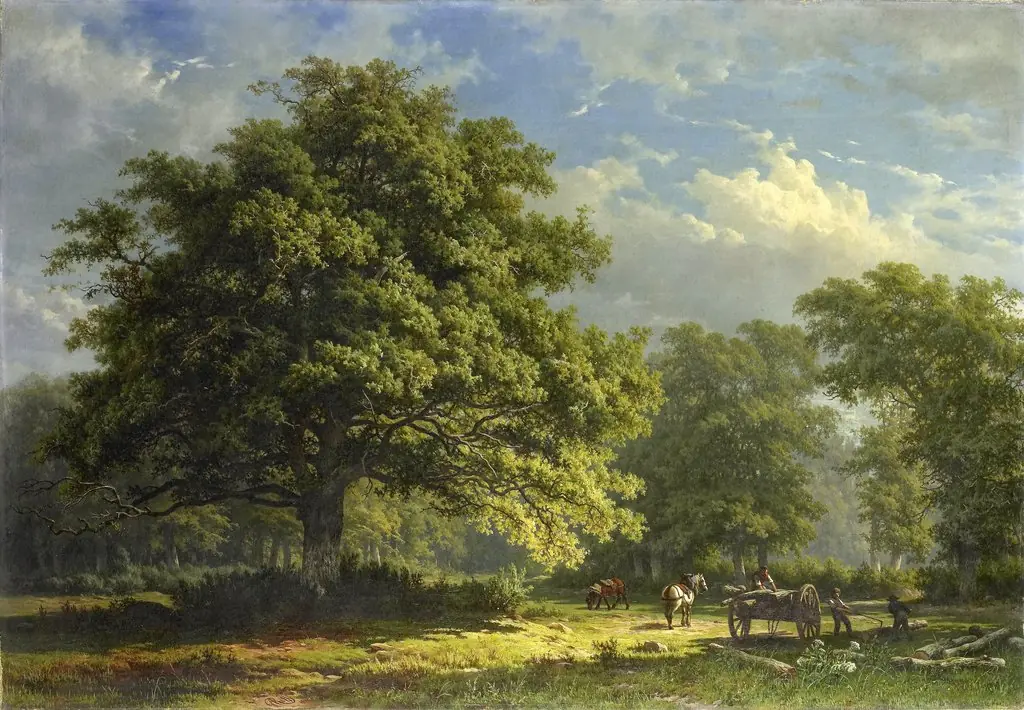
The painting depicts a simple hay wagon returning home at dusk, its forms softened by golden light. No figures are present, yet the scene suggests quiet labor and the rhythm of rural existence. The absence of drama or narrative invites contemplation rather than storytelling. Schlesinger’s focus on ordinary rural life reflects a broader 19th-century interest in the dignity of peasant routines, rendered without sentimentality or idealization.
Technique & Style
Schlesinger employed fine brushwork to render textures—hay, wood, earth—with clarity, while allowing the sky and shadows to dissolve into a hazy, luminous glow. The backlighting creates depth and mood, a hallmark of Düsseldorf-trained artists. His technique balances precision in foreground elements with loose, atmospheric handling in the distance, achieving a sense of realism grounded in observed light rather than theatrical effect.
History & Provenance
Schlesinger lived and worked in Düsseldorf from 1852 until his death in 1893, a period when the city was a leading center for academic painting in German-speaking Europe. This painting likely originated in his studio during the 1860s, a time when he produced numerous similar rural scenes. While its early ownership is undocumented, its stylistic consistency with his known oeuvre supports its attribution and dating to this decade.
Context
Düsseldorf’s art academy emphasized detailed observation and emotional restraint, influencing Schlesinger’s approach. His landscapes responded to a growing urban audience’s nostalgia for rural life, yet avoided overt romanticism. Unlike historical or religious subjects favored by some contemporaries, Schlesinger’s focus on quiet agrarian moments aligned with a quieter, more introspective current in mid-century German painting.
Legacy
Schlesinger’s work, though not widely exhibited beyond regional circles, contributed to the Düsseldorf school’s reputation for refined naturalism. His hay wagon paintings, with their calm lighting and unembellished subjects, represent a modest but persistent strand of 19th-century European art—one that valued quiet observation over grand narrative. His influence remains visible in regional collections and the continued appreciation for understated landscape traditions.
Artist & collection