Artwork
Saint Paul
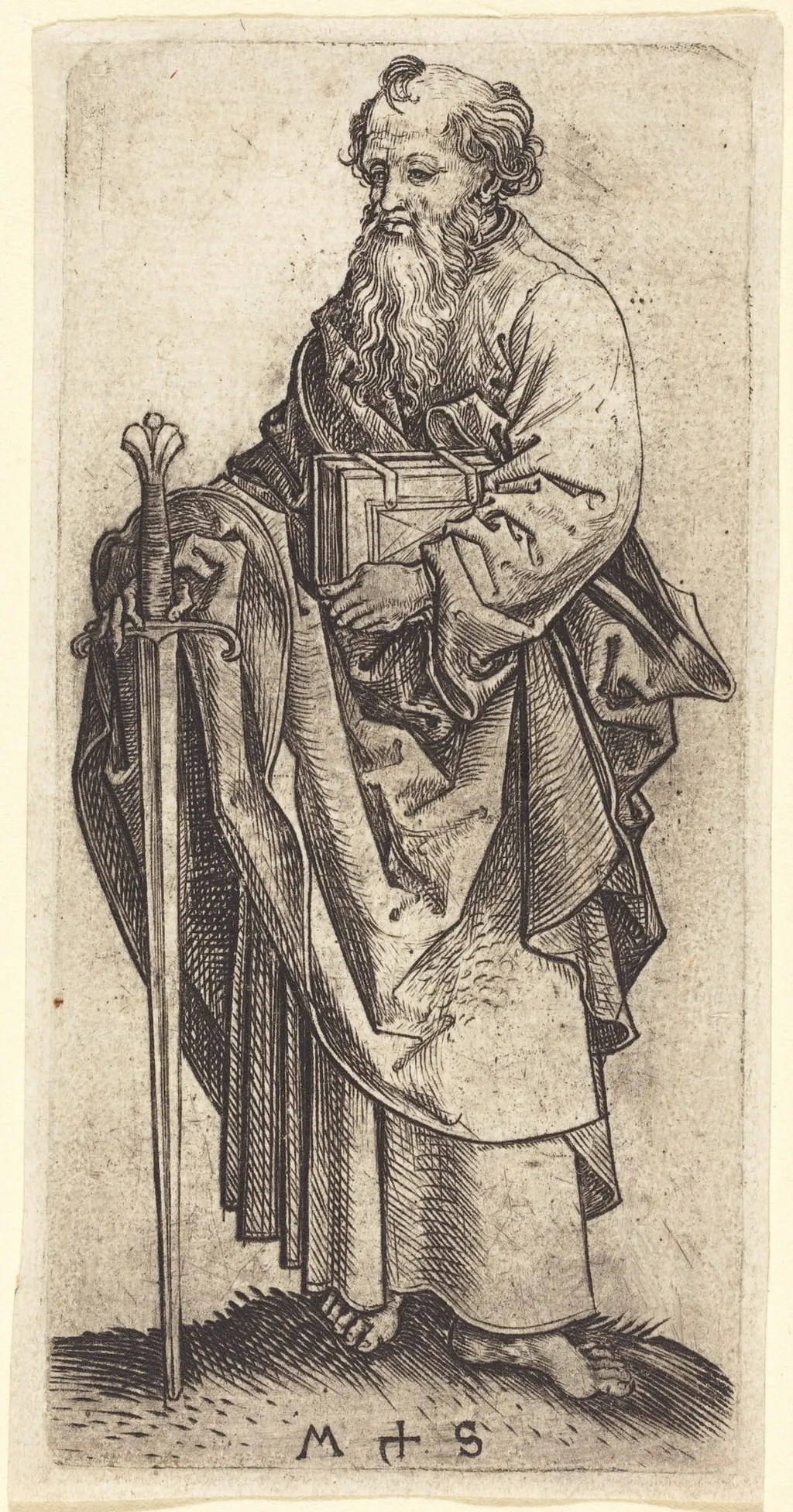
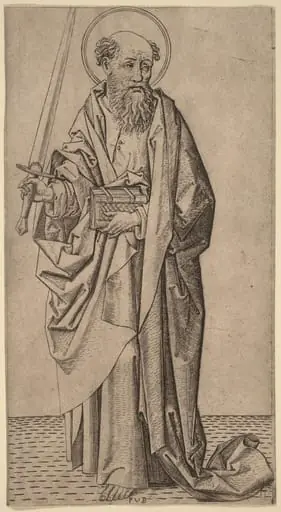
Saint Paul is an ink print by the Renaissance artist Martin Schongauer. It dates from 1480 and is held in the collection of the National Gallery of Art.
About this work
Overview
Executed in black ink on laid paper, the work exemplifies the technical precision and expressive potential of early Northern European printmaking.
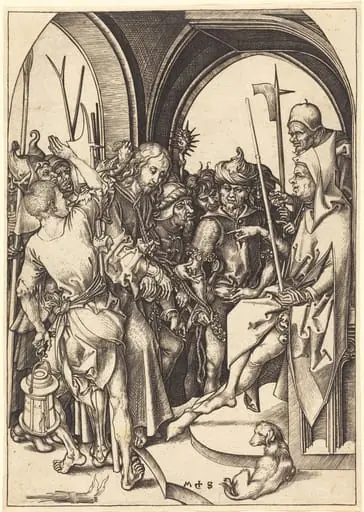
Martin Schongauer’s engraving of Saint Paul, dated circa 1480, is one of 116 known engravings by the Alsatian artist. Executed in black ink on laid paper, the work exemplifies the technical precision and expressive potential of early Northern European printmaking. Schongauer’s signature monogram appears on the piece, a common feature in his engraved works, affirming his authorship and the growing status of the print as an independent art form.
Subject & Meaning
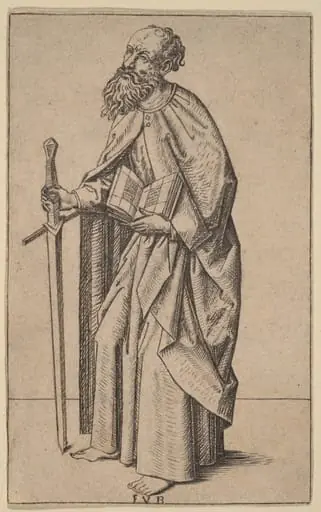
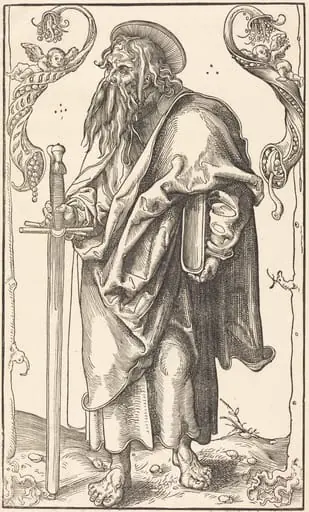
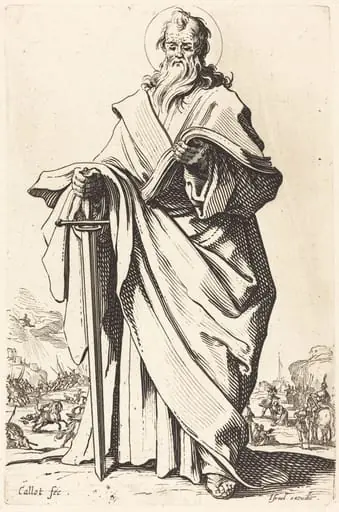
The apostle Paul is portrayed with solemn dignity, holding a book to signify his epistles and a sword to reference his execution by beheading. These attributes, drawn from longstanding Christian iconography, convey his role as a foundational theologian and martyr. His intense gaze and composed posture reinforce his intellectual and spiritual authority, aligning the image with devotional practices of the late medieval period.
Technique & Style
Schongauer employed fine, controlled lines to model form through cross-hatching, creating subtle gradations of light and shadow. The texture of Paul’s beard, the folds of his robe, and the sheen of the sword are rendered with meticulous detail, giving the image a sculptural depth. The engraving’s clarity and tonal richness reflect mastery of metalplate incision, where each line was carefully carved to control ink retention and visual weight.
History & Provenance
The engraving was produced during Schongauer’s most active period in Colmar, when his prints circulated widely across Europe. Though no specific early ownership records survive for this particular impression, the survival of multiple copies suggests broad distribution among clergy, scholars, and collectors. Its preservation in institutional collections today underscores its enduring value as a benchmark in print history.
Context
In the decades before Dürer’s rise, Schongauer dominated Northern printmaking, bridging Gothic traditions and emerging Renaissance sensibilities. His engravings, including this one, were studied by younger artists and served as models for religious imagery in both print and painting. The work reflects the devotional culture of late medieval Europe, where images of saints functioned as aids to prayer and moral instruction.
Legacy
Schongauer’s technical innovations in engraving influenced generations of Northern artists, most notably Dürer, who admired and copied his work. The precision and emotional restraint of this Saint Paul helped define the aesthetic possibilities of the medium. As one of the earliest engravings to achieve wide recognition, it contributed to the elevation of printmaking from craft to respected artistic discipline.
Artist & collection

Artist
Martin Schongauer, also known as Martin Schön or Hübsch Martin by his contemporaries, was an Alsatian engraver and painter.