Artwork
Saint Paul
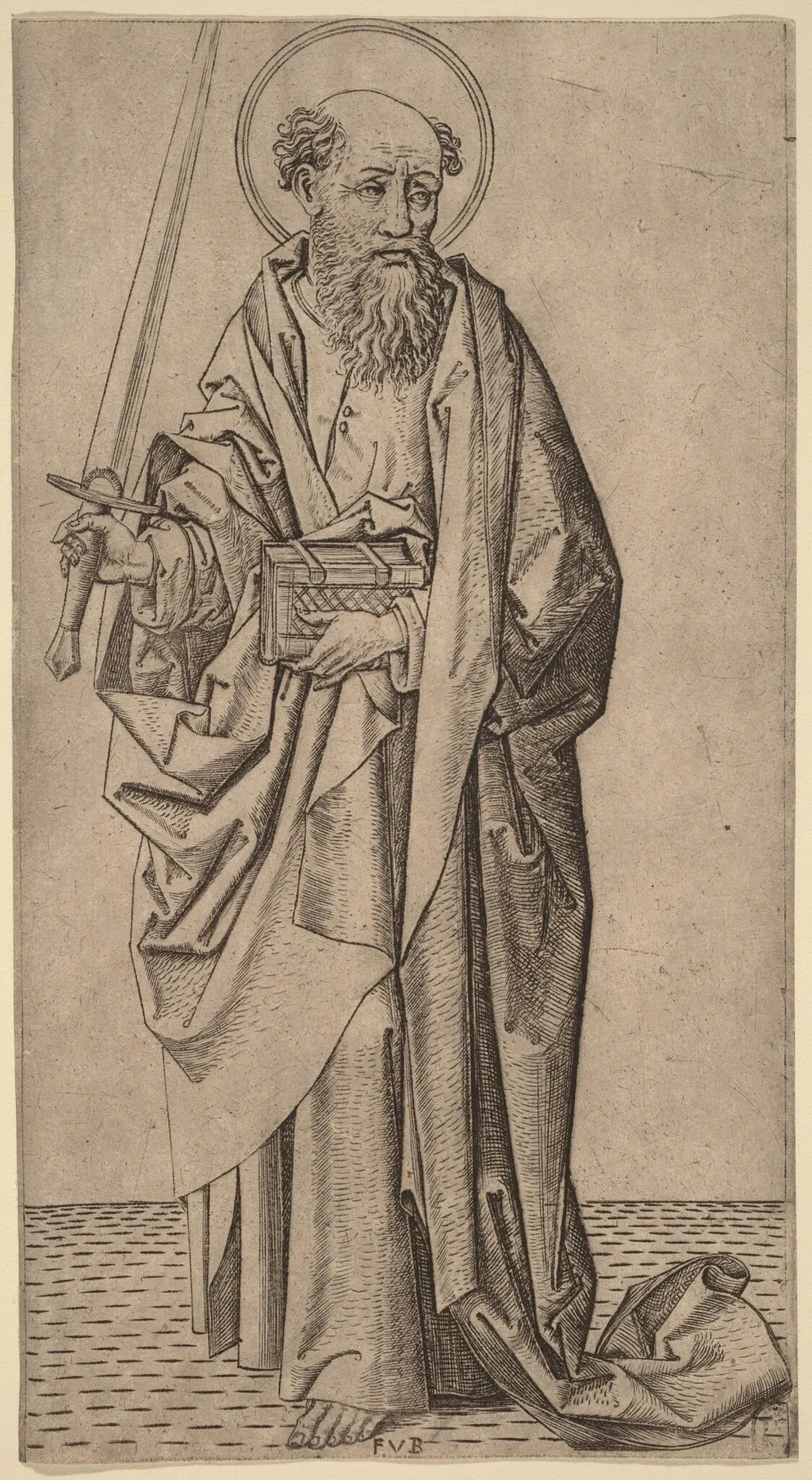
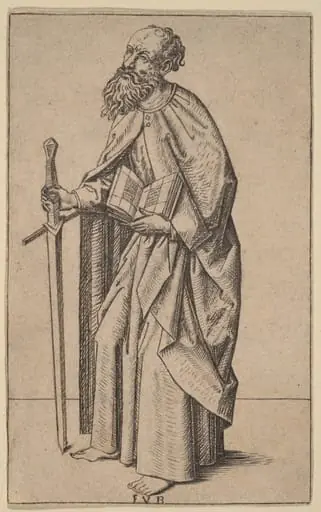
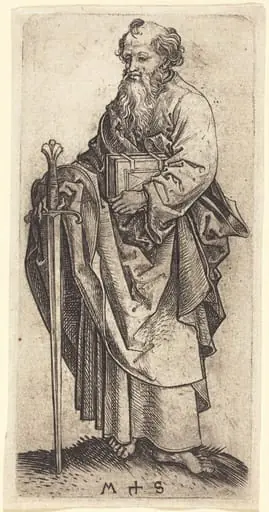
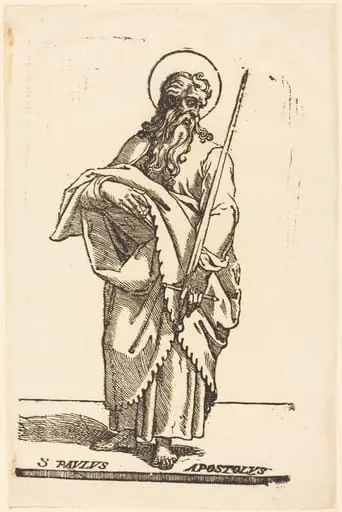
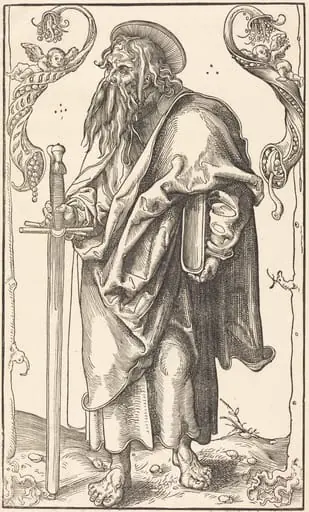
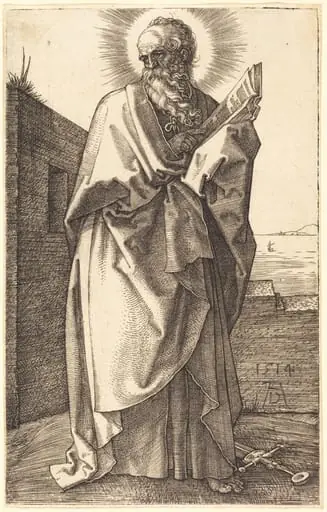
Saint Paul is an ink print by the Renaissance artist Master FVB. It dates from 1495 and is held in the collection of the National Gallery of Art.
About this work
Overview
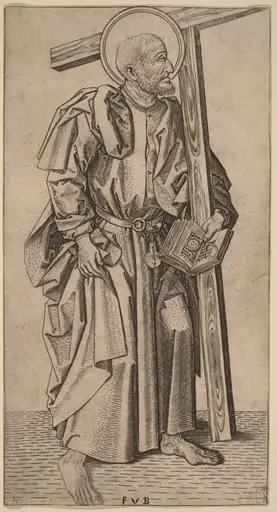
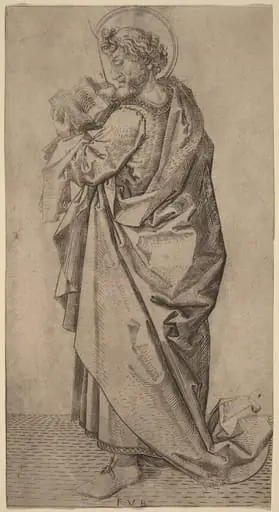
Saint Paul is a religious engraving created by Master FVB, an anonymous early Netherlandish artist, around 1495. The work is a black-and-white print depicting the saint in a characteristic contemplative pose.
Subject & Meaning
The engraving portrays Saint Paul, identifiable by his beard, halo, and attributes: a sword (symbolizing his martyrdom) and a small box (possibly representing his writings or a symbol of his ministry). Bare feet and a discarded hat beside him may signify humility or renunciation.
Technique & Style
Executed with fine lines and nuanced shading, the engraving showcases Master FVB's skill in achieving depth, particularly in the folds of Saint Paul's long robe. The style aligns with Renaissance printmaking conventions of the late 15th century.
History & Provenance
Active between 1480–1500, Master FVB's *Saint Paul* (c. 1495) reflects influences from notable contemporaries, including Dieric Bouts, the Master of the Amsterdam Cabinet, and Martin Schongauer, indicating the artist's engagement with the broader artistic trends of the time.
Context
This engraving represents a common subject in late 15th-century religious printmaking, catering to the devotional needs of the populace. The use of metal plates for engraving allowed for widespread dissemination of such religious imagery.
Legacy
While *Saint Paul* by Master FVB does not singularly define the artist's impact, it contributes to the understanding of early Netherlandish engraving's evolution and the popularization of religious themes in Renaissance print culture.
Artist & collection

Artist
Master FVB (active c. 1480 — 1500) was an anonymous early Netherlandish engraver. According to one tradition, the artist is identical to Franz von Bocholt, but there seems to be no evidence to support such a…