Artwork
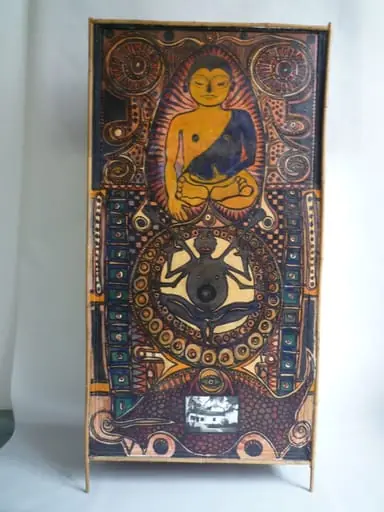
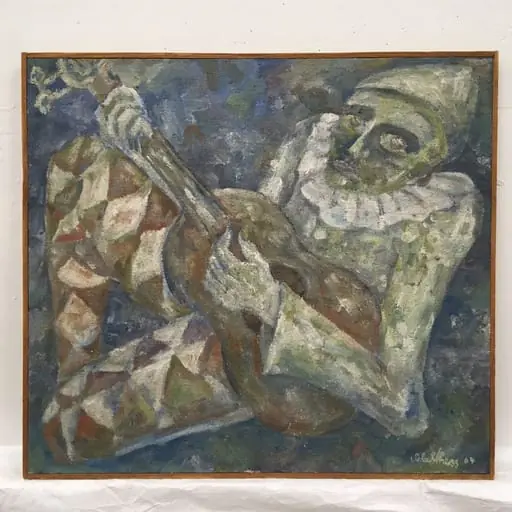
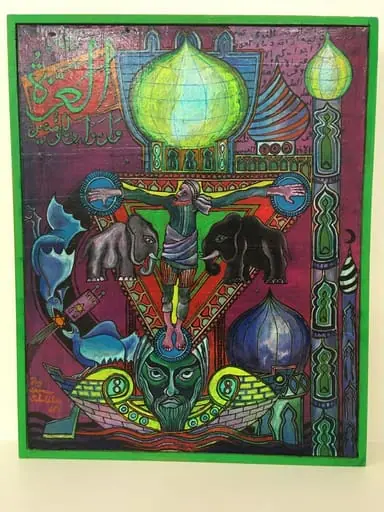
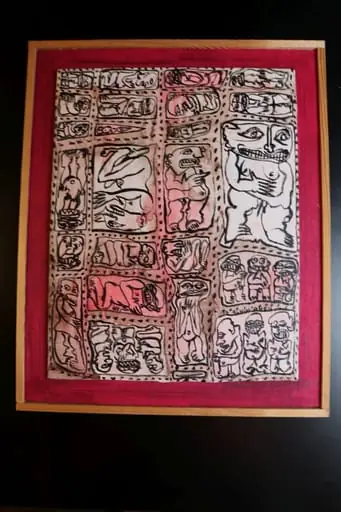
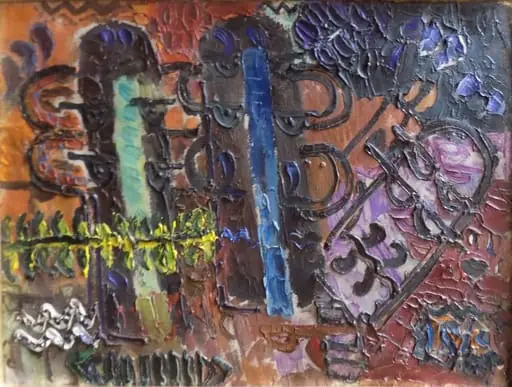
Schuldhess, Jörg Shimon - Gemälde, Dahinter ist kein Wunder
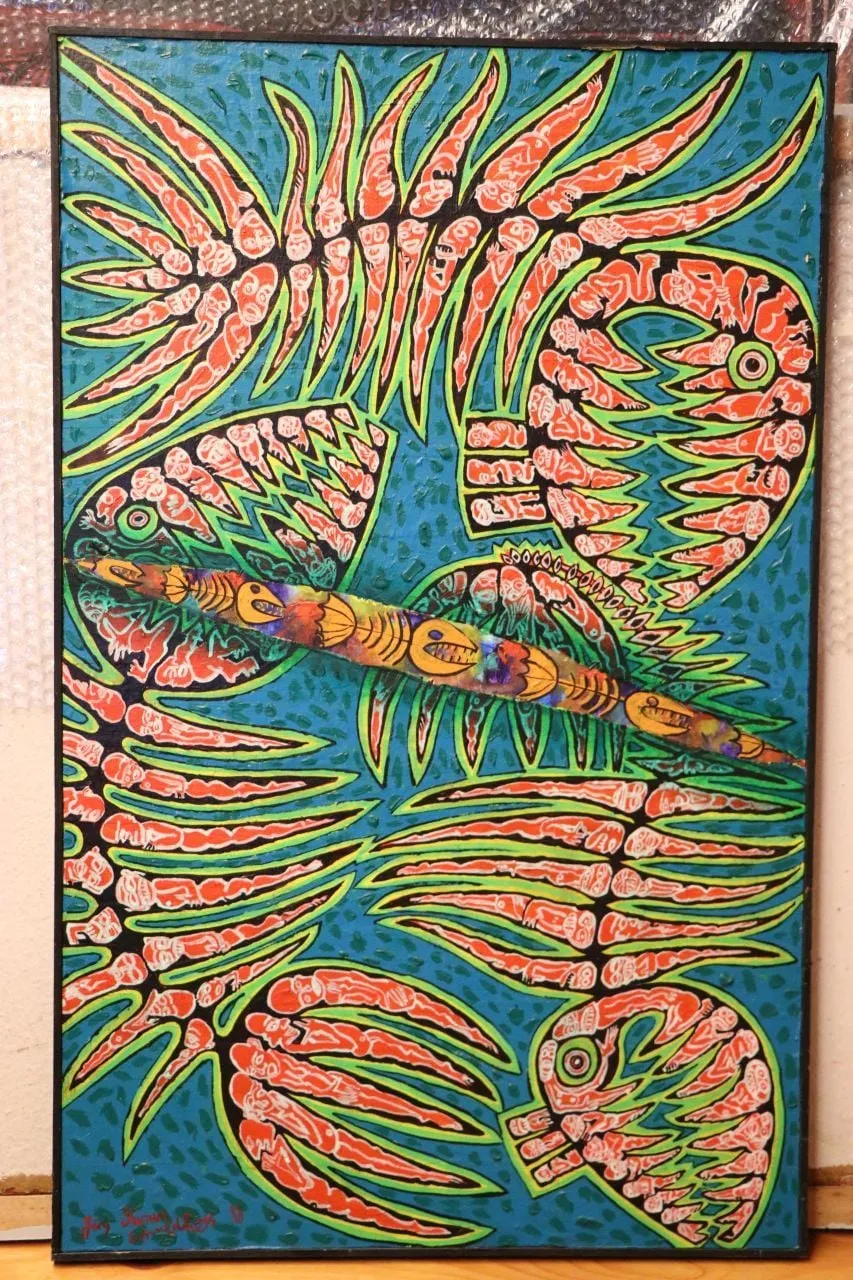
Schuldhess, Jörg Shimon - Gemälde, Dahinter ist kein Wunder is an unspecified painting by Jörg Shimon Schuldhess. It dates from 1988 and is held in the collection of the Poets and City Museum Liestal.
About this work
Overview
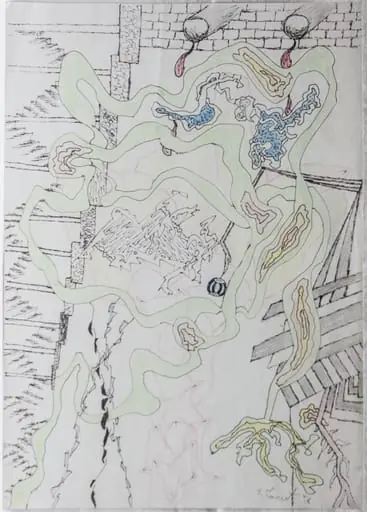
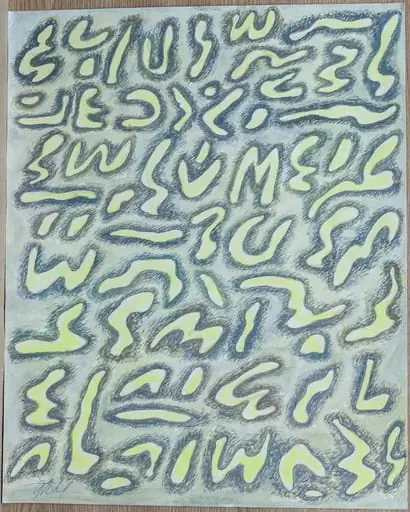
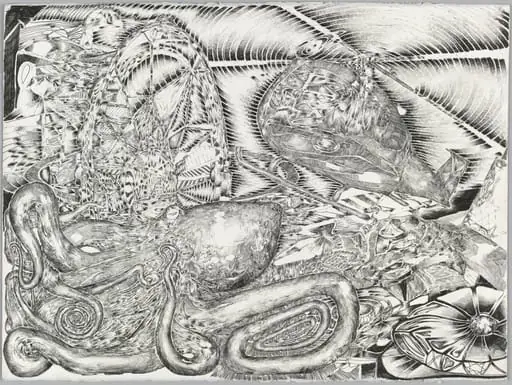
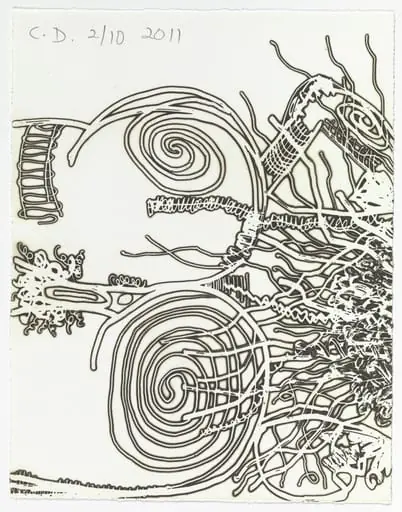
Created in 1988 by Jörg Shimon Schuldhess, this abstract painting is part of the Museum of Ethnography’s collection. It presents a dynamic composition of fish and aquatic flora rendered in vivid hues, with no literal narrative or symbolic intent beyond formal arrangement. The work reflects the artist’s engagement with visual rhythms rather than representational storytelling.
Subject & Meaning
The painting features stylized fish and plant forms, neither scientifically accurate nor culturally specific. Their interwoven shapes suggest organic motion but avoid clear symbolism. The absence of a hidden meaning is implied by the title, which translates to 'Behind It, There Is No Miracle,' reinforcing a focus on material presence over metaphor.
Technique & Style
Schuldhess employs bold, flat areas of color outlined in crisp green lines, evoking folk or decorative traditions without direct citation. Orange and white dominate the figures against a blue ground, creating high contrast. The brushwork is deliberate but unrefined, prioritizing rhythmic repetition over detail, resulting in an energetic, pattern-like surface.
History & Provenance
The work entered the Museum of Ethnography’s holdings after its creation in 1988. No record of prior ownership or exhibition history is publicly documented. Its inclusion in an ethnographic institution suggests an interest in non-Western aesthetic modes, though the artist’s background is rooted in contemporary European practice.
Context
Schuldhess worked during a period when many artists explored abstraction through non-academic visual languages. His use of bright, simplified forms aligns with broader post-1970s tendencies to revisit folk and craft aesthetics, though his work resists cultural appropriation by avoiding direct references to any specific tradition.
Legacy
The painting remains a singular example within Schuldhess’s oeuvre and the museum’s collection. It has not been widely reproduced or studied, and its influence on later artists is undocumented. Its significance lies in its quiet assertion of abstraction as a self-contained visual experience, free from imposed meaning.
Artist & collection
Artist
Swiss artist Jörg Shimon Schuldhess painted everyday scenes and objects with a quiet, offbeat focus.