Artwork
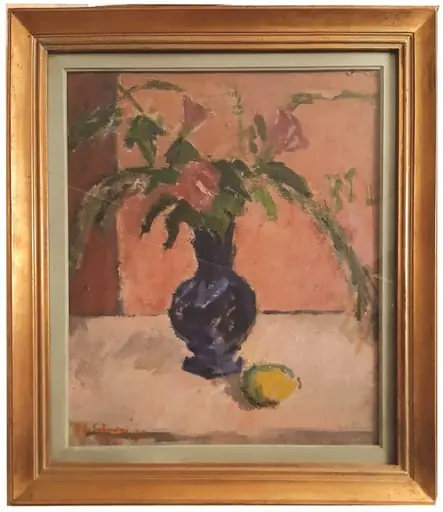
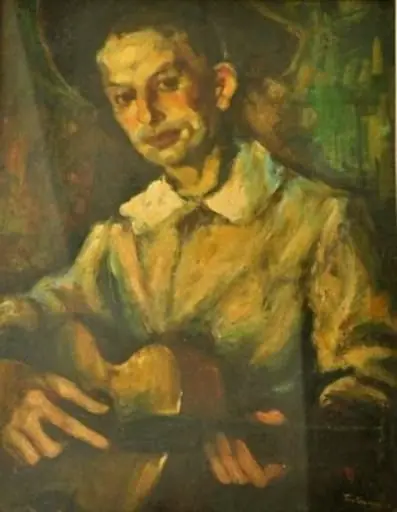
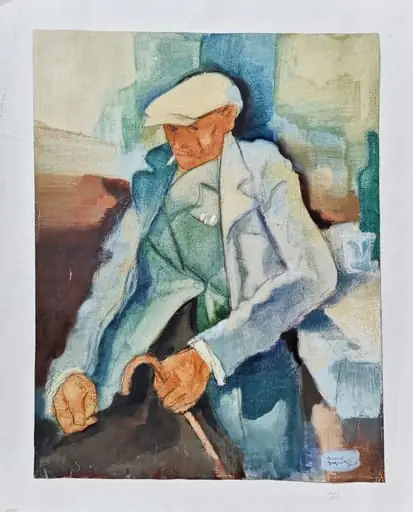
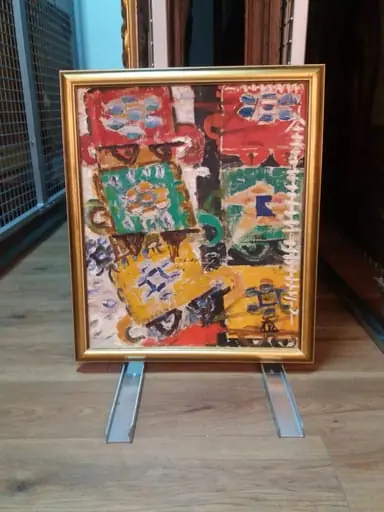
Schuldhess, Jörg Shimon - Gemälde, Musiker
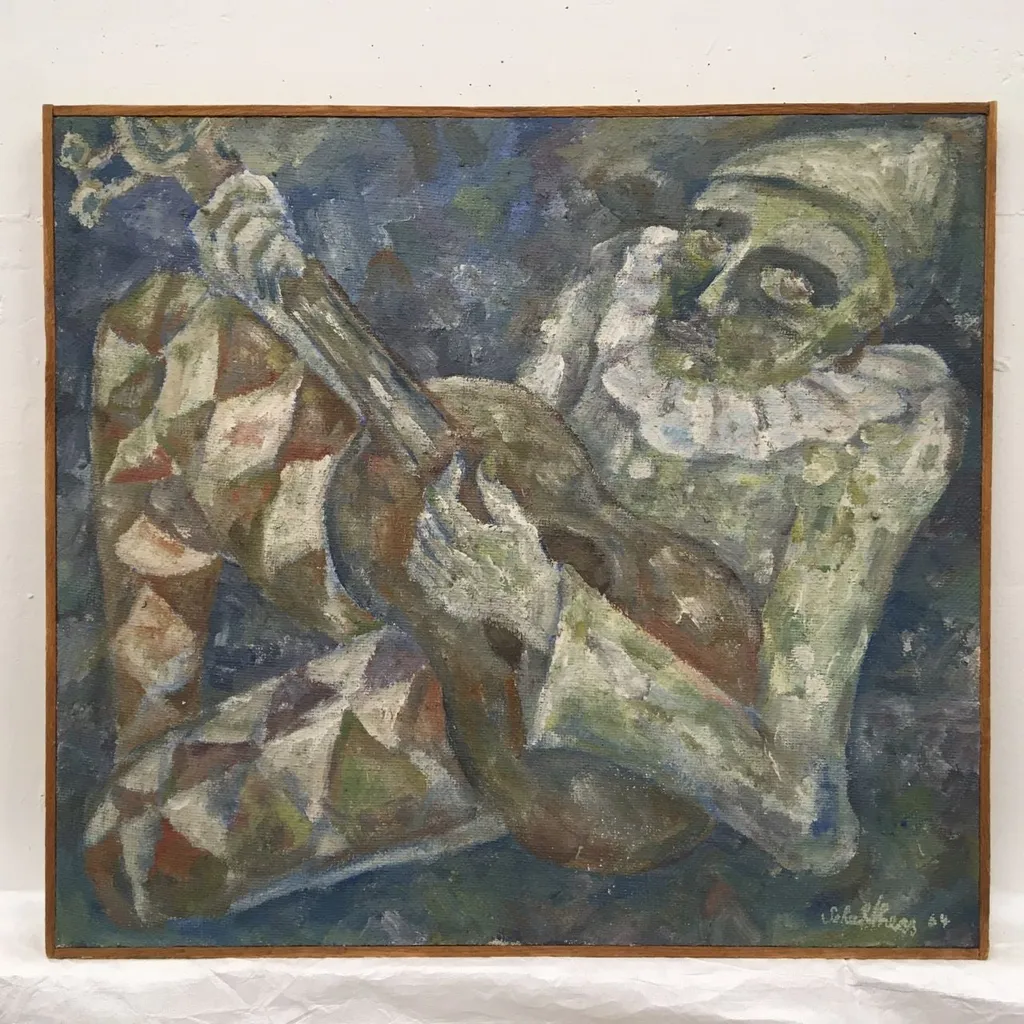
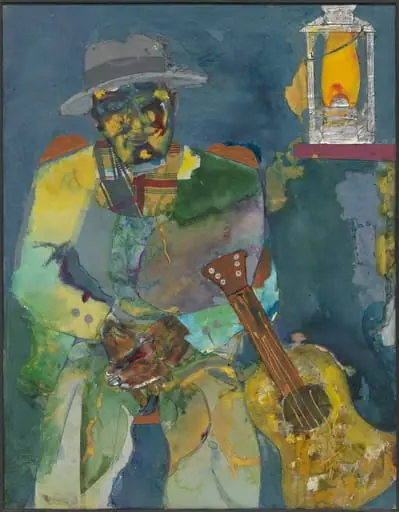
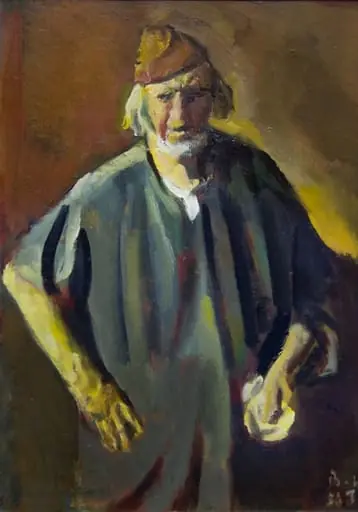
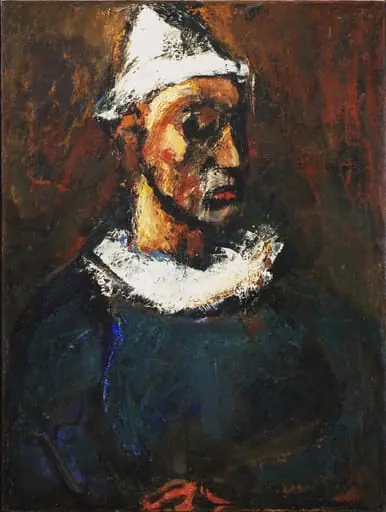
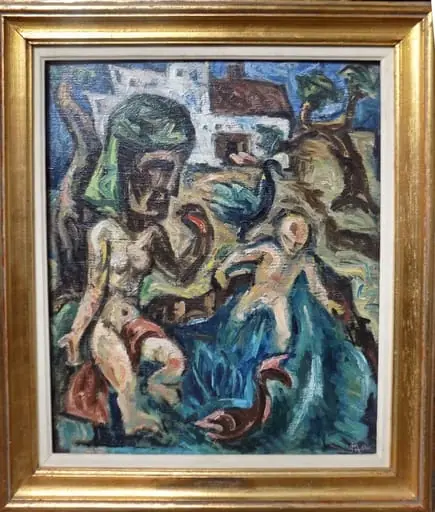
Schuldhess, Jörg Shimon - Gemälde, Musiker is a drawing by Jörg Shimon Schuldhess. It dates from 1964 and is held in the collection of the Poets and City Museum Liestal.
About this work
Overview
Created in 1964 by Jörg Shimon Schuldhess, this oil painting is part of the Museum of Ethnography’s collection.
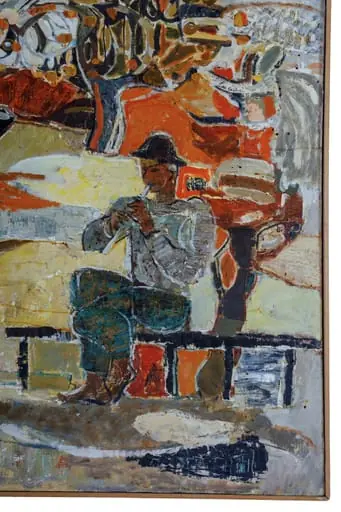
Created in 1964 by Jörg Shimon Schuldhess, this oil painting is part of the Museum of Ethnography’s collection. It depicts two figures in close, supportive posture, rendered with minimal detail and a raw, gestural approach. The work lacks conventional finish, appearing more like an immediate visual record than a polished composition. Its unrefined quality suggests an emphasis on emotional presence over formal resolution.
Subject & Meaning
The two figures, possibly musicians, lean into one another with indistinct features and obscured instruments. Their blurred faces and ambiguous attire invite interpretation rather than narrative clarity. The intimacy of their posture suggests solidarity or shared exhaustion, evoking themes of human connection amid uncertainty. The absence of defining details shifts focus from identity to emotional resonance.
Technique & Style
Thick, uneven brushstrokes dominate the surface, applying dark blues, muted greens, and earthy browns with little blending. Patches of white and red interrupt the somber palette without resolving its tension. The texture is deliberately rough, emphasizing materiality over realism. The artist’s signature is visible but unobtrusive, reinforcing the work’s sense of spontaneity and informal execution.
History & Provenance
The painting entered the Museum of Ethnography’s holdings after its creation in 1964, though its prior ownership is undocumented. It has remained in the institution’s collection since, with no record of public exhibition prior to its inclusion in the permanent display. Its acquisition reflects the museum’s interest in non-traditional artistic expressions of the mid-20th century.
Context
Produced during a period of postwar artistic experimentation in Europe, the work aligns with movements that valued emotional authenticity over technical polish. Schuldhess’s approach echoes contemporaneous tendencies toward expressive abstraction and figural distortion, particularly among artists rejecting academic norms. The painting’s ambiguity reflects broader cultural uncertainties of the era.
Legacy
While not widely reproduced or critically analyzed, the painting contributes to a lesser-known strand of postwar German-Swiss art focused on psychological immediacy. Its presence in an ethnographic museum underscores a broader curatorial interest in art that captures human condition over cultural specificity. It remains a quiet, unassuming example of personal expression within institutional collections.
Artist & collection
Artist
Swiss artist Jörg Shimon Schuldhess painted everyday scenes and objects with a quiet, offbeat focus.