Artwork
Topographical drawing
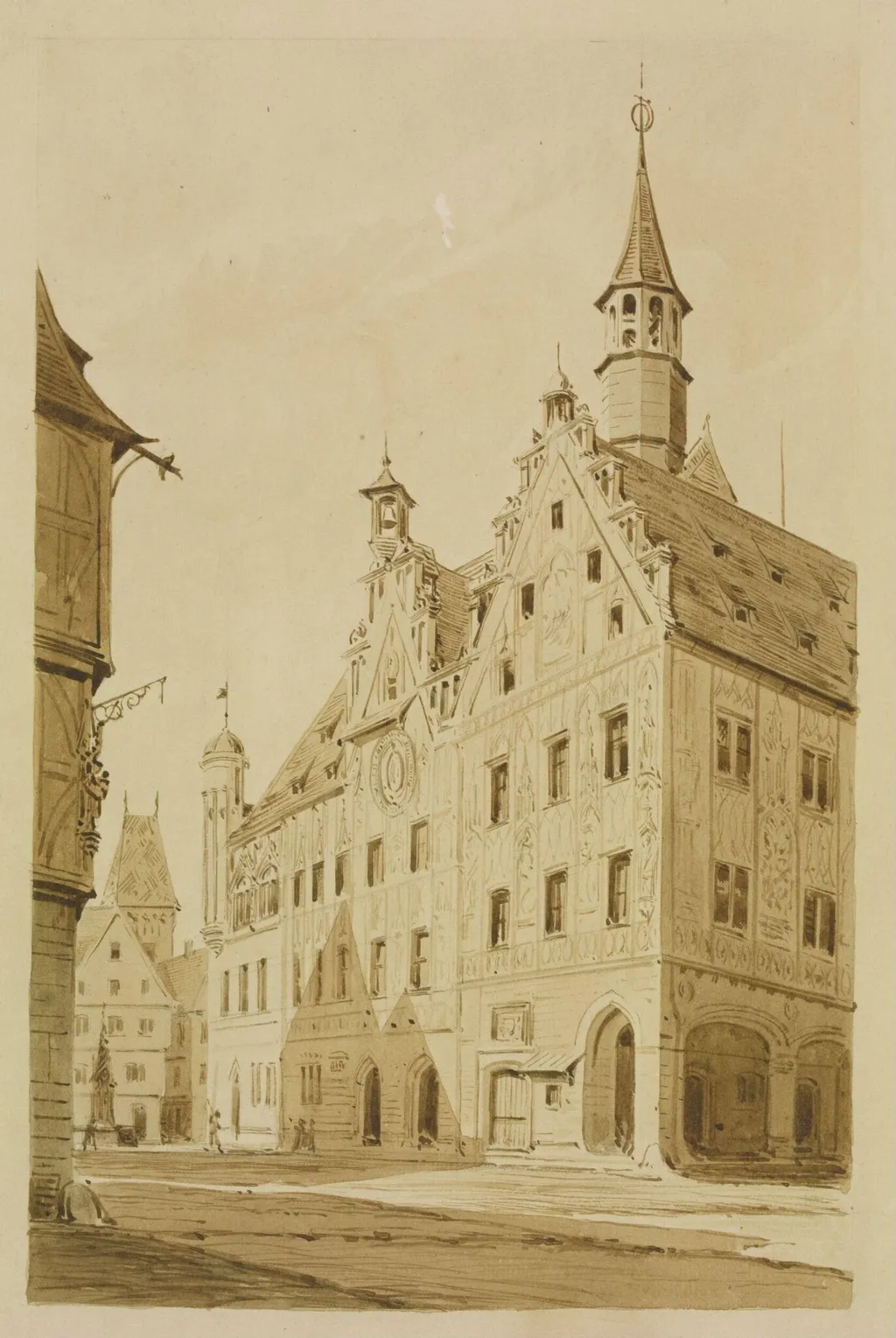
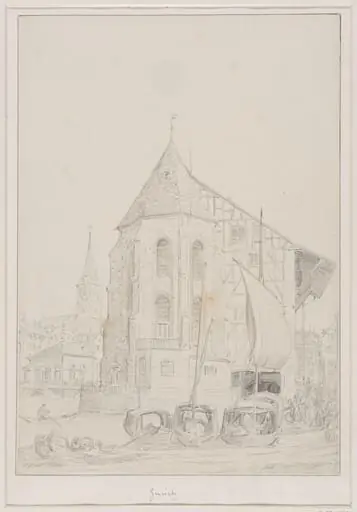
Topographical drawing is a drawing by the Romanticist artist A.W.N. Pugin. It dates from 1838 and is held in the collection of the Victoria and Albert Museum. A.
About this work
Overview
Rendered in fine ink wash, the work belongs to a tradition of topographical studies that prioritized precise observation over idealized composition.
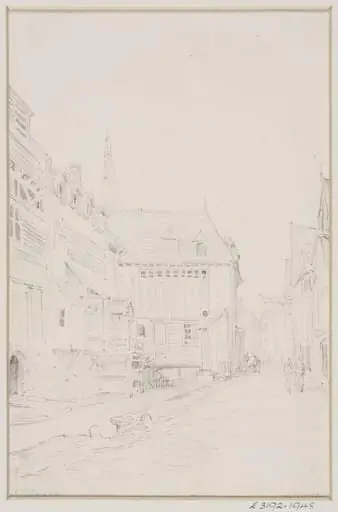
A.W.N. Pugin created this sepia drawing in 1838 during a documented trip to Ulm, capturing the Town Hall as it appeared on August 17 of that year. Rendered in fine ink wash, the work belongs to a tradition of topographical studies that prioritized precise observation over idealized composition. It reflects Pugin’s interest in recording architectural detail as a means of understanding historical form.
Subject & Meaning
The drawing centers on Ulm’s Town Hall, a late medieval civic structure marked by steep gables, slender towers, and intricate stone tracery. The empty street and diminutive figures emphasize the building’s dominance over its surroundings, suggesting a quiet reverence for civic architecture. Pugin’s focus on the structure’s exterior reveals his belief in the moral weight of authentic design, rooted in historical precedent.
Technique & Style
Executed in sepia ink, the drawing employs delicate hatching and tonal gradations to render textures—roof tiles, carved stonework, and window tracery—with meticulous care. Pugin avoided dramatic lighting or romantic embellishment, instead favoring a restrained, documentary approach. This method aligns with 19th-century topographical practices that valued accuracy and atmospheric truth over artistic flourish.
History & Provenance
The drawing originates from Pugin’s 1838 journey through southern Germany, undertaken to study Gothic architecture firsthand. It was likely made as a personal record, later incorporated into his broader collection of architectural studies. No public record of its ownership prior to institutional acquisition exists, but its precision suggests it served as reference material for his later design work.
Context
In the 1830s, European architects increasingly turned to historical buildings as models for renewal. Pugin, influenced by the Gothic Revival, documented structures like Ulm’s Town Hall to inform his own designs. His drawings were not mere records but tools for reinterpreting medieval principles in contemporary practice, linking observation to architectural reform.
Legacy
Pugin’s topographical studies, including this one, contributed to a shift in architectural education, emphasizing direct observation over theoretical abstraction. Though not widely exhibited in his lifetime, these drawings underpinned his influential writings and building projects, helping to shape the revival of Gothic forms in Britain and beyond.
Artist & collection

Artist
Augustus Welby Northmore Pugin was an English architect, designer, artist and critic with French and Swiss origins.

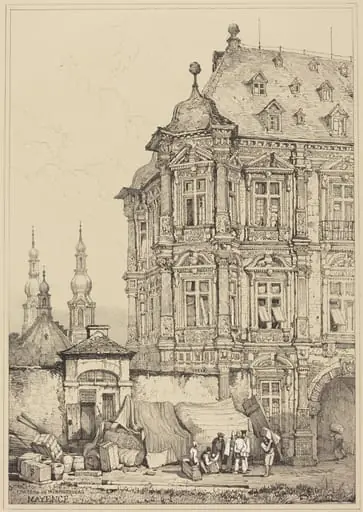 Chateau de Martinsbourg, Mayence
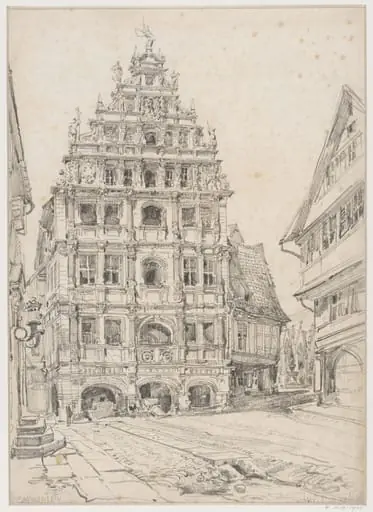 The east front of the Gewandhaus, Brunswick
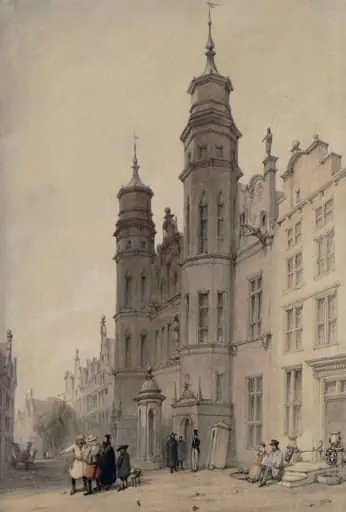 The Zeughaus, Danzig
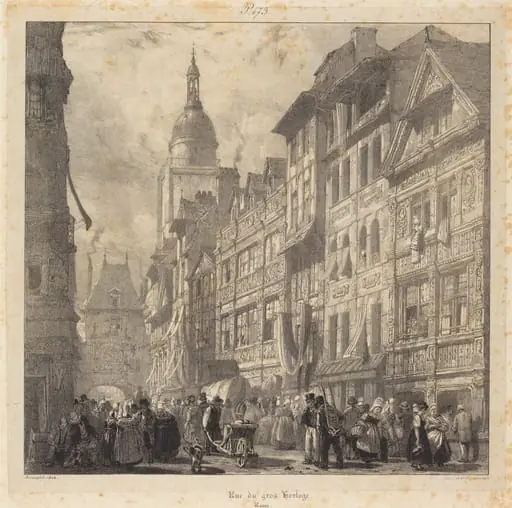 Rue du gros-horloge, Rouen
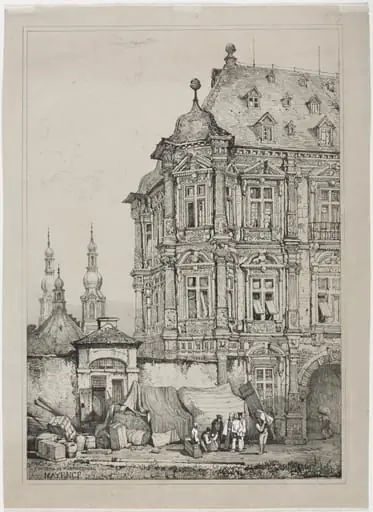 Castle of Martinsburg, Mainz, Germany
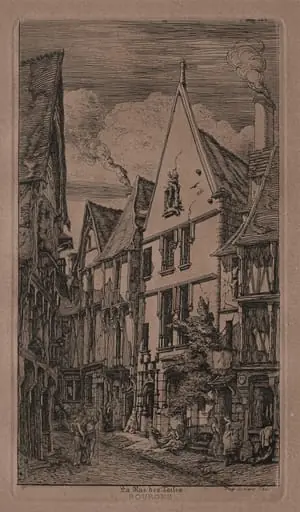 Rue des Toilés, Bourges
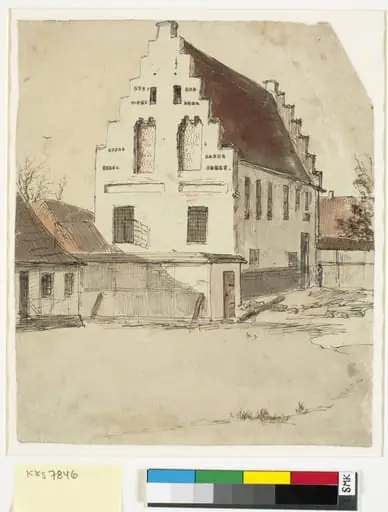 Ligkapellet ved Frue Kirke i Odense
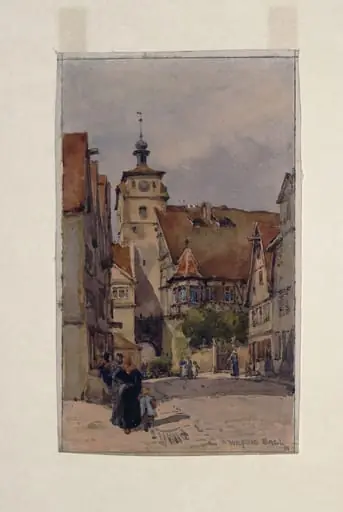 Street scene, Rotenburg, showing the White Tower and the Judentanzhaus
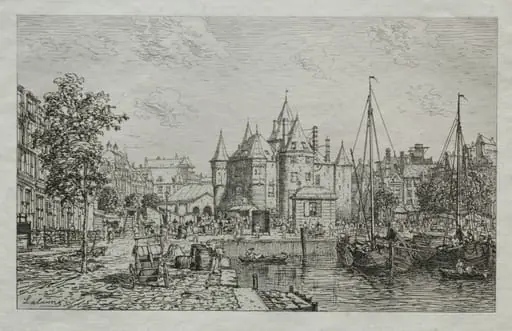 The Wagg-Poids of the City of Amsterdam
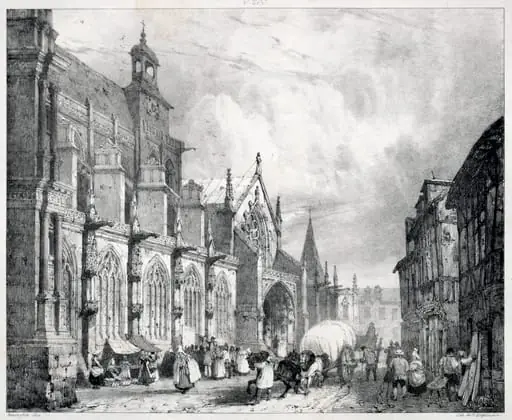 Voyages pittoresques et romantiques dans l'ancienne France, Normandie: Église de Saint Gervais et Saint Protais à Gisors
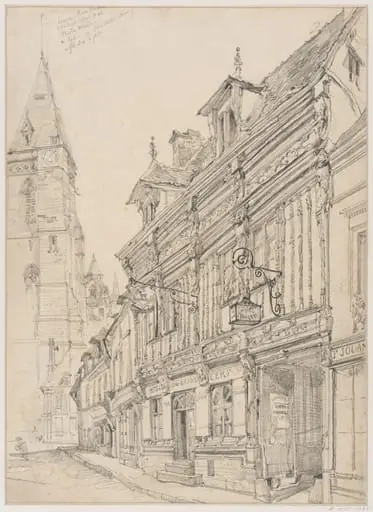 Hôtel du Grand Cerf, Les Andelys