Artwork
Colibă de țigani
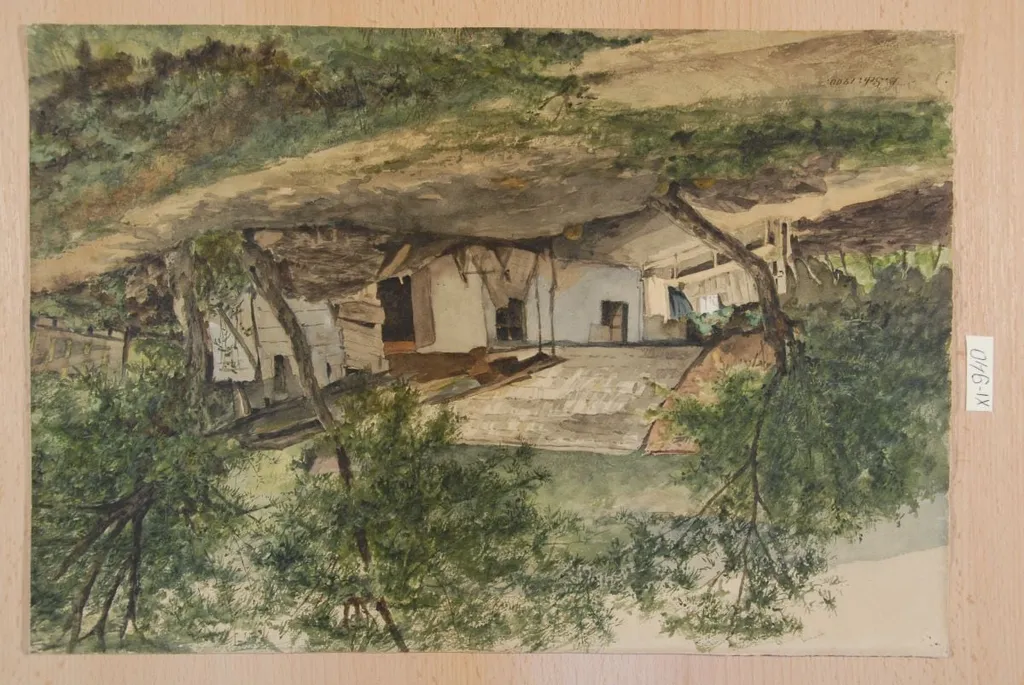
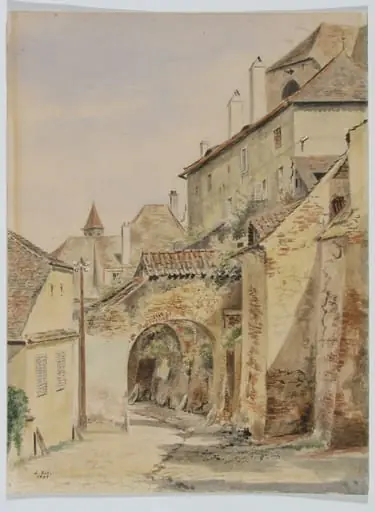
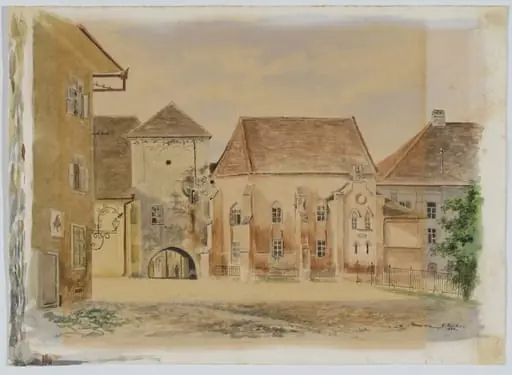
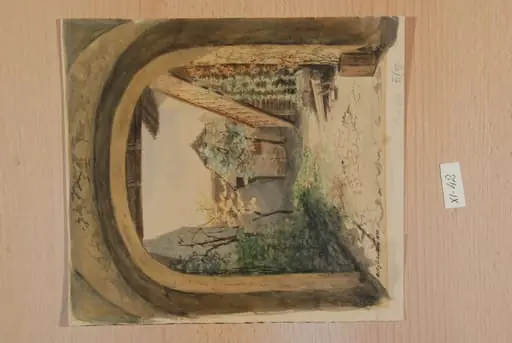
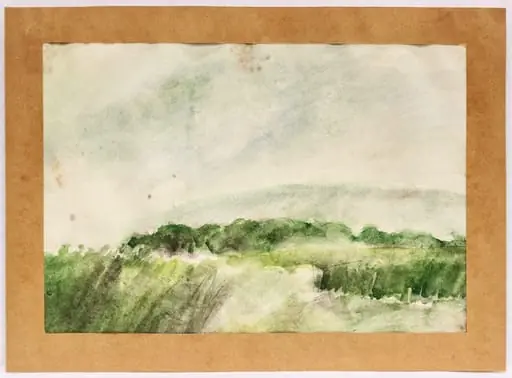
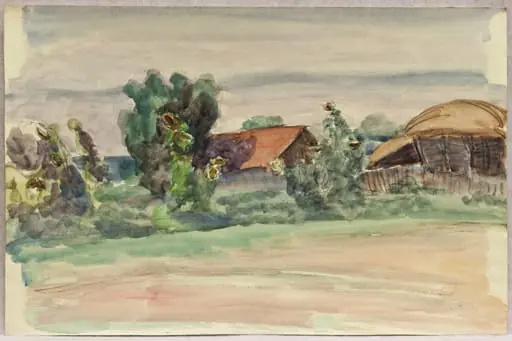
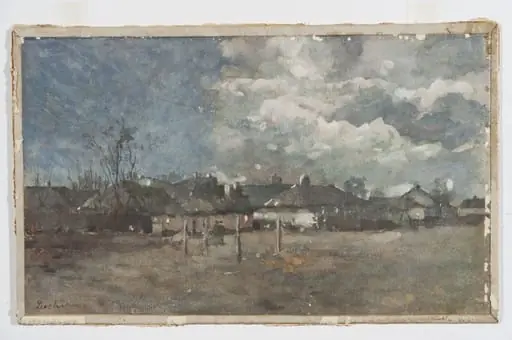
Colibă de țigani is a print by Betty Schuller. It is held in the collection of the Brukenthal National Museum. This small-scale image depicts a modest dwelling nestled into a sloping terrain, rendered with quiet attention to everyday textures.
About this work
Overview
The structure, built of rough-hewn wood and plaster, shows signs of long use, with laundry drying on lines and vegetation encroaching naturally around it.
This small-scale image depicts a modest dwelling nestled into a sloping terrain, rendered with quiet attention to everyday textures. The structure, built of rough-hewn wood and plaster, shows signs of long use, with laundry drying on lines and vegetation encroaching naturally around it. The composition avoids dramatic elements, instead emphasizing the quiet integration of human habitation within an unaltered landscape.
Subject & Meaning
The scene portrays a rural Romani home, capturing a moment of ordinary life without idealization or sentimentality. The house’s worn materials and informal additions suggest a community adapting to limited resources. The absence of figures reinforces a sense of stillness, inviting reflection on the dignity found in unremarkable, sustained existence rather than grand narratives.
Technique & Style
The artist employed direct observation, likely working outdoors to capture the subtle shifts of light and terrain. Brushwork is restrained, favoring muted earth tones—olive greens, ochres, and grays—that blend the structure into its surroundings. Details like hanging textiles and uneven ground are suggested with minimal strokes, avoiding embellishment in favor of authenticity.
History & Provenance
The work is attributed to a 19th-century Romanian artist associated with early realist tendencies. It was likely created during a period of growing interest in rural life among local painters, though the piece remained in private hands for much of its early history. Its current location reflects later institutional recognition of regional vernacular art.
Context
Created during a time when urbanization was reshaping Eastern European landscapes, this image stands as a quiet counterpoint to romanticized depictions of peasant life. It aligns with emerging plein-air practices that valued direct engagement with nature and ordinary settings, reflecting broader shifts toward social realism in regional art circles.
Legacy
Though not widely exhibited during its time, the work has come to represent a restrained, empathetic approach to documenting marginalized communities. Its influence is seen in later Romanian artists who prioritized unadorned observation over narrative spectacle, contributing to a regional tradition of understated realism.
Artist & collection
Artist
Betty Schuller made prints and paintings of European town scenes. Her two prints—Curte veche din Sibiu and Colibă de țigani—show old Saxon and Roma architecture in sharp lines and soft color. Her paintings Strada…