Artwork
Julius Misselbacher, negustor din Sighișoara
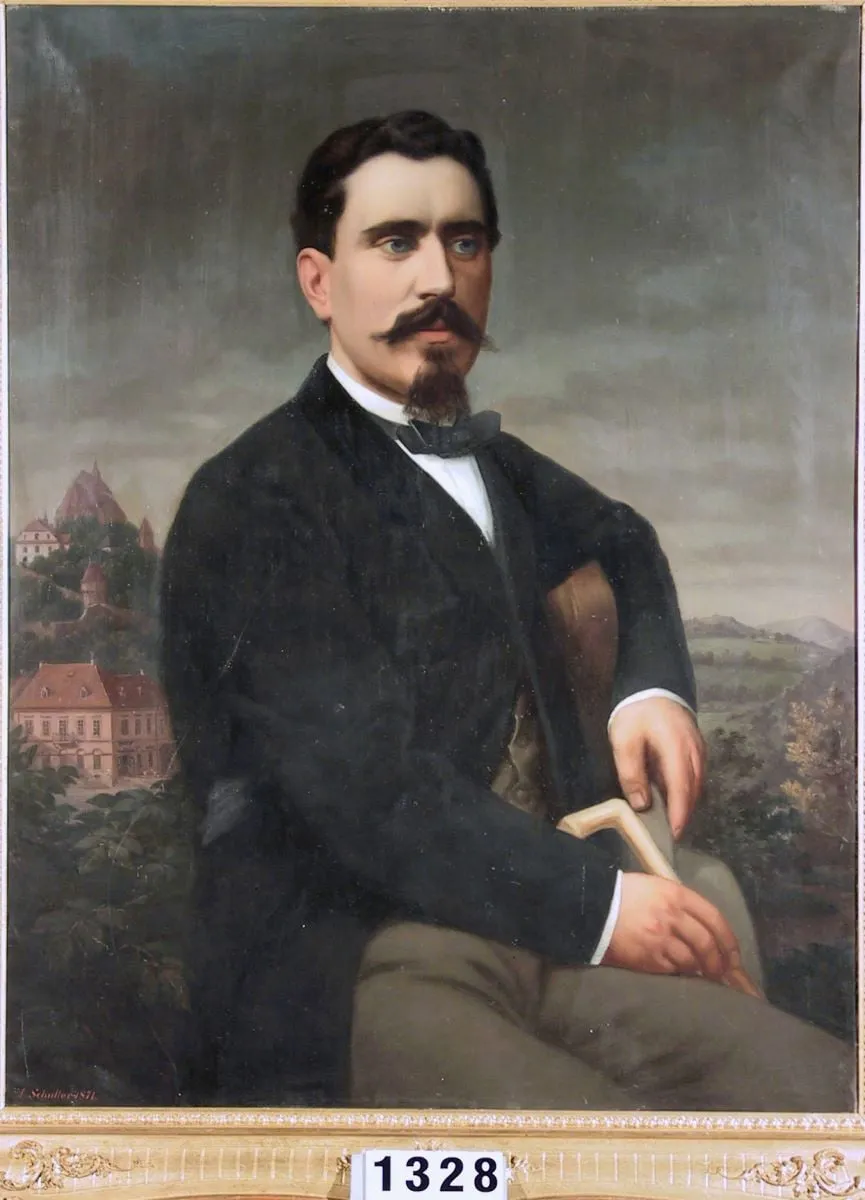
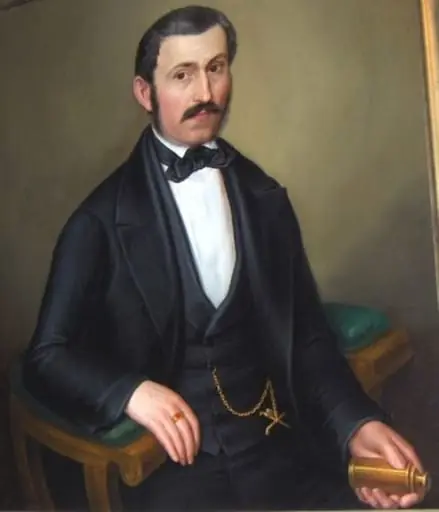
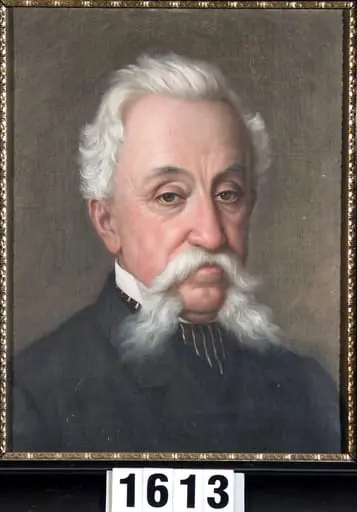
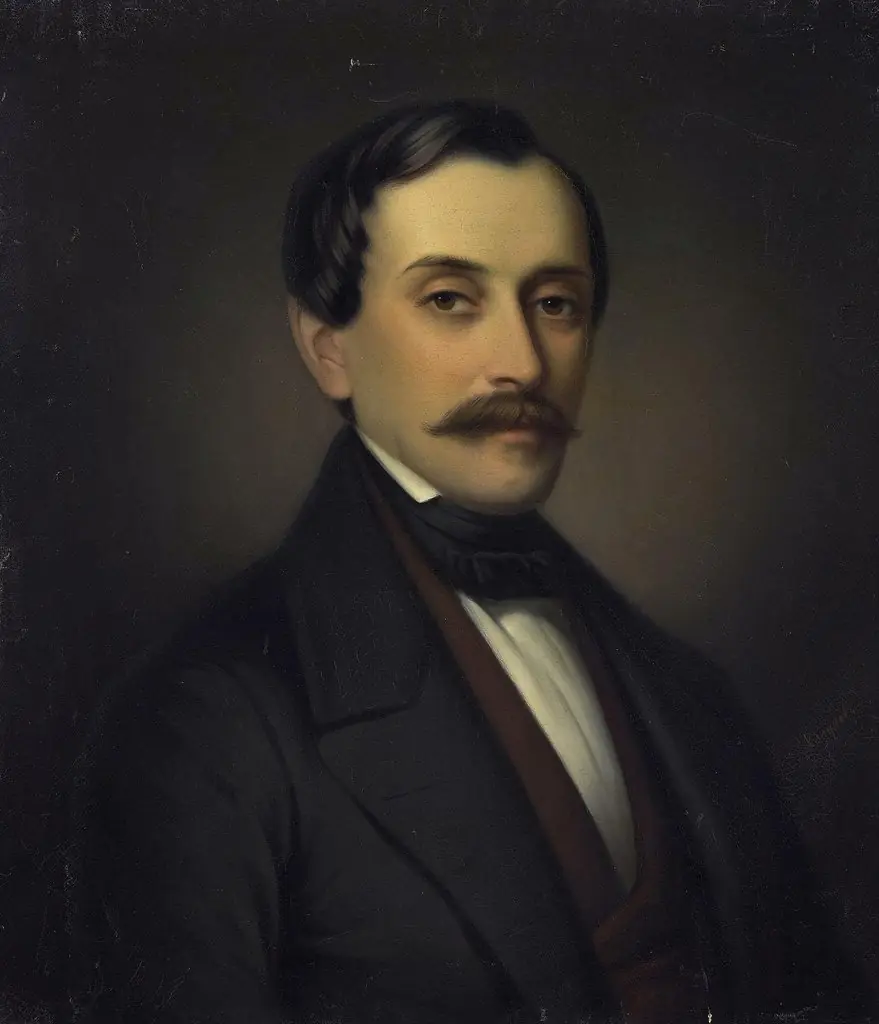
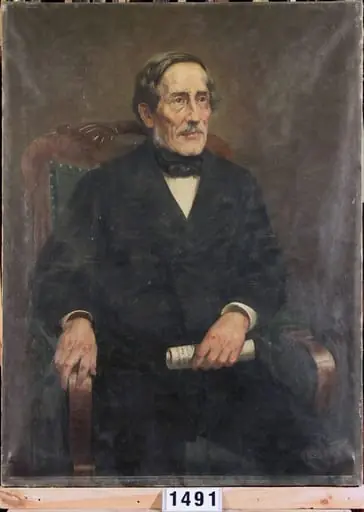
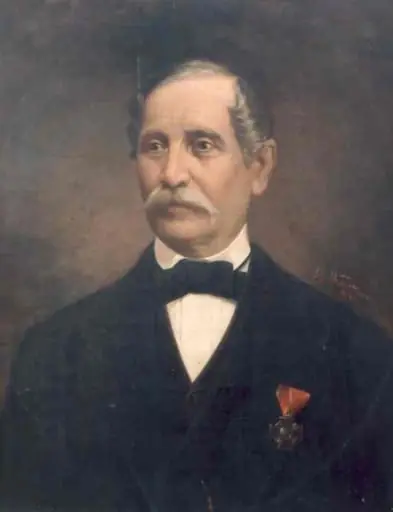
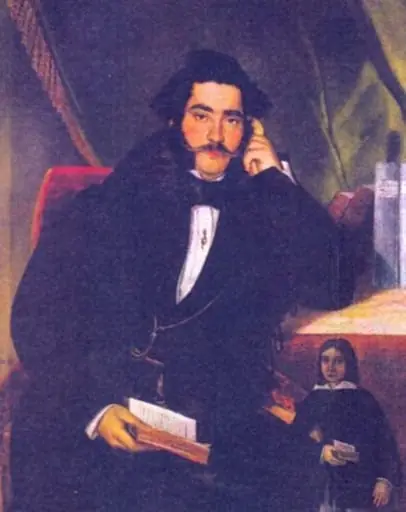
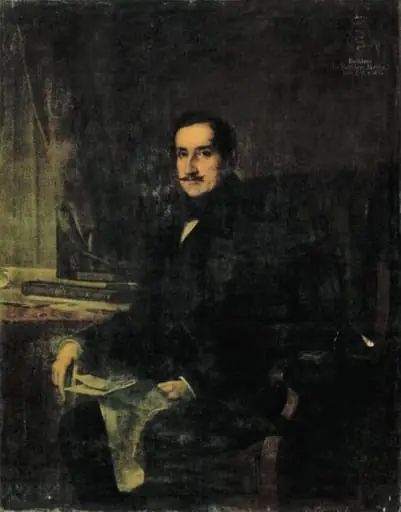
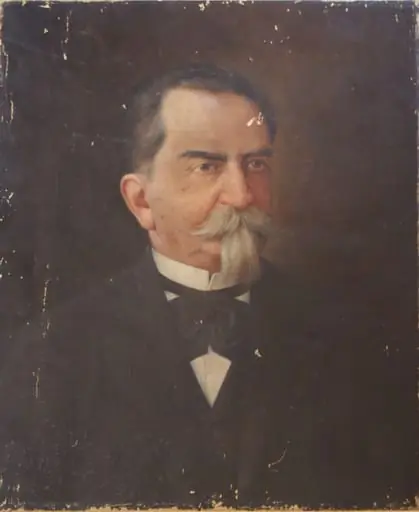
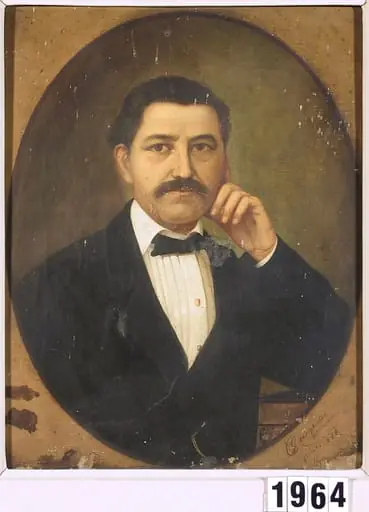
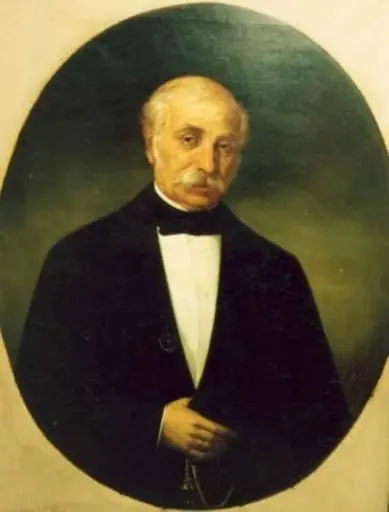
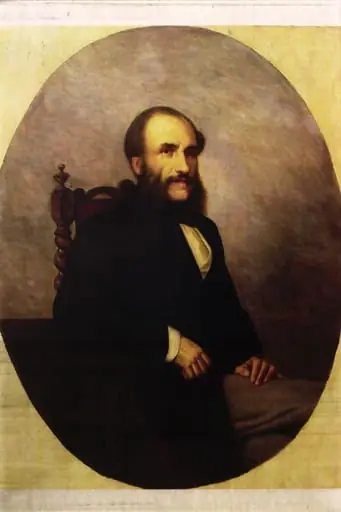
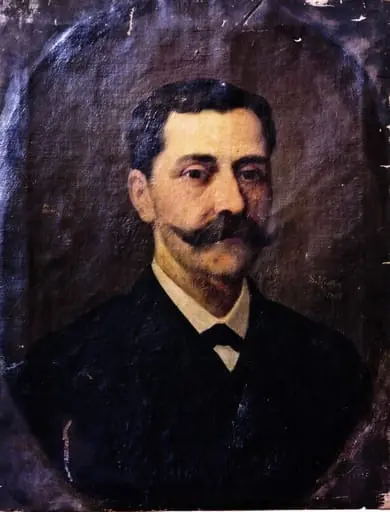
Julius Misselbacher, negustor din Sighișoara is an unspecified painting by Ludwig Schuller. It is held in the collection of the Brukenthal National Museum.
About this work
Overview
Julius Misselbacher, negustor din Sighișoara is an image‑based work held in the collection of the Museum of Ethnography. The portrait presents a seated figure dressed in a dark jacket, white shirt, bow tie and brown trousers, with a cane in his right hand. Behind him a modest landscape of buildings and trees recedes, providing a contextual backdrop.
Subject & Meaning
The sitter is identified as a merchant from Sighișoara, suggested by the title’s reference to a “negustor.” His formal attire and the inclusion of a cane convey a status of respectability and professional standing within the town’s commercial class. The surrounding architecture hints at the urban environment that shaped his livelihood.
Technique & Style
The artist employs a restrained palette, contrasting the dark jacket with the lighter shirt and bow tie to model the figure’s form. Linear perspective in the background creates depth, while the placement of trees and structures frames the subject without detracting from his presence. Brushwork suggests a careful, realistic approach typical of 19th‑century portraiture.
History & Provenance
The work is catalogued as an image rather than a painted canvas, indicating it may be a reproduction or a photographic print derived from an original portrait. It entered the Museum of Ethnography’s holdings, though specific acquisition details are not recorded in the available data.
Context
Sighișara, a historic fortified town in Transylvania, was a commercial hub where merchants played a pivotal role in local trade. Portraits of such figures served both as personal commemoration and as visual documentation of the town’s socioeconomic fabric, reflecting the importance of trade in the region’s cultural identity.
Artist & collection
Artist
Ludwig Schuller spent his days in Sighișoara, painting shopkeepers and city views when he wasn’t fixing clock towers.