Artwork
Peter Lange von Burgenkron (în Registrul inventar: Baungenhein)
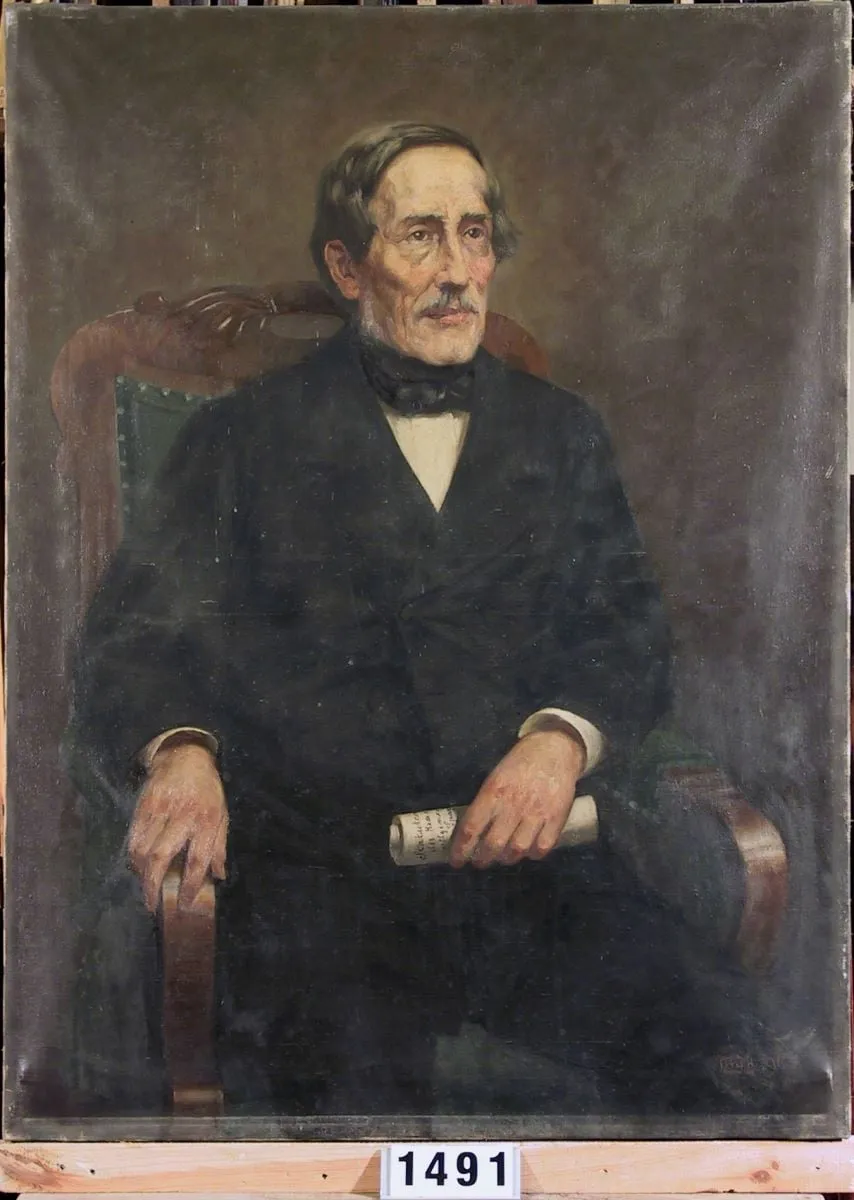
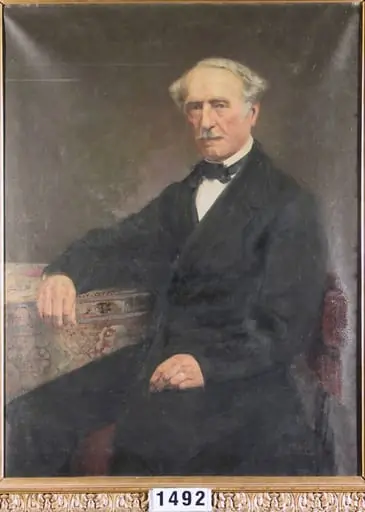
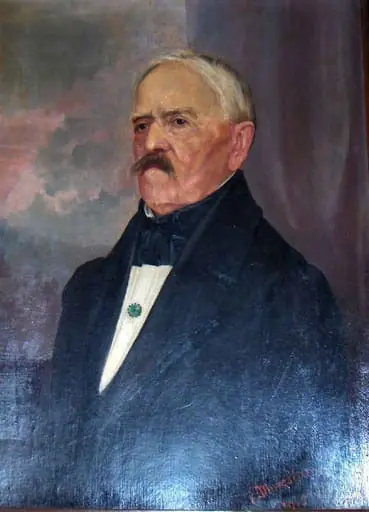
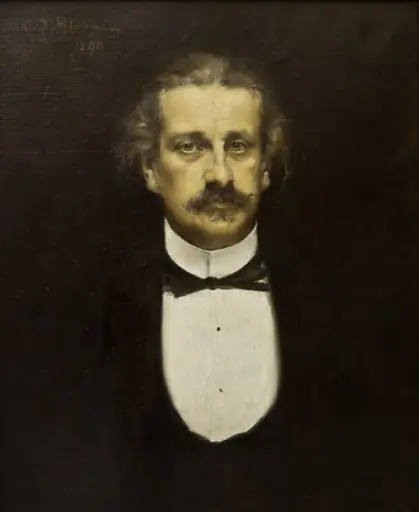
Peter Lange von Burgenkron (în Registrul inventar: Baungenhein) is a print by Friedrich Miess. It is held in the collection of the Brukenthal National Museum. This portrait depicts a man seated in a plain wooden chair, rendered in a restrained palette dominated by dark tones.
About this work
If you're interested in learning more about the artist behind this portrait, you might want to look up Miess, Friedrich.
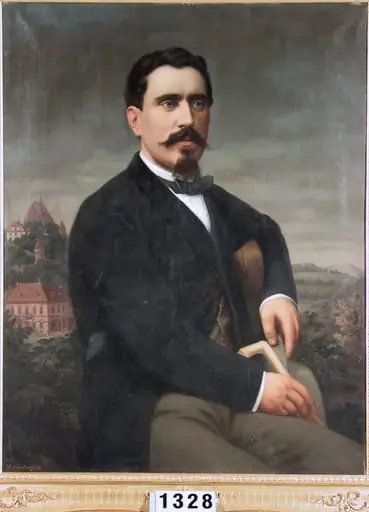
This painting depicts a man sitting in a chair, dressed in a black suit with a white shirt and a black bow tie. He holds a rolled-up paper in his left hand, which rests on his lap. The man's right hand is placed on the armrest of the chair, and he has short dark hair. The background of the painting is a muted brown color.
The man's attire and the style of the painting suggest that it may be a portrait from the 19th century. The artist's use of chiaroscuro, a technique that uses strong contrasts between light and dark to create a sense of volume and depth, adds depth to the painting.
If you're interested in learning more about the artist behind this portrait, you might want to look up Miess, Friedrich.
Overview
This portrait depicts a man seated in a plain wooden chair, rendered in a restrained palette dominated by dark tones. His formal attire—a black suit, white shirt, and black bow tie—suggests a professional or bourgeois identity. The muted brown background isolates the figure, focusing attention on his posture and expression. The use of chiaroscuro enhances the three-dimensionality of his form, indicating a deliberate engagement with traditional portraiture techniques of the 19th century.
Subject & Meaning
The man holds a rolled document in his left hand, a gesture that may imply authority, documentation, or intellectual engagement. His right hand rests calmly on the armrest, conveying composure. The absence of symbolic objects or elaborate settings points to an emphasis on personal presence rather than status display. The portrait likely served as a private or professional record, capturing an individual’s demeanor rather than a public persona.
Technique & Style
The painting employs chiaroscuro to model the figure’s face and hands, creating subtle transitions between light and shadow that define volume without theatricality. Brushwork is controlled and precise, favoring smooth surfaces over expressive texture. The limited color range and neutral background reflect a preference for psychological realism over decorative flourish, aligning with mid-19th-century academic portraiture conventions in Central Europe.
History & Provenance
The painting is listed in an inventory under the name 'Baungenhein,' possibly a variant spelling of Peter Lange von Burgenkron. No documented exhibition history or collector lineage is provided. The attribution to an artist named Miess remains unverified in major archives, suggesting the work may have been produced locally or by a lesser-known practitioner, with limited historical documentation beyond its inventory entry.
Context
Created during a period when bourgeois portraiture flourished across German-speaking regions, the work reflects a trend toward intimate, restrained depictions of individuals outside aristocratic circles. The absence of heraldic or occupational symbols aligns with a growing emphasis on personal identity in middle-class society. Similar portraits from the era often served as family records or professional acknowledgments, commissioned without grand ceremonial intent.
Legacy
The portrait survives primarily as an archival entry, with no known public display or scholarly analysis to date. Its significance lies in its quiet representation of a non-elite individual through conventional techniques of the time. While not widely recognized, it contributes to the broader visual record of 19th-century portraiture, preserving the likeness of someone whose name and role remain only partially recoverable.
Artist & collection
Artist
A Romanian artist working across the late 19th and early 20th centuries, Friedrich Miess made prints and paintings that capture landscapes and portraits of the time.