Artwork
Beaufort-Belforte, Hermann
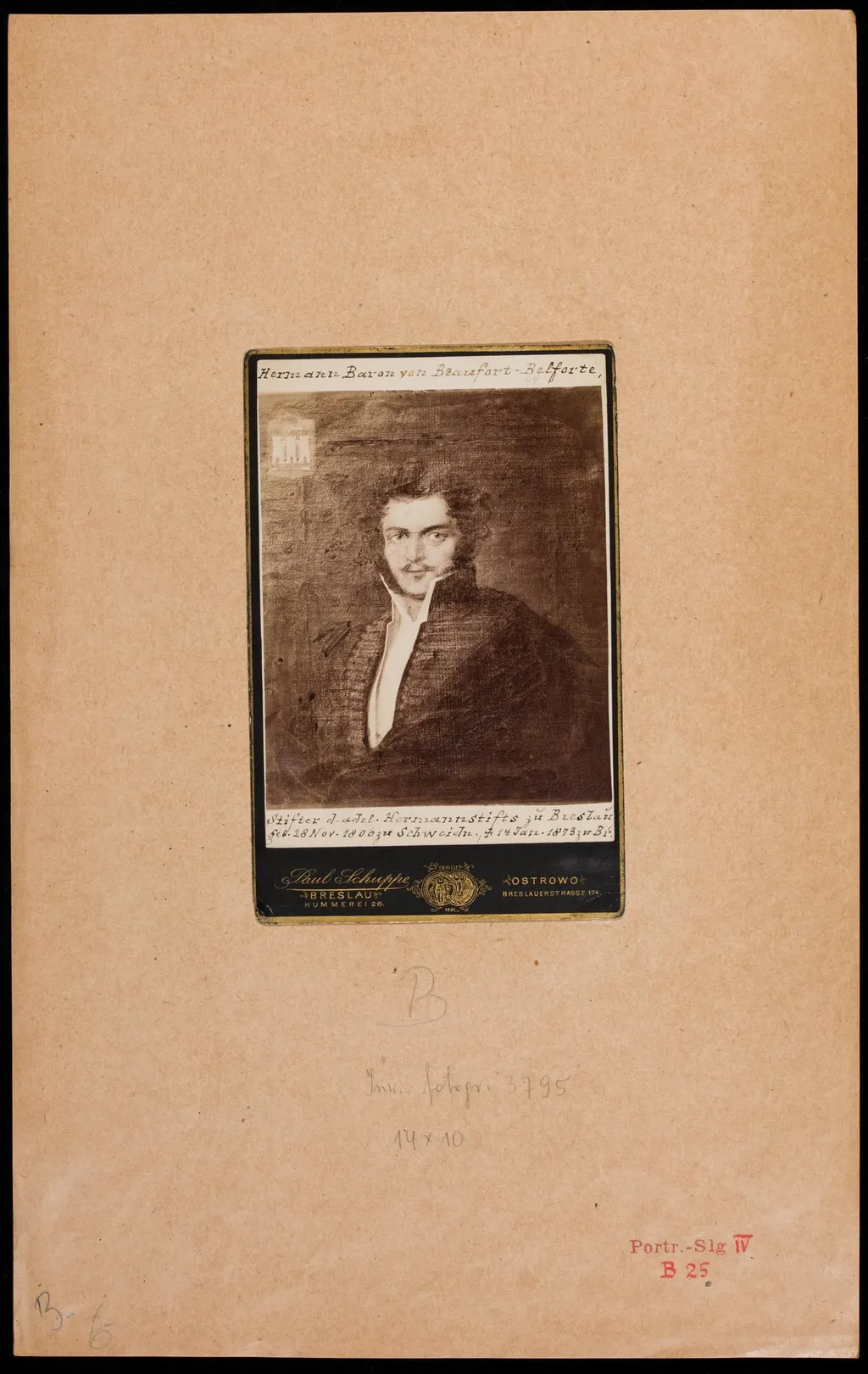
Beaufort-Belforte, Hermann is a print by Paul (ca 1870). Fig. Schuppe. It dates from 1899 and is held in the collection of the Library of the Wroclaw University. This black-and-white photographic portrait, created in 1899 by Paul Schuppe, depicts Hermann Beaufort-Belforte.
About this work
Overview
This black-and-white photographic portrait, created in 1899 by Paul Schuppe, depicts Hermann Beaufort-Belforte. The image is a gelatin silver print, not a painted work, and is part of the Museum of Ethnography’s collection. Its muted tones and slight fading suggest age and careful preservation. The composition is restrained, with no decorative elements to distract from the subject’s presence.
Subject & Meaning
Hermann Beaufort-Belforte is portrayed with formal composure, his serious expression and neatly groomed facial hair conveying a sense of dignity and restraint. The plain background eliminates contextual clues, directing focus to his demeanor. The image likely served as an official or personal record, reflecting 19th-century conventions of portraiture that emphasized character over circumstance.
Technique & Style
Schuppe employed chiaroscuro to model the face with subtle gradations of light and shadow, enhancing the three-dimensionality of the subject.
Schuppe employed chiaroscuro to model the face with subtle gradations of light and shadow, enhancing the three-dimensionality of the subject. The contrast between the dark coat and pale shirt sharpens the figure’s outline, while the soft focus and tonal fading are characteristic of late 19th-century photographic printing processes. The image’s texture suggests hand-printing on paper, typical of the era’s archival practices.
History & Provenance
The photograph was produced in 1899 and entered the Museum of Ethnography’s holdings at an unknown date. Its label includes German text, indicating its origin in a German-speaking cultural context. As a portrait of an individual with a non-German surname, it may reflect the multicultural dimensions of European intellectual or administrative circles at the time.
Context
In the late 19th century, photographic portraiture became a standard tool for documenting individuals in academic, colonial, and bureaucratic settings. This image aligns with ethnographic practices that sought to catalog human types through standardized visual records. The absence of props or setting reflects a desire for neutrality, though such neutrality often carried implicit cultural assumptions.
Legacy
The portrait endures as a quiet example of early ethnographic photography, illustrating how personal identity was framed within institutional frameworks. Its preservation highlights the museum’s role in archiving everyday visual records of the past. Though not widely exhibited, it contributes to broader studies of how photography shaped perceptions of individuality and difference in the modern era.
Artist & collection
Artist
Paul Schuppe’s paintings look like someone left the studio window open during a rainstorm—soft, blurry edges everywhere, as if the world was slightly out of focus.
 H Beard Print Collection
 H Beard Print Collection
 H Beard Print Collection
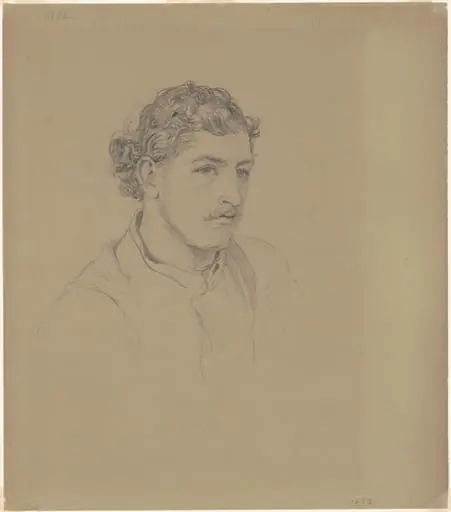 Man with Curly Hair
 Cy-devant (Ex-Noble)
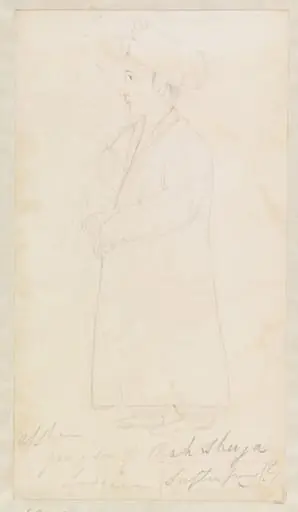 Young son of Shah Shuja Lodiana
 Cy-devant (Vieux jeu)
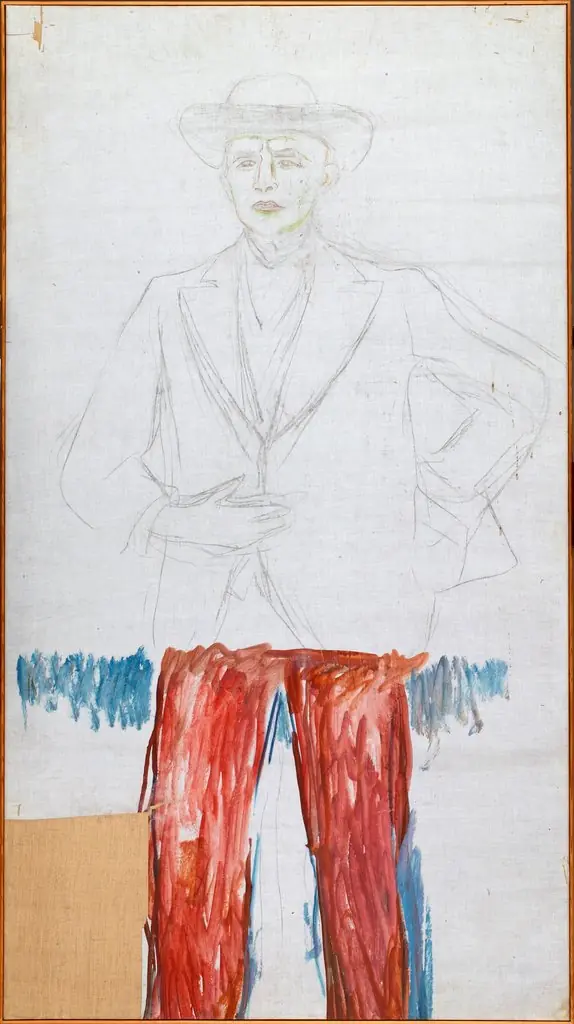 Eberhard Grisebach
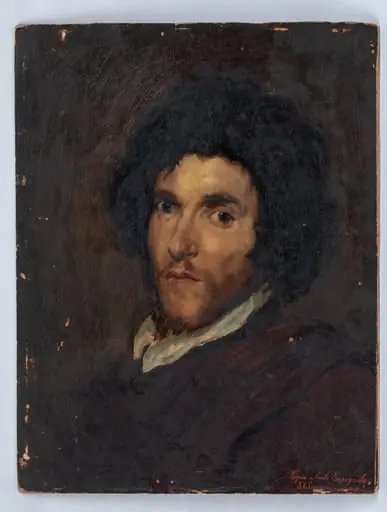 Profil de bărbat
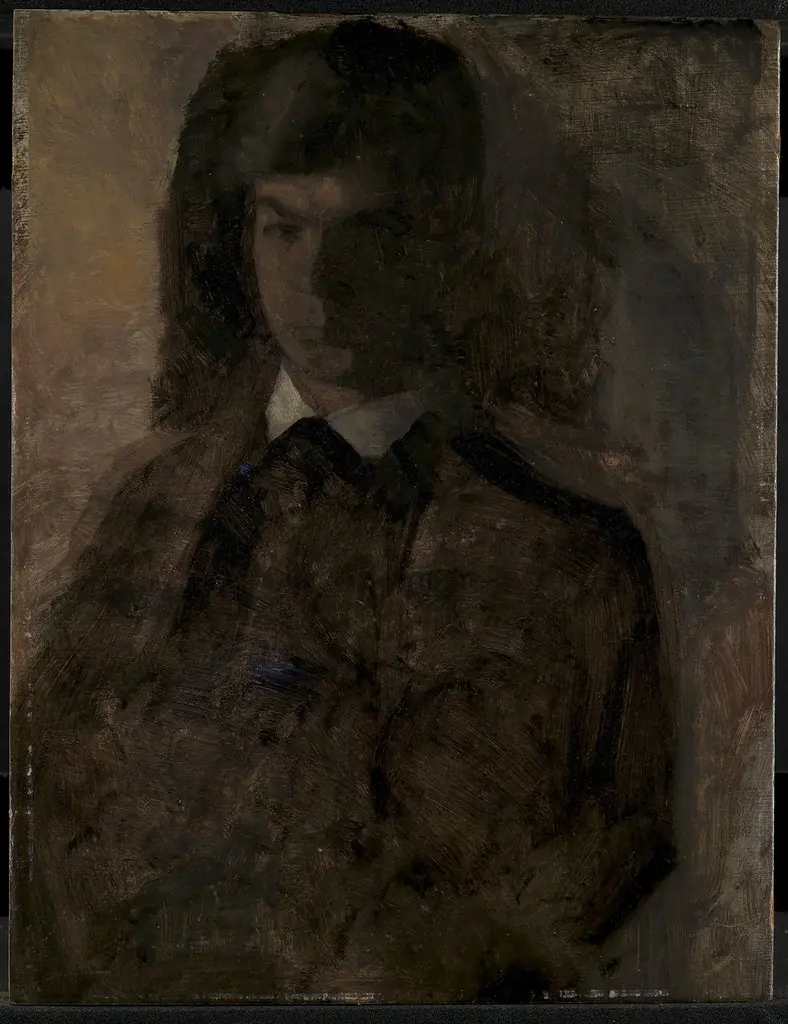 Maleren Svend Hammershøi, kunstnerens broder
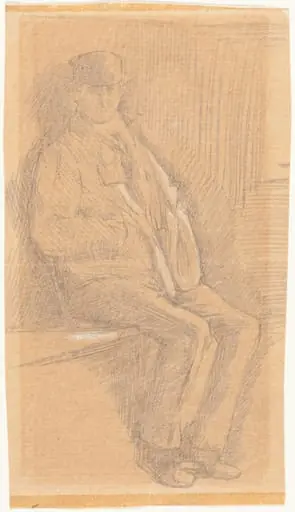 Seated Man
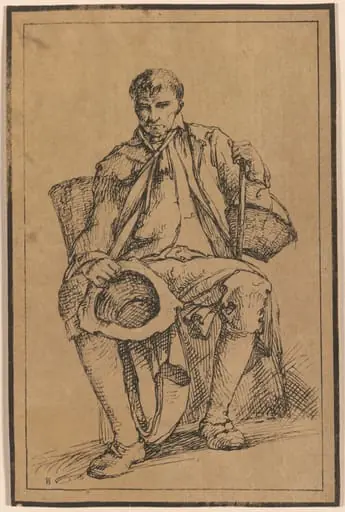 Forty Lithographic Impressions from Drawings of Landscape Scenery by Thomas Barker, Selected from His Studies of Rustic Figures after Nature: Seated Man with Baskets Holding Hat and Walking Stick