Artwork
Canalul Sf. Luca
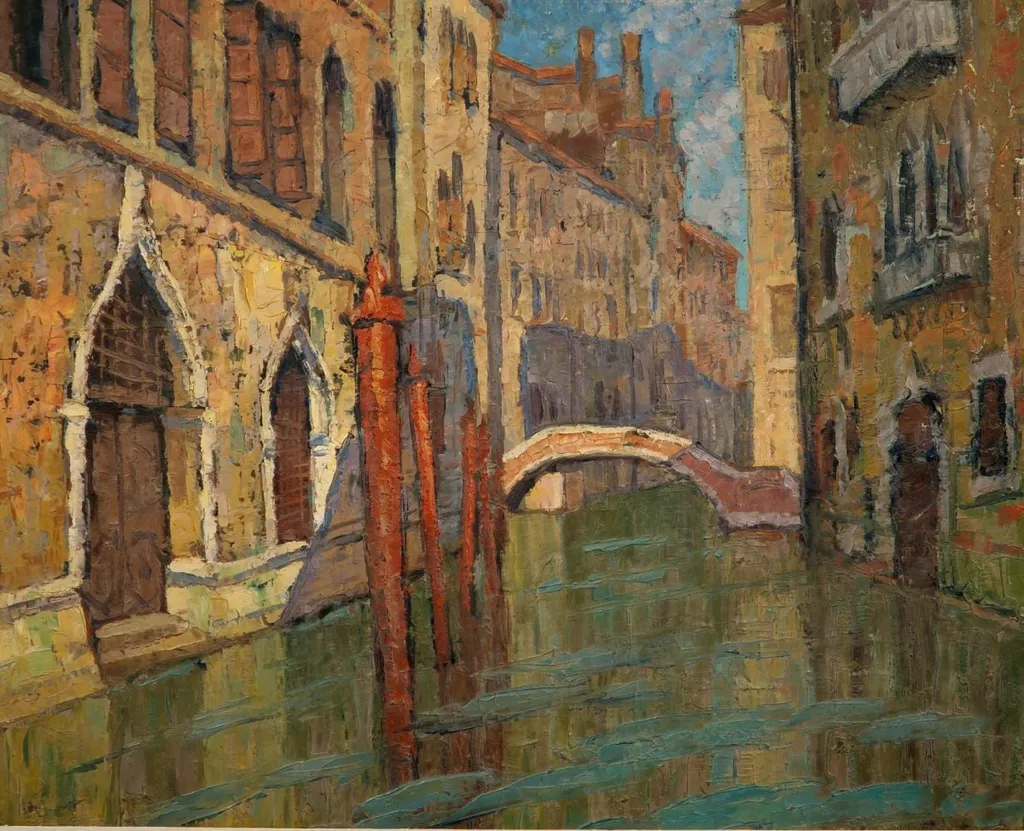
Canalul Sf. Luca is a print by Paul A. Scorțescu. It dates from 1925 and is held in the collection of the National Museum of Art of Romania. Paul A.
About this work
Overview
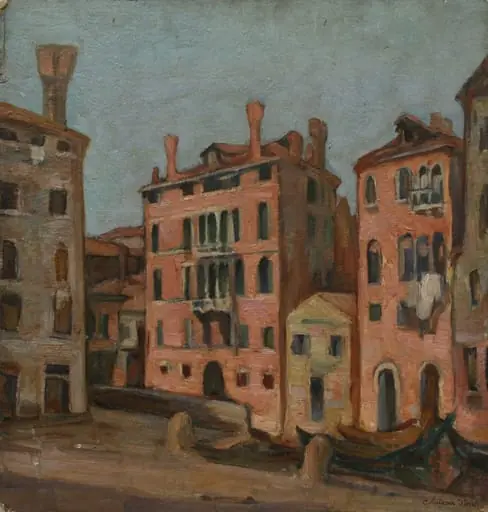
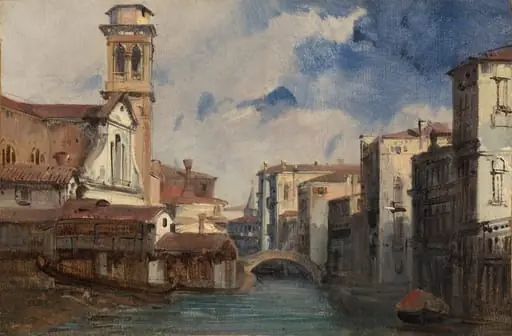
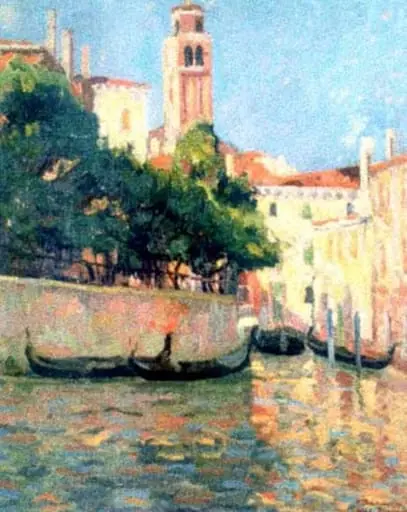
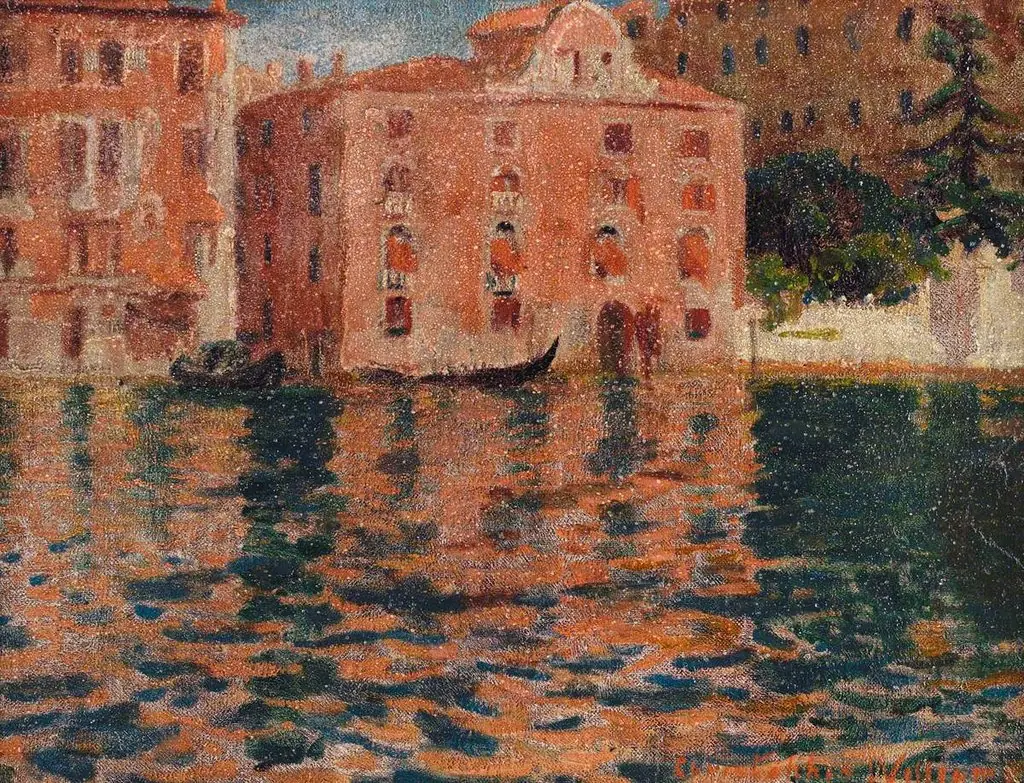
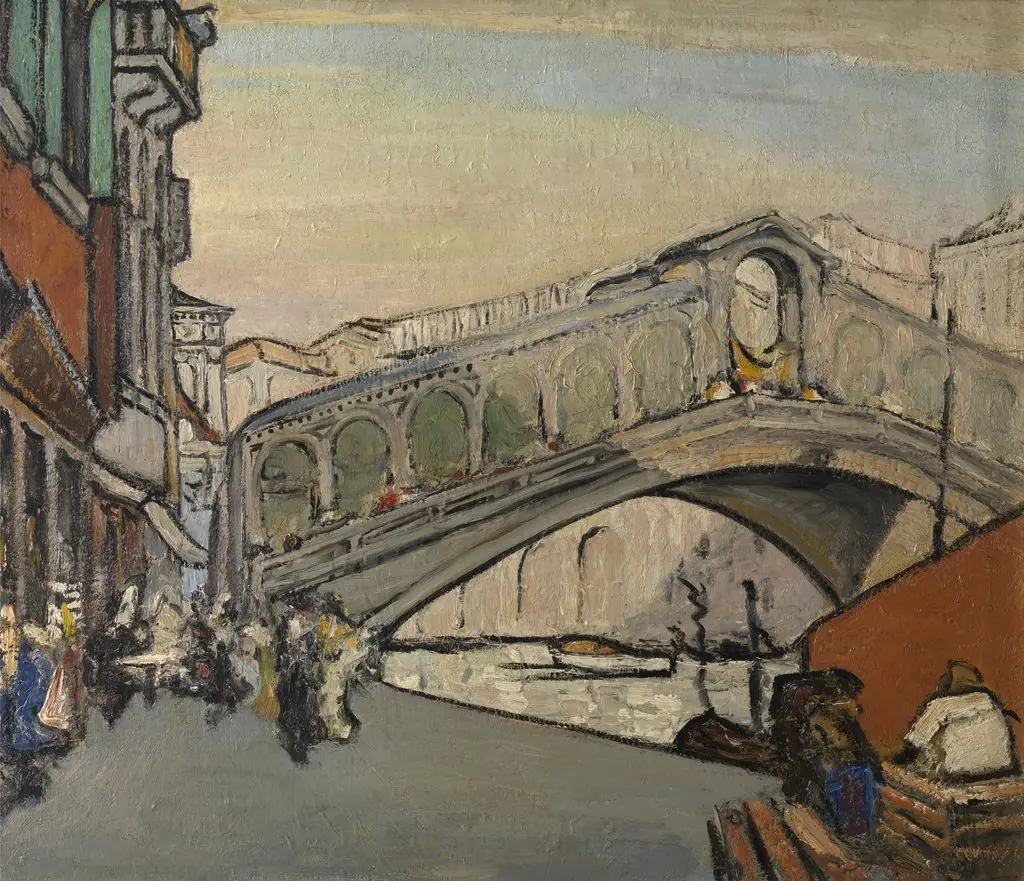
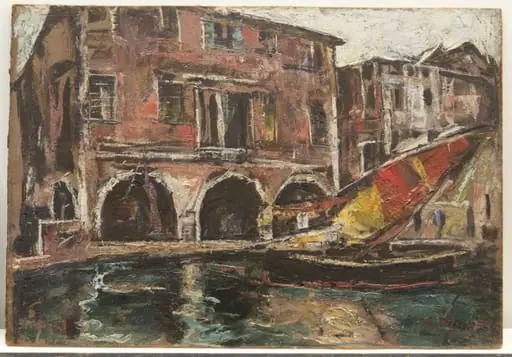
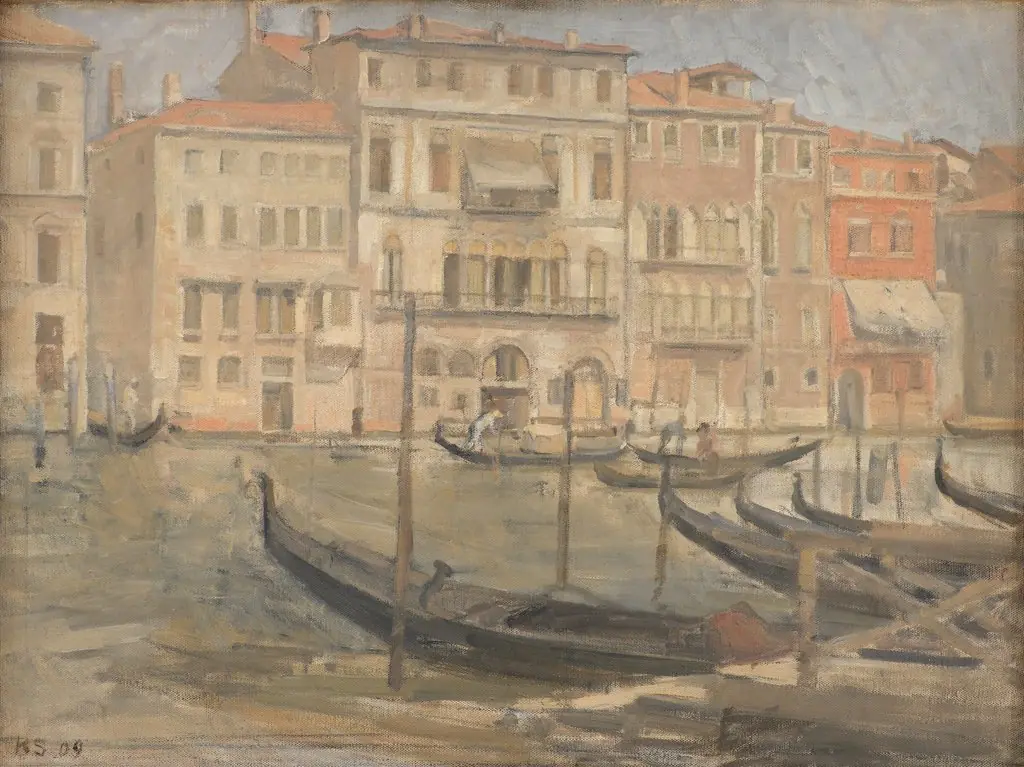
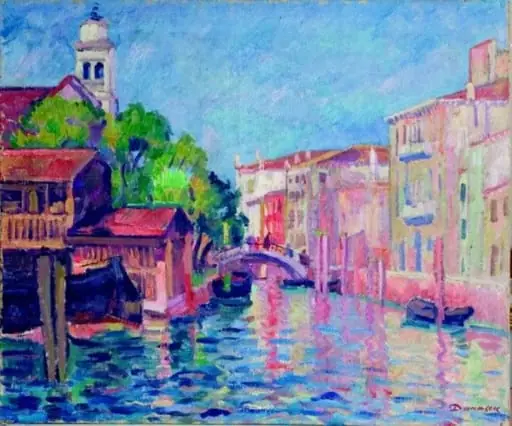
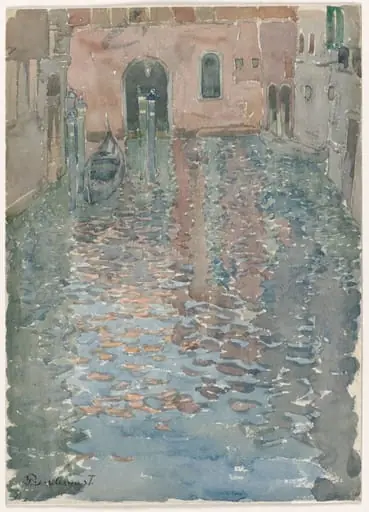
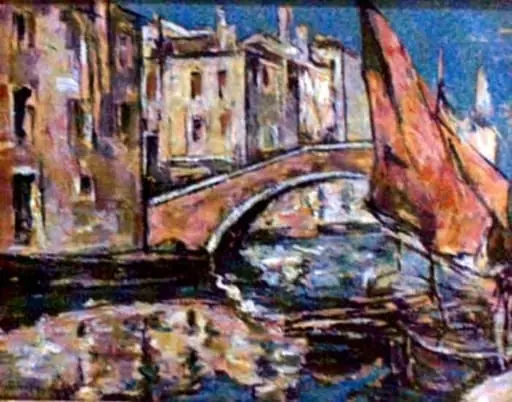
Paul A. Scorțescu painted Canalul Sf. Luca in 1925, capturing a quiet urban waterway in Romania. The composition centers on a narrow canal flanked by historic masonry structures, with a bridge spanning its length. The scene is rendered in muted earth tones, emphasizing stillness and architectural harmony. No figures are present, reinforcing a sense of solitude and contemplation.
Subject & Meaning
The painting presents a mundane urban feature—a canal—as a subject worthy of quiet attention. The absence of human activity shifts focus to the relationship between architecture and water, suggesting a meditation on time, decay, and endurance. The stillness of the water and the weathered stone imply a place untouched by haste, evoking a sense of continuity rather than narrative.
Technique & Style
Scorțescu employed loose, visible brushwork to model surfaces of stone, water, and sky, avoiding smooth finishes in favor of tactile texture. Color is restrained, dominated by ochres, grays, and soft blues, creating a unified tonal harmony. Reflections on the canal are suggested rather than precisely rendered, enhancing the painting’s atmospheric mood without relying on detail.
History & Provenance
Created during a period of cultural consolidation in interwar Romania, the work reflects local interest in documenting everyday urban landscapes. While specific ownership history is not widely documented, the painting is associated with Scorțescu’s broader engagement with Romanian topography and architectural heritage during the 1920s.
Context
In the 1920s, Romanian artists increasingly turned from grand historical themes to intimate depictions of local environments. Canalul Sf. Luca aligns with this trend, echoing the quiet realism of European urban scenes by contemporaries like Giorgio de Chirico or Camille Pissarro, yet grounded in the specific vernacular of Romanian cityscapes.
Legacy
The painting contributes to a modest but persistent body of work by Scorțescu that documents Romania’s architectural fabric with restraint and sensitivity. Though not widely exhibited internationally, it remains a reference point in studies of early 20th-century Romanian landscape painting, valued for its understated observation and technical restraint.
Artist & collection
Artist
Romanian printmaker Paul A. Scorțescu made etchings of waterfront scenes in the early 20th-century style. His print Canalul Sf. Luca shows a quiet canal lined with houses and boats, while the painting Tiberiada captures…