Artwork
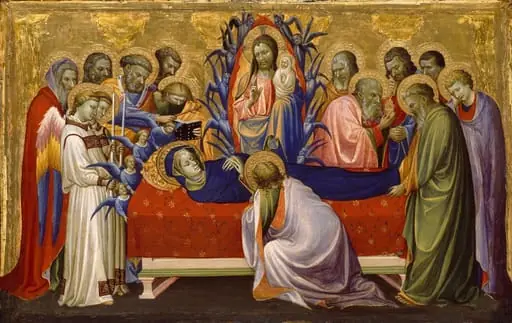
Dormition of the Virgin
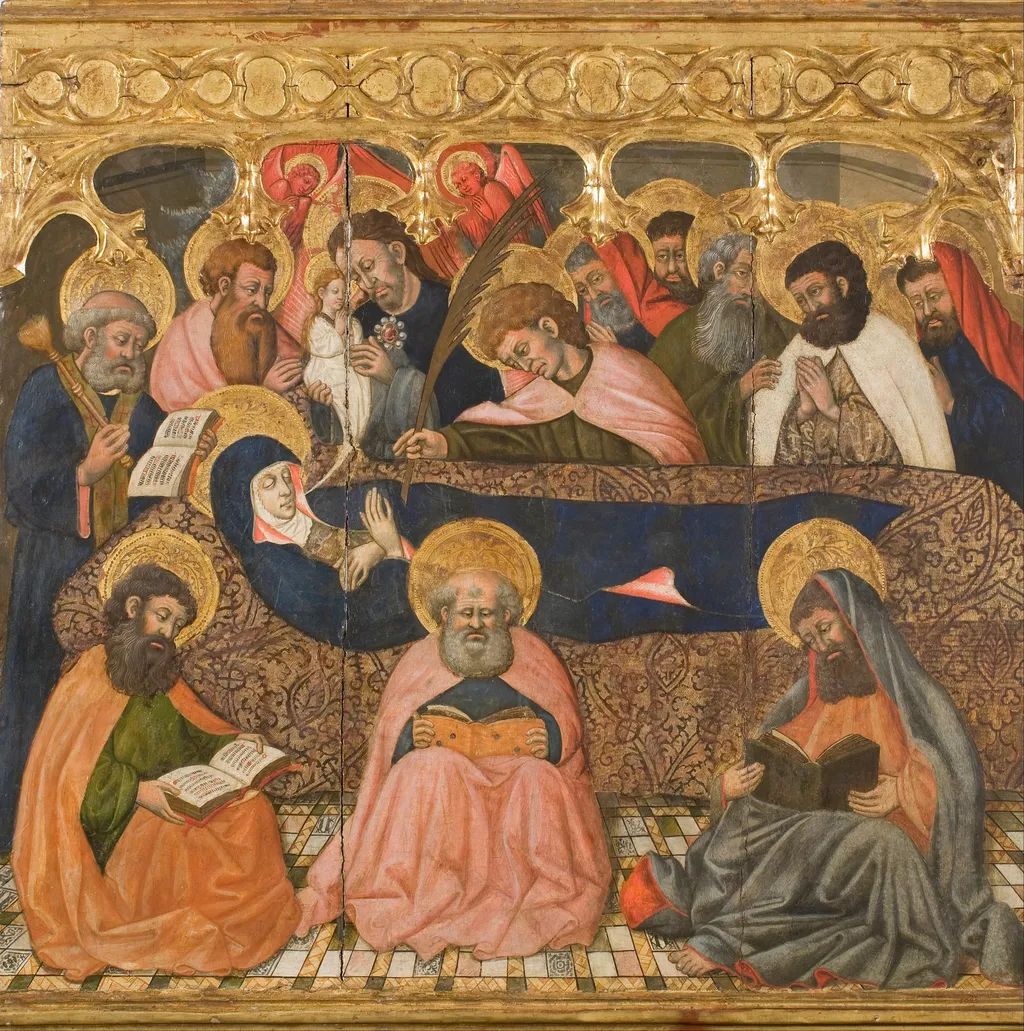
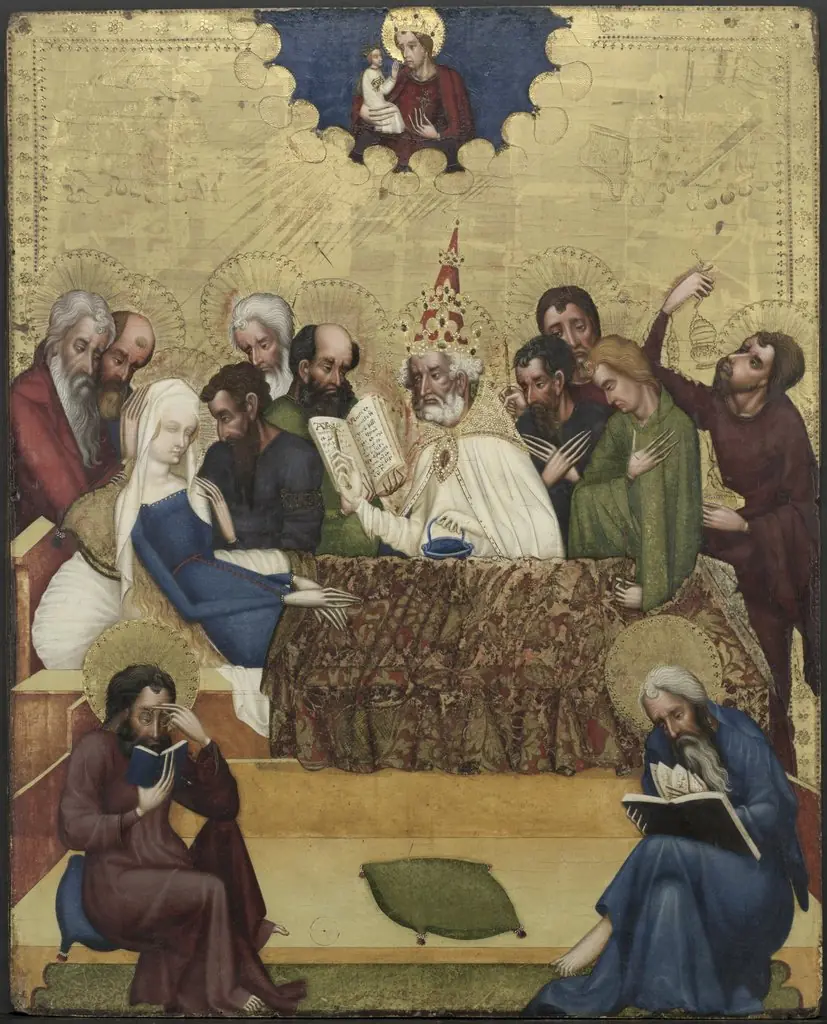
Dormition of the Virgin is an unspecified painting by the Northern Renaissance artist Second Master of Estopanyà. It dates from 1450 and is held in the collection of the Museu Nacional d'Art de Catalunya.
About this work
Overview
It is preserved in the Museu Nacional d'Art de Catalunya and exemplifies the devotional painting tradition of late medieval Catalonia.
Painted around 1450, the Dormition of the Virgin is a devotional panel attributed to the Second Master of Estopanyà, an anonymous Catalan artist active in the mid-fifteenth century. It is preserved in the Museu Nacional d'Art de Catalunya and exemplifies the devotional painting tradition of late medieval Catalonia. The work captures a moment of sacred stillness, focusing on the Virgin’s passing as witnessed by apostles and mourners.
Subject & Meaning
The painting illustrates the Virgin Mary’s death, or Dormition, a widely accepted belief in medieval Christianity that she fell into a peaceful sleep before her bodily assumption into heaven. Surrounding her are apostles gathered in quiet grief, their postures and expressions conveying reverence. Her crossed arms and serene demeanor suggest acceptance, reinforcing the theological notion of death as a transition rather than an end.
Technique & Style
The artist employs subtle chiaroscuro to model the figures, lending them a tangible presence against a shallow, gold-ground background. Rich pigments—deep blues, muted greens, and crimson—are layered to suggest texture and volume. The composition is tightly arranged, directing focus to the Virgin’s recumbent form through balanced groupings and directional gazes, enhancing the scene’s emotional gravity without theatricality.
History & Provenance
The painting originated in a Catalan religious context, likely commissioned for a private chapel or monastic setting. It entered the Museu Nacional d'Art de Catalunya’s collection through the consolidation of ecclesiastical artworks in the late nineteenth and early twentieth centuries. Its attribution to the Second Master of Estopanyà reflects scholarly efforts to identify anonymous regional painters from stylistic comparisons with signed works from the Estopanyà workshop.
Context
Created during a period of flourishing Catalan Gothic painting, the work reflects the region’s devotion to Marian themes and its engagement with broader European devotional trends. While influenced by Italian and Flemish models, the painting retains local characteristics in its linear precision and restrained emotional expression, aligning with the devotional aesthetics favored in Catalan churches and convents of the time.
Legacy
Though the artist’s identity remains obscure, the Dormition of the Virgin stands as a representative example of mid-fifteenth-century Catalan panel painting. It contributes to the understanding of regional artistic practices before the full impact of Renaissance naturalism. Its preservation allows continued study of how religious narratives were visually encoded in intimate, contemplative formats for private and communal devotion.
Artist & collection
Artist
This painter made calm, gold-backed scenes of Mary and Jesus in the mid-1400s. Look at the Dormition of the Virgin, where the apostles gather around Mary as she dies, and the Archangel Gabriel from an Annunciation,…