Artwork
Winter Quarters - Cape Ann
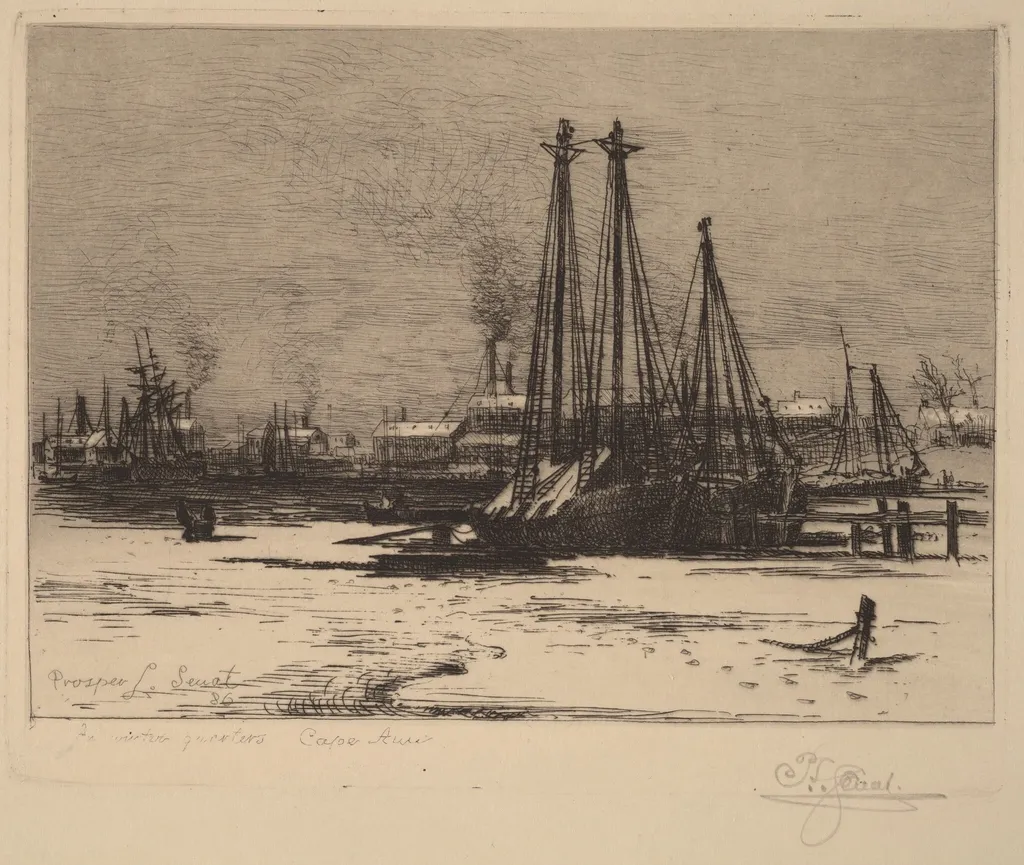
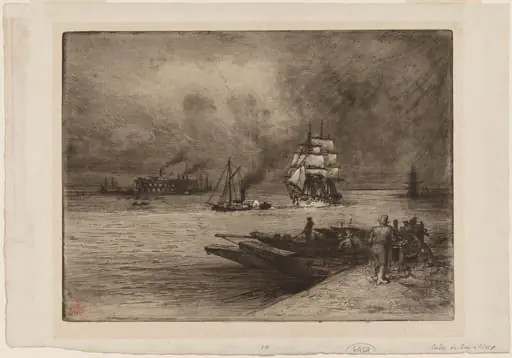
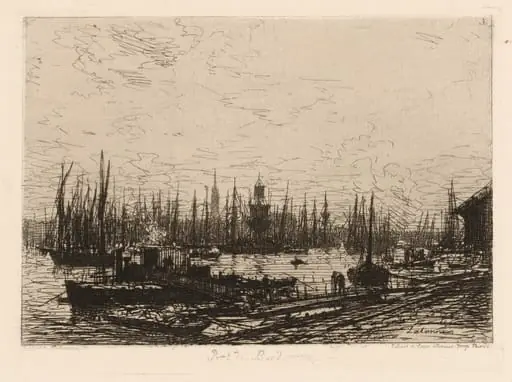
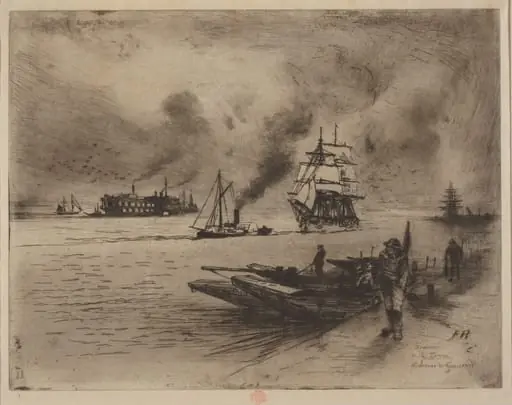
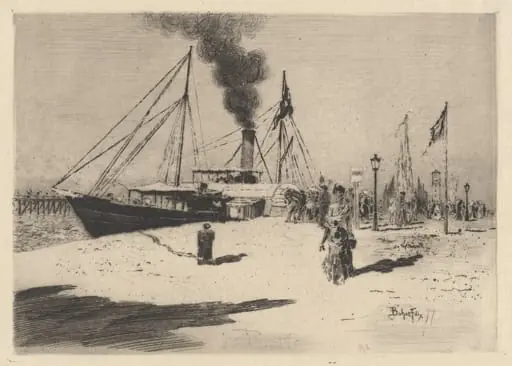
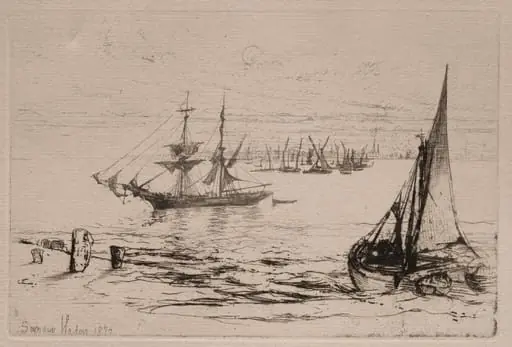
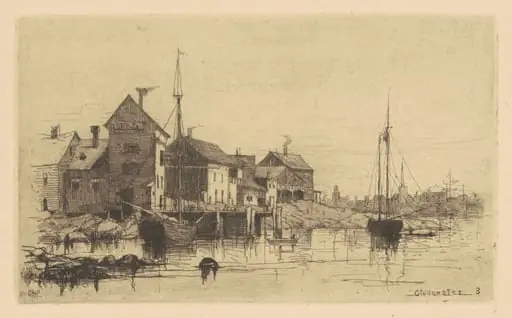
Winter Quarters - Cape Ann is an ink print by the Impressionist artist Prosper Louis Senat. It dates from 1886 and is held in the collection of the National Gallery of Art.
About this work
Overview
Created in 1886 by Prosper Louis Senat, Winter Quarters - Cape Ann is an etching rendered in black ink on imitation Japan paper.
Created in 1886 by Prosper Louis Senat, Winter Quarters - Cape Ann is an etching rendered in black ink on imitation Japan paper. The work captures a quiet coastal scene in winter, focusing on frozen water, moored vessels, and clustered buildings. Its restrained palette and fine linear detail reflect the artist’s engagement with printmaking traditions of the late nineteenth century, emphasizing atmosphere over narrative.
Subject & Meaning
The scene depicts a dormant fishing community on Cape Ann during winter, with boats immobilized by ice and smoke curling from chimney tops. The stillness of the frozen water and the absence of human figures suggest a pause in seasonal labor. The image conveys endurance and solitude, reflecting the rhythms of coastal life rather than romanticizing the landscape.
Technique & Style
Senat employed etching to achieve fine, controlled lines that define textures of ice, wood, and brick. The use of imitation Japan paper, known for its smooth surface and absorbency, enhanced the ink’s depth and allowed subtle tonal gradations. The monochrome scheme focuses attention on form and light, reinforcing the hushed mood of the winter day through precision rather than color.
History & Provenance
The print was made in 1886 during Senat’s period of active print production, though little public documentation exists regarding its early ownership. It likely circulated among collectors of American and European prints in the late 19th century. Its survival in institutional collections suggests it was valued for its technical execution and regional subject matter.
Context
Senat worked during a time when American artists increasingly turned to printmaking to document everyday life, influenced by European realist traditions. Cape Ann, a known artistic hub since the 1800s, attracted creators drawn to its rugged coastline and seasonal changes. This work aligns with a broader interest in capturing the quiet dignity of coastal communities in winter.
Legacy
Though not widely exhibited today, Winter Quarters - Cape Ann remains a representative example of late 19th-century American etching. It reflects Senat’s commitment to capturing regional character through disciplined technique. The work contributes to the historical record of New England’s maritime culture, preserved not through grandeur but through attentive observation.
Own this work as a print
Artist & collection