Artwork
The Tow
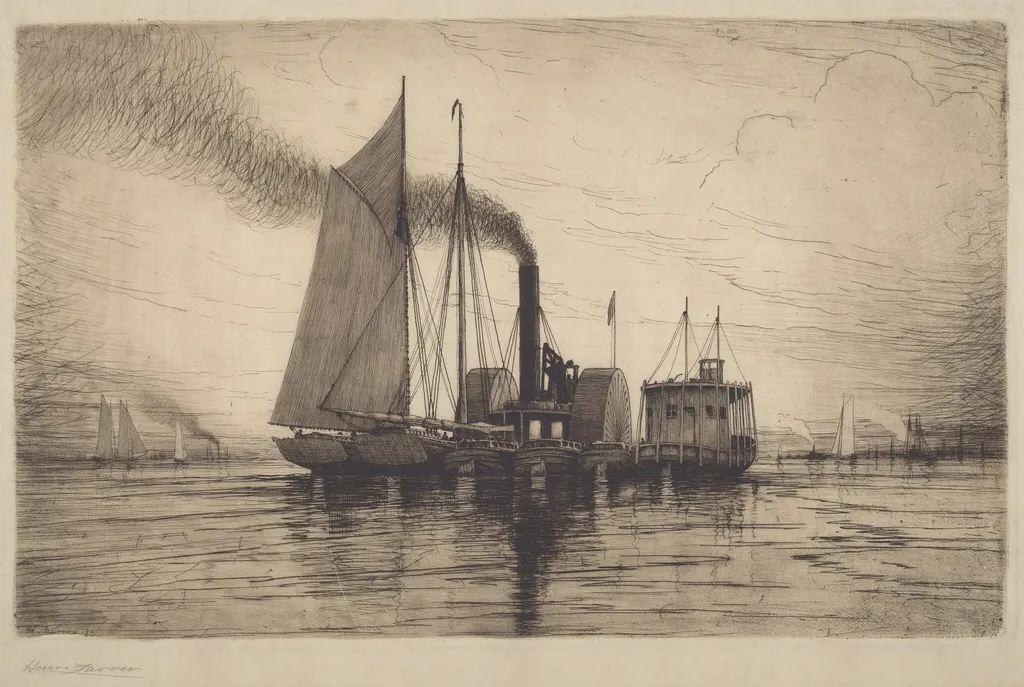
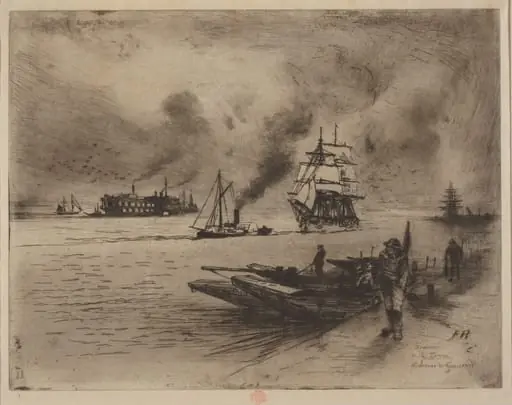
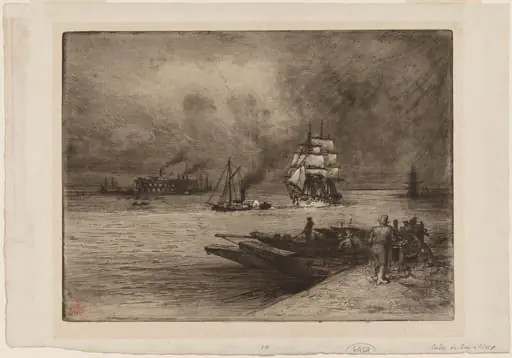
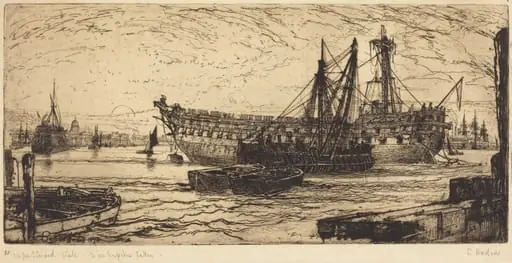
The Tow is an ink print by the Impressionist artist Henry Farrer. It dates from 1881 and is held in the collection of the National Gallery of Art.
About this work
Overview
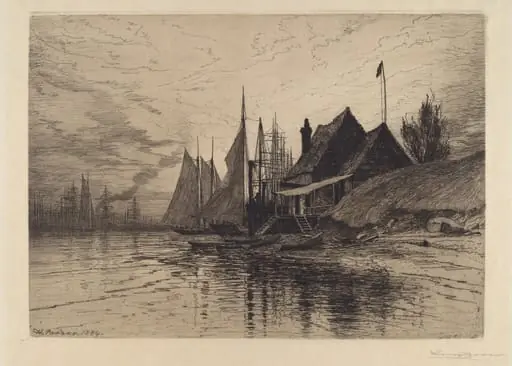
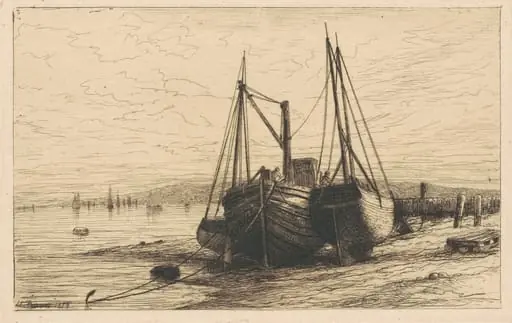
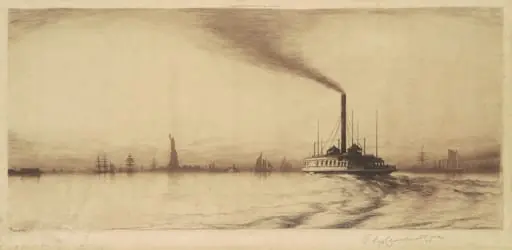
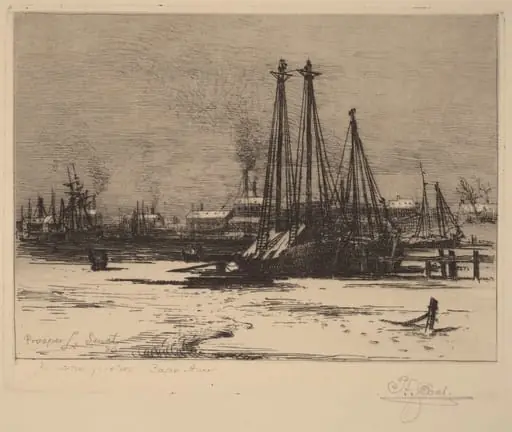
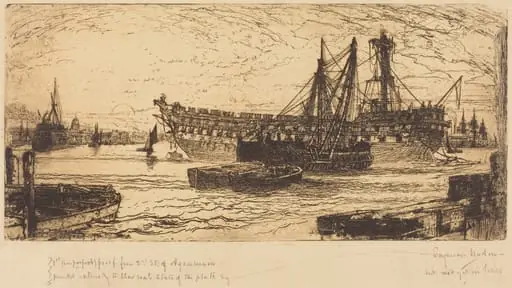
The Tow is an 1881 etching by American artist Henry Farrer. Executed as a single‑plate print, the work presents a quiet river scene centered on a large sailing vessel pulling a smaller boat. The composition is anchored by the calm water, which mirrors the sky, while distant vessels and architecture recede into the background.
Subject & Meaning
The image captures a moment of gentle labor on the water, emphasizing the relationship between the towboat and its cargo. The tranquil atmosphere, reinforced by the smooth surface of the river and the soft horizon, suggests a contemplative pause in everyday river traffic, inviting viewers to consider the quiet rhythms of 19th‑century waterways.
Technique & Style
Farrer employed traditional intaglio etching, incising lines into a copper plate before printing on paper. The method allows for fine hatching and varied line weight, creating texture in the water’s surface and depth in the distant architecture. The restrained tonal range and careful delineation reflect the artist’s interest in realistic detail within a modestly impressionistic framework.
Context
Created during a period when American printmakers were exploring atmospheric landscapes, The Tow aligns with Farrer’s broader oeuvre of river and harbor scenes.
Created during a period when American printmakers were exploring atmospheric landscapes, The Tow aligns with Farrer’s broader oeuvre of river and harbor scenes. While not directly linked to the French Impressionist movement, the work shares its emphasis on light, reflection, and fleeting moments, situating it within the late‑19th‑century interest in everyday subjects rendered with technical precision.
Own this work as a print
Artist & collection

Artist
Henry Farrer was an English-born American artist known for his tonalist watercolor landscapes and etchings.