Artwork
Battle of Cape St. Vincent, Commodore Nelson capturing the San Nicholas and San Josef
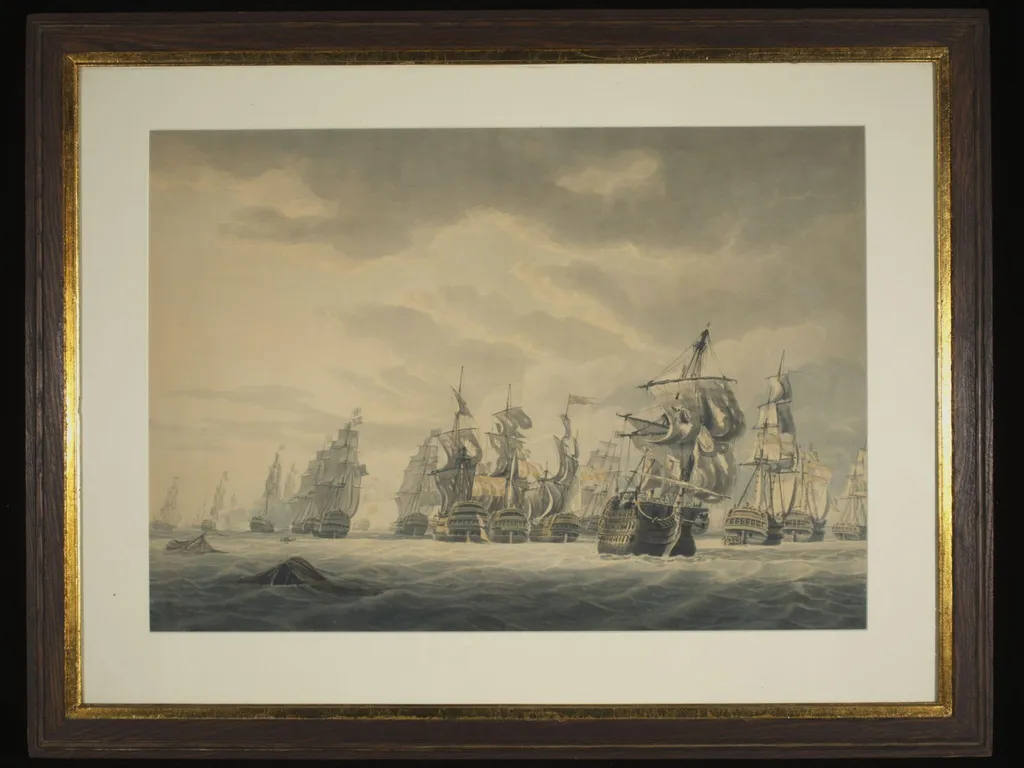
Battle of Cape St. Vincent, Commodore Nelson capturing the San Nicholas and San Josef is a watercolor work on paper by the Romanticist artist Serres. It dates from 1797 and is held in the collection of the Victoria and Albert Museum.
About this work
Overview
The composition focuses on the moment of capture, avoiding overt heroism in favor of tactical realism.
This watercolour captures a naval engagement off the coast of Portugal in 1797, when British forces under Commodore Horatio Nelson boarded two Spanish ships in rapid succession. Rendered in muted blues and greys, the scene emphasizes motion and chaos, with smoke, splintered masts, and taut rigging conveying the intensity of close-quarters combat. The composition focuses on the moment of capture, avoiding overt heroism in favor of tactical realism.
Subject & Meaning
The painting documents Nelson’s bold maneuver during the Battle of Cape St. Vincent, where he broke the Spanish line and seized the San Nicolás, then used it as a bridge to board the larger San Josef. The act symbolized naval initiative and discipline, challenging conventional fleet tactics. The absence of individual figures underscores the scale of institutional conflict over personal glory.
Technique & Style
Executed in transparent watercolour, the artist employed layered washes to suggest depth and atmospheric haze. Fine brushwork defines rigging and cannon smoke, while the sky’s diffuse greys unify the scene’s somber tone. The lack of bright highlights or dramatic lighting reflects a documentary approach common in early 19th-century maritime art, prioritizing accuracy over theatricality.
History & Provenance
Created shortly after the 1797 battle, the work likely served as a visual record for British naval patrons or officials. Its survival suggests it was kept within military or aristocratic circles, possibly commissioned to commemorate Nelson’s rising reputation. No definitive record of its original owner exists, but its preservation aligns with contemporary efforts to archive naval victories.
Context
In the late 1790s, Britain relied heavily on naval supremacy to counter French and Spanish alliances. Watercolours like this circulated among officers and government figures as both records and propaganda. Unlike oil paintings intended for public display, such works were often private, intended for informed viewers familiar with ship types and battle tactics.
Legacy
The painting contributes to a broader archive of maritime documentation from the Napoleonic era. While not widely exhibited today, it remains a valuable reference for understanding how naval engagements were visually recorded before photography. Its restrained aesthetic contrasts with later romanticized depictions, preserving a more immediate, observational perspective.
Artist & collection

Artist
Serres is a city in Macedonia, Greece. It is the capital of the Serres regional unit and the second largest city in the region of Central Macedonia, after Thessaloniki.


 Three-Masted Sailing Boat on Gently Moving Water
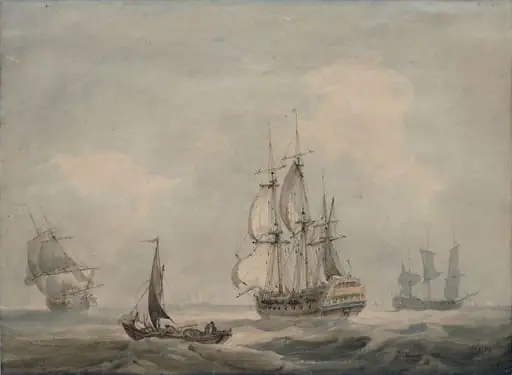 Vessels and fishing boat
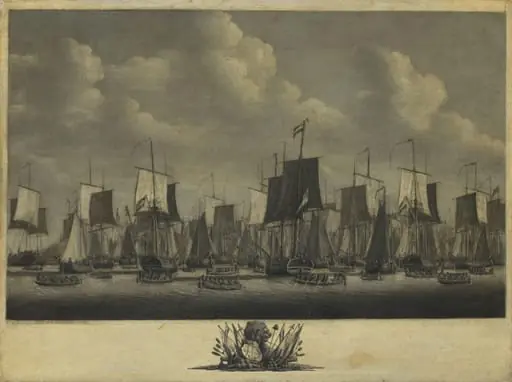 Untitled
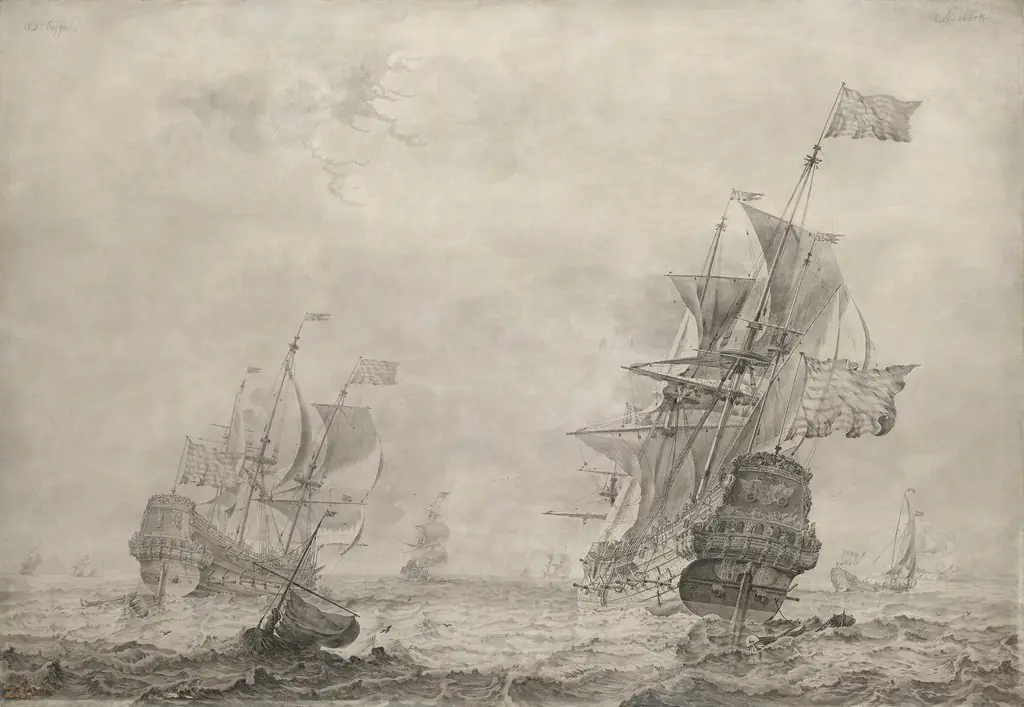
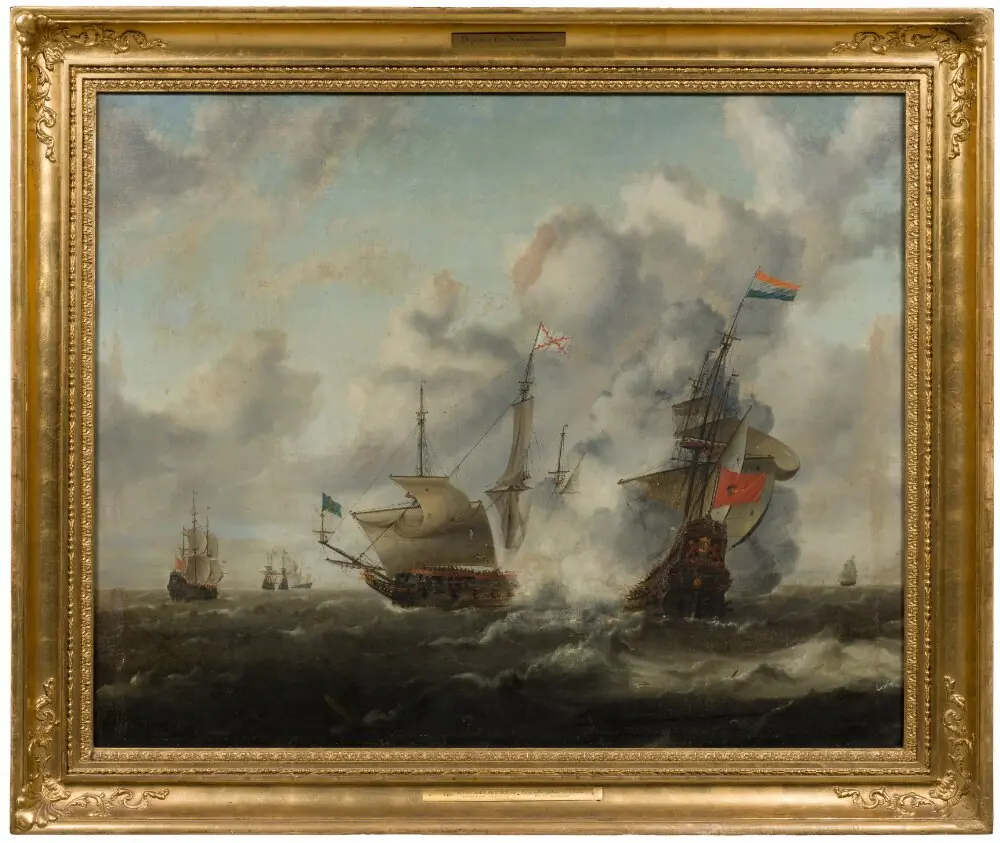 Sea Battle between the English and the Dutch
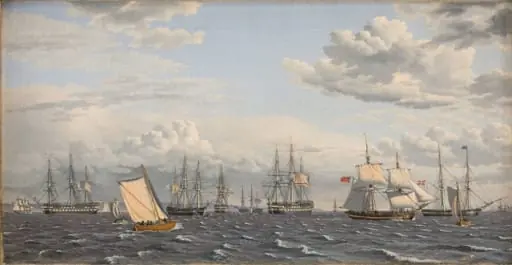 A Russian Fleet at Anchor near Elsinore
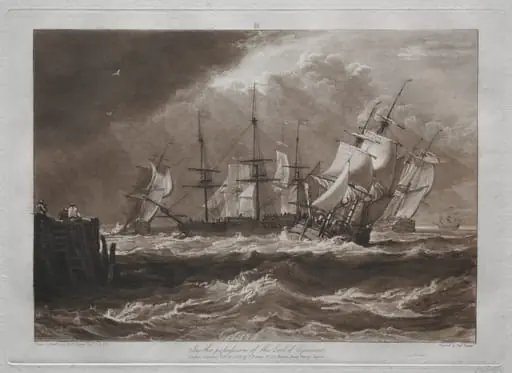 Liber Studiorum: Ships in a Breeze
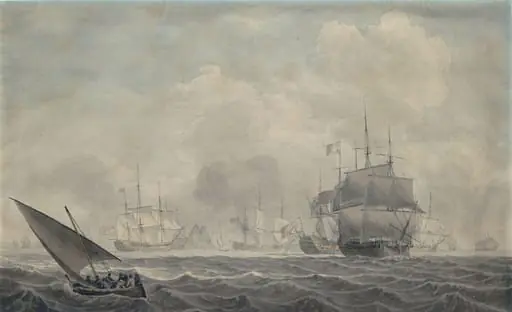 English Ships of War
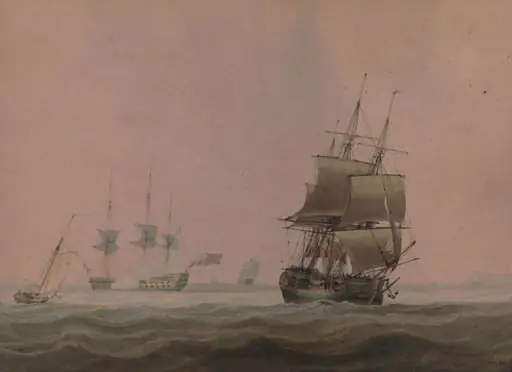 Shipping off the north foreland
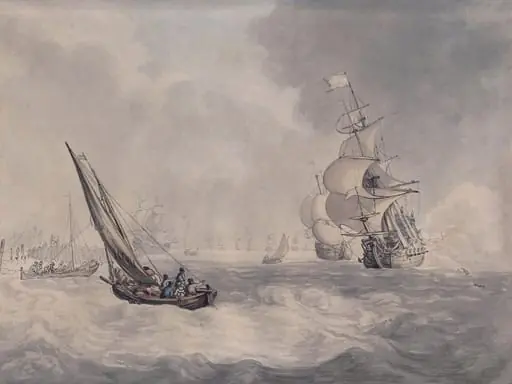 Firing a salute off Portsmouth
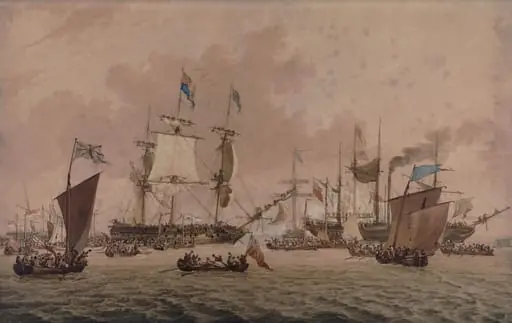 Shipping and boats: George IV passing Great Ormesby, Yarmouth, on his return from Edinburgh 1822
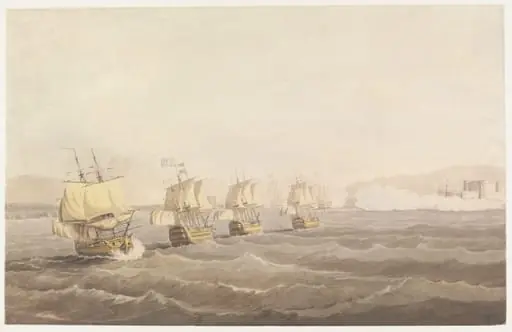 The Passage of Admiral Duckworth's Fleet in 1806-07 through the Dardanelles'
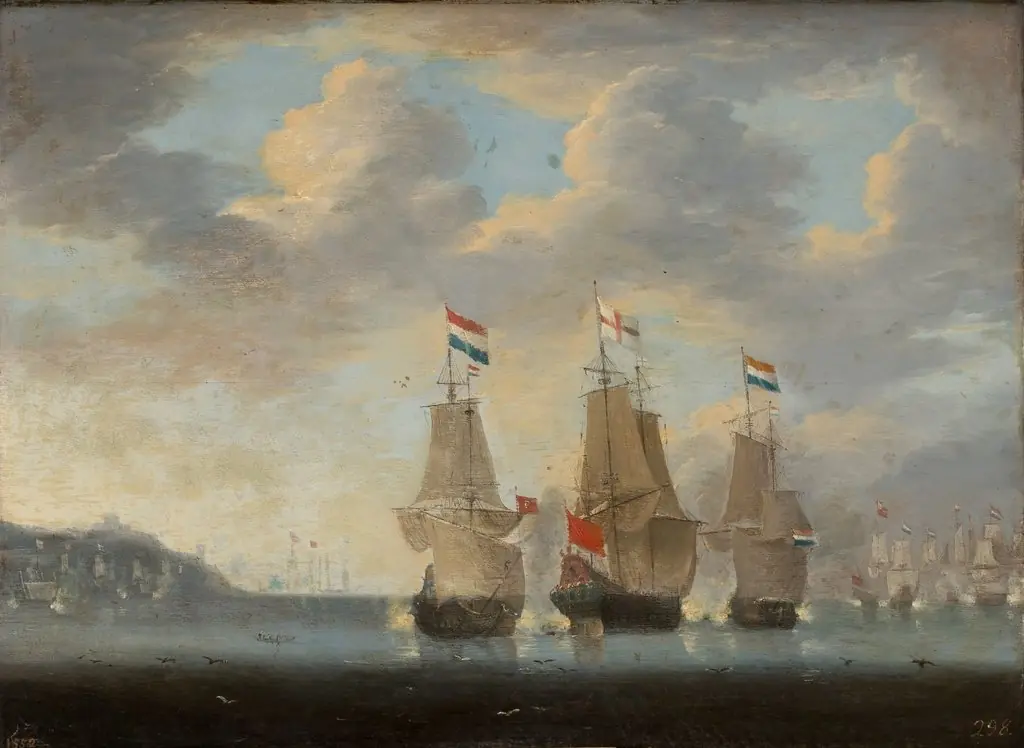 Naval Battle