Artwork
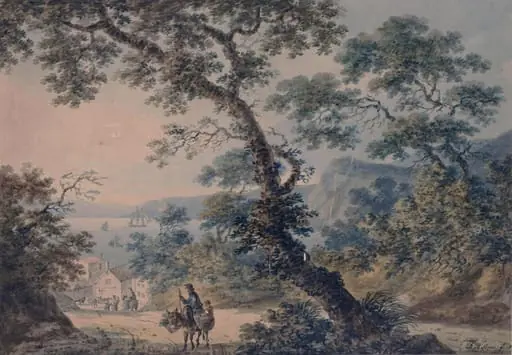
Mountainous Landscape with Figures
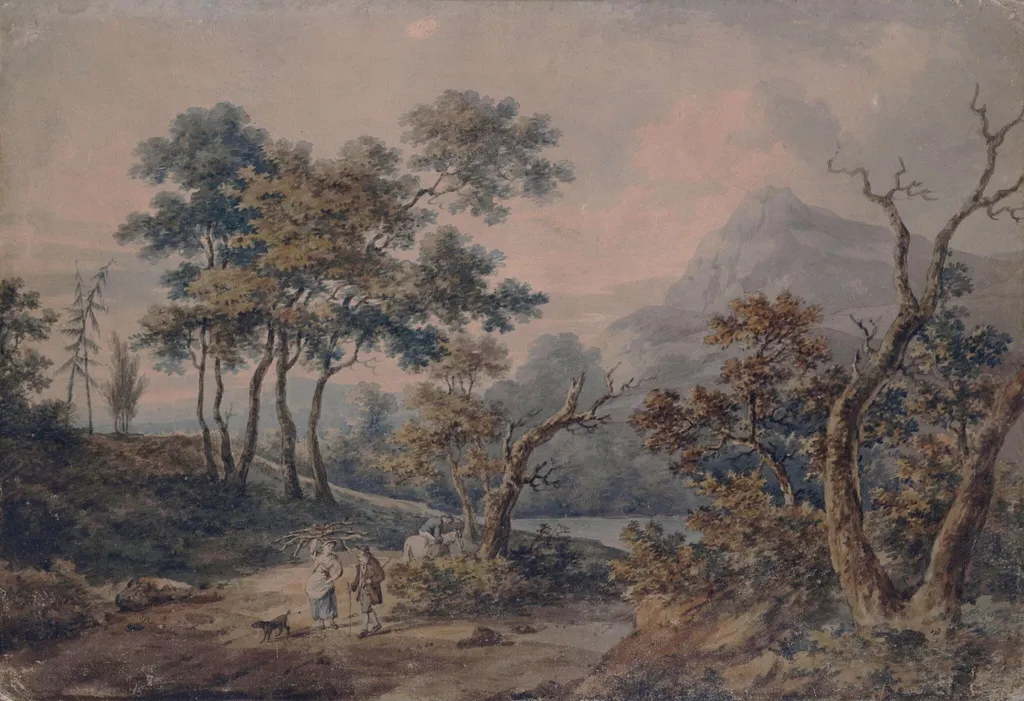
Mountainous Landscape with Figures is a watercolor work on paper by the Rococo painting artist Serres. It dates from 1750 and is held in the collection of the Victoria and Albert Museum.
About this work
Overview
This 1750 watercolour by Serres presents a tranquil mountainous scene rendered in delicate washes of pigment.
This 1750 watercolour by Serres presents a tranquil mountainous scene rendered in delicate washes of pigment. The composition centers on a quiet forest path where three figures move slowly beneath a broad tree, their scale emphasizing the immensity of the natural surroundings. A dog rests nearby, and horses stand tethered in the distance, suggesting a pause in travel. The soft, layered application of watercolour captures subtle shifts in light and atmosphere.
Subject & Meaning
The scene depicts a moment of stillness within a journey, not a dramatic event. The figures, small and unobtrusive, appear absorbed in their movement rather than interacting with one another. The presence of an umbrella and tethered horses implies a journey interrupted by rest, perhaps in response to weather or terrain. The landscape itself becomes the focus, evoking contemplation rather than narrative.
Technique & Style
Serres employed watercolour with a light, fluid hand, allowing pigments to blend softly on the paper to suggest mist, foliage, and distant peaks. Varied brushwork differentiates dense canopy from sparse branches, while pale washes create atmospheric depth. The absence of sharp outlines and the muted palette reflect the medium’s suitability for capturing transient natural effects, typical of 18th-century topographical watercolours.
History & Provenance
The work dates from 1750, a period when watercolour was increasingly used for landscape studies among British artists and amateurs. While its early ownership is undocumented, its style aligns with the growing interest in naturalistic scenery during the mid-18th century. It likely originated as a personal sketch or travel record, later preserved for its quiet aesthetic rather than its historical significance.
Context
In mid-18th-century Britain, watercolour landscapes gained popularity as both artistic expression and topographical documentation. Artists like Serres contributed to a tradition that valued subtle observation over grandeur. This work reflects a shift toward intimate, personal encounters with nature, influenced by emerging Romantic sensibilities and the rise of travel as a cultural pursuit among the educated classes.
Legacy
Though not widely exhibited or reproduced, the painting exemplifies the quiet precision of 18th-century watercolour landscape practice. Its emphasis on atmosphere over drama influenced later generations of British watercolourists who sought to capture the mood of natural settings. Collections such as the Victoria and Albert Museum hold similar works, preserving this understated yet enduring approach to landscape representation.
Own this work as a print
Artist & collection

Artist
Serres is a city in Macedonia, Greece. It is the capital of the Serres regional unit and the second largest city in the region of Central Macedonia, after Thessaloniki.

 Landscape with stream, cattle and figures
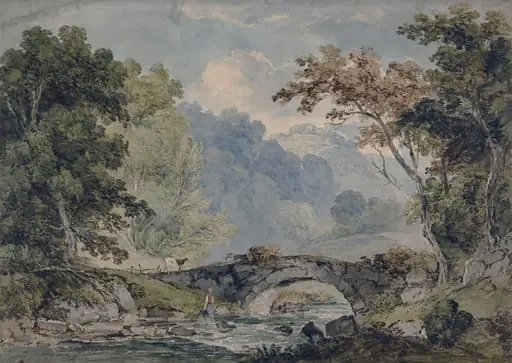 Bridge at Kippenross, near Dunblane
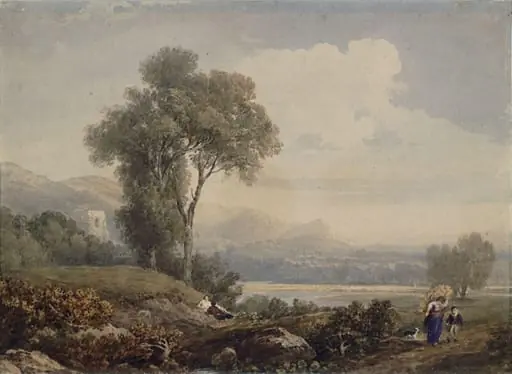 Landscape
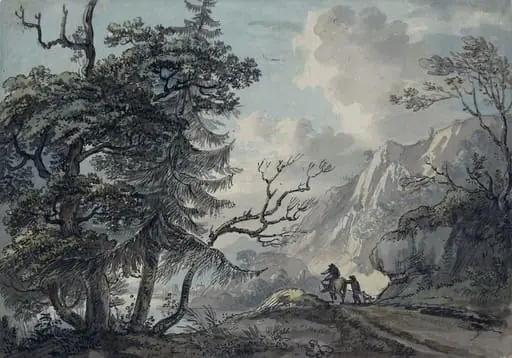 A road in mountainous country, leading to a castle by a lake
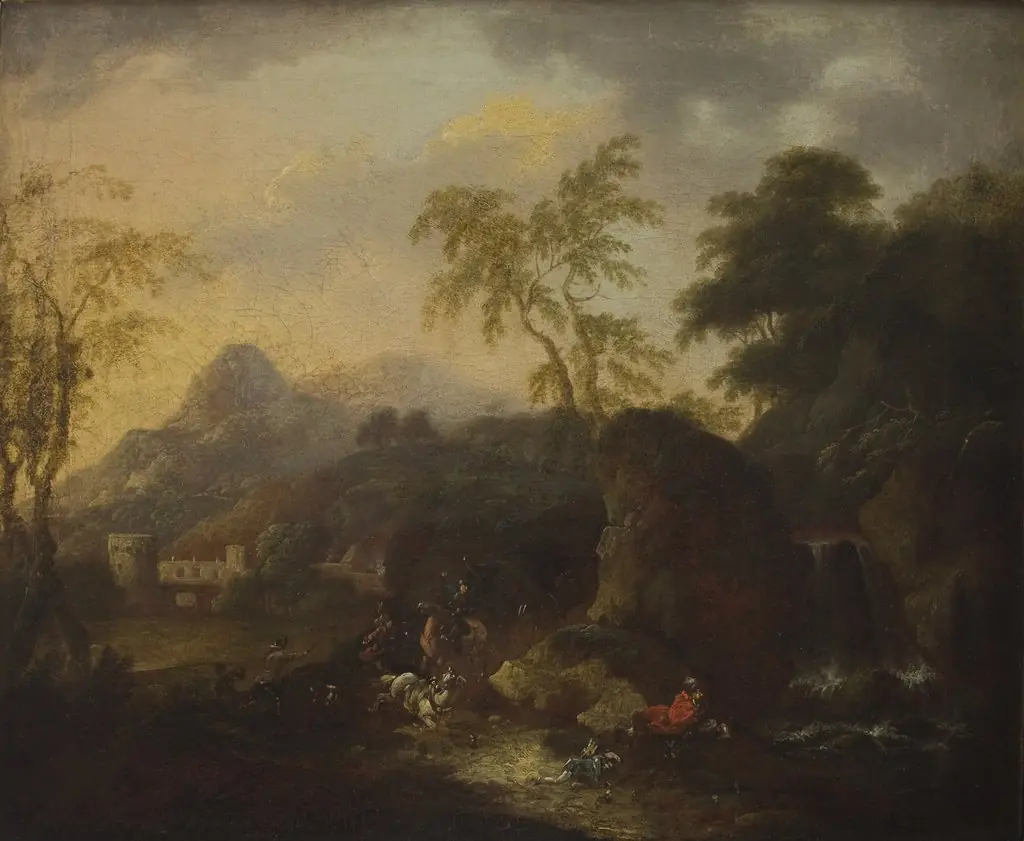 Landscape
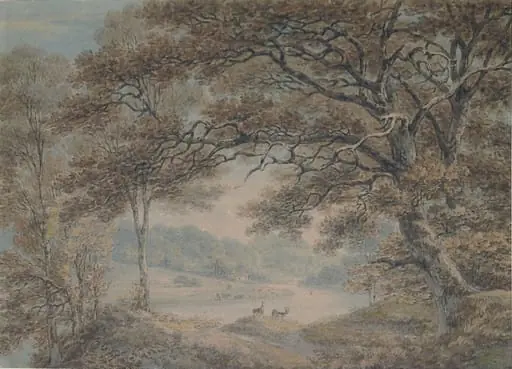 A Scene At Knights, Downton, Herefordshire
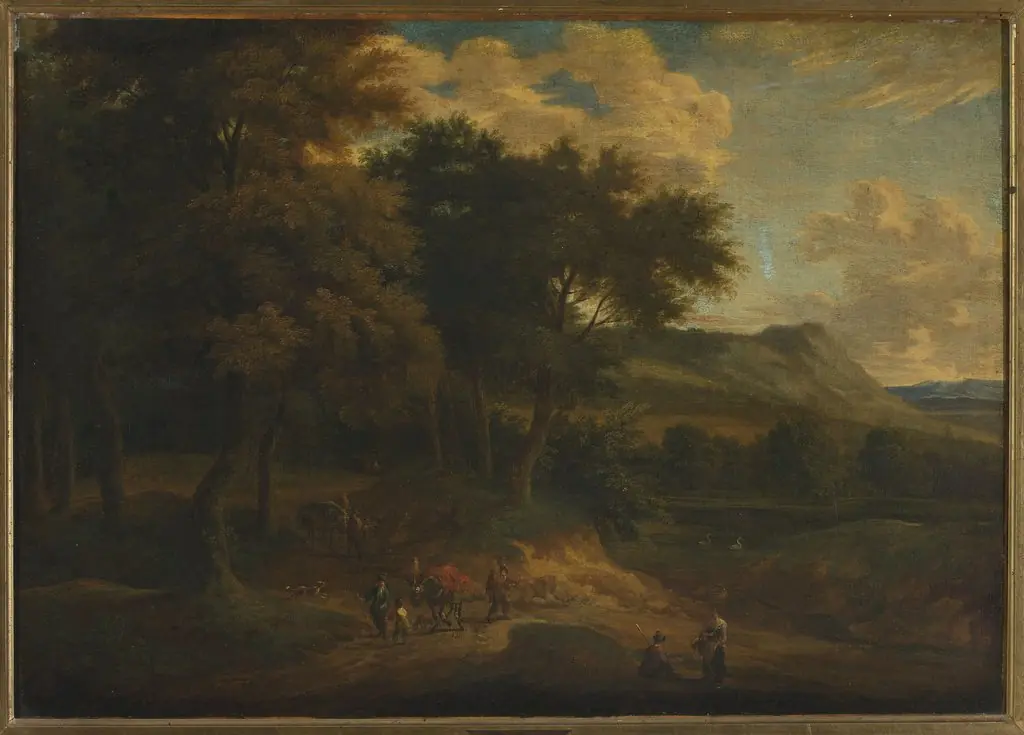 Landscape with staffage at sunset
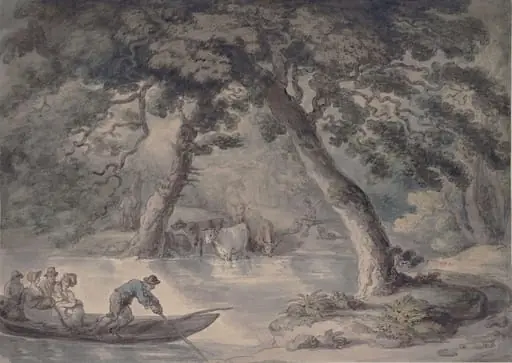 The Ferry
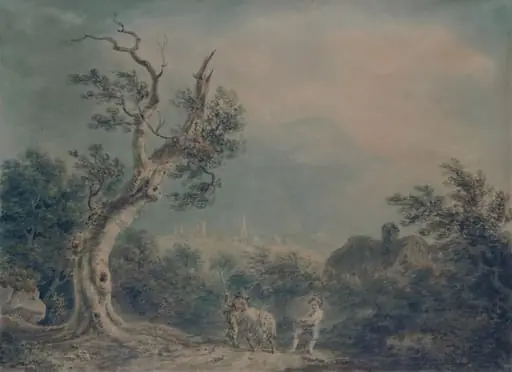 A Mountainous Country
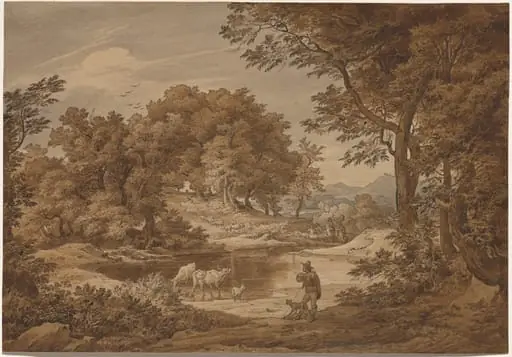 An Italianate Landscape with Shepherds
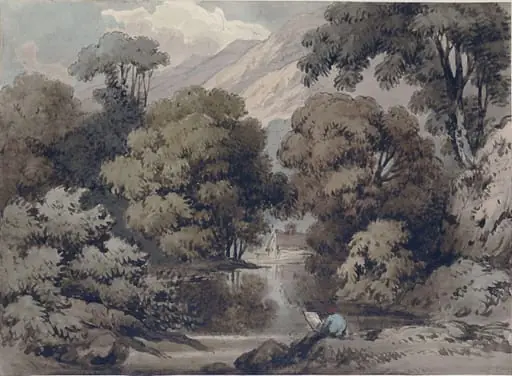 Landscape with man sketching
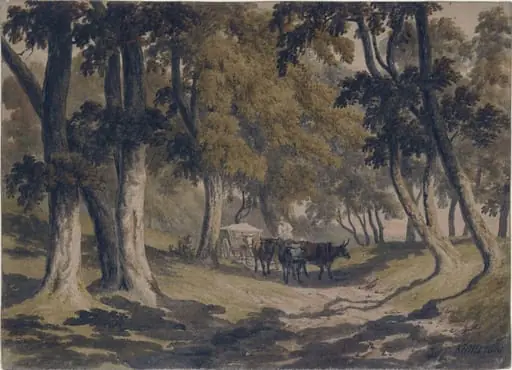 Woodland Road with Ox-waggon