Artwork
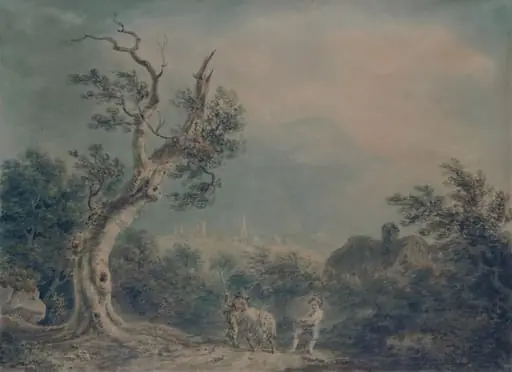
A road in mountainous country, leading to a castle by a lake
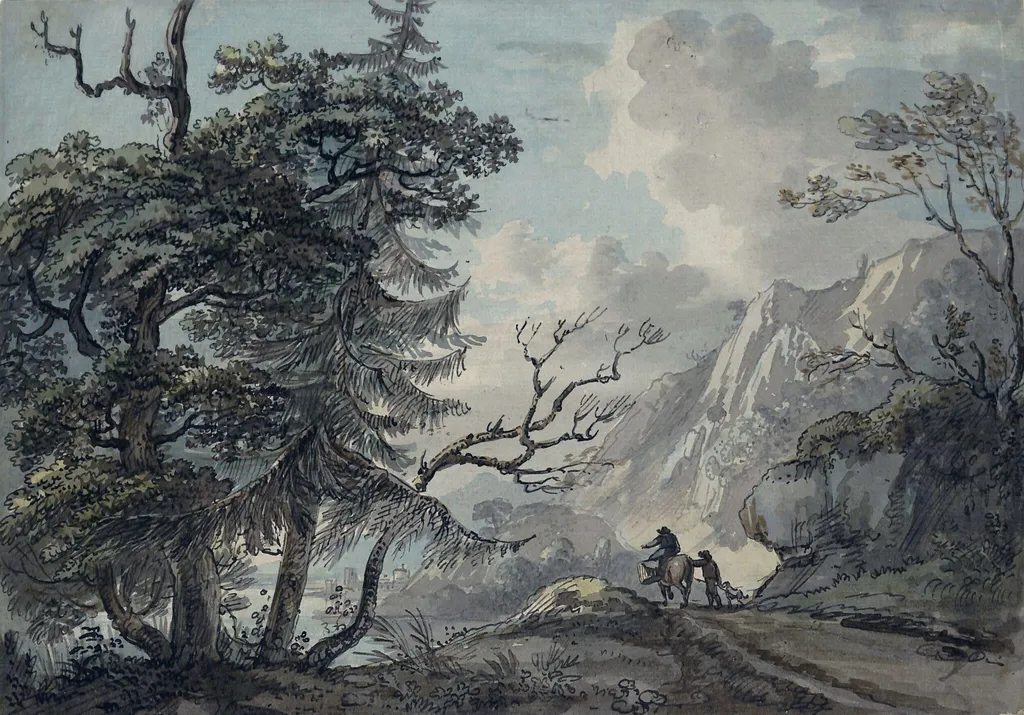
A road in mountainous country, leading to a castle by a lake is a watercolor work on paper by the Rococo painting artist Paul Sandby. It dates from 1750 and is held in the collection of the Victoria and Albert Museum.
About this work
Overview
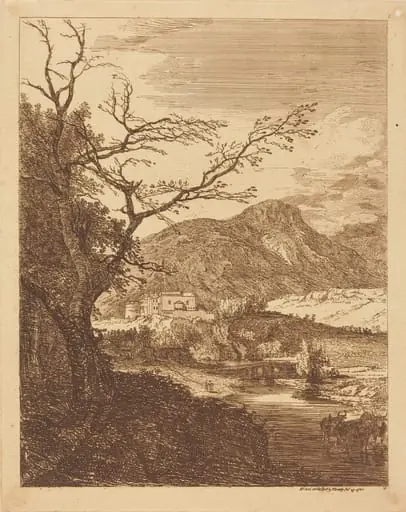
A watercolour painting by Paul Sandby portrays a serene, mountainous landscape with a winding road leading to a distant castle beside a lake, set against a soft, misty sky.
Subject & Meaning
The scene focuses on the vastness of nature, with a lone rider on horseback (leading another) dwarfed by the landscape, emphasizing the sublime and the relationship between human presence and wild, untouched environment.
Technique & Style
Sandby employed watercolour to evoke a mood of quietness, prioritizing the interplay of light and shadow over sharp details, characteristic of the emphasis on atmosphere in Romantic-era landscape painting.
History & Provenance
Originally part of the William Sandby Collection, the work was acquired from the Gravatt collection at a Christie’s auction in 1959.
Context
This painting aligns with the principles of Romanticism, a 19th-century art movement that celebrated the beauty, power, and emotional resonance of nature, often depicting landscapes that inspired awe and contemplation.
Own this work as a print
Artist & collection
Artist
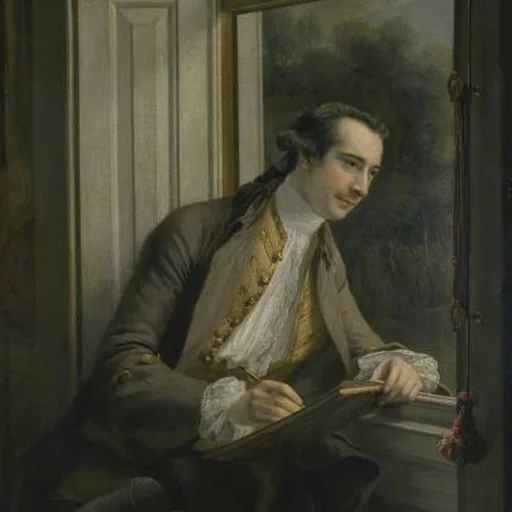
Paul Sandby, (1731 – 7 November 1809) was an English mapmaker and painter who specialised in landscape art. Along with his older brother Thomas Sandby, he was one of the founding members of the Royal Academy in 1768.


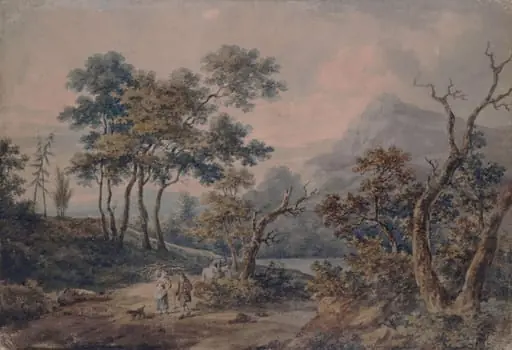 Mountainous Landscape with Figures
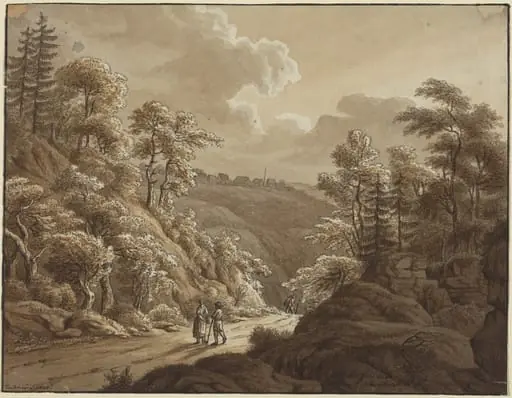 Road through the Woods near Kresselbach
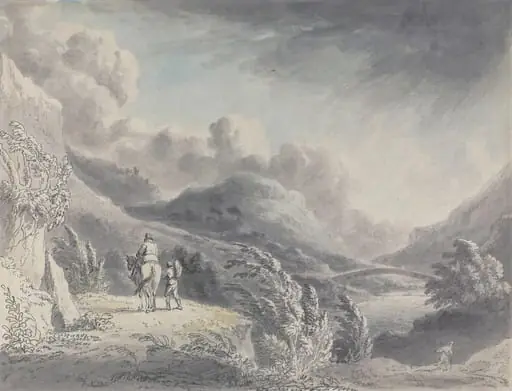 Travellers on a Road Near Pont-y-Pridd, Wales
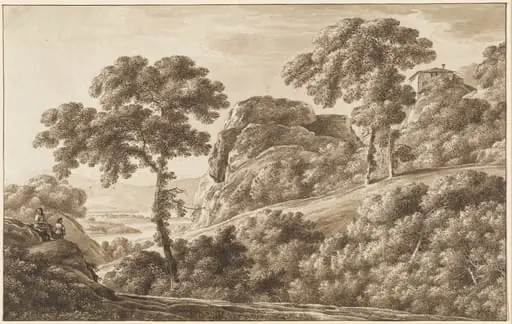 The Isar with Boulders on the Isarhohe
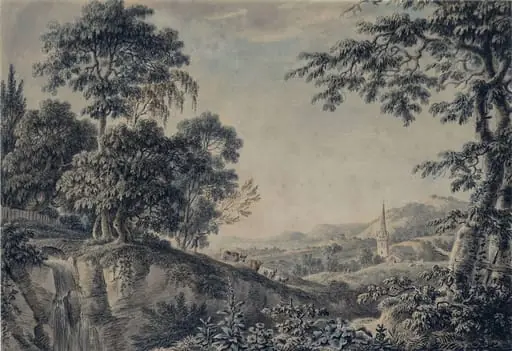 Landscape with church and cattle
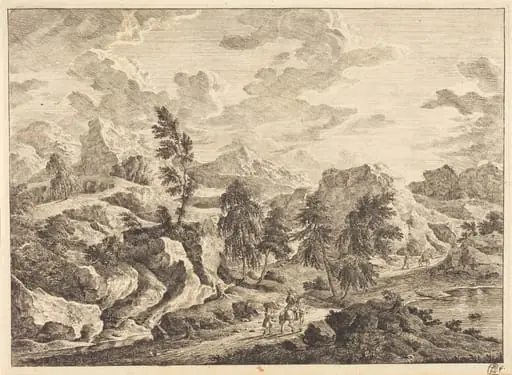 Landscape with the Rising Sun and a Rider with Attendant
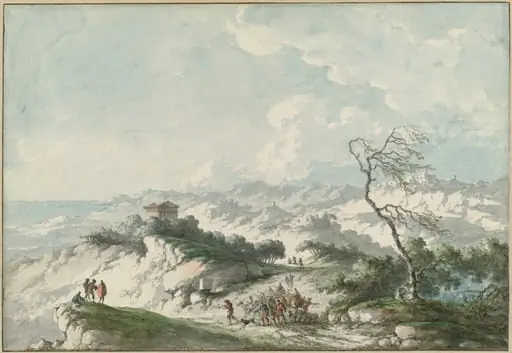 Second View of the Agrigento Countryside
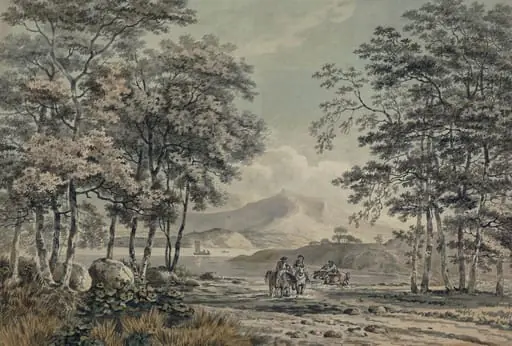 Landscape with River and Figures
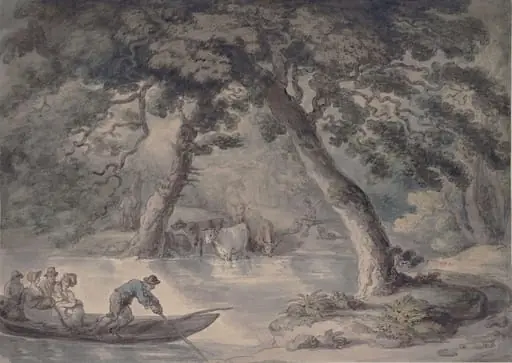 The Ferry
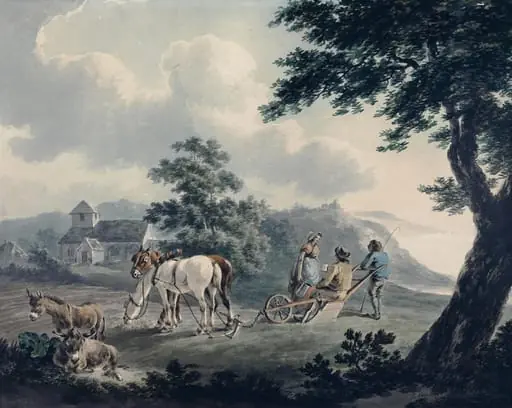 Landscape with Horses at Plough, and Figures
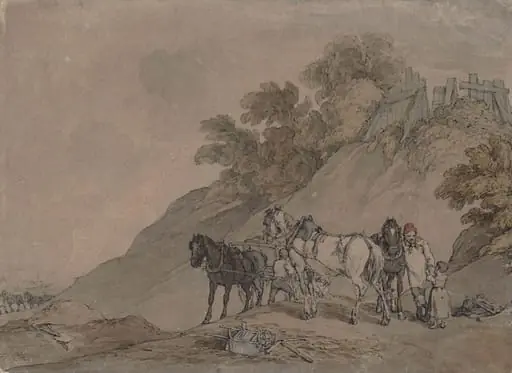 Cart and Team at a Gravel Pit
 A Mountainous Country