Artwork
Naturaleza muerta
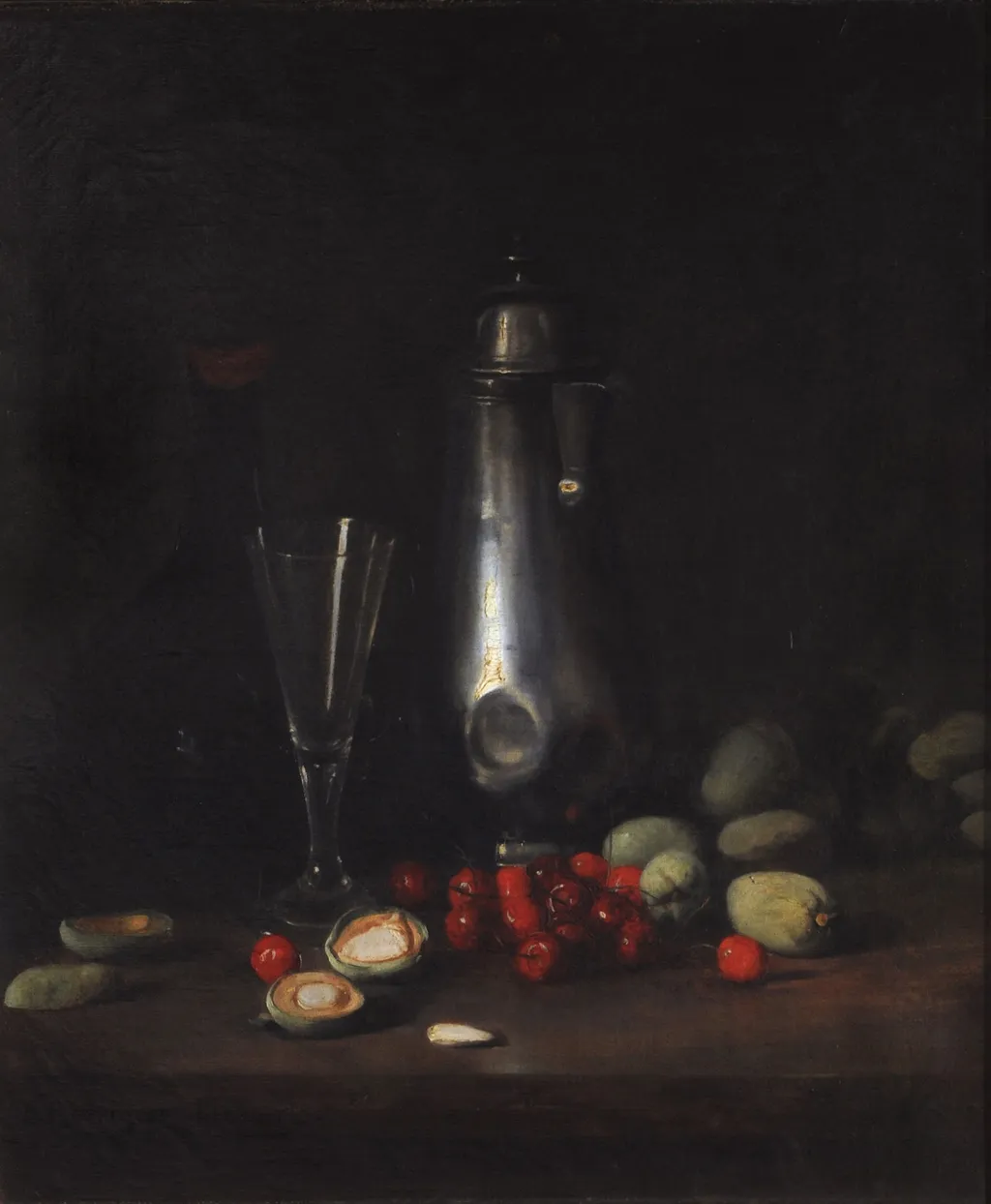
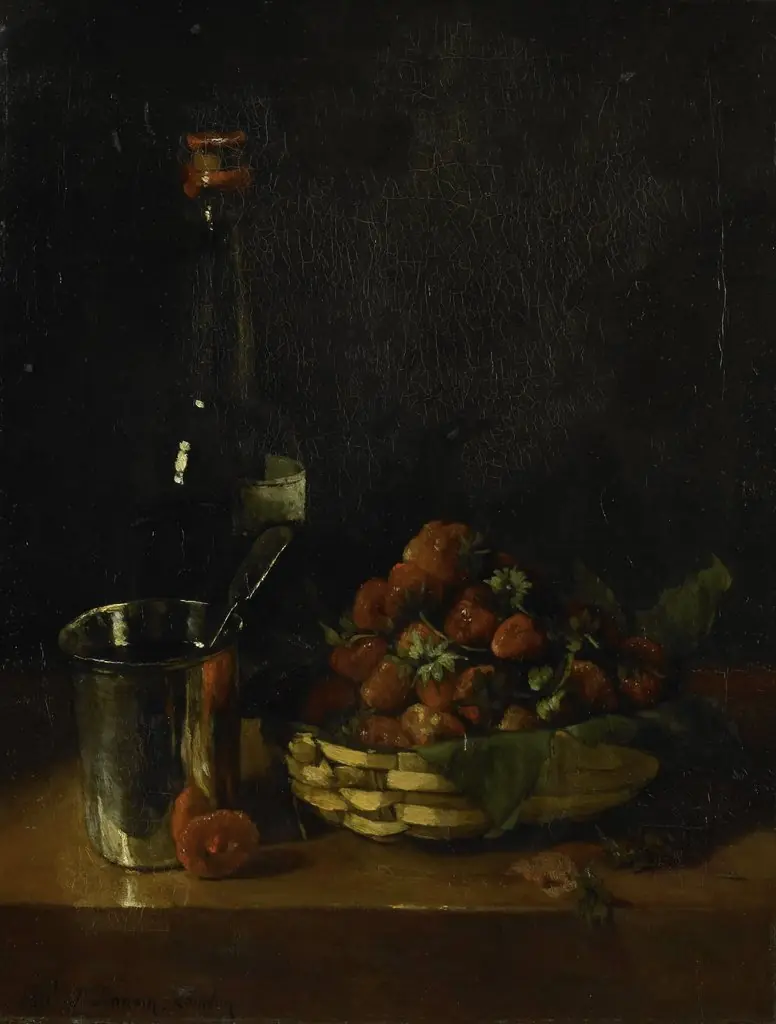
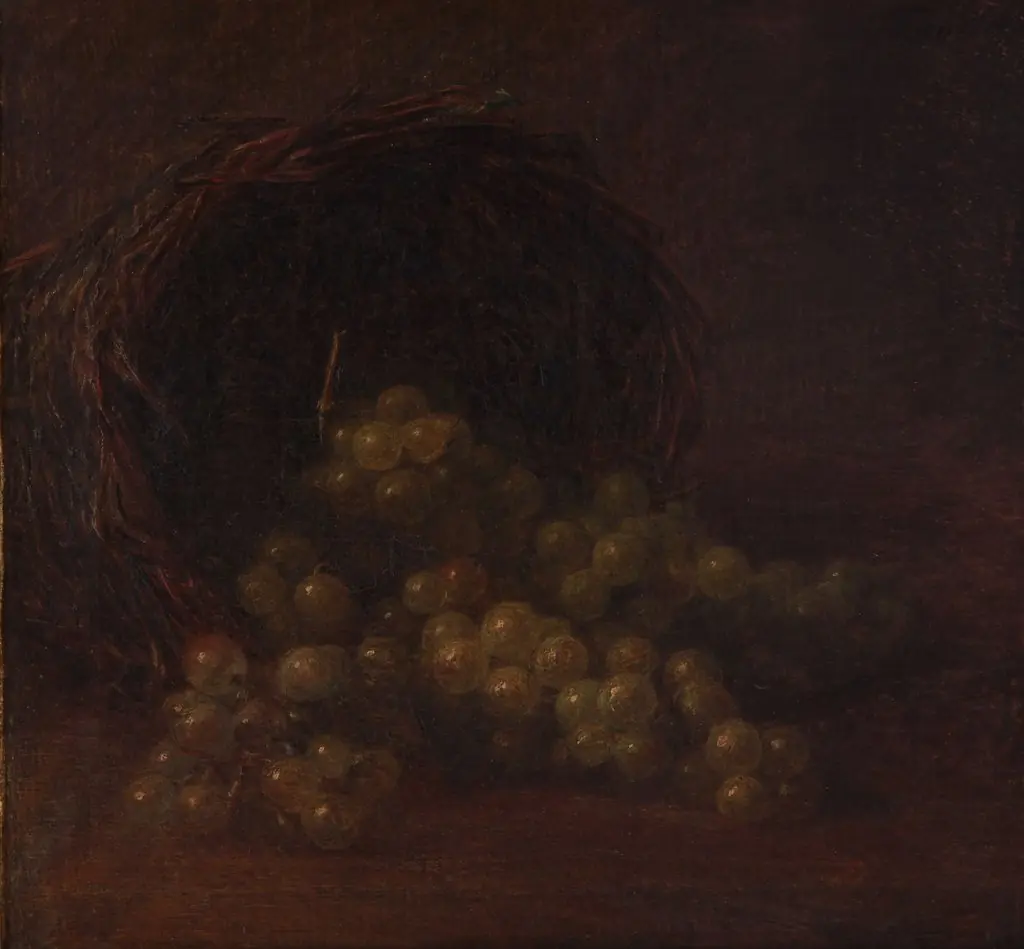
Naturaleza muerta is an oil painting by Severo Rodríguez Etchart. It dates from 1894 and is held in the collection of the National Museum of Fine Arts, Argentina.
About this work
Overview
The work presents a quiet arrangement of everyday objects—bottle, glass, and fruit—rendered with deliberate spatial clarity and muted tonal harmony.
Naturaleza muerta is an oil painting by Severo Rodríguez Etchart, dated around 1894. It belongs to the collection of the National Museum of Fine Arts in Buenos Aires. The work presents a quiet arrangement of everyday objects—bottle, glass, and fruit—rendered with deliberate spatial clarity and muted tonal harmony. Its composition avoids theatricality, favoring a restrained, contemplative mood typical of late 19th-century still-life traditions in Latin America.
Subject & Meaning
The painting features a dark, tall bottle centered on a table, flanked by a glass to its left. In front, red cherries and green fruits are arranged with casual precision, alongside indistinct items that suggest domestic abundance without narrative. The absence of human presence or symbolic allegory shifts focus to material presence itself—each object treated with quiet dignity, inviting observation over interpretation.
Technique & Style
Etchart employs chiaroscuro to model form through subtle gradations of light and shadow. The bottle and glass catch ambient illumination, their surfaces rendered with soft highlights that define their curvature against the deep, unbroken background. Brushwork is controlled and smooth, avoiding visible strokes, which enhances the sense of solidity and stillness. The palette is restrained, dominated by earth tones and muted reds, reinforcing the painting’s somber intimacy.
History & Provenance
Created circa 1894, the painting entered the collection of the National Museum of Fine Arts in Buenos Aires, where it remains today. While little is documented about its early ownership, its inclusion in the museum’s holdings suggests it was acquired during a period of institutional efforts to preserve Argentine artistic production. Its preservation reflects a broader interest in regional still-life traditions of the late 19th century.
Context
In the 1890s, Argentine artists were increasingly engaging with European academic styles while developing local subjects. Etchart’s still life aligns with this trend, drawing on Spanish and French precedents in composition and lighting, yet avoiding overt exoticism. The painting reflects a moment when domestic interiors and humble objects became legitimate subjects for serious artistic study in the region.
Legacy
Naturaleza muerta stands as a representative example of Argentine still-life painting from the late 19th century. Though not widely exhibited beyond national collections, it contributes to the understanding of how regional artists adapted European techniques to quiet, local themes. Its endurance in the museum’s collection underscores its role as a quiet anchor in the history of Argentine visual culture.
Own this work as a print
Artist & collection
Artist
Severo Rodríguez Etchart (1865–1903) was an artist, born in Buenos Aires.

Museum
National Museum of Fine Arts, Argentina
Continue through works from the same source collection.
 Still life
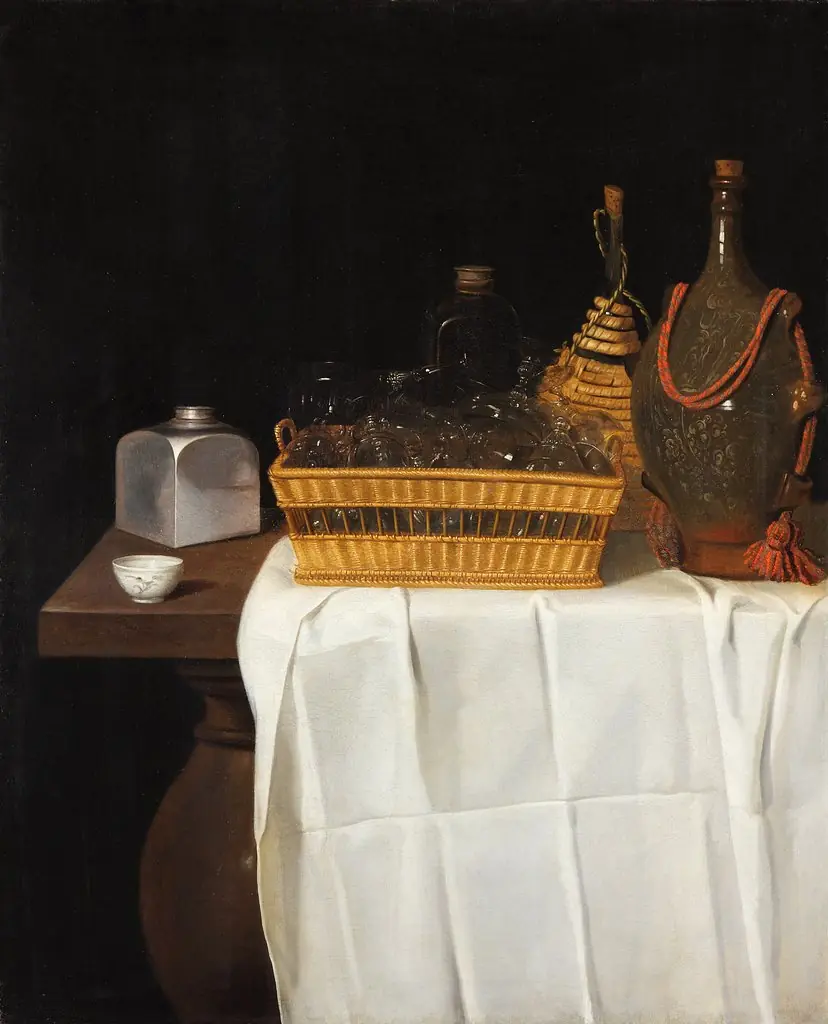 Still-Life with Glasses and Bottles
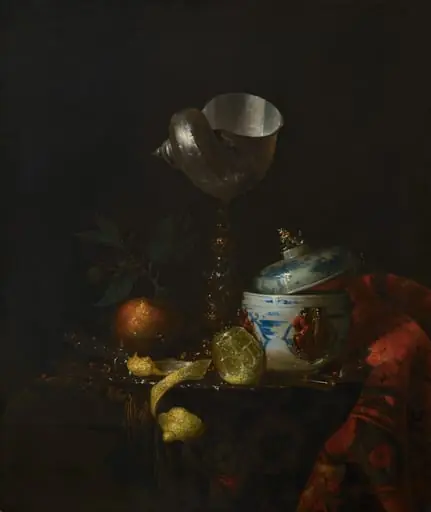 Still Life with Nautilus Cup
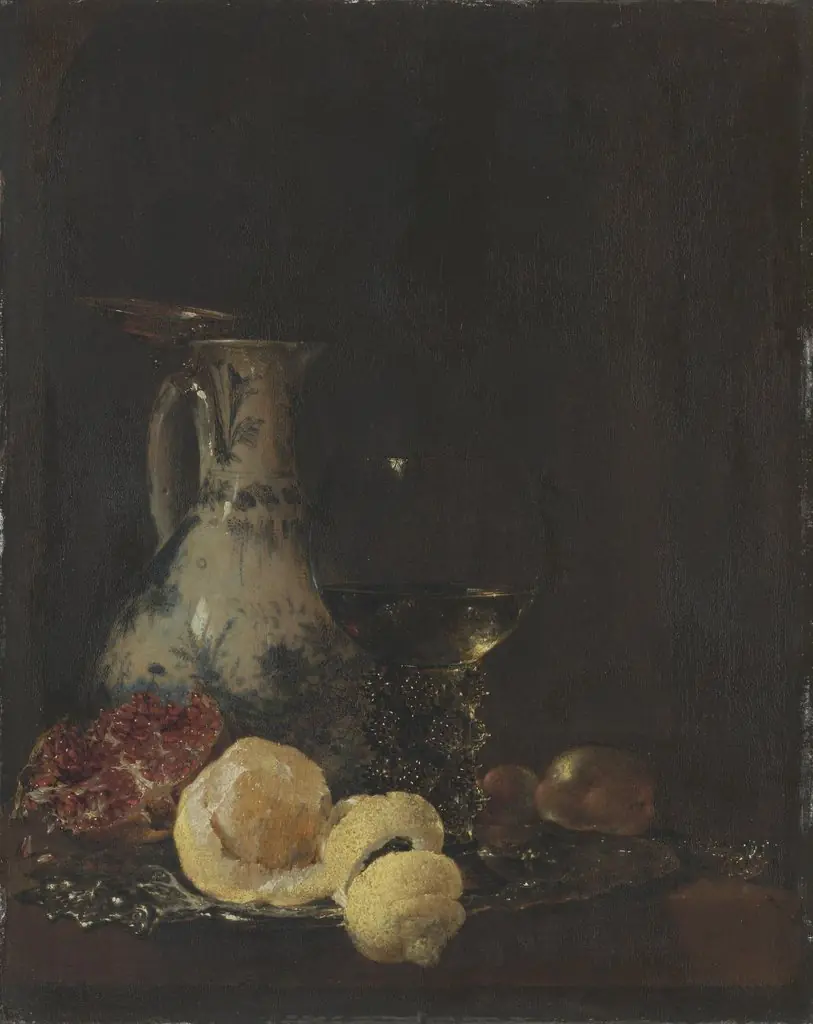 Still Life with a Ming Jug
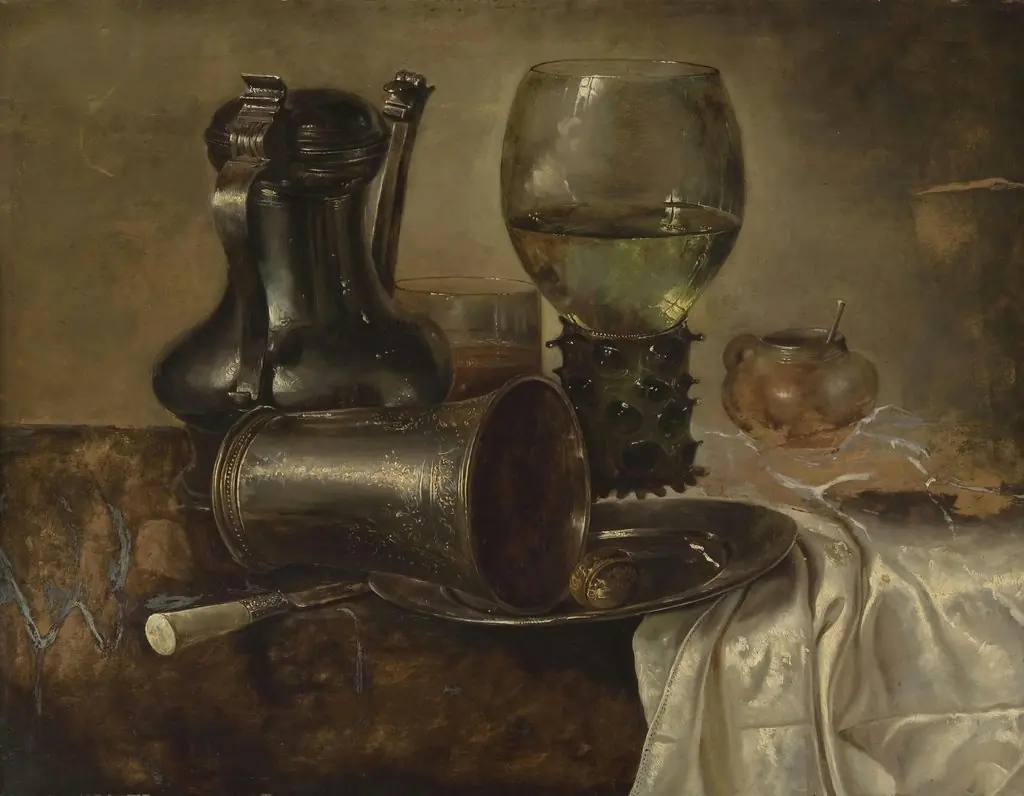 Still Life with a Roemer, a Covered Flagon, and a Beaker
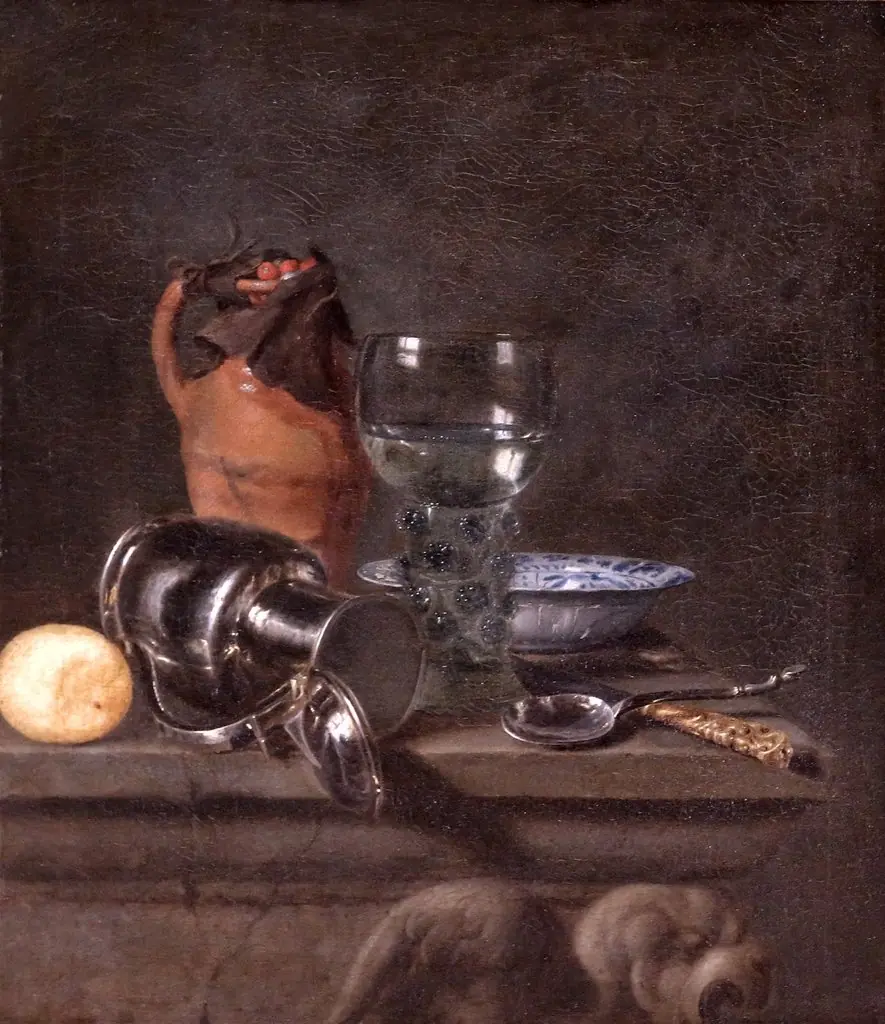 Still life with fallen pewter jug and roemer
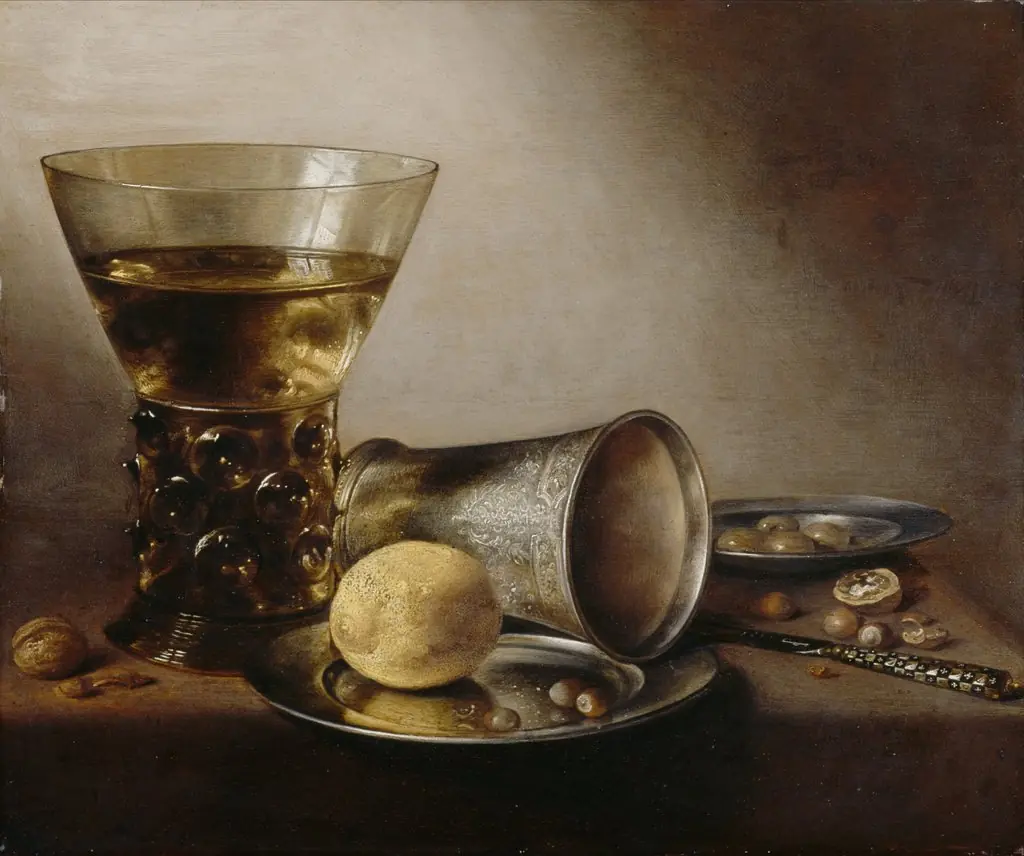 Still Life with Roemer
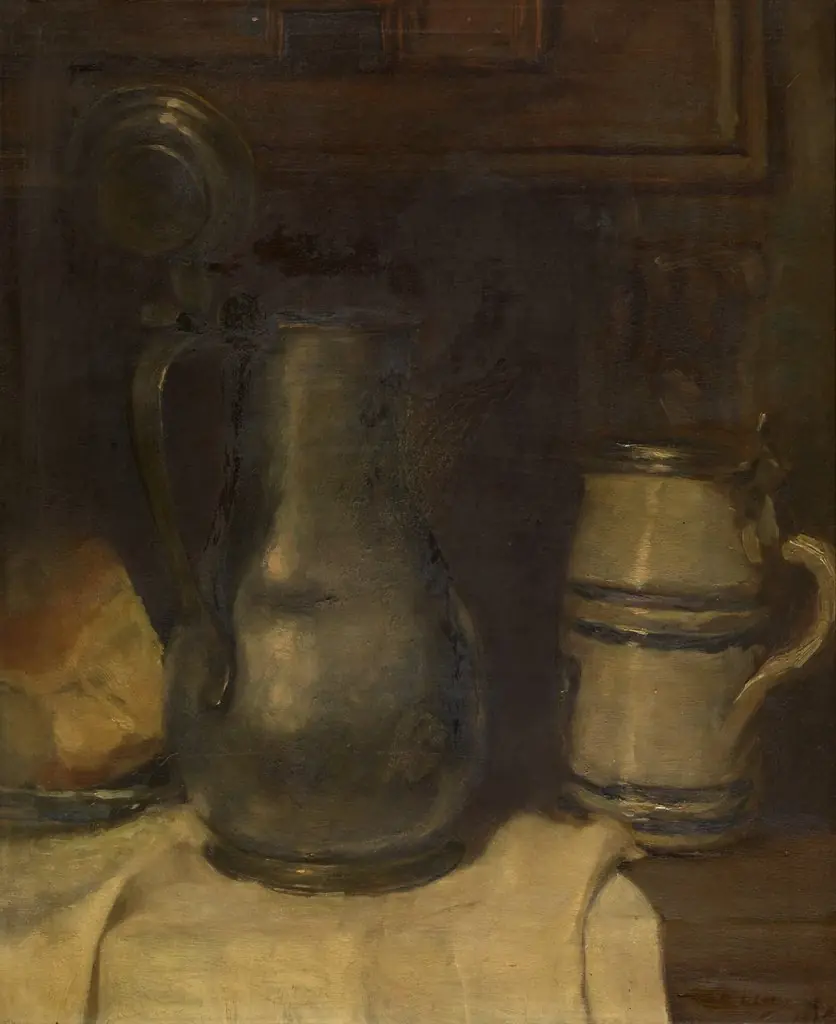 Still Life with Pewter Jar
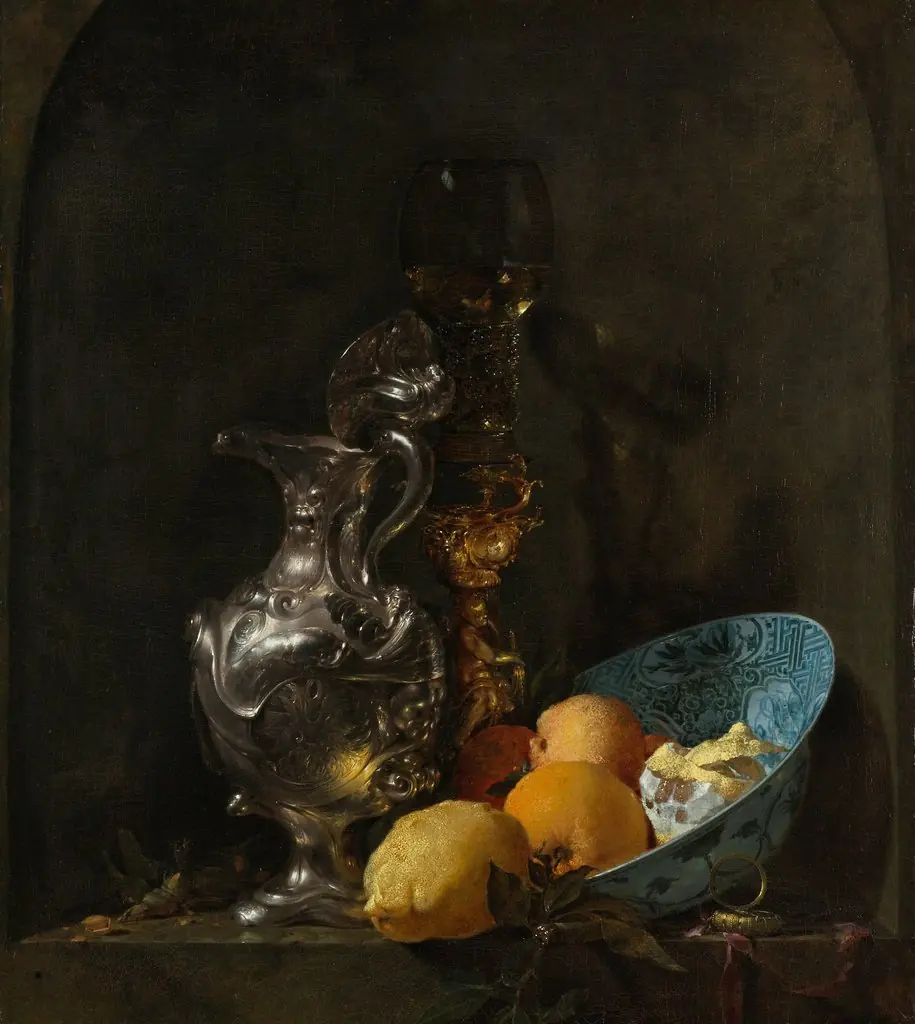 Still Life with a Silver Jug and a Porcelain Bowl
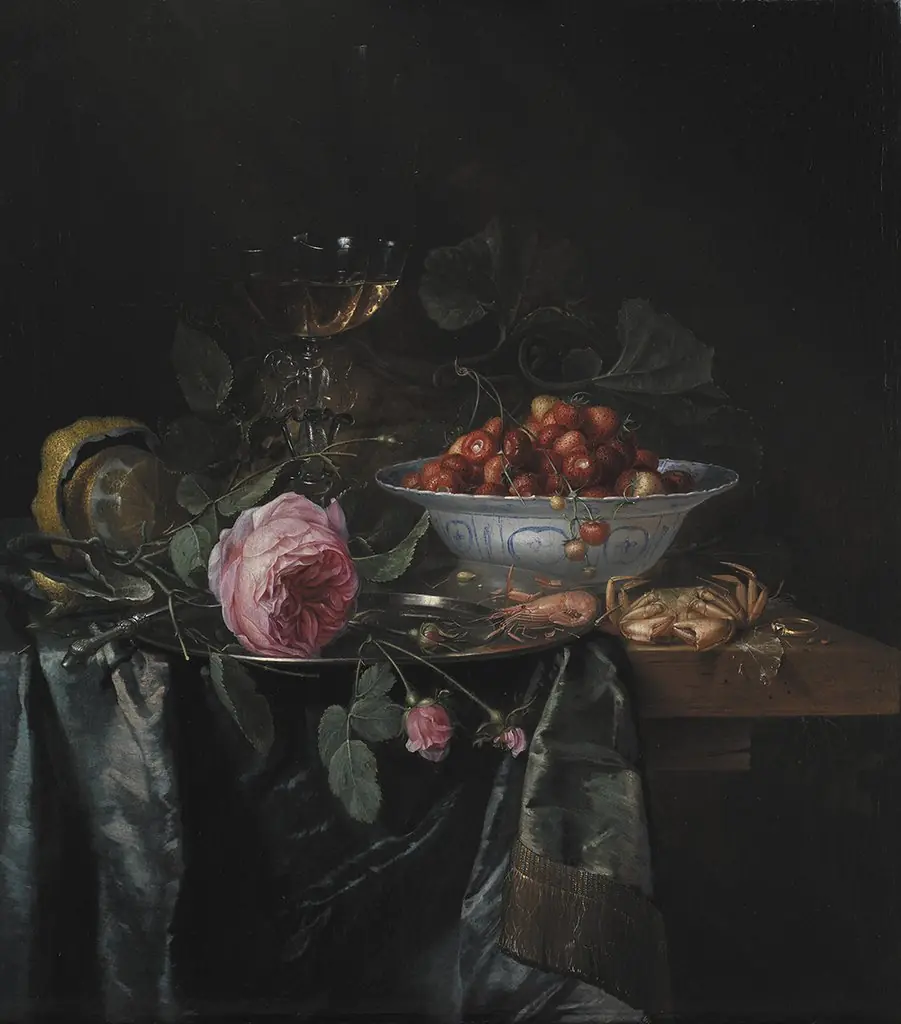 Pronk Still life
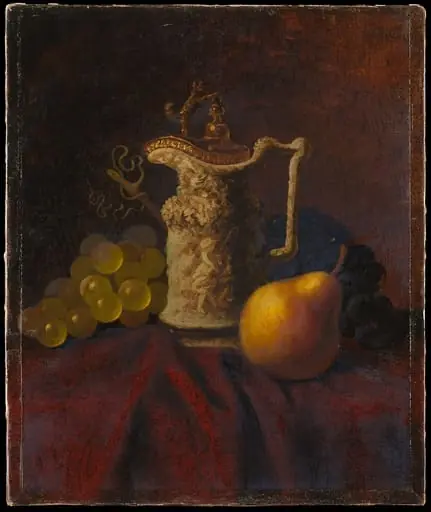 Still Life with Ewer and Fruit
 Le panier de raisin (Uvas)