Artwork
Untitled
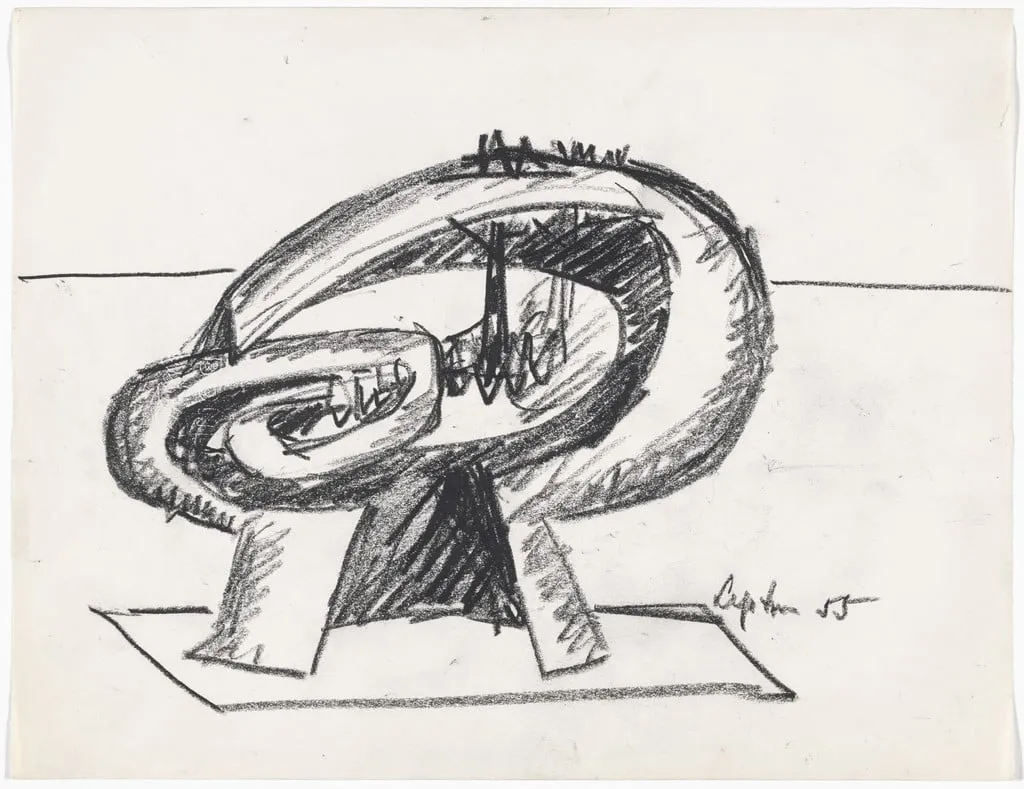
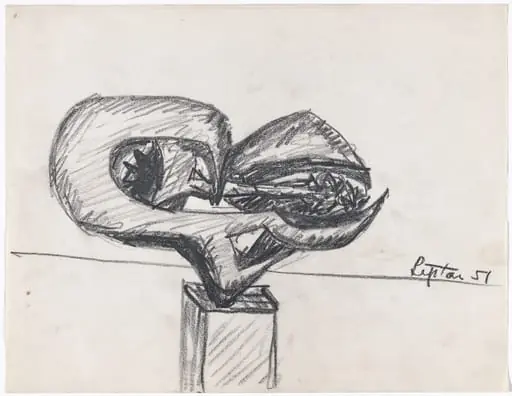
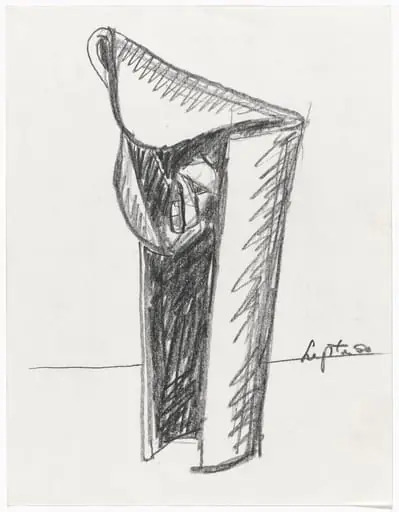
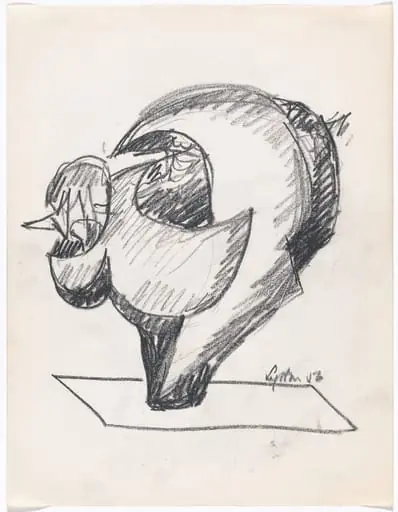
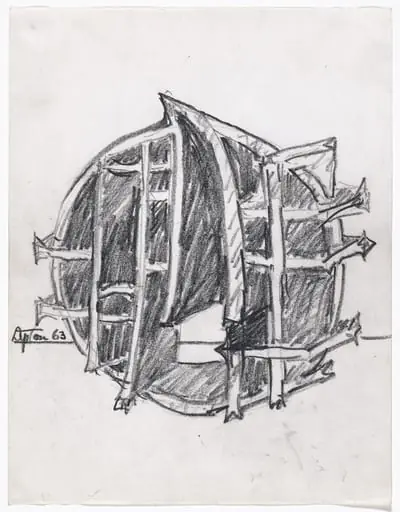
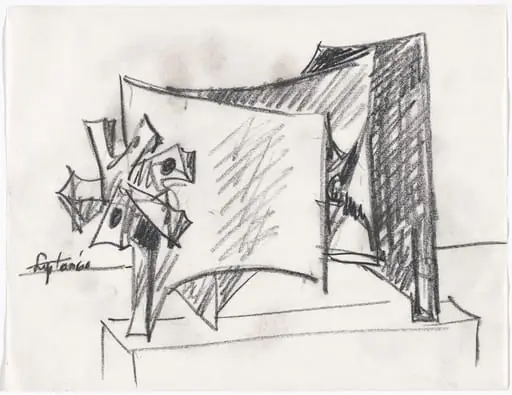
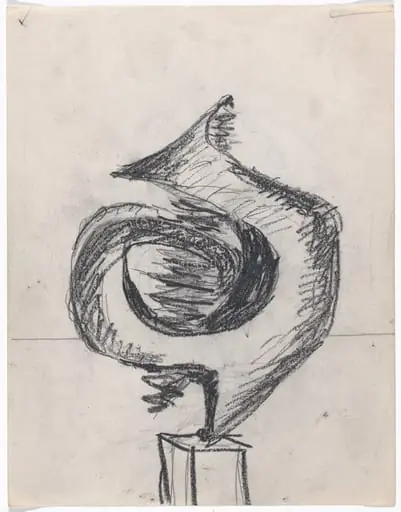
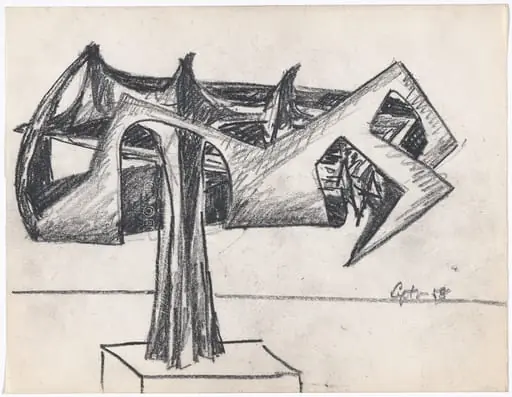
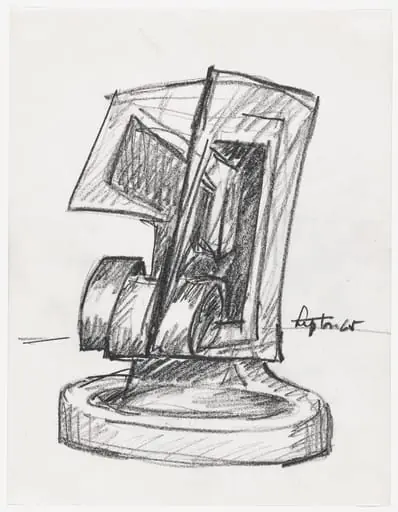
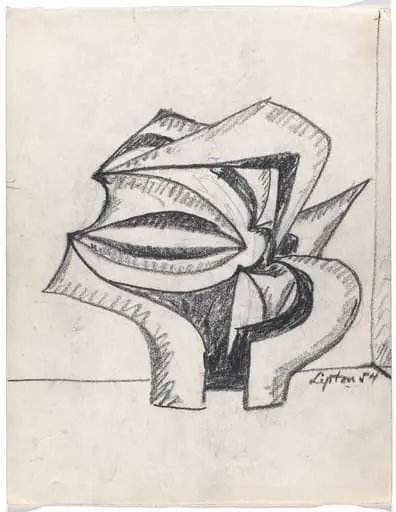
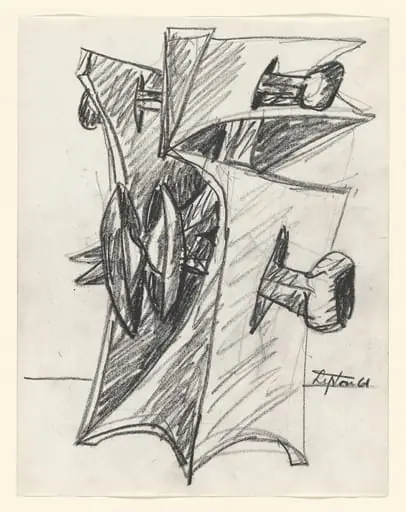
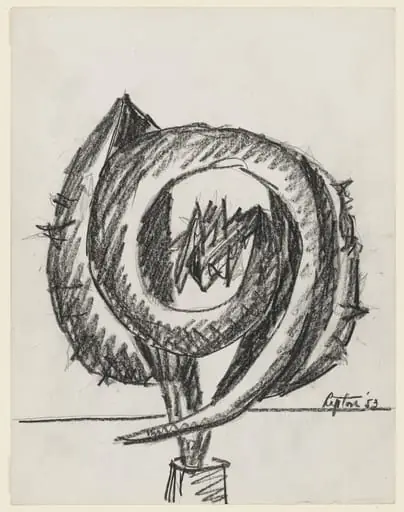
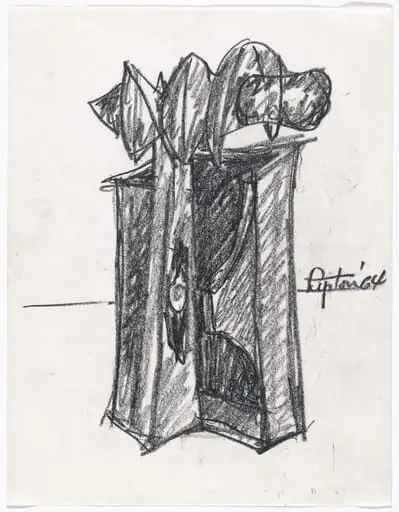
Untitled is a crayon drawing by Seymour Lipton. It dates from 1955 and is held in the collection of the Museum of Modern Art.
About this work
Overview
The work’s raw, gestural lines and unrefined medium suggest a direct, urgent hand, capturing movement and tension without figurative reference.
Created in 1955, this crayon drawing by Seymour Lipton is part of The Museum of Modern Art’s collection. It is an abstract composition centered on a single, complex form that fills the page. The work’s raw, gestural lines and unrefined medium suggest a direct, urgent hand, capturing movement and tension without figurative reference. The absence of context or background focuses attention entirely on the form’s physical presence.
Subject & Meaning
The drawing does not depict a recognizable object but evokes organic, almost biological structures—suggesting internal forces, growth, or fragmentation. Its twisting, overlapping contours imply tension and instability, as if the form is caught mid-transformation. The ambiguity invites interpretation as a metaphor for psychological or physical states, aligning with mid-century interests in the subconscious and existential tension.
Technique & Style
Lipton used dark crayon to build dense, layered marks that convey texture and depth through pressure and smudging rather than shading. The rough, uneven edges and visible strokes emphasize spontaneity, reinforcing the sense of immediacy. The white paper remains largely untouched, acting as a neutral field that heightens the form’s sculptural presence and the medium’s physicality.
History & Provenance
The work entered The Museum of Modern Art’s collection shortly after its creation, reflecting institutional interest in postwar American abstraction. Lipton, primarily known as a sculptor, often translated three-dimensional concerns into two-dimensional works. This drawing is one of many from the mid-1950s that bridge his sculptural practice with graphic experimentation, though it remains less documented than his metal works.
Context
Made during a period when American artists were exploring abstraction beyond pure geometry, Lipton’s drawing aligns with expressive, biomorphic tendencies seen in artists like Arshile Gorky and Jean Arp. The emphasis on gesture and materiality reflects broader trends in Abstract Expressionism, even as Lipton’s background in sculpture lent his drawings a unique sense of volume and spatial ambiguity.
Legacy
Though not among Lipton’s most widely exhibited works, this drawing illustrates his consistent interest in translating sculptural ideas into drawing. It contributes to understanding how artists of the era used humble materials to explore complex forms, bridging the gap between studio practice and expressive mark-making. Its presence in MoMA underscores its role in documenting the diversity of mid-century abstraction.
Artist & collection

Artist
Seymour Lipton was an American abstract expressionist sculptor. He was a member of the New York School who gained widespread recognition in the 1950s. He initially trained as a dentist but focused on sculpture from…