Artwork
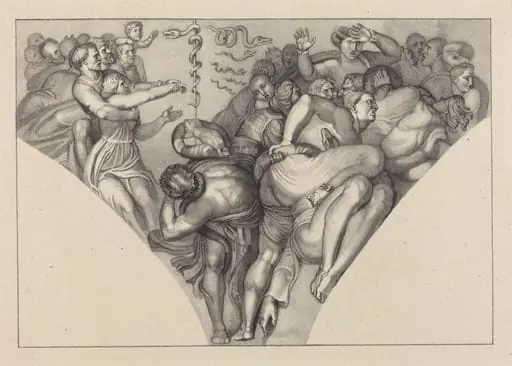
Brazen Serpent, from Michael Angelo
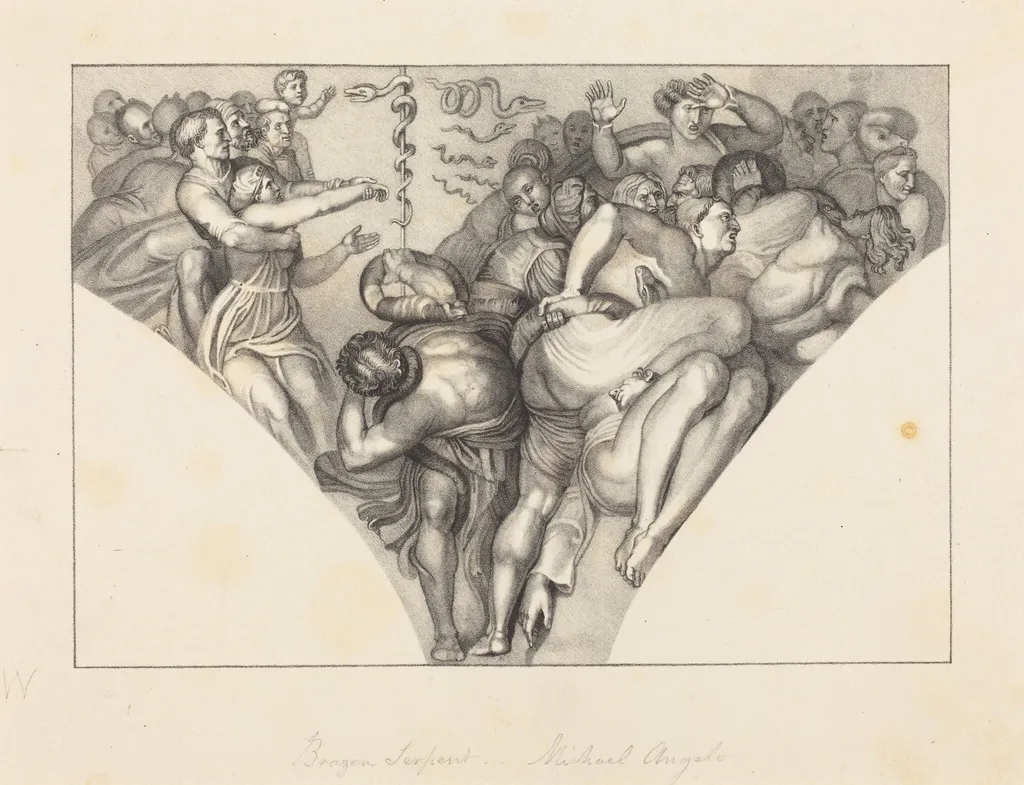
Brazen Serpent, from Michael Angelo is an ink print by the Romanticist artist William Sharp. It is held in the collection of the National Gallery of Art.
About this work
Overview
William Sharp’s 1829 lithographic proof, titled Brazen Serpent, from Michael Angelo, presents a crowded tableau of robed figures surrounding a central pole encircled by a bronze‑colored serpent. The composition captures a moment of collective reaction, with some individuals reaching upward while others avert their gaze, creating a palpable sense of tension.
Subject & Meaning
The work references the biblical episode of the bronze serpent lifted by Moses, a symbol of healing and divine intervention. By arranging the participants in varied poses, Sharp emphasizes the diverse human responses to a shared, unseen crisis, inviting contemplation of faith, suffering, and redemption.
Technique & Style
Executed as a lithograph proof prior to the addition of lettering, the image displays Sharp’s meticulous handling of line and wash. Fine cross‑hatching and subtle tonal gradations render the figures with a realistic sense of volume, while the texture of the serpent’s scales and the drapery’s folds convey depth within a single plane.
History & Provenance
Created in 1829, the print was part of a series illustrating scenes from Michael Angelo’s literary works. As a proof before lettering, it represents an early stage in the print’s production, offering insight into Sharp’s preparatory process before the final edition was issued.
Context
Sharp’s lithograph emerges during the early Romantic period, when artists increasingly explored dramatic narratives and emotional intensity. The biblical motif aligns with contemporary interests in moral and spiritual subjects, while the lithographic medium reflects the era’s expanding print technologies.
Legacy
Although not as widely reproduced as later editions, this proof provides scholars with a valuable example of Sharp’s draftsmanship and the transitional role of lithography in early 19th‑century visual culture.
Artist & collection

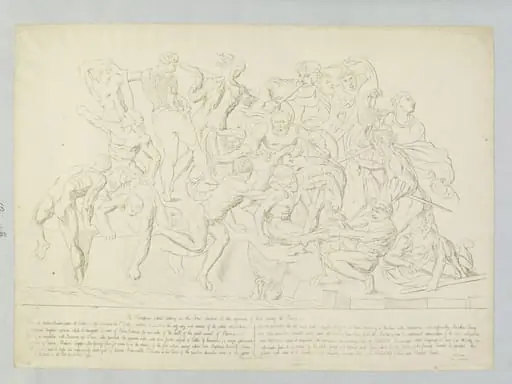 The Cartoon of Pisa
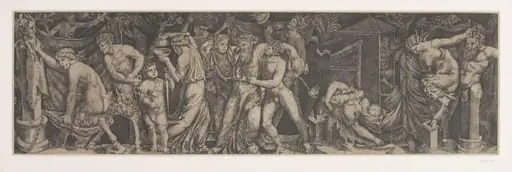 Untitled
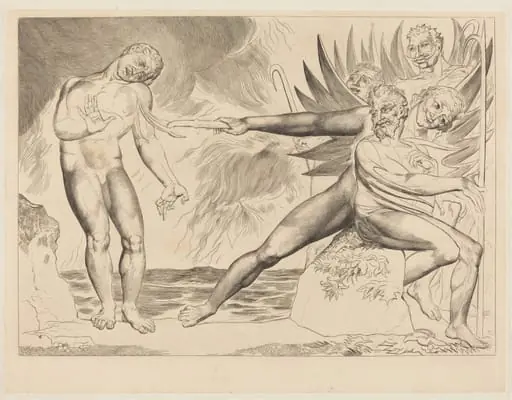 The Circle of the Corrupt Officials; the Devils Tormenting Ciampolo
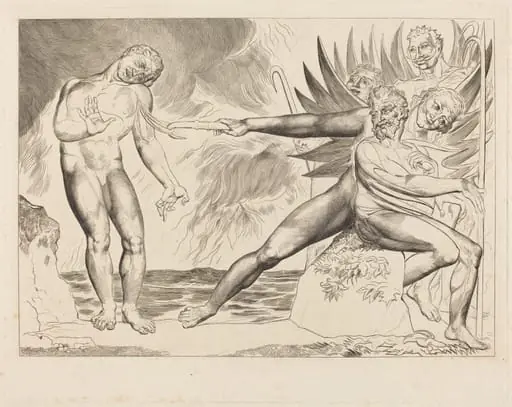 The Circle of the Corrupt Officials; the Devils Tormenting Ciampolo
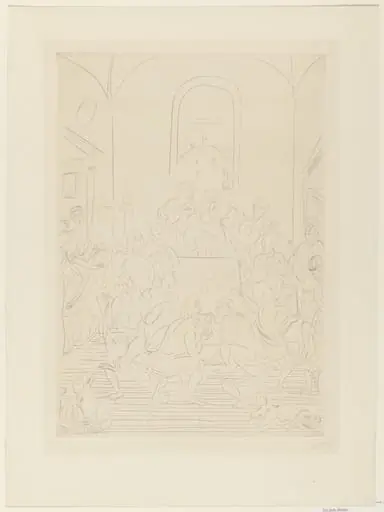 Untitled
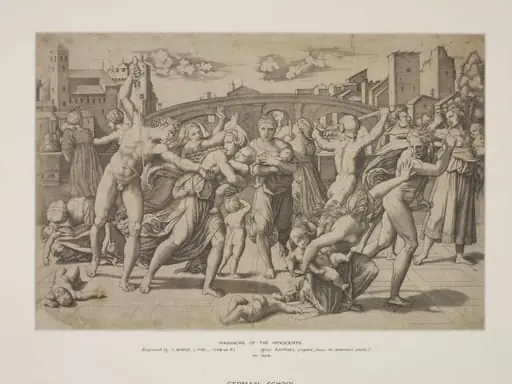 Massacre of the Innocents
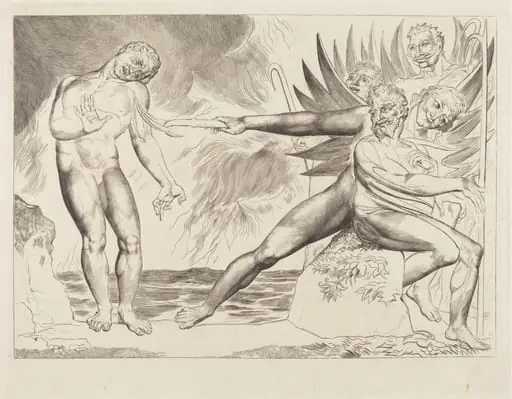 The Circle of the Corrupt Officials; the Devils Tormenting Ciampolo
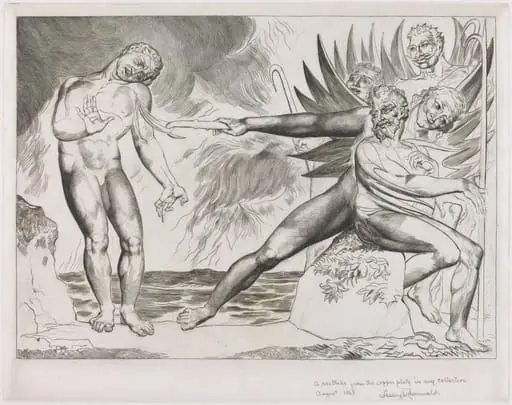 The Circle of the Corrupt Officials; the Devils Tormenting Ciampolo
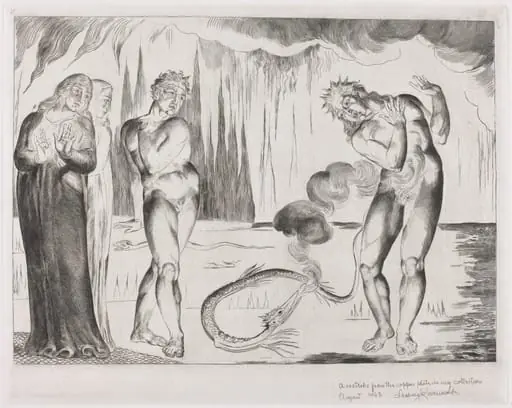 The Circle of the Thieves; Buoso Donati Attacked by the Serpent
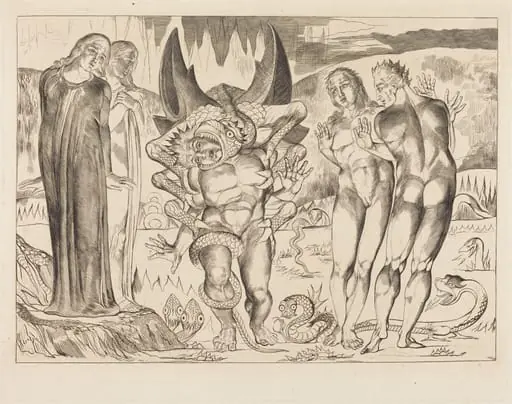 The Circle of the Thieves; Agnolo Brunelleschi Attacked by a Six-Footed Serpent