Artwork
Railroad Jubilee on Boston Common
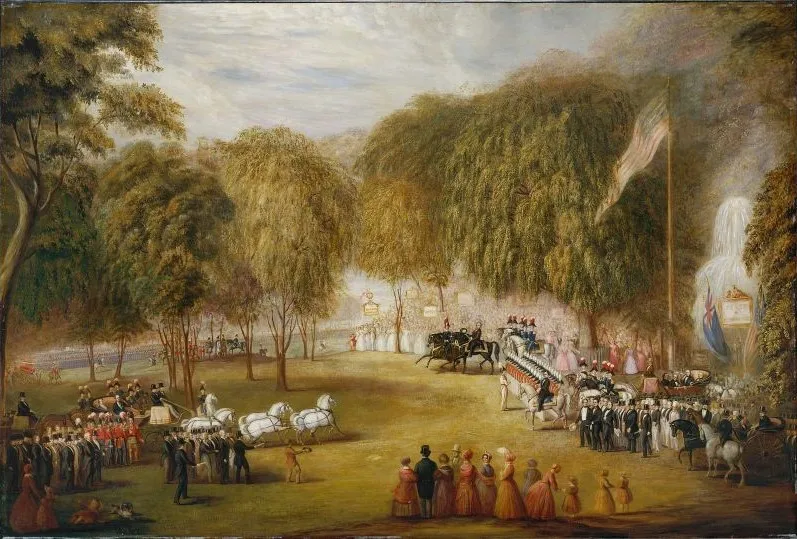
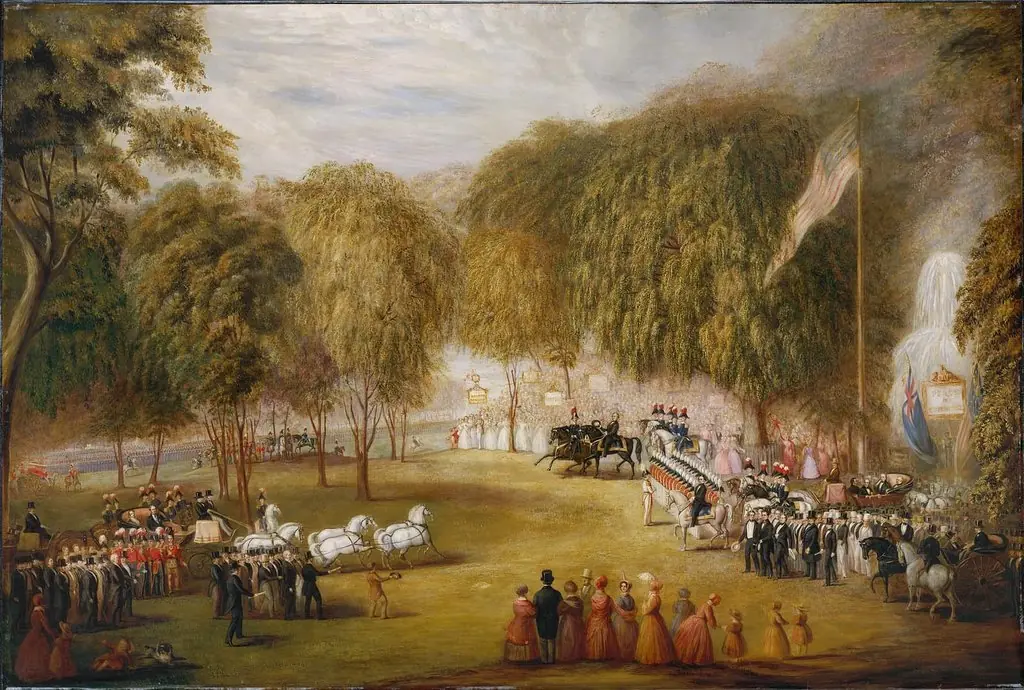
Railroad Jubilee on Boston Common is an oil painting by the American Folk Art artist William Sharp. It is held in the collection of the Museum of Fine Arts Boston.
About this work
Overview
Painted in 1851 by William Sharp, Railroad Jubilee on Boston Common captures a public celebration marking the arrival of a new railroad line.
Painted in 1851 by William Sharp, Railroad Jubilee on Boston Common captures a public celebration marking the arrival of a new railroad line. Executed in oil on canvas, the work depicts a bustling crowd gathered on Boston Common, a central urban green space. The scene blends civic pride with the emerging presence of industrial transport in everyday life, rendered with attention to the movement and attire of its participants.
Subject & Meaning
The painting portrays a festive gathering centered on a stationary locomotive, symbolizing the railroad’s arrival as a moment of communal achievement. Attendees, dressed in formal 19th-century attire, observe the train with curiosity and delight. Horses, carriages, and scattered onlookers suggest a cross-section of Boston society, reflecting the railroad’s role as a unifying force in urban development and social life during the mid-1800s.
Technique & Style
Sharp employs a detailed, observational approach typical of mid-19th-century American genre painting. Brushwork is precise yet fluid, capturing textures of fabric, wood, and foliage. The composition directs attention toward the train through diagonal lines of pathways and figures, while the soft, diffused light of a cloudy sky lends a calm, atmospheric balance to the energetic scene.
History & Provenance
Created shortly after the expansion of rail networks in New England, the painting was likely commissioned or acquired by a local patron interested in documenting technological progress. It entered the collection of the Museum of Fine Arts, Boston, in the late 19th or early 20th century, where it remains as part of the museum’s holdings of American genre scenes from the antebellum period.
Context
In the early 1850s, railroads were transforming American cities, altering patterns of commerce, travel, and social interaction. Boston Common, traditionally a site for public gatherings and military drills, became a stage for civic celebrations tied to modernization. Sharp’s painting reflects this shift, portraying the railroad not as a mechanical intrusion but as a welcomed public event.
Legacy
Though William Sharp is not widely known today, this work contributes to a broader record of how Americans visually responded to industrial change. Railroad Jubilee on Boston Common stands as a quiet testament to the cultural moment when technological innovation was met with public enthusiasm, offering insight into the social rhythms of urban life before the Civil War.
Artist & collection

 Aukea Kaivohuoneen edustalla
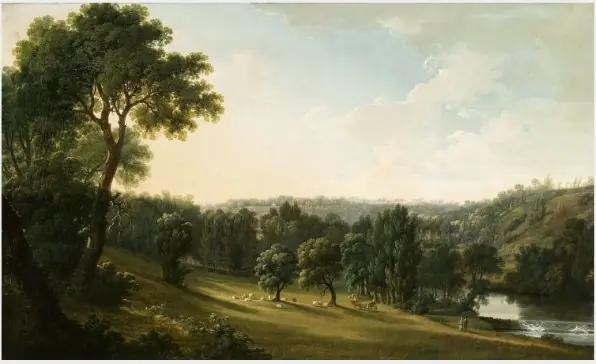 A View in Lucan House Demesne
 A Garden Scene, in the Manner of Watteau
 Salem Common on Training Day
 The Claremont
 The Army of the Potomac
 Bull's Head Tavern
 The Oxford and Cambridge Rowing Match at Henley-on-Thames
 Meadow of the Sweet Waters of Asia, Constantinople
 Jagershalte in een bos.
 The Embarkation: An Eighteenth Century Costume Piece