Artwork
Portrait of a Gentleman
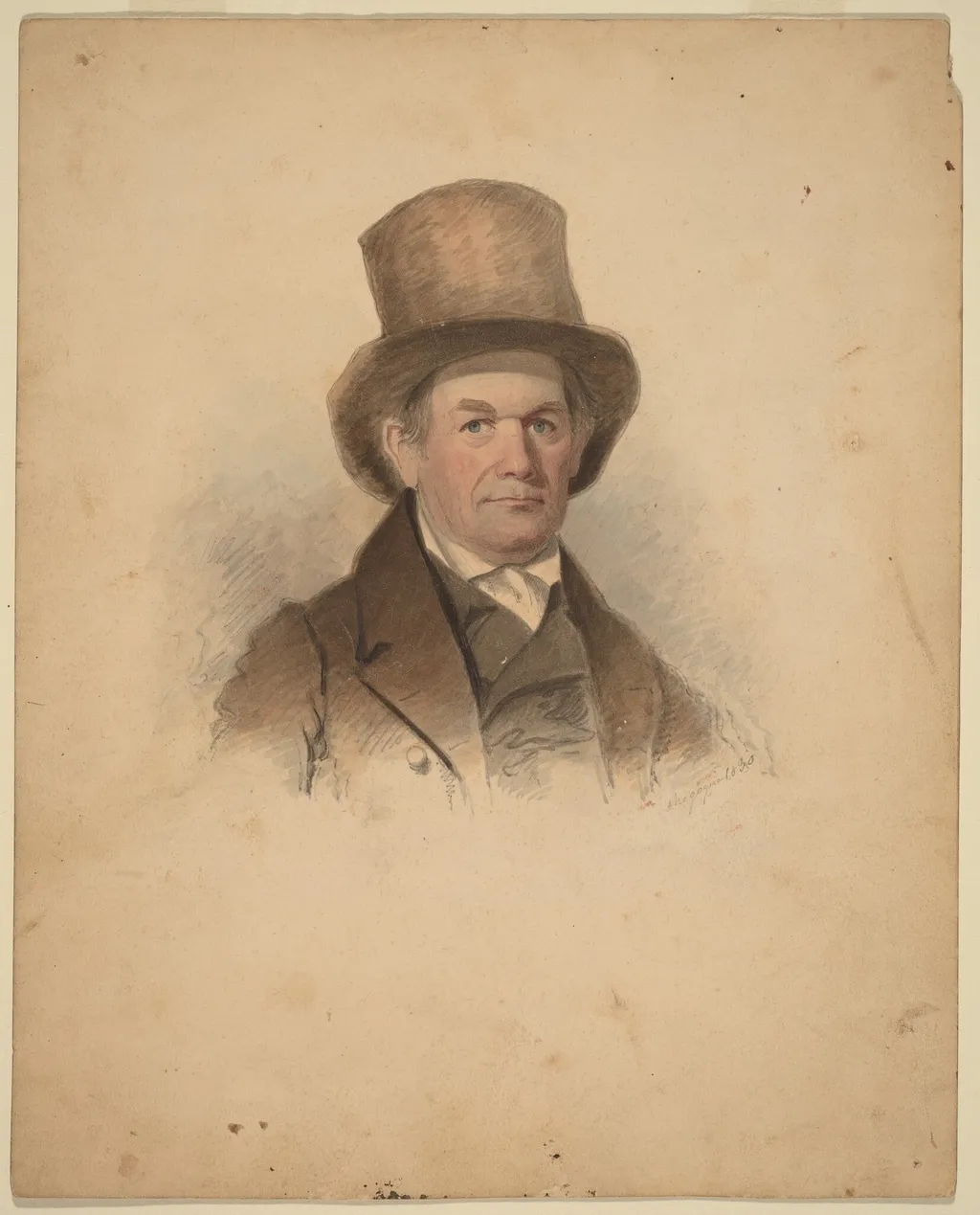
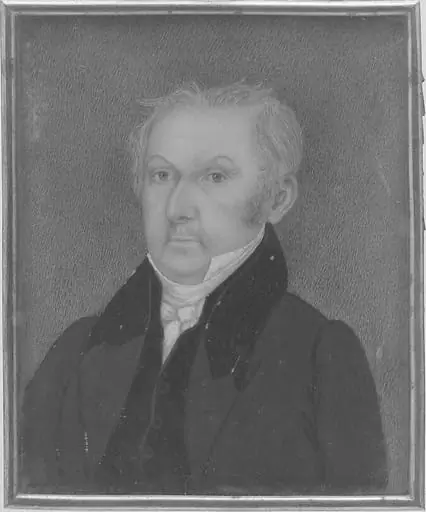
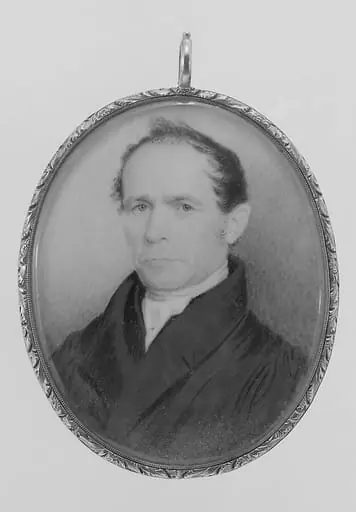
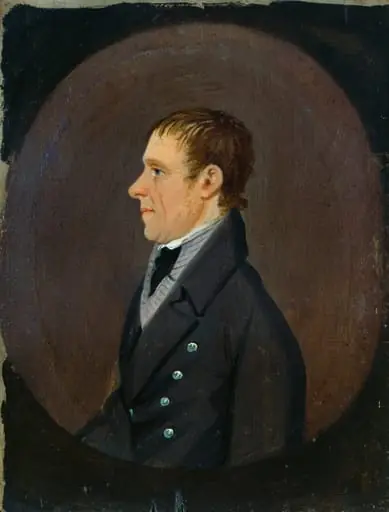
Portrait of a Gentleman is a graphite drawing by the Romanticist artist James Hamilton Shegogue. It dates from 1830 and is held in the collection of the National Gallery of Art.
About this work
Overview
Created in 1830, this watercolor drawing by James Hamilton Shegogue depicts a man in formal attire, rendered on paperboard with graphite underdrawing.
Created in 1830, this watercolor drawing by James Hamilton Shegogue depicts a man in formal attire, rendered on paperboard with graphite underdrawing. The work is modest in scale and unadorned in setting, emphasizing the subject’s presence through restrained color and minimal background. Its sketchlike quality suggests a spontaneous study rather than a commissioned portrait, capturing a moment of quiet intensity.
Subject & Meaning
The sitter wears a dark coat, a tall hat, and a white cravat—elements of early 19th-century male dress indicating social standing. His expression is composed but somber, eyes slightly narrowed, mouth set in a neutral line. The absence of props or context invites focus on his demeanor, suggesting introspection or reserve rather than narrative or status display.
Technique & Style
Shegogue applied translucent watercolor over light pencil lines, allowing the underdrawing to guide form while letting the washes suggest texture and shadow. Brushwork is swift and economical, with loose strokes defining the hat’s brim and the cravat’s folds. The lack of detail in the background heightens the immediacy of the figure, aligning the work with the tradition of informal portraiture.
History & Provenance
The drawing’s early history is undocumented, and its ownership prior to institutional acquisition remains unclear. It is among the few surviving works by Shegogue from his formative years, before he gained recognition for maritime subjects. Its preservation suggests it was valued by a private collector or family member, though no record of commission or exhibition exists.
Context
In the 1830s, watercolor was increasingly used for personal portraiture in America, especially among artists trained in academic traditions but working outside formal studios. Shegogue, then a young artist in Philadelphia, likely produced this as a study or private commission. The style reflects influences from European sketching practices adapted to American sensibilities.
Legacy
Though Shegogue later became known for seascapes, this early portrait reveals his skill in capturing character with minimal means. It stands as a rare example of his figural work from this period, offering insight into his development as an artist. The drawing contributes to understanding the breadth of American watercolor practice beyond landscape and genre scenes.
Artist & collection