Artwork
George Way
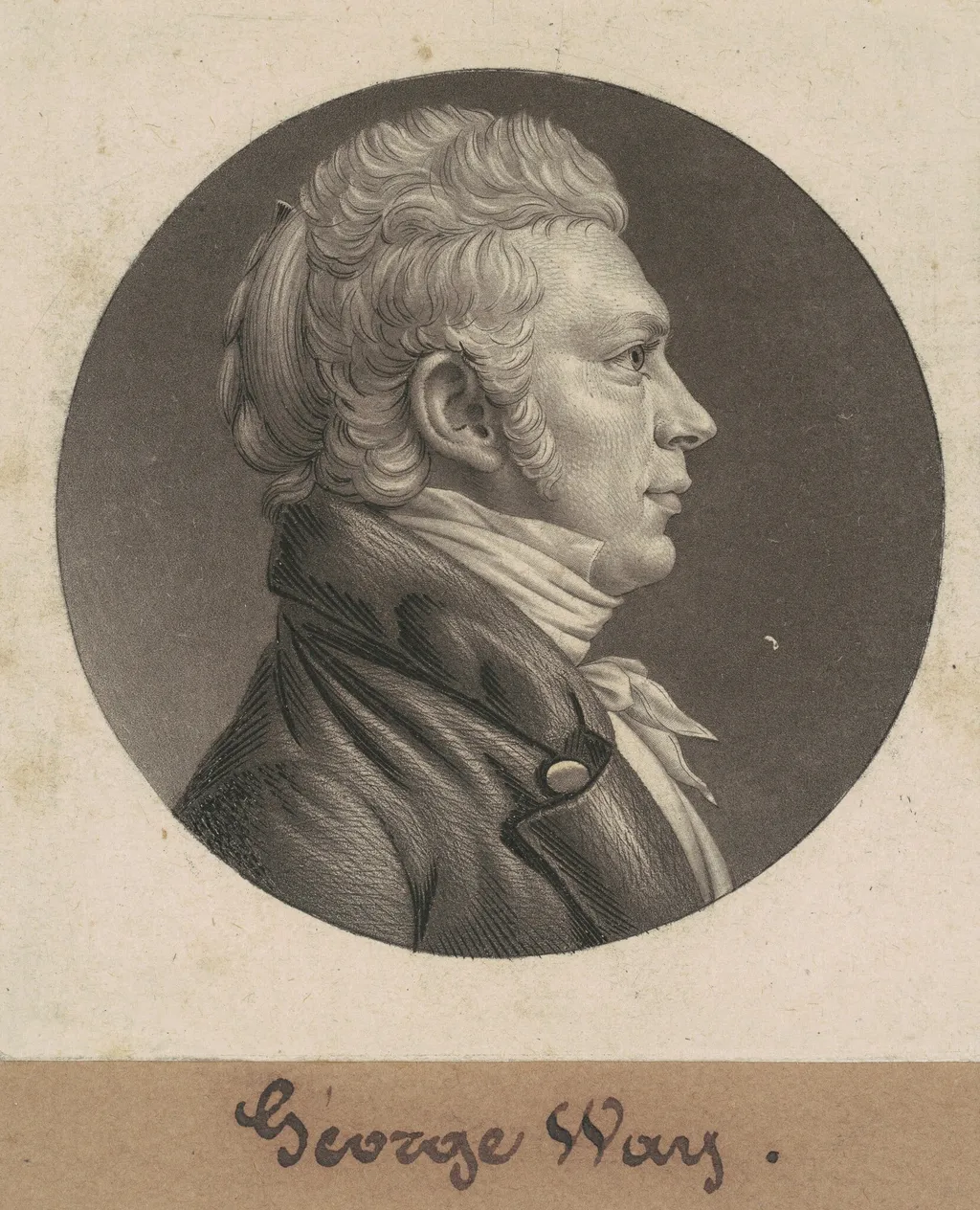
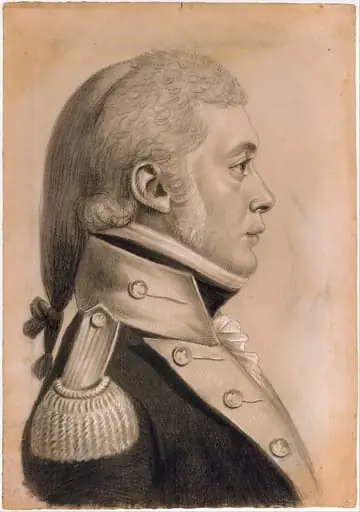
George Way is an ink print by the Romanticist artist Charles Balthazar Julien Févret de Saint-Mémin. It dates from 1807 and is held in the collection of the National Gallery of Art. Charles B.
About this work
The artist, Saint-Mémin, made this portrait in 1807, which is a long time ago.
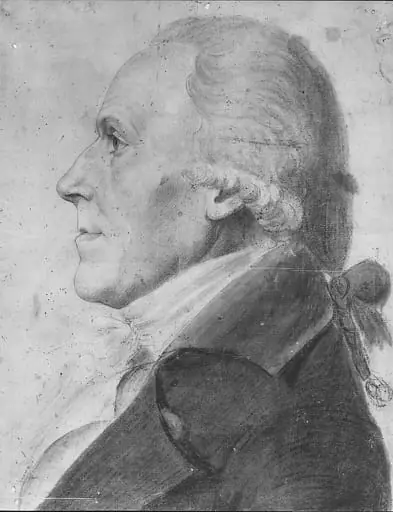
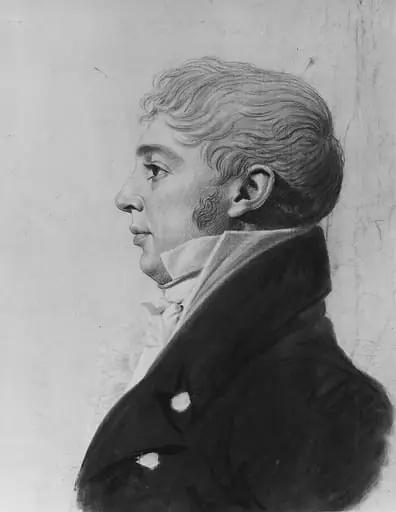
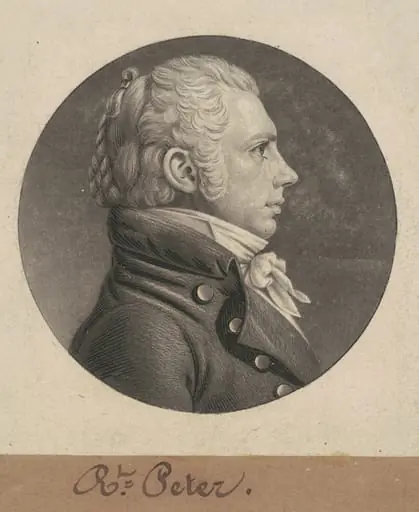
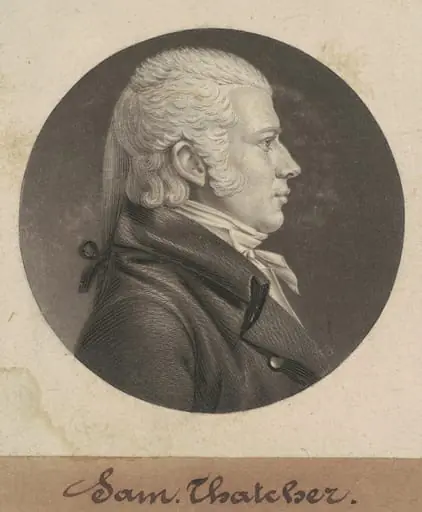
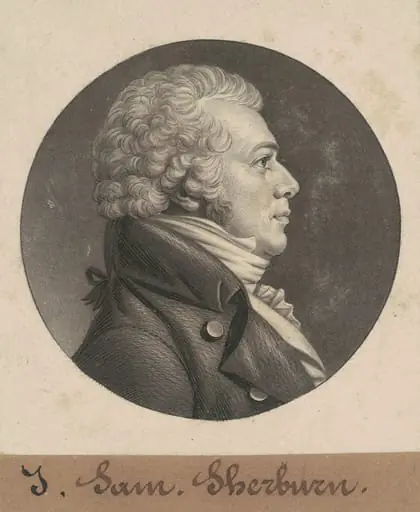
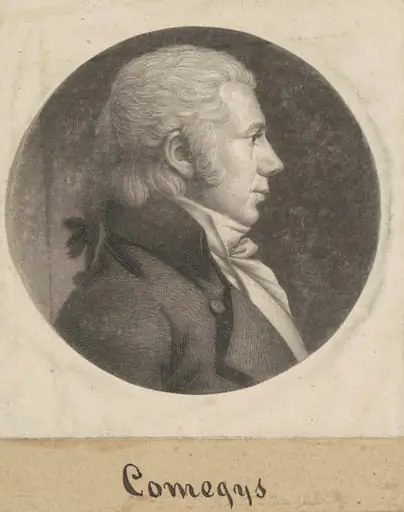
This painting shows a man's upper body in profile.
He's looking straight ahead, and we can see his nose and mouth.
The artist used a lot of detail to make the man's face look real.
The man in the portrait is George Way, but we don't know much about him.
The artist, Saint-Mémin, made this portrait in 1807, which is a long time ago.
To learn more about portraits like this, look up the technique: engraving.
Overview
Charles B. J. Févret de Saint‑MÉmin’s 1807 print titled “George Way” is a black‑ink portrait executed in mezzotint and engraving. The image shows the sitter’s upper body in strict profile, his gaze directed forward, rendered with fine modelling that emphasizes the contours of his nose and mouth. The work is held in the Corcoran Collection.
Subject & Meaning
The portrait represents George Way, a figure about whom no biographical details are recorded in the surviving documentation. By presenting him in a frontal profile, Saint‑MÉmin follows the eighteenth‑century convention of emphasizing the sitter’s character through precise facial rendering rather than narrative context.
Technique & Style
Saint‑MÉmin combined mezzotint—a tonal method that allows smooth gradations of light and shadow—with line engraving to achieve both depth and crisp detail. Executed on wove paper and later mounted on a brown‑toned sheet, the print demonstrates the artist’s skill in manipulating texture to convey a lifelike presence within the limits of a monochrome medium.
History & Provenance
Created in 1807, the print entered the Corcoran Collection, a major American institution that acquired numerous works of early American and European portraiture. Its provenance traces directly from the artist’s studio to the museum’s holdings, where it remains catalogued as part of the collection’s print department.
Context
During the early nineteenth century, portrait prints served as affordable alternatives to painted likenesses, allowing a broader audience to possess images of notable individuals. Saint‑MÉmin, a French émigré active in the United States, applied his European training to American subjects, bridging transatlantic artistic practices through works such as this.
Artist & collection

Artist
Charles Balthazar Julien Févret de Saint-Mémin
Charles Balthazar Julien Févret de Saint-Mémin (French pronunciation: ; 1770–1852) was a French portrait painter and museum director.