Artwork
Bacchante
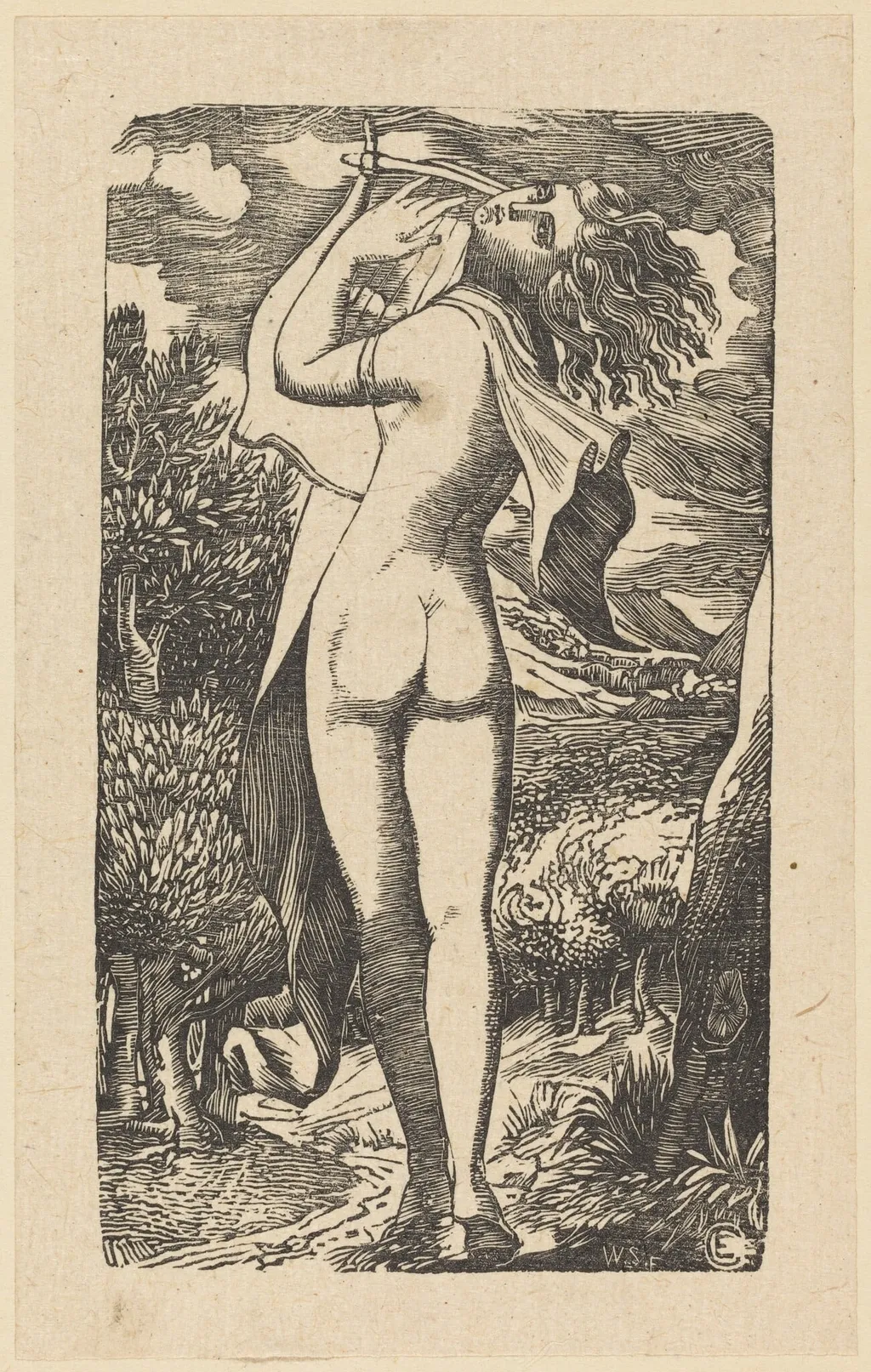
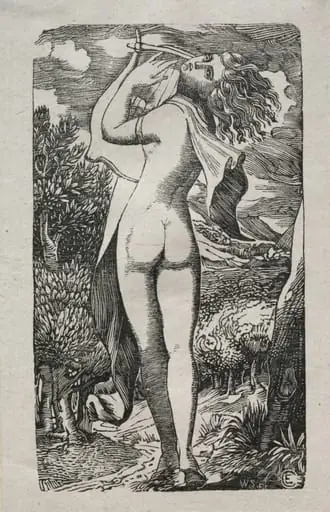
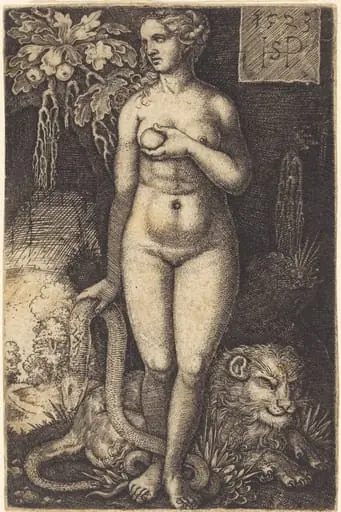
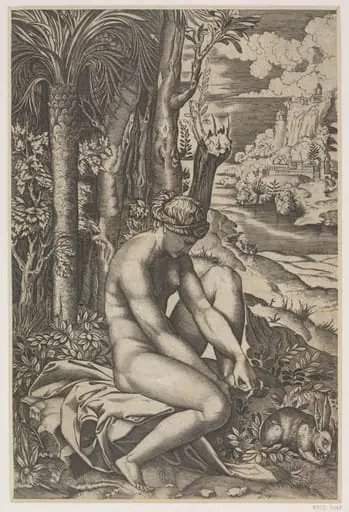
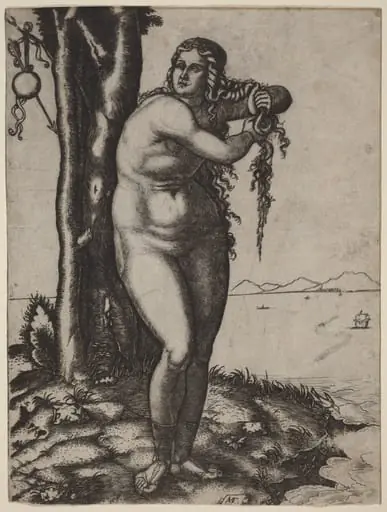
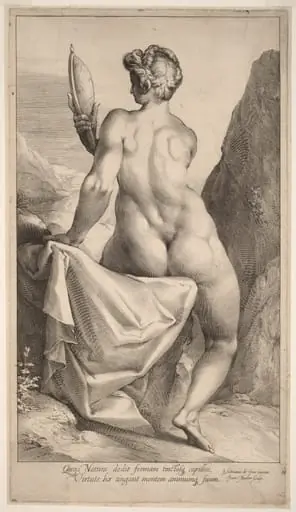
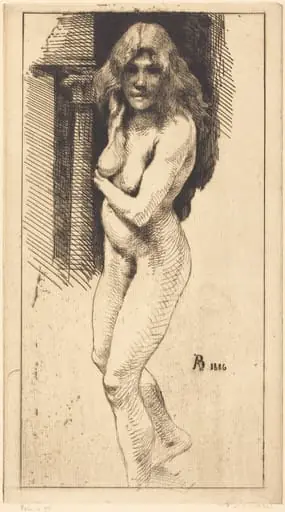
Bacchante is an ink print by the Romanticist artist Welby Sherman. It dates from 1830 and is held in the collection of the National Gallery of Art.
About this work
Overview
The composition emphasizes movement and emotional resonance over precise detail, aligning with early 19th-century aesthetic priorities.
Bacchante is a woodcut print on wove paper, dated around 1830, by American artist Welby Sherman. Executed in the Romantic tradition, the work presents a solitary female figure in a wooded landscape, rendered through bold, incised lines and tonal contrasts characteristic of the medium. The composition emphasizes movement and emotional resonance over precise detail, aligning with early 19th-century aesthetic priorities.
Subject & Meaning
The figure is interpreted as a Bacchante, a follower of the god Bacchus, associated with ecstatic ritual and nature. Her raised arm and fluid posture suggest motion, perhaps in dance or invocation. The absence of narrative context invites contemplation of primal energy and the human form in harmony with the wild, reflecting Romantic ideals of nature as a spiritual force rather than a literal scene.
Technique & Style
Sherman employed woodcut techniques to achieve strong linear definition and dramatic chiaroscuro. The figure is carved with vigorous, flowing lines, while the background trees and water are rendered with softer, sparser incisions, creating depth through contrast. The use of wove paper, relatively new at the time, allowed for fine detail and even ink absorption, enhancing the print’s tactile presence.
History & Provenance
The print’s early 19th-century origin places it within a period of growing interest in printmaking as an independent art form in the United States. Sherman, though not widely documented, contributed to this emerging tradition. No definitive record of early ownership exists, but the work likely circulated among collectors of Romantic-era prints, valued for its expressive rather than commercial appeal.
Context
Created during the height of Romanticism in America, Bacchante reflects broader cultural fascinations with classical mythology, emotional expression, and the sublime in nature. While European artists dominated the genre, Sherman’s work exemplifies how American printmakers adapted these themes using accessible media. The print stands apart from academic nudes by emphasizing spontaneity and raw vitality over idealized form.
Legacy
Bacchante remains a rare surviving example of Sherman’s output and an early American woodcut with Romantic sensibilities. It contributes to the understanding of how printmaking in the U.S. engaged with European traditions while developing its own visual language. Though not widely exhibited, it is preserved in institutional collections as a representative work of its time and medium.
Artist & collection