Artwork
Eve
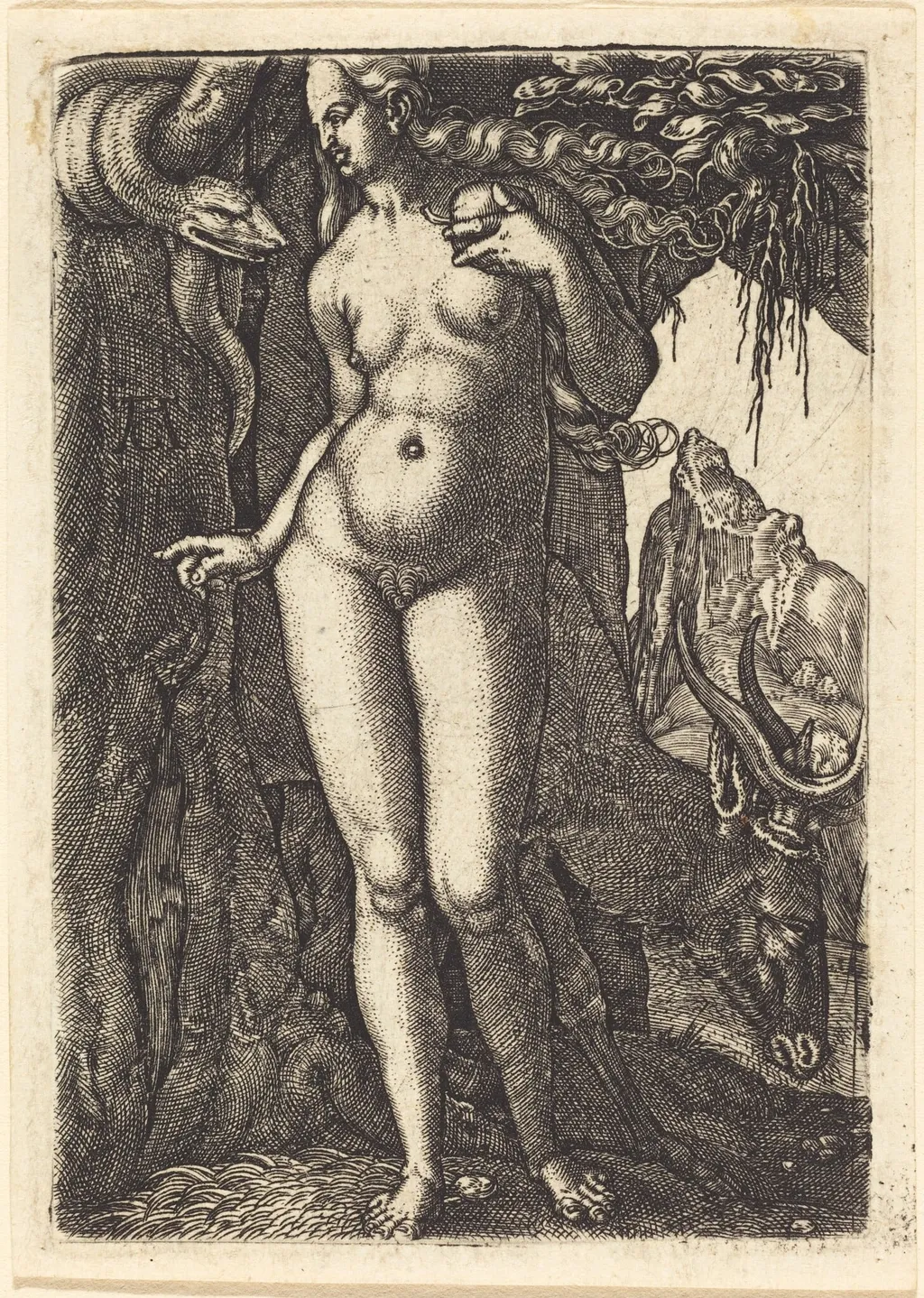
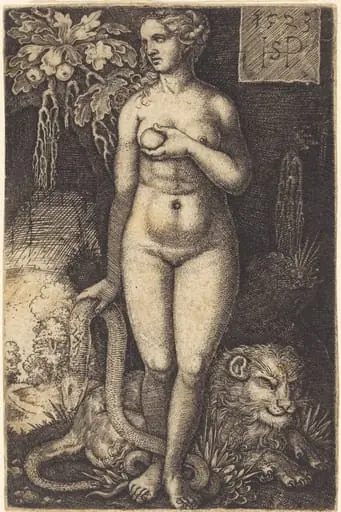
Eve is an ink print by the Northern Renaissance artist Heinrich Aldegrever. It dates from 1532 and is held in the collection of the National Gallery of Art.
About this work
Overview
Eve is a 1532 engraving by Heinrich Aldegrever, a German artist of the 'Little Masters' group, known for small, detailed prints in the post-Dürer generation.
Subject & Meaning
The print depicts the biblical Eve in a nude pose, accompanied by a secondary figure with a snake, set against a rocky background, reflecting Northern Renaissance compositional influences.
Technique & Style
Aldegrever employed intricate cross-hatching (tiny crisscrossed lines) to achieve depth and shading, characteristic of his refined engraving technique.
History & Provenance
Created in 1532, the work's provenance is not detailed here, but its creation places it within the early 16th-century Northern European printmaking tradition.
Context
Eve situates itself within Northern Renaissance art, following in the technical and compositional footsteps of Albrecht Dürer, yet distinguishing itself through Aldegrever's unique attention to detail.
Legacy
As part of Aldegrever's oeuvre, Eve contributes to the legacy of the 'Little Masters,' influencing subsequent generations with its meticulous engraving style and interpretation of biblical themes.
Own this work as a print
Artist & collection

Artist
Heinrich Aldegrever or Aldegraf was a German painter and engraver. He was one of the "Little Masters", the group of German artists making small old master prints in the generation after Albrecht Dürer.