Artwork
The Yellow Emperor Inquiring After the Tao
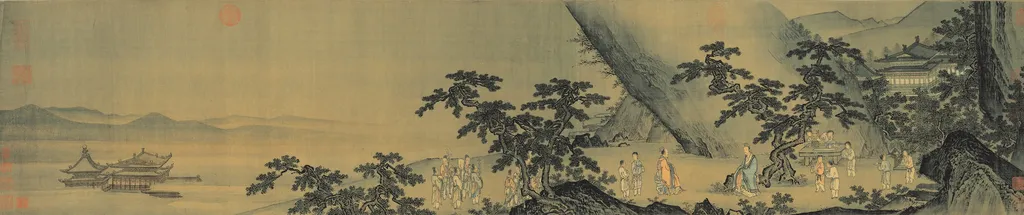
The Yellow Emperor Inquiring After the Tao is an unspecified painting by the Ming dynasty painting artist Shi Rui. It dates from 1470 and is held in the collection of the National Palace Museum.
About this work
Overview
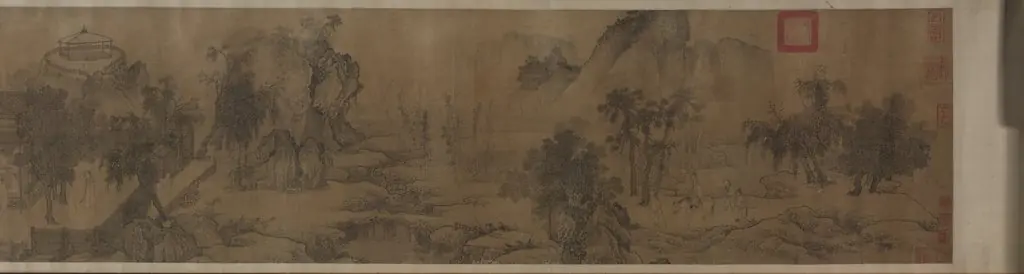
Painted around 1470 by Shi Rui, this work depicts a legendary encounter between the Yellow Emperor and a sage seeking the Tao. Executed in ink and color on silk, it belongs to the National Palace Museum’s collection. The composition balances architectural elements with natural features, reflecting the Ming dynasty’s interest in harmonizing human inquiry with cosmic order.
Subject & Meaning
The scene illustrates the mythic moment when the Yellow Emperor, a foundational figure in Chinese tradition, seeks wisdom from a hermit sage.
The scene illustrates the mythic moment when the Yellow Emperor, a foundational figure in Chinese tradition, seeks wisdom from a hermit sage. The figures are arranged to emphasize reverence and quiet contemplation. The setting—solitary pavilion, distant peaks, and still water—symbolizes the Taoist ideal of harmony between ruler and nature, suggesting that true knowledge arises in stillness, not power.
Technique & Style
Shi Rui employs fine ink brushwork to define architecture and foliage, with subtle washes suggesting atmospheric depth. Figures are rendered with restrained detail, drawing focus to their posture and spatial relationship rather than individual expression. The use of tonal gradation, not chiaroscuro, creates spatial recession, aligning with traditional Chinese landscape conventions rather than Western lighting techniques.
History & Provenance
The painting entered the imperial collection during the Ming dynasty and remained in royal custody through subsequent dynasties. It was later transferred to the National Palace Museum in Taipei following the relocation of artifacts in the mid-20th century. Its continuous preservation within elite collections underscores its recognized cultural and artistic value.
Context
Created during the mid-Ming period, the painting reflects a revival of interest in Daoist philosophy among scholar-officials. Landscape painting served not merely as decoration but as a medium for moral and metaphysical reflection. Shi Rui’s work aligns with literati traditions that valued quietude and intellectual pursuit over courtly grandeur.
Legacy
Though not widely known outside specialist circles, the painting exemplifies how Ming artists synthesized historical myth with aesthetic discipline. It influenced later depictions of sage-figures in nature and remains a reference for studies on Daoist iconography in Chinese painting, preserving a visual language of contemplative authority.
Artist & collection
Artist
Shi Rui, courtesy name also Shi Rui, was a Chinese landscape and building painter in the early Ming dynasty.


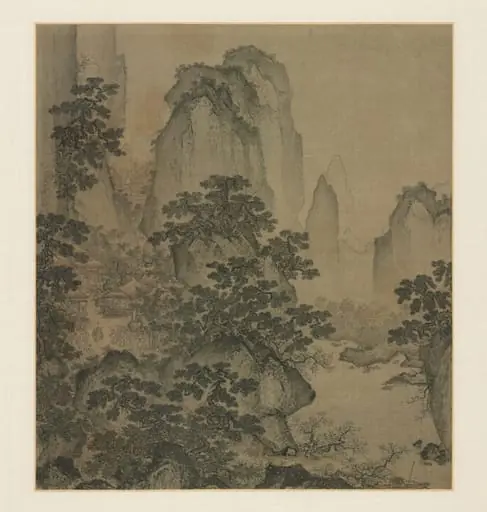
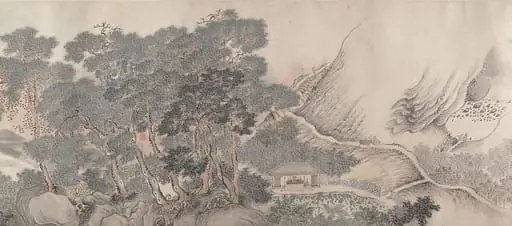 明 魏之克(魏克) 四時倣古山水圖 卷|Landscape of the four seasons in the styles of old masters
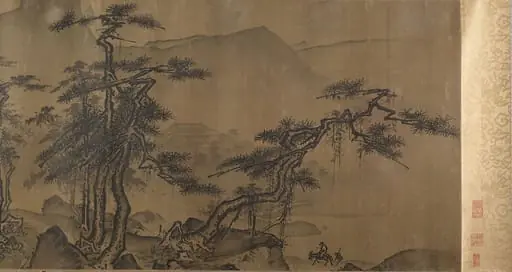 明/清 佚名 李遠(僞款) 仿夏珪江山清遠圖 卷|Landscape
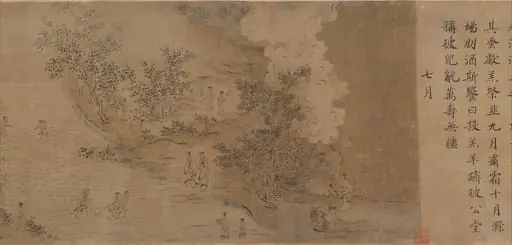 南宋 馬和之 詩經豳風圖 卷|Odes of the State of Bin
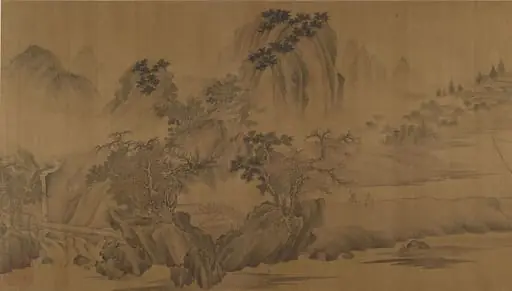 Untitled
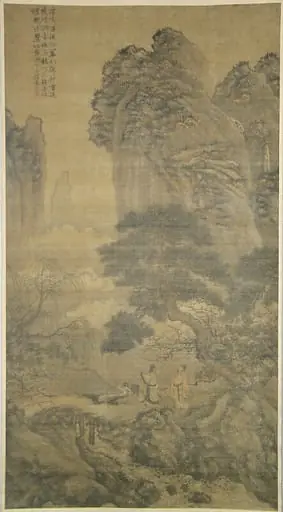 明 謝時臣 谿山春曉圖 軸|Spring Morning in the Mountains
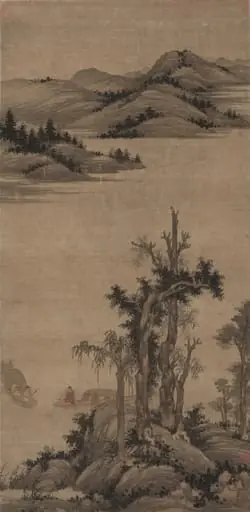 Fishermen-Hermits in Stream and Mountain
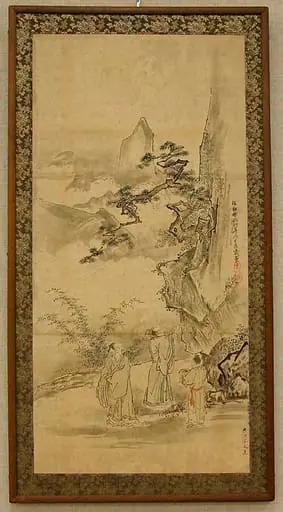 Untitled
 Autumn Mist in the Countryside
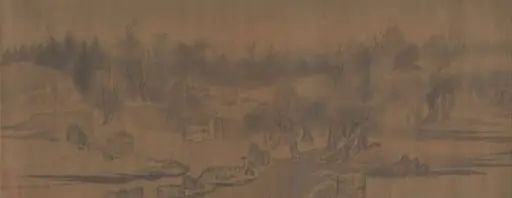 北宋 傳趙令穰 江村秋曉圖 卷|南宋 舊傳 趙令穰 江村秋曉圖 卷|River Village in Autumn Dawn
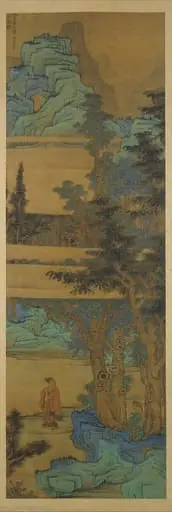 明 陳洪綬 樹下高士圖 軸|Scholar-recluse in blue-green landscape
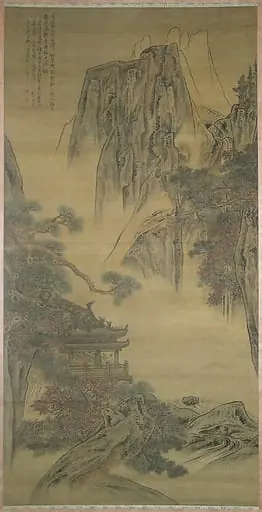 清 李寅 高閣觀瀑圖 軸|Viewing a waterfall from a mountain pavilion
 Tao Yuanming's Return Home