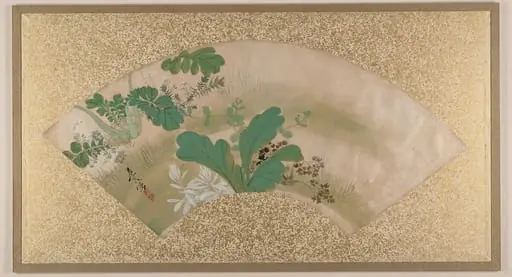
Artwork
Untitled
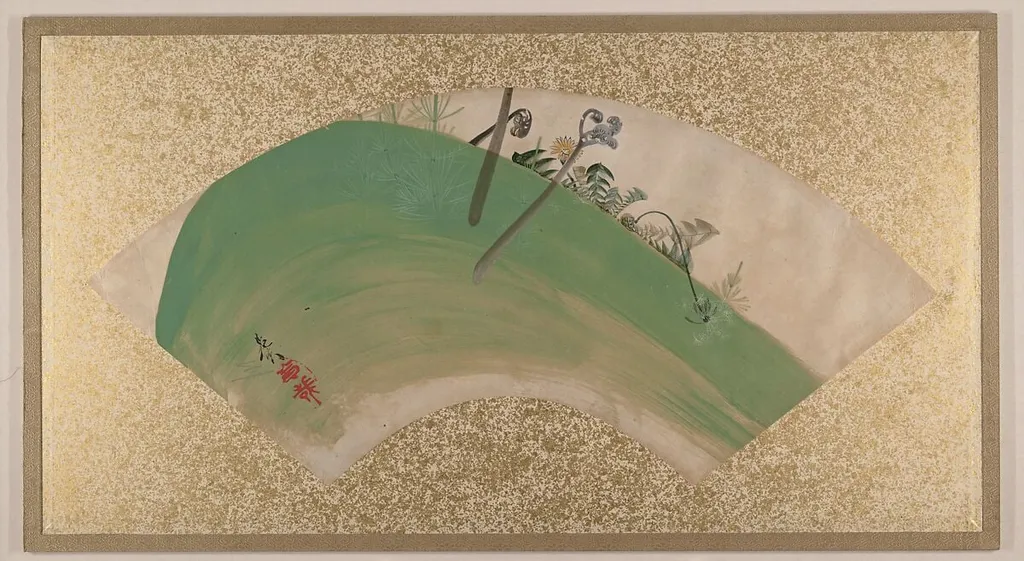
Untitled is a tempera painting by the Impressionist artist Shibata Zeshin. It dates from 1879 and is held in the collection of the Metropolitan Museum of Art.
About this work
Overview
This piece reflects Zeshin's mastery of lacquer and painting techniques, adapted here for a portable format intended for personal use or as a gift.
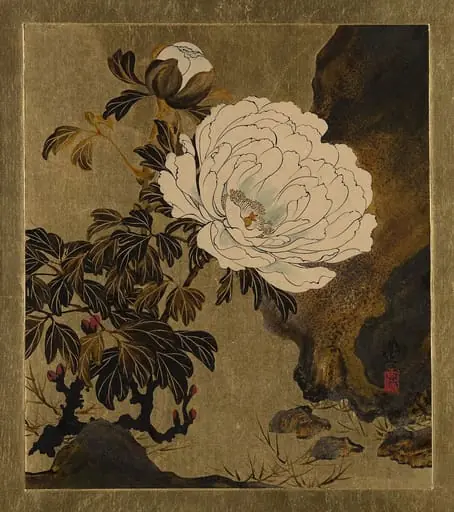
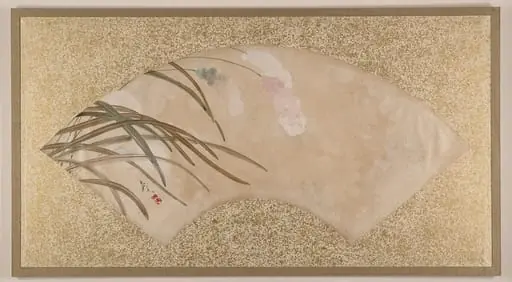
Created in 1879, this work by Shibata Zeshin is a fan painting mounted as an album leaf, executed in tempera on paper. The composition features a single pink peony drooping diagonally across a pale, unadorned background. Zeshin employs a technique involving glue and colored powder to render the petals with a soft, matte texture that contrasts with the smoothness of the paper support. The flower's stem appears strained under the weight of the bloom, emphasizing naturalism within a minimalist framework. The absence of a detailed background isolates the subject, drawing the viewer's focus entirely to the botanical form and its delicate structure. This piece reflects Zeshin's mastery of lacquer and painting techniques, adapted here for a portable format intended for personal use or as a gift. Produced late in the artist's career, during the Meiji period, the work exemplifies his ability to elevate everyday objects into refined art. It demonstrates his characteristic blend of Edo-period decorative sensibilities with a keen observation of nature, avoiding the heavy ornamentation typical of earlier lacquerware in favor of subtle elegance and spatial restraint.
Subject & Meaning
The painting focuses on a single peony whose heavy petals appear to sag under their own weight, echoing the natural moment when the blossom is near the end of its bloom. The quiet, unembellished setting invites contemplation of the fleeting beauty of the flower.
Technique & Style
Zeshin applied a tempera mixture of glue and colored pigment to achieve a soft yet vivid surface on the paper fan. The brushwork captures the delicate texture of the petals while maintaining the flat, decorative quality typical of fan painting in the late nineteenth century.
History & Provenance
The work was produced as a fan intended for personal use or as a gift, a common practice for Zeshin’s decorative pieces. It remains catalogued as an untitled example of his late Edo‑Meiji period output, reflecting his continued engagement with traditional Japanese formats.
Artist & collection