Artwork
Sparrows and Bamboo
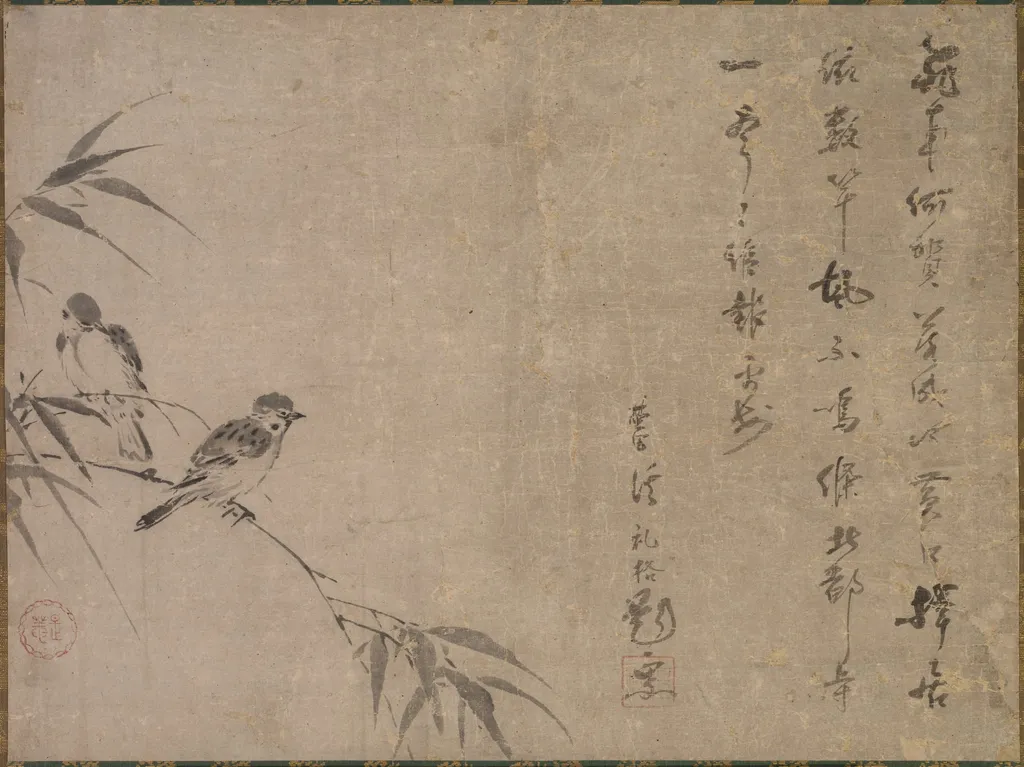
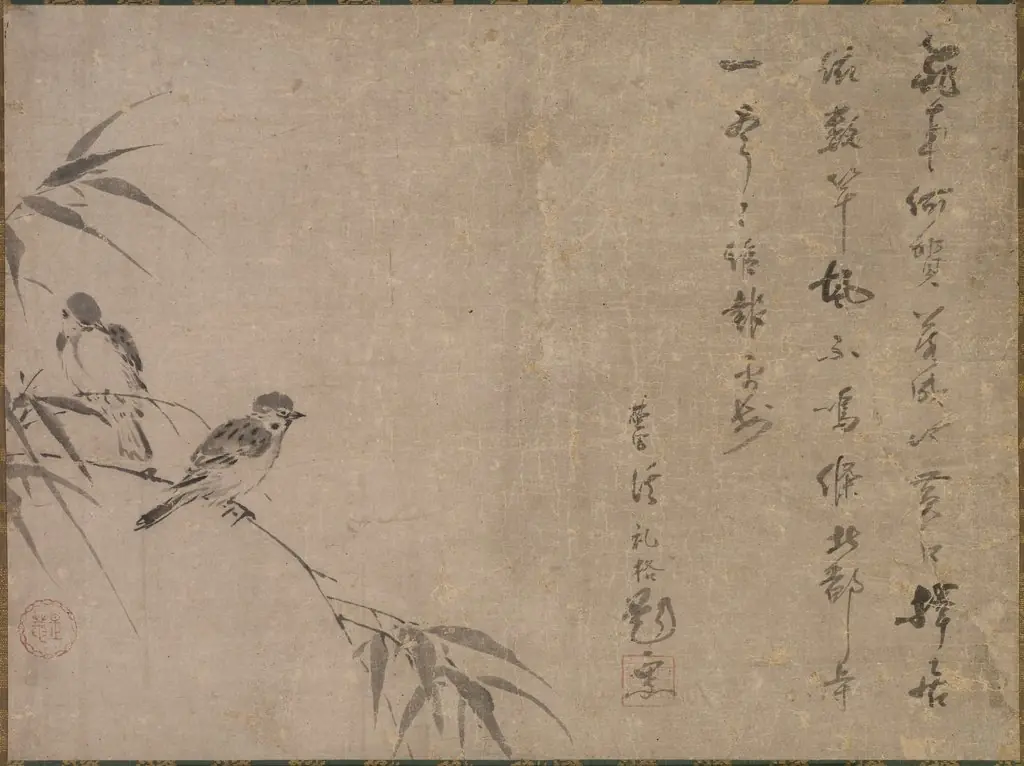
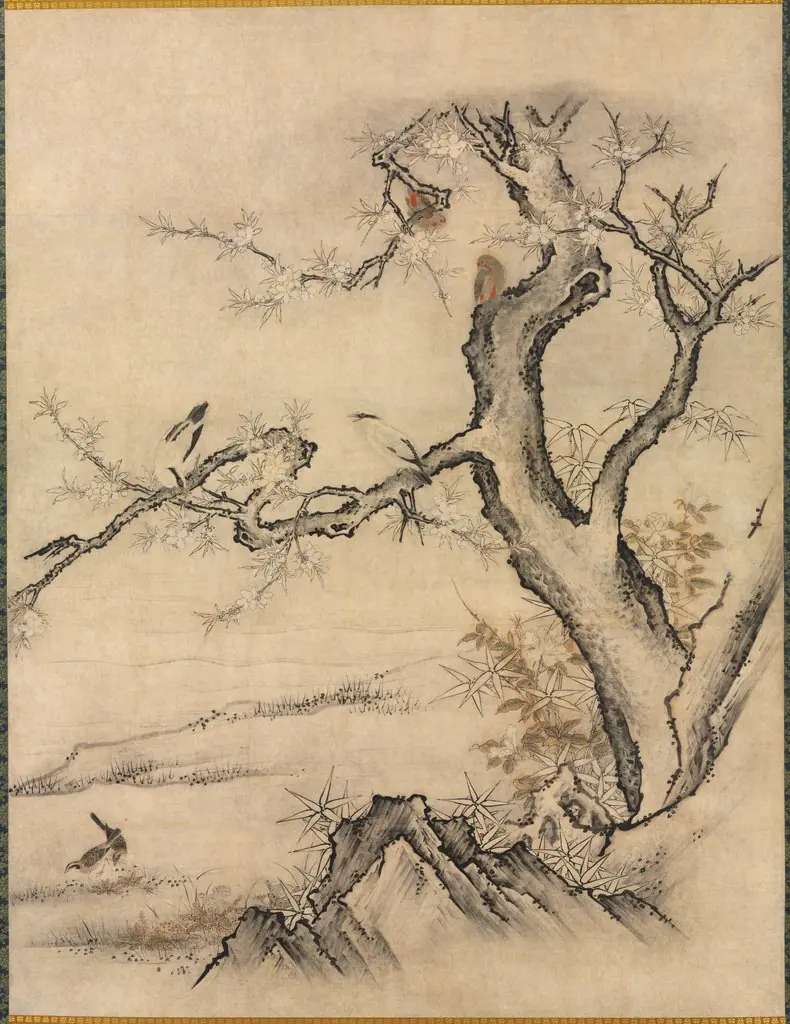
Sparrows and Bamboo is an unspecified painting by the Nihonga artist Shiken Saidō. It dates from 1504 and is held in the collection of the Cleveland Museum of Art.
About this work
Overview
Sparrows and Bamboo is a painting by Shiken Saidō (style name Ze'an), a Zen monk and artist trained at Shōkokuji temple in Kyoto. The work features two sparrows perched on bamboo, accompanied by a poetic inscription by Ekkei Reikaku.
Subject & Meaning
The serene depiction of sparrows on bamboo reflects the artist's Zen background, symbolizing harmony with nature. The composition embodies the contemplative and simple aesthetics often associated with Zen art.
Technique & Style
The painting exhibits a simple, natural style, indicative of the artist's training in traditional Japanese techniques. Shiken Saidō's work was influenced by contemporaries like Sōami, evident in the subtle, understated execution.
History & Provenance
Created by Shiken Saidō, a monk who also designed the garden of Reiun’in at Myōshinji temple, the painting's history prior to its current location is not detailed here. It is now part of The Cleveland Museum of Art's collection.
Context
This piece represents the intersection of art and spirituality in 16th-century Japan, where Zen monks like Shiken Saidō played a significant role in both artistic creation and religious practice.
Legacy
While specific influence of 'Sparrows and Bamboo' on later artists is not highlighted, it contributes to the broader understanding and appreciation of Zen-inspired Japanese art from the period.
Artist & collection

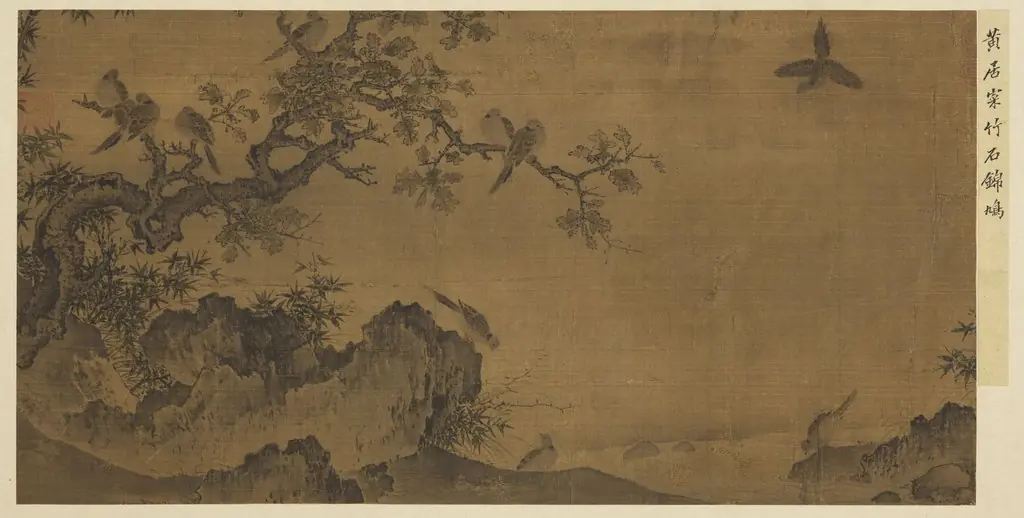 名繪集珍 冊 宋黃居寀竹石錦鳩
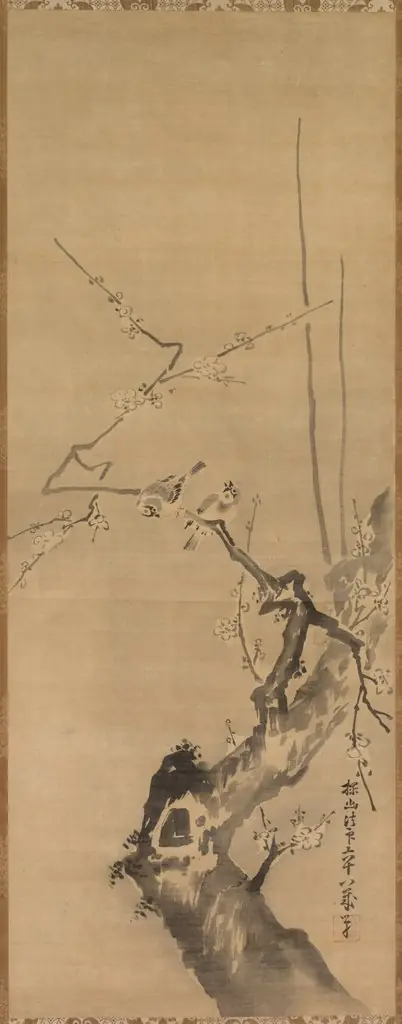 Sparrows on Blossoming Plum; A Sage with Tiger; Chinese Bird on Snow-Laden Branch
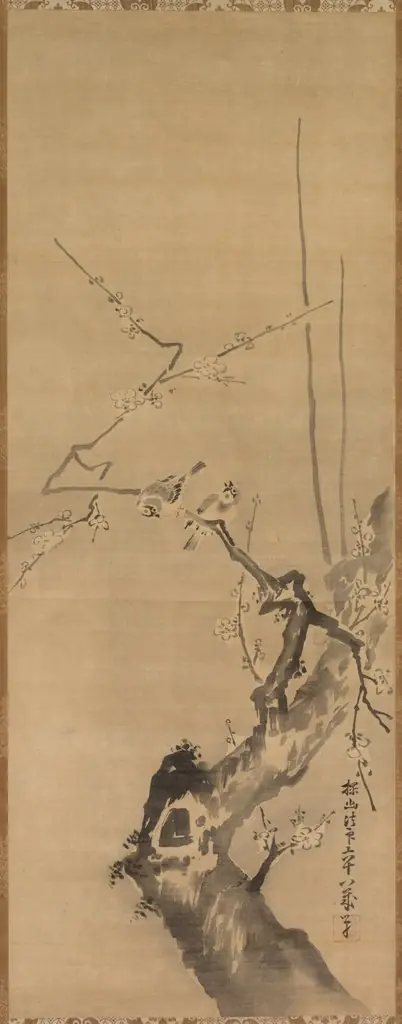 Sparrows on Blossoming Plum
 Sparrows on Blossoming Plum; A Sage with Tiger; Chinese Bird on Snow-Laden Branch
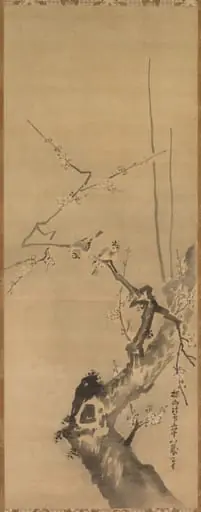 Sparrows on Blossoming Plum
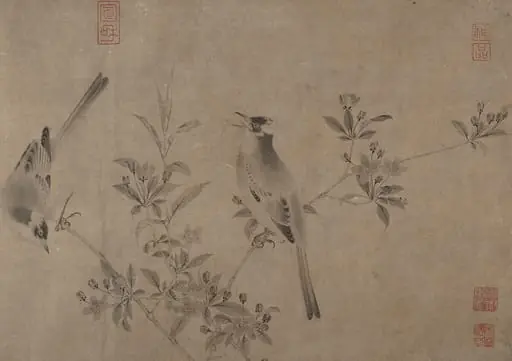 宋? 佚名 傳宋徽宗 白頭海棠圖 卷|Chinese Bulbuls on Flowering Cherry-Apple
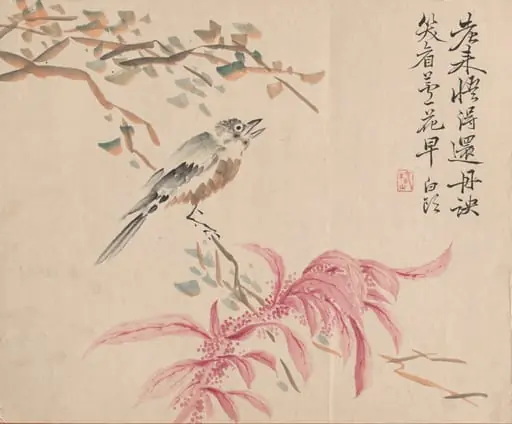 Strawberry Spinach and Nightingale
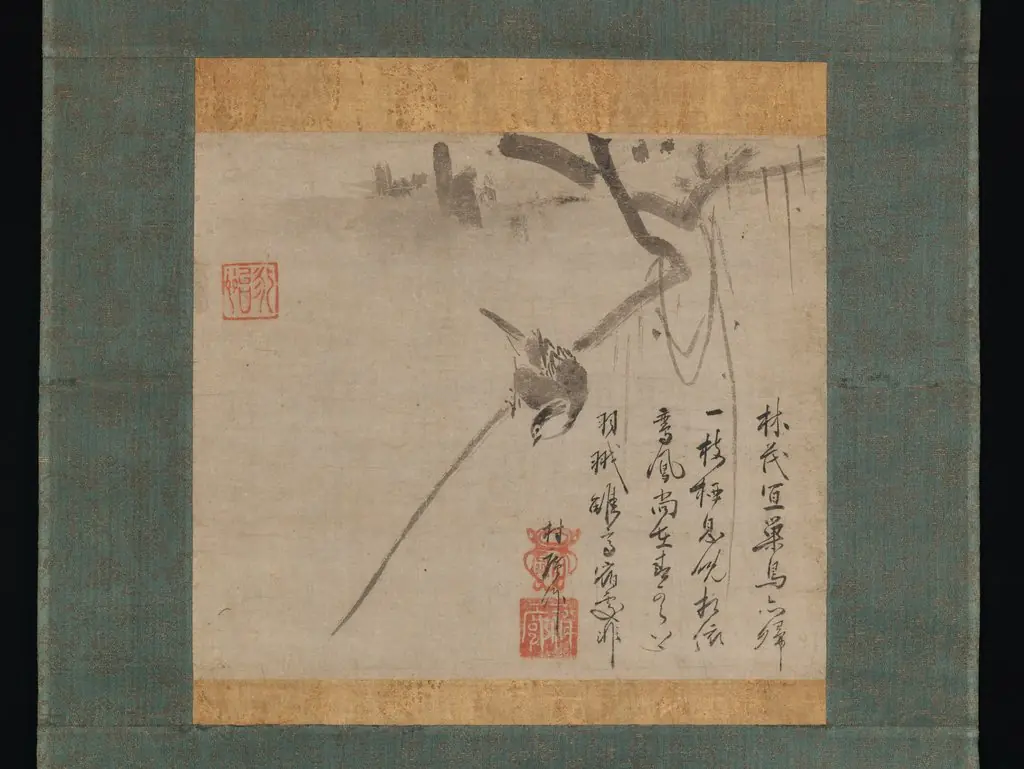 Bird on a Branch
 Flowers and Birds in a Spring Landscape