Artwork
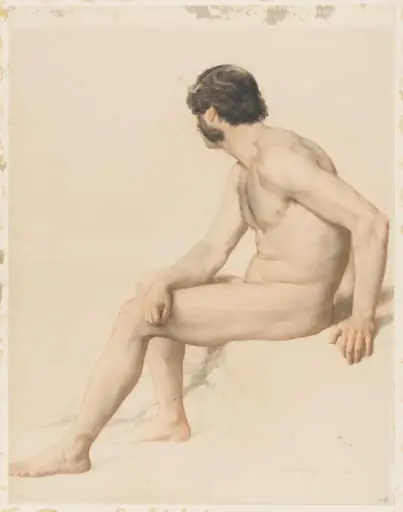
Seated Male Nude
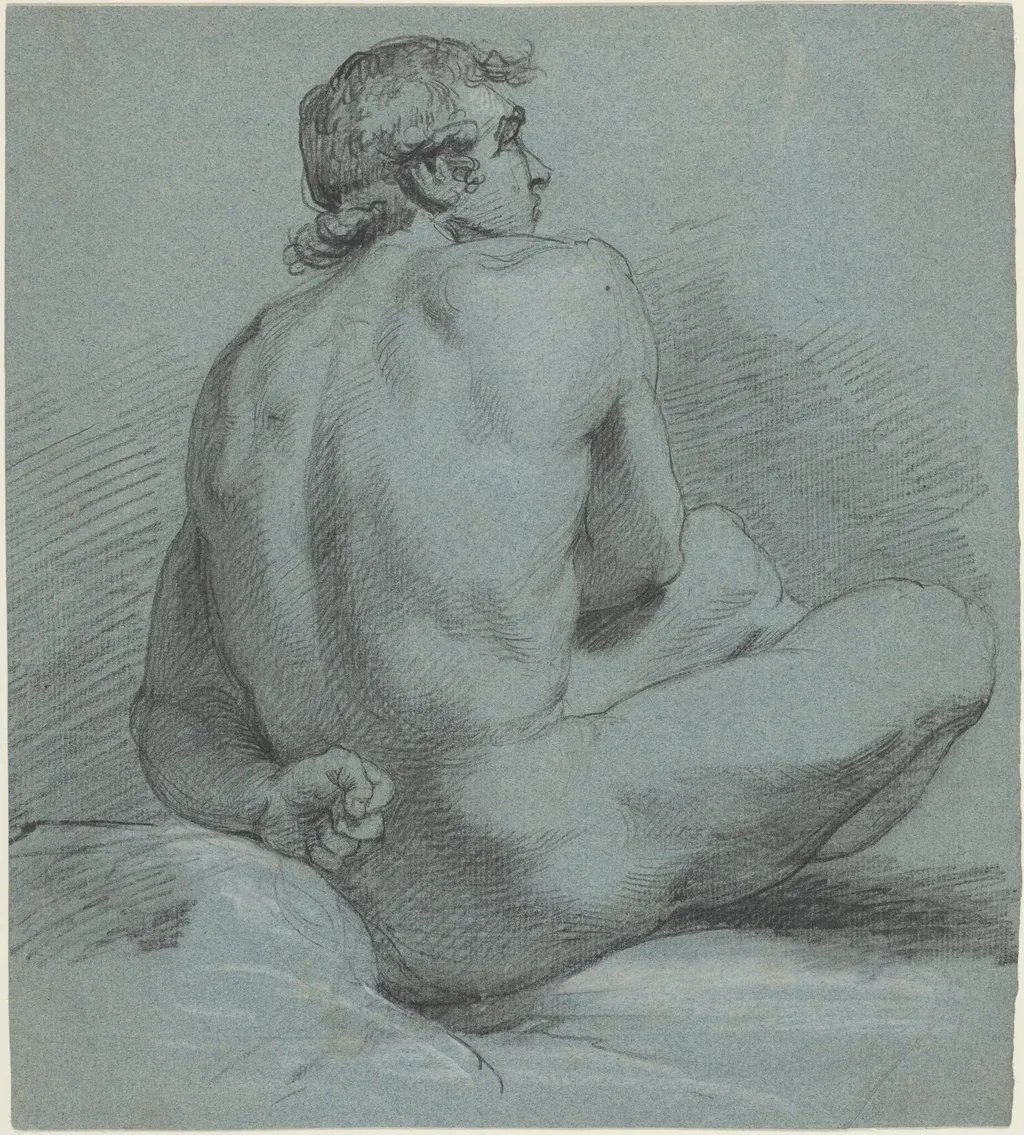
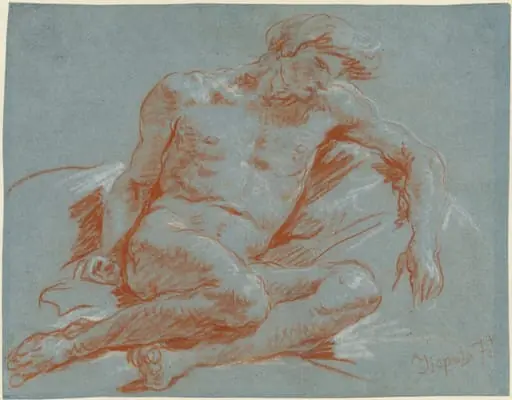
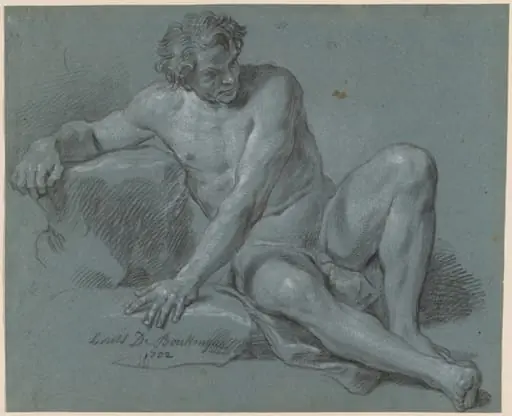
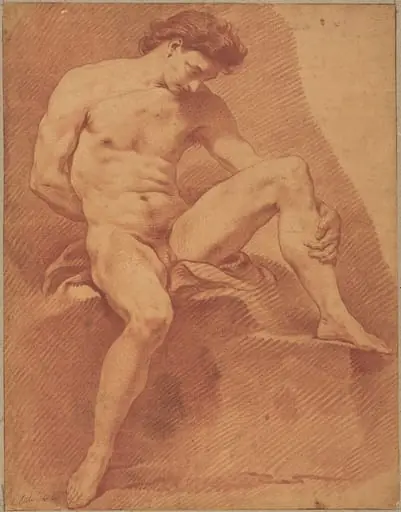
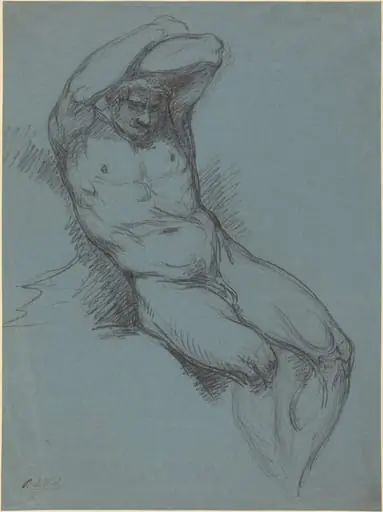
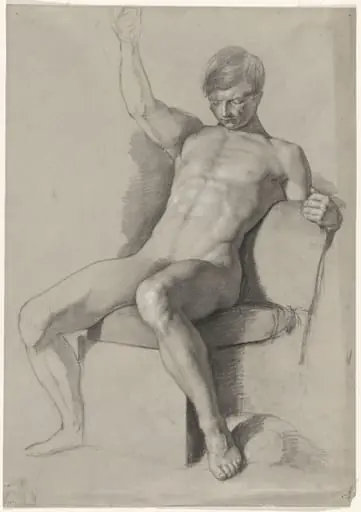
Seated Male Nude is a chalk drawing by the Romanticist artist Samuel Woodforde. It dates from 1788 and is held in the collection of the National Gallery of Art.
About this work
Overview
Created around 1788, this drawing depicts a seated male figure in nude form, rendered in black chalk with selective highlights in white on blue laid paper. The work belongs to the tradition of academic figure studies, emphasizing anatomical observation and compositional balance. Its modest scale and intimate medium suggest it was made for private study rather than public display.
Subject & Meaning
The figure is posed in a relaxed, naturalistic seated position, with one leg bent and the other extended, conveying a sense of stillness and introspection. There is no narrative context or symbolic attribute, focusing attention solely on the human form. The absence of idealization points to a study grounded in direct observation, typical of life drawing practices in late 18th-century Britain.
Technique & Style
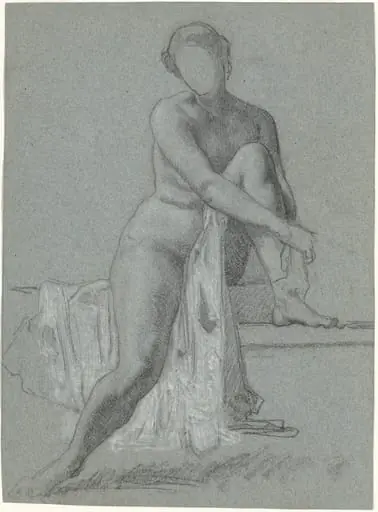
The artist employed black chalk for broad tonal modeling and fine linear definition, using white chalk to accentuate highlights on the torso, limbs, and facial features. The blue paper provides a mid-tone ground, enhancing the contrast and depth of the chalkwork. The handling is precise yet fluid, reflecting a disciplined approach to capturing volume and light through minimal means.
History & Provenance
The drawing is attributed to Samuel Woodforde, an English artist active in the late 1700s known for his figure studies and teaching. It likely originated in his studio or as part of a student’s exercise, given its academic character. No documented early ownership or exhibition history is recorded, suggesting it remained within private or educational circles.
Context
During the 1780s, life drawing from the nude was central to artistic training in Britain, particularly in institutions like the Royal Academy.
During the 1780s, life drawing from the nude was central to artistic training in Britain, particularly in institutions like the Royal Academy. While large-scale historical paintings dominated public taste, smaller studies like this one formed the foundation of technical skill. Woodforde’s work reflects the quiet, methodical culture of drawing academies that prioritized anatomical accuracy over dramatic expression.
Legacy
This drawing survives as a representative example of late 18th-century British figure study. Though Woodforde is not widely known today, works like this illustrate the rigorous training practices that underpinned the era’s artistic output. Its preservation offers insight into the everyday labor of artists refining their craft away from the public eye.
Own this work as a print
Artist & collection