Artwork
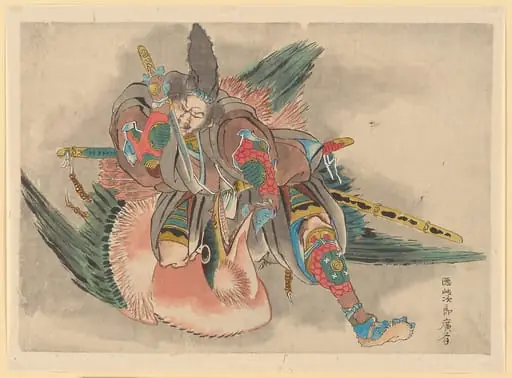
Nakamura Utaemon IV as a Warrior Standing in the Snow
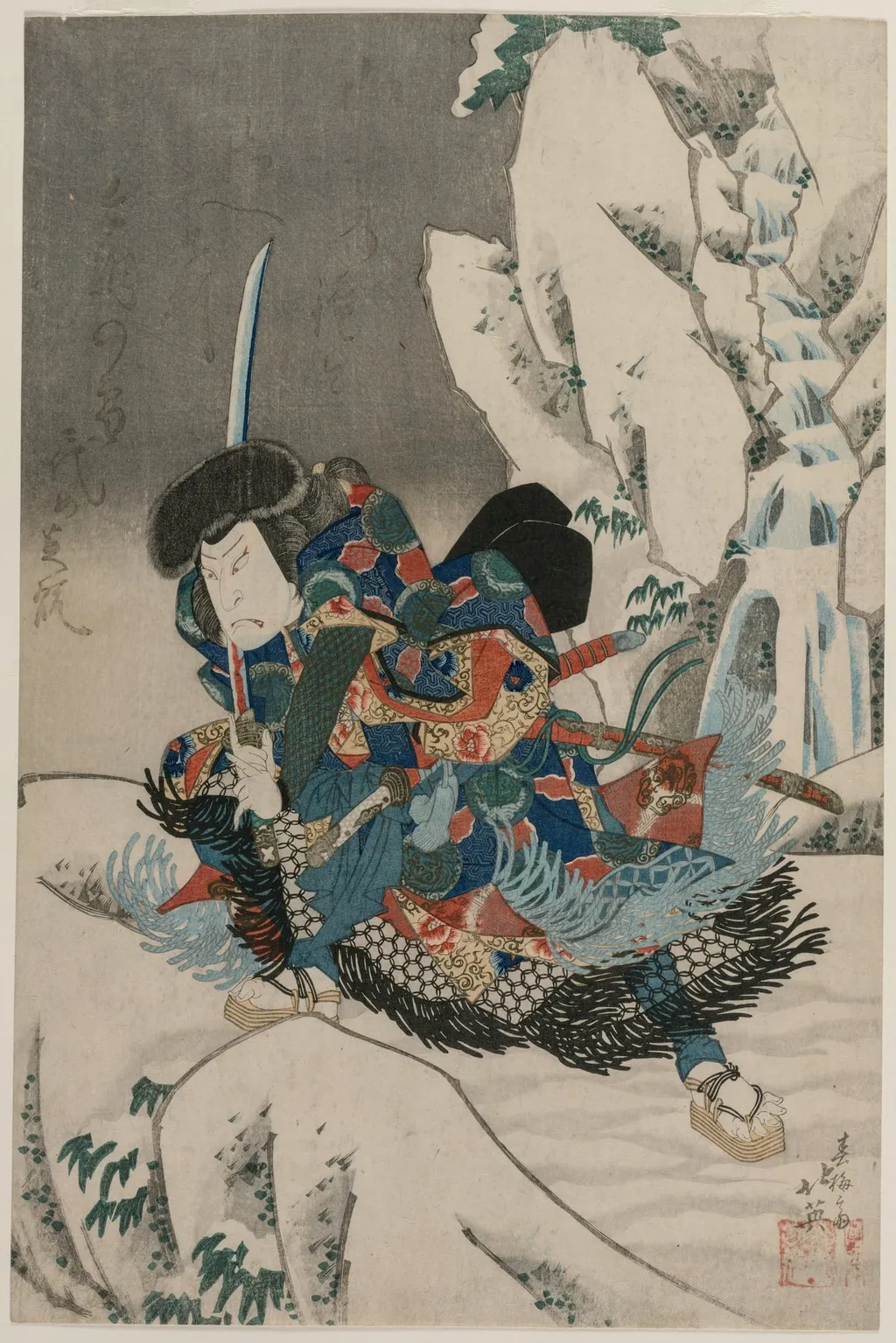
Nakamura Utaemon IV as a Warrior Standing in the Snow is a print by the Romanticist artist Shunbaisai Hokuei. It dates from 1835 and is held in the collection of the Cleveland Museum of Art.
About this work
Overview
This woodblock print, dated around 1835, depicts the kabuki actor Nakamura Utaemon IV in a warrior role, frozen mid-motion amid a winter landscape. Created by Shunbaisai Hokuei, it belongs to the ukiyo-e tradition of Japanese printmaking. The work is part of the collection at The Cleveland Museum of Art, where it is preserved as an example of early 19th-century theatrical portraiture.
Subject & Meaning
The snow-laden setting suggests isolation or introspection, common in narratives of loyal warriors facing moral or physical trials.
The figure represents a dramatic kabuki character, likely from a historical or samurai play, rendered in a moment of stillness. The snow-laden setting suggests isolation or introspection, common in narratives of loyal warriors facing moral or physical trials. The actor’s composed expression and poised stance convey inner resolve rather than action, aligning with kabuki’s emphasis on emotional depth over physical movement.
Technique & Style
Hokuei employed fine linework and layered color printing to render the warrior’s ornate kimono, with delicate patterns suggesting texture and luxury. The snow is suggested through subtle gradations of pale ink, while distant trees and rocks are rendered in minimal, atmospheric strokes. The composition balances bold figures against a restrained background, characteristic of late Edo-period actor prints that prioritized expressive detail over realism.
History & Provenance
Produced during the Tenpō era, the print was likely distributed as a theatrical souvenir, popular among urban audiences. It entered the Cleveland Museum of Art’s collection in the 20th century, having passed through private Japanese and Western hands. Its survival in good condition reflects its cultural value and the care taken in its preservation across generations.
Context
This print emerged during a period when kabuki theater flourished in Edo, and actor portraits were mass-produced for fans. Hokuei specialized in capturing performers in iconic roles, blending theatricality with naturalistic detail. Unlike Western Romanticism, Japanese prints of this era drew from literary traditions and stage conventions rather than individual emotion or nature worship, emphasizing social and performative identity.
Legacy
Works like this helped define the aesthetic of ukiyo-e actor prints, influencing later artists and collectors worldwide. Though no longer produced, such prints remain vital to understanding Edo-period popular culture and the intersection of theater, printmaking, and public taste. Today, they serve as historical documents of performance and identity in pre-modern Japan.
Own this work as a print
Artist & collection

Artist
Shunbaisai Hokuei, also known as Shunkō III, was a designer of ukiyo-e style Japanese woodblock prints in Osaka, and was active from about 1824 to 1837.

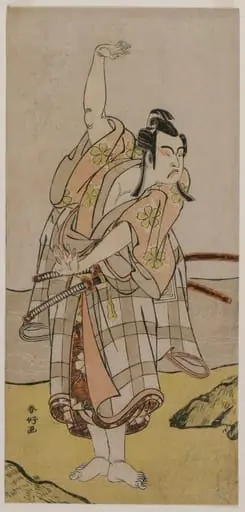 Actor Ichikawa Yaozō II as Sakuramaru
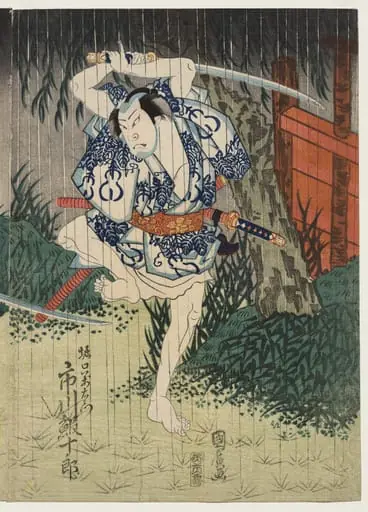 Ichikawa Ebijuro II as Horiguchi Manzaemon
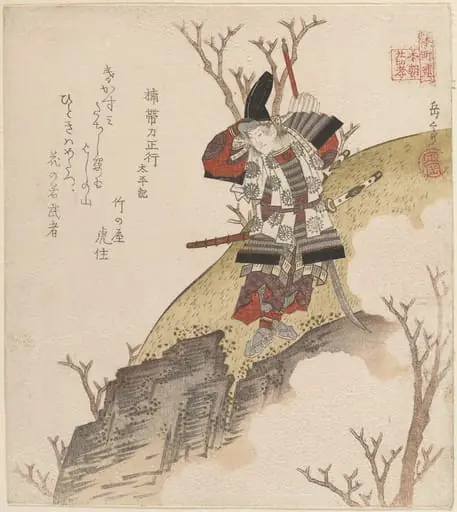 Untitled
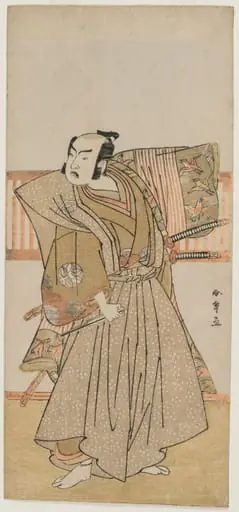 Ichimura Uzaemon IX as Soga no Juro
 Bando Mitsugoro IV in a Travelling Robe
 Musashibo Benkei Kneeling by a Plum Tree
 Onoe Matsusuke I as a Samurai Standing Beneath a Cherry Tree
 Bando Hikosaburo II as Sanada no Yoichi
 Untitled