Artwork
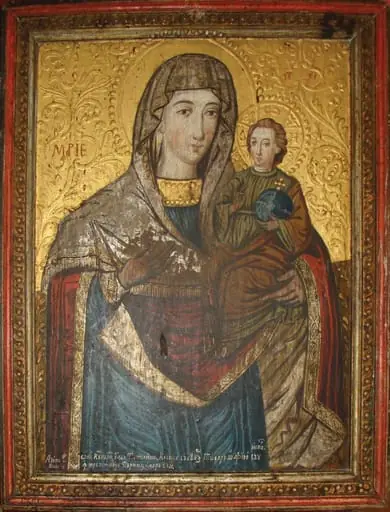
Maica Domnului cu Pruncul
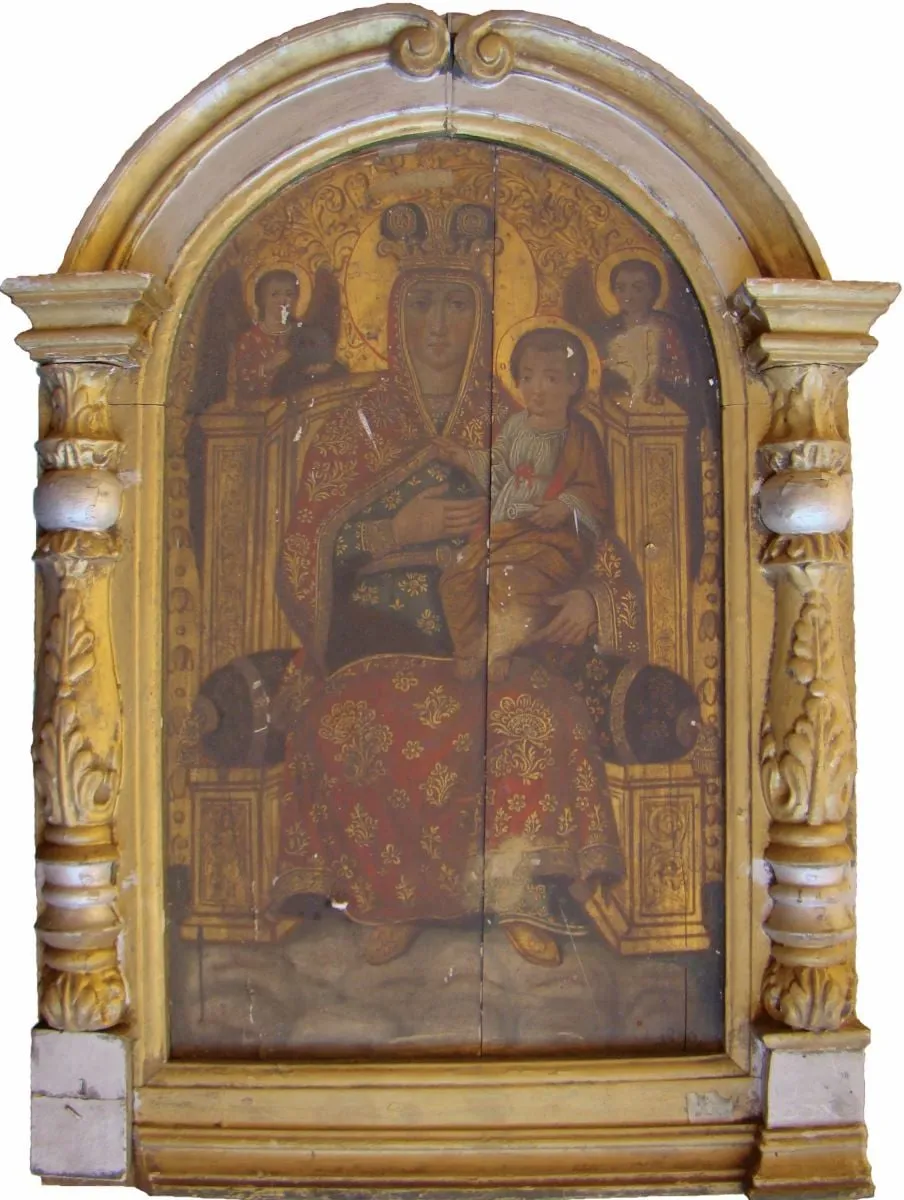
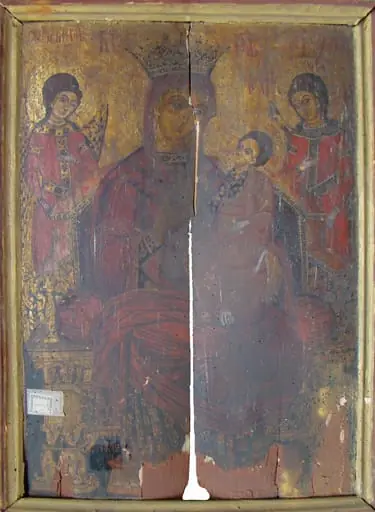
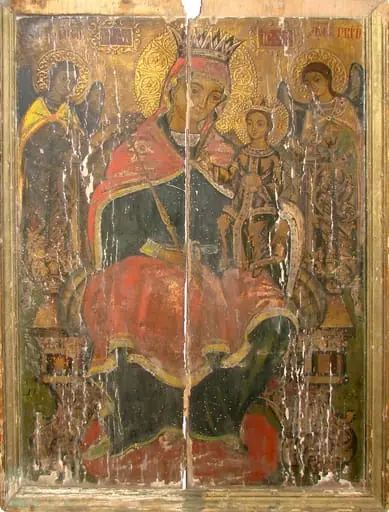
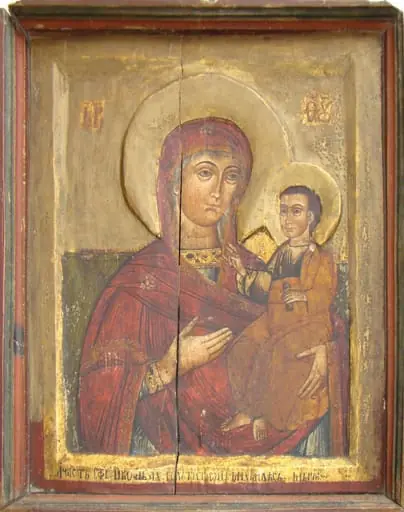
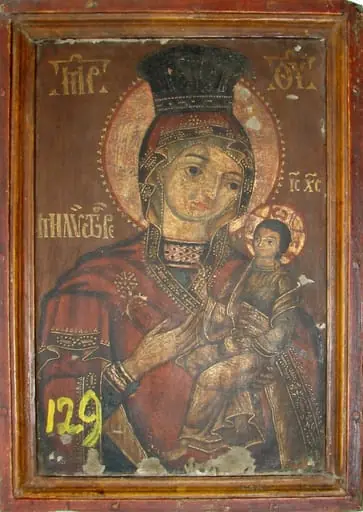
Maica Domnului cu Pruncul is a drawing by the Romanticist artist Simion Silaghi-Sălăgeanu. It dates from 1830 and is held in the collection of the Alba Iulia Orthodox Archdiocese.
About this work
Overview
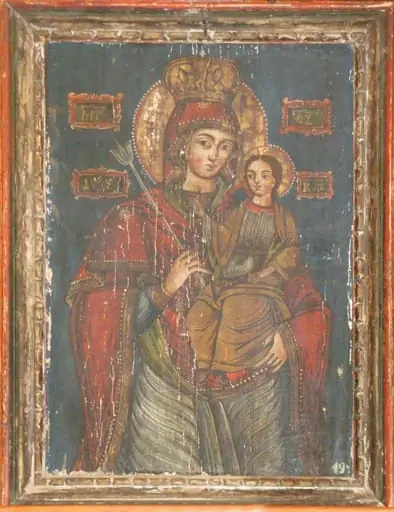
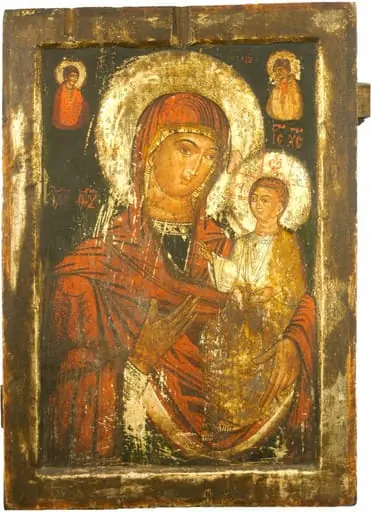
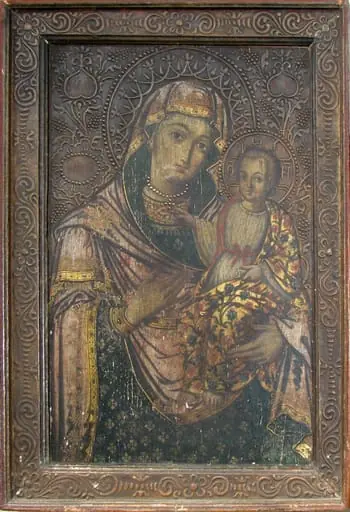
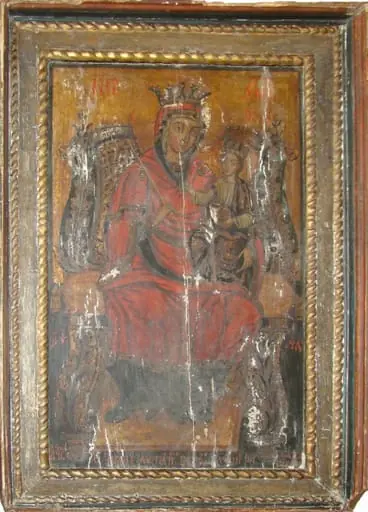
Painted in 1830 by Simion Silaghi-Sălăgeanu, this devotional image depicts the Virgin Mary with the Christ Child seated on an ornate throne.
Painted in 1830 by Simion Silaghi-Sălăgeanu, this devotional image depicts the Virgin Mary with the Christ Child seated on an ornate throne. Executed in oil on canvas, it is part of the collection at the Museum of Ethnography. The composition follows traditional religious iconography but incorporates regional decorative elements, reflecting a blend of sacred symbolism and local artistic sensibilities common in 19th-century Romanian religious art.
Subject & Meaning
The Virgin Mary, portrayed with serene dignity, holds the Christ Child, who gazes directly outward, inviting contemplation. Flanking them are two smaller figures, likely angels or saints, positioned to emphasize the central pair’s spiritual authority. The throne, richly adorned with floral and swirling motifs, symbolizes divine sovereignty. The calm expressions and formal posture convey reverence, aligning the image with liturgical use and private devotion in Orthodox Christian households.
Technique & Style
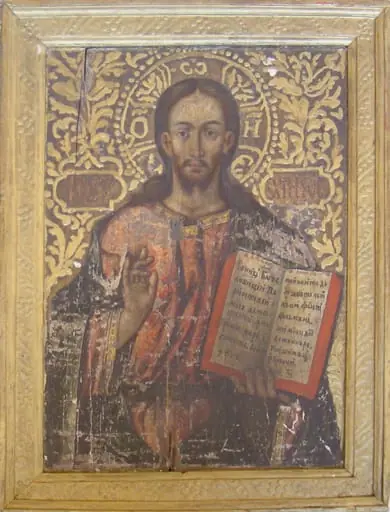
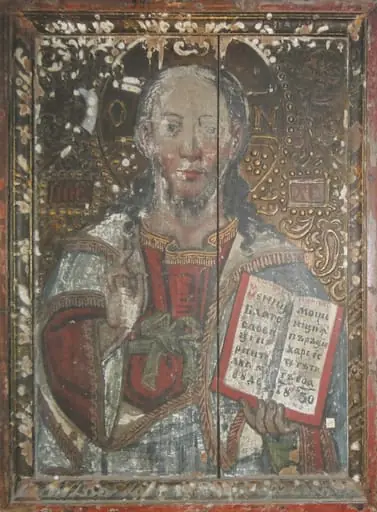
The painting employs deep, saturated hues—navy, crimson, and gold—to create a sense of solemn grandeur. Gold leaf accents highlight the throne’s carvings and the figures’ garments, enhancing their sacred status. The brushwork is precise yet restrained, favoring clarity over emotional intensity. The arched frame, carved and gilded, extends the pictorial space, mimicking the structure of an altar piece and reinforcing the image’s liturgical function.
History & Provenance
Created in 1830, the work entered the Museum of Ethnography’s collection as part of a broader effort to preserve regional religious artifacts. Its survival suggests it was once displayed in a domestic or parish setting before being collected for cultural documentation. The painting’s stylistic consistency with other Romanian devotional works from the period supports its attribution to Silaghi-Sălăgeanu, a known painter of ecclesiastical subjects in Moldavia.
Context
This image emerged during a period when Romanian religious art was evolving under the influence of both Byzantine traditions and emerging Western styles. While retaining the hierarchical composition of Orthodox icons, it integrates decorative elements reminiscent of European courtly art. Such works served not only spiritual purposes but also affirmed cultural identity amid increasing Habsburg and Ottoman pressures on local artistic practices.
Legacy
The painting remains a representative example of early 19th-century Romanian religious portraiture, illustrating how local artisans adapted sacred themes with regional aesthetics. It contributes to scholarly understanding of how devotional imagery functioned in everyday religious life beyond urban centers. Its preservation in an ethnographic museum underscores its value as a cultural artifact, not merely a religious object.
Artist & collection
Artist
Religious images fill these drawings and paintings by Simion Silaghi-Sălăgeanu, rooted in Orthodox icon traditions.